CHATTANOOGA — Spain has packed its bags and fled the humidity of Tennessee for Los Angeles, but head coach Luis de la Fuente faces a major midfield crisis ahead of today’s Round of 32 clash against Austria. Spain’s medical department has spent the last month nursing a bruised, battered squad through the group stage, but the bill has finally come due.
Midfielder Fabián Ruiz, wingers Lamine Yamal and Nico Williams, and midfielder Mikel Merino all arrived at the tournament carrying the residue of long-term injuries that decimated their domestic campaigns. The central issue is match rhythm. As The Guardian reported, the team departed their Chattanooga base at the Embassy Suites on Broad Street leaving behind a trail of unanswered questions about their physical capacity to survive the knockout rounds.
While Spain swept through their group, the constant rotation of players suggests a coaching staff deeply concerned about physical load. De la Fuente has repeatedly shuffled his pack, unable to field the same starting eleven twice. Fabián Ruiz has been the most visible casualty of this rotation policy.
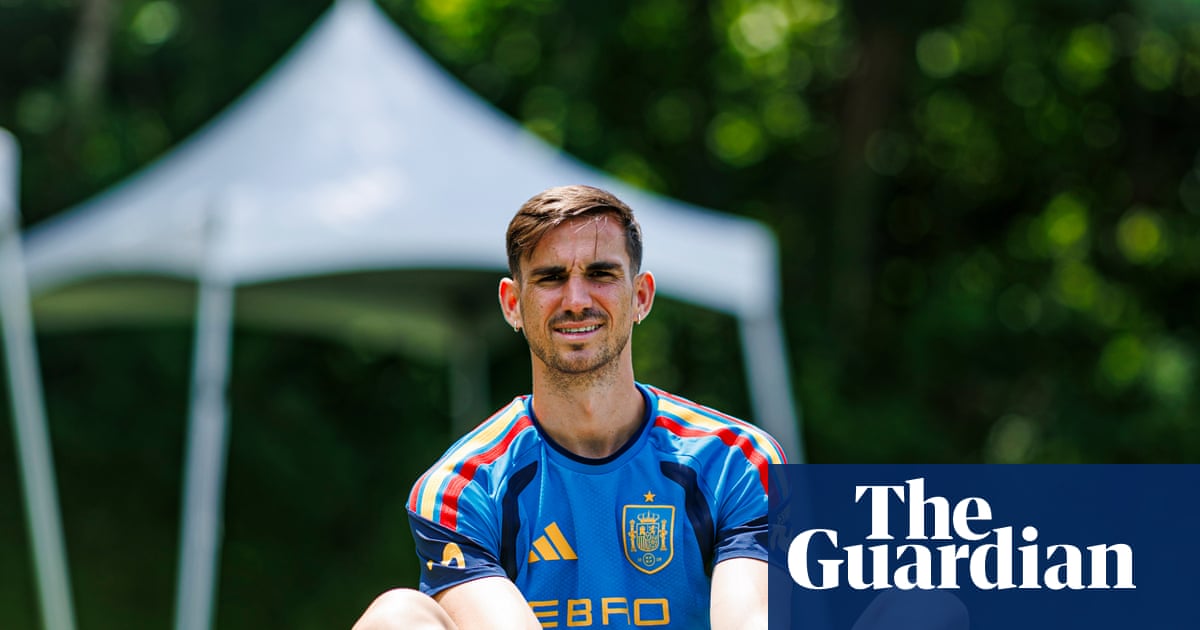
The Paris Saint-Germain midfielder started the opening match against Cape Verde but found himself benched for Dani Olmo in the second game, before Mikel Merino took his place in the third. This is a stark departure from Euro 2024, where Fabián was Spain’s standout performer. The midfielder spent months on the sidelines for PSG this season, and the drop-off in his explosive acceleration has been visible.
The Cost of the Medical Crisis
The numbers tell a worrying story for Spanish fans. Lamine Yamal, the 18-year-old winger who is central to Spain’s attacking structure, was sidelined from April until the eve of the tournament. His absence forced Spain to play a waiting game, delaying their tactical integration until their star teenager could pass a fitness test.
Nico Williams has similarly struggled with muscular complaints that restricted his training load in Chattanooga. Without their first-choice wingers operating at full capacity, Spain’s high-tempo, direct attacking style has looked sluggish. De la Fuente’s tactical system relies on isolated wingers winning individual duels, a task that requires peak physical condition.
When those wingers are playing on half-empty tanks, the system collapses into the slow, lateral passing circles that defined Spain’s worst tournaments. Fabián Ruiz, however, rejects the narrative of a team in physical decline. In a recent interview, he insisted his own fitness issues are completely behind him.
It has been hard to get my pace and rhythm back, but I am 100% now. I struggled with that, but by the time I got here, I had played various games in a row for PSG at the highest level without having to stop.
The physical reality was explained by Fabián Ruiz, who admitted that finding match rhythm was a slow process. Spanish medical staff have reportedly warned that pushing Yamal and Williams to play 90 minutes against a physical Austria side could risk long-term hamstring damage. The recovery timeline for both wingers to reach peak physical capacity is expected to stretch another two weeks into the tournament.
A Disjointed Midfield and Lost Leaders
The physical fragility is compounded by a leadership vacuum in the dressing room. Spain’s Euro 2024 squad was guided by Álvaro Morata, Dani Carvajal, and Rodri, but today only Rodri remains active. Morata and Carvajal are absent, leaving a massive void in terms of competitive character.
Rodri has taken the armband, supported by goalkeeper Unai Simón, Mikel Oyarzabal, and Aymeric Laporte. But none of these players possess Carvajal’s aggressive, combative edge on the pitch. In their place, Spain has relied on a rotating cast in midfield.
De la Fuente recently bragged that Spain possesses the six best midfielders in the world. It is a bold claim, but one that ignores the difficulty of finding a cohesive combination. The partnership between Pedri and Rodri is secure, but the third midfield slot remains a tactical puzzle.
When Fabián plays, De la Fuente is forced to abandon his preferred 4-2-3-1 formation for a 4-3-3. This tactical shift pushes Pedri higher up the pitch, away from the areas where he can dictate the tempo of the match. If Dani Olmo plays, Spain gets more central penetration but loses defensive stability.
If Merino starts, Spain gains aerial presence but sacrifices ball progression. This constant tinkering has prevented Spain from developing the automatic passing patterns that are essential for breaking down low defensive blocks. Spain’s midfield is talented, but it lacks the cohesion needed for elite international play.
Strategic Implications for the Knockout Rounds
The physical condition of Spain’s squad will dictate their longevity in this tournament. Ralf Rangnick’s Austria represents a nightmare matchup for a team recovering from long-term injuries. The Austrians play a relentless, high-pressing game designed to exploit physical weakness and slow decision-making.
If Spain’s midfielders cannot match Austria’s physical intensity in the opening minutes, they will be overrun. The drop-off in Spain’s press resistance has been notable. In their group stage matches, they conceded more transitions than they did in the entirety of Euro 2024.
This vulnerability is a direct consequence of midfield players failing to track back quickly enough after turnovers. For the Spanish clubs, the long-term health of their young stars is also at stake. PSG and Barcelona have reportedly monitored the tournament with growing anxiety, fearing their prized assets will return with chronic injuries.
De la Fuente must balance the immediate demands of a World Cup knockout match against the long-term careers of his players. It is a gamble that could define his legacy. A round-of-32 exit would be a disaster for Spain, but destroying the fitness of Lamine Yamal for the next domestic season would be equally unforgivable.
Spain’s medical team has worked wonders to get these players on the pitch, but the ultimate test comes today in Los Angeles. The team spent a three-week period training in Chattanooga, but that preparation will mean nothing if the players lack durability. The era of rotation is over, and Spain must now rely on a group of players whose match sharpness remains highly suspect.
Read Next
- Spain's midfield puzzle is the key to their World Cup survival
- Folarin Balogun's shock red card leaves USMNT facing a massive Belgium problem
- Pochettino must solve the Balogun puzzle before USA face Belgium in Seattle
- Top 10: Top Moments
- 🏆 World Cup 2026 — Full Coverage Hub
- 🇪🇸 Spain World Cup 2026 — La Roja Hub
- 🇦🇹 Austria World Cup 2026 — Das Team Hub