The physical toll of the quarter-final
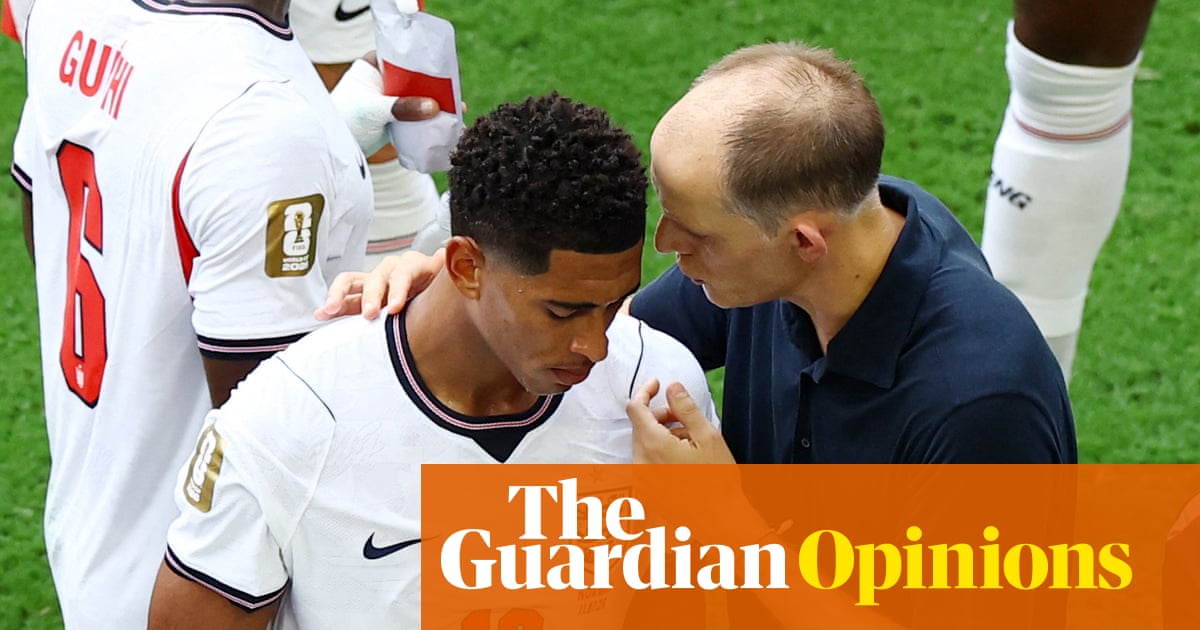
Jude Bellingham is facing renewed scrutiny regarding his fitness ahead of England’s World Cup semifinal against Argentina. Despite scoring a brace in the 2-1 quarter-final victory over Norway, footage emerging from the Hard Rock Stadium shows the midfielder visibly clutching his shoulder while navigating the mixed zone.
The images display the Three Lions star grimacing in evident discomfort. Argentina’s media outlets have zeroed in on his heavily-scarred right shoulder, questioning if the playmaker is playing through a recurring issue that could compromise his impact in the upcoming clash. Gareth Southgate’s camp has yet to issue an official medical bulletin regarding the severity of the ailment.
The friction behind the scenes
Physical concerns arrive at an awkward moment for the England camp. Reports from The Mirror indicate that manager Thomas Tuchel and Bellingham are engaged in a public disagreement regarding the team's performance. Tuchel labeled the squad 'lucky' to advance against Norway, an assessment that Bellingham openly rejected in post-match comments.
This tension has created a distraction for a squad just days away from a historic match. While some outlets suggest this friction is merely a healthy 'battle of wills' between two competitors, the potential injury to a key starter adds a layer of vulnerability. England currently sits as a high-stakes contender, but their reliance on Bellingham is statistically undeniable, as he currently leads the team in multiple key categories according to Sky Sports data.
Historical precedent and strategic impact
Shoulder instability is a recurring narrative for high-intensity midfielders who rely on physical shielding and high-volume dribbling in central areas. In previous tournament cycles, players attempting to play through shoulder pathologies often report decreased range of motion, which limits verticality and defensive ball-winning capabilities—crucial metrics for England’s gegenpressing style under Tuchel.
Denise Bellingham, the player’s mother, has reportedly been heavily involved in advising him on his game-day conduct and reactions, signaling that the inner circle is working to manage both his public image and his physical stress. However, management of a Grade 1 or 2 shoulder sprain typically requires rest, which is a luxury England does not have. If Tuchel chooses to start a diminished Bellingham, he risks exacerbating the injury early in a tournament semifinal where possession retention is paramount.
The tactical risk here is significant. If Bellingham is indeed hampered, he becomes a target for an Argentinian midfield unit known for high-contact defensive work. Tuchel must decide whether to rotate personnel or trust his star’s recovery despite these visible warning signs.
The current outlook
As of July 13, 2026, no official diagnosis has been confirmed by the FA. The squad remains in a delicate period where internal discord and physical attrition risk derailing their progress. While industry insiders have insisted there are 'no problems' between the manager and the player, the combination of a sharp disagreement over team quality and a visible physical struggle creates an unpredictable narrative heading into the semifinal.
Monitoring the intensity of his participation in training drills over the next 48 hours will be the only way to gauge his availability. If Bellingham cannot go at 100%, England loses its primary transition threat. This represents more than just a personnel choice—it is a decision that could define the outcome of the tournament for a team currently walking a tightrope between excellence and internal volatility.
Read Next
- England's broken midfield triangles will still get them past Argentina
- England vs Argentina: A Tactical Reckoning
- Jude Bellingham is carrying England on his back to the semi-finals
- Cablegate: How England's World Cup run survived a technical phantom
- 🏆 World Cup 2026 — Full Coverage Hub
- 🇦🇷 Argentina World Cup 2026 — Defending Champions Hub
- 🏴 England World Cup 2026 — Three Lions Hub
- ⚡ UCL Semi-Finals 2026 — Full Coverage Hub