The Illusion of England's Possession Control
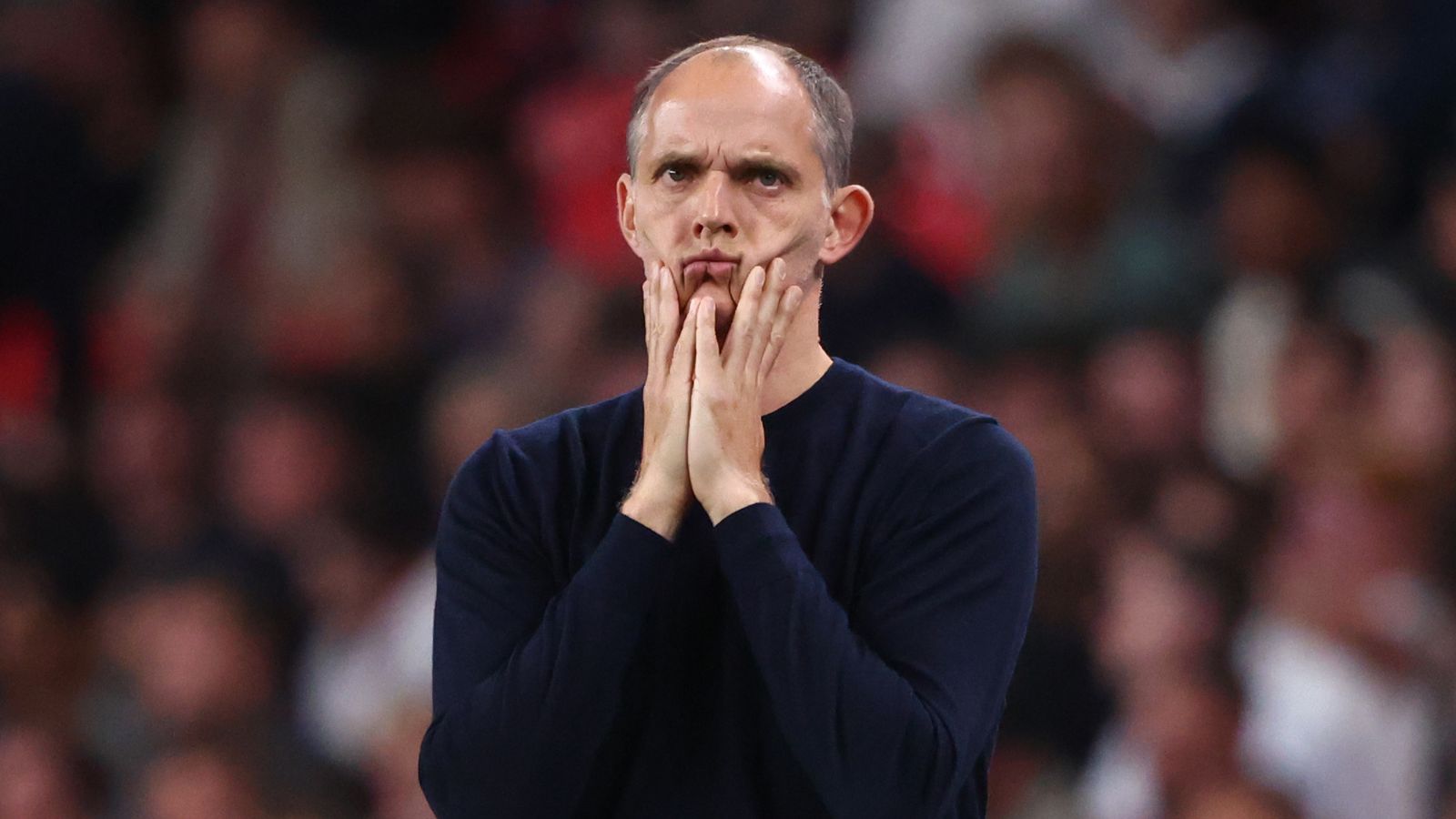
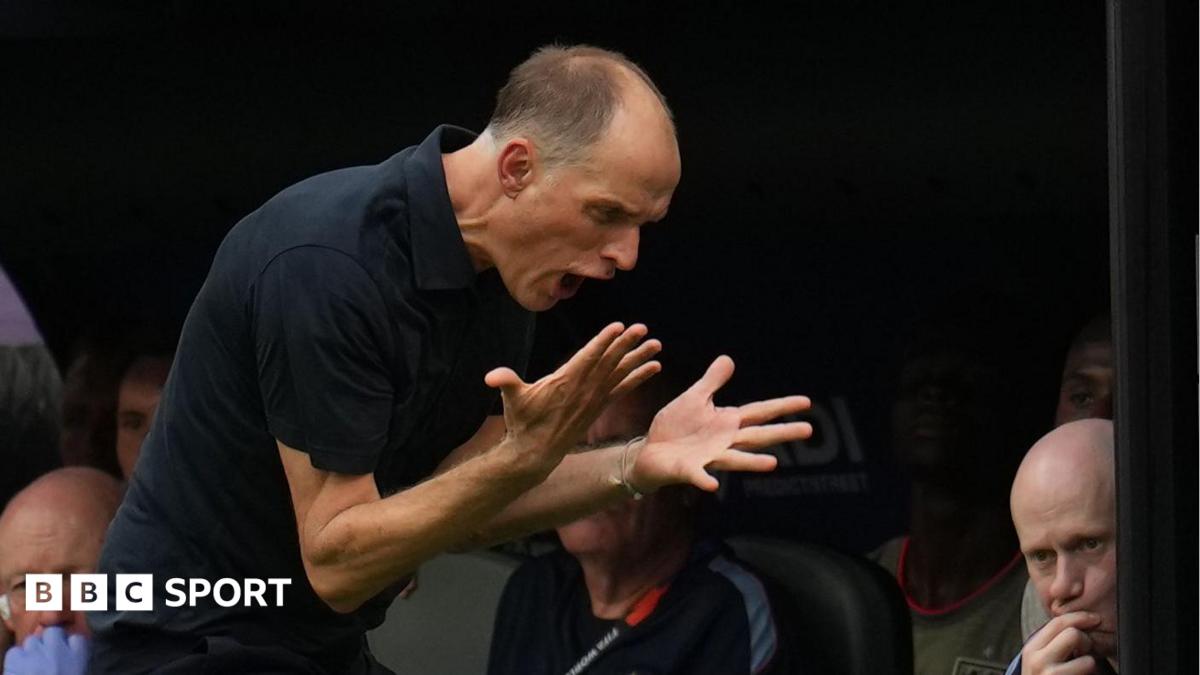
Thomas Tuchel was pacing the technical area in Stuttgart, his arms thrashing in frustration. Five games into this 2026 World Cup campaign, England are in the semi-finals, yet their manager looks like a man whose house is slowly flooding. The 2-1 quarter-final victory over Norway on Saturday was a perfect encapsulation of the tactical disconnect at the heart of this squad.
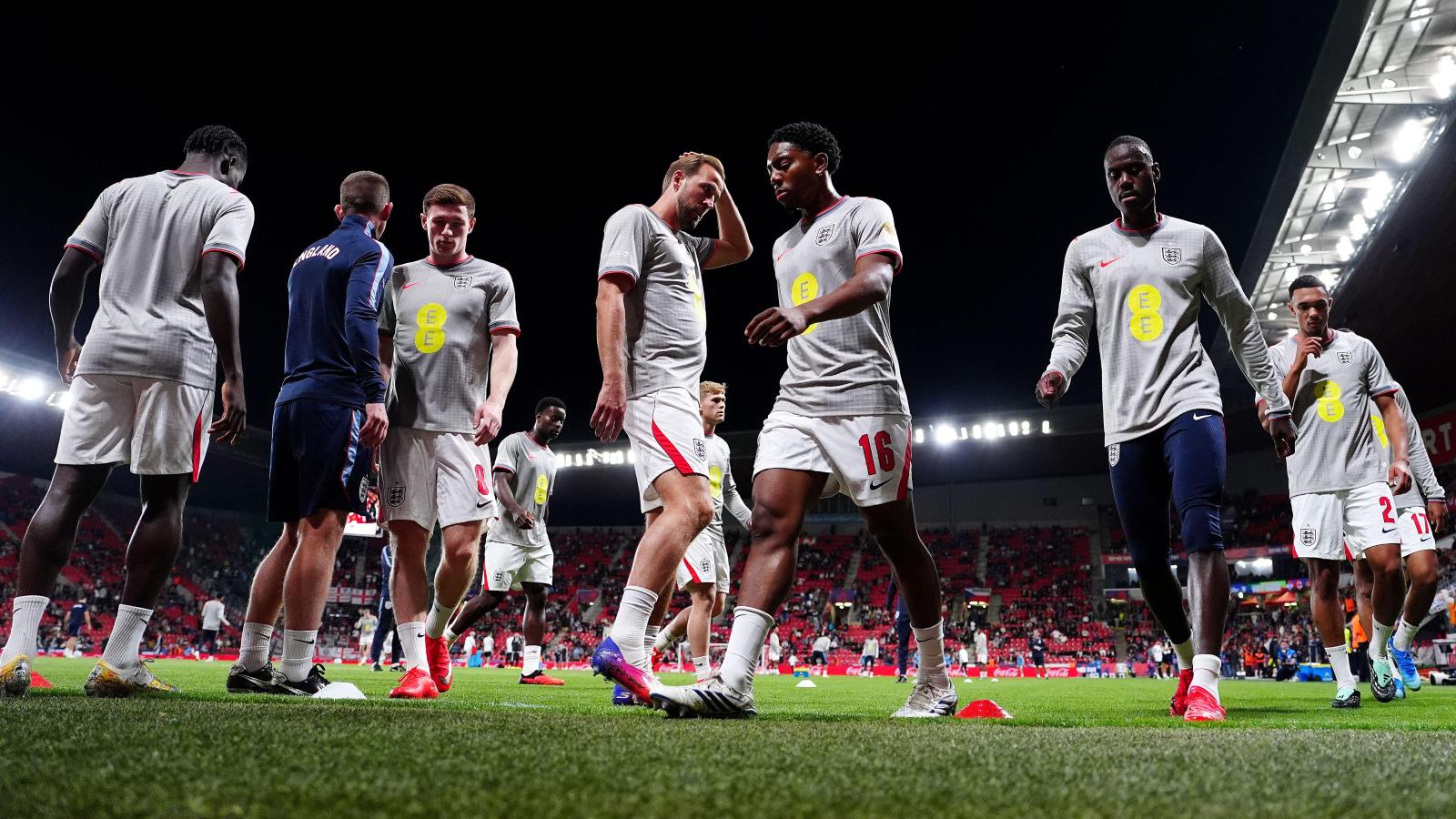
In possession, Tuchel sets England up in a strict 3-2-5 structure. Marc Guehi, John Stones, and Ezri Konsa form the base three, while Declan Rice and Elliot Anderson occupy the double pivot. Their job is to circulate the ball to draw the opposition press.
Nico O'Reilly joins the front four to occupy the left flank, while Bukayo Saka and Noni Madueke provide the width. On paper, it is a system designed to suffocatingly dominate the pitch. In reality, it is a clunky engine that regularly stalls under pressure.
The numbers from Saturday prove a deep tactical disconnect. In the first half, England commanded 68% of the ball, repeatedly passing across their backline to lure Norway's 4-5-1 defensive block forward. We saw the ideal iteration of this in the 10th minute when six England players overloaded the left flank, baiting the Norwegian midfield across before Elliot Anderson launched a diagonal switch to Noni Madueke.
But as the match progressed, England fell back into what assistant coach Anthony Barry previously described as 'fearful patterns' during the group stage. The tempo slowed, passing lanes vanished, and England's second-half possession plummeted to just 44%. Stale Solbakken's side comfortably dictated the rhythm.
The Structural Collapse in the Wide Triangles
Tuchel's frustrations are not born of mere perfectionism. The wide triangles that are supposed to slice through defensive blocks are currently static. To break down Norway's narrow defensive shape, the wingers needed to rotate with the central midfielders.
When Anthony Gordon drifted inside from the left wing, Anderson or O'Reilly should have surged into the vacated space out wide to overload Julian Ryerson. Instead, the players stood like statues. O'Reilly repeatedly turned back and played negative passes to Guehi.
Guehi was particularly sloppy on the ball throughout the second half. Instead of playing through the wide channels, the defender walked on the ball before forcing a dangerous pass through the middle that Norway intercepted. As BBC Sport reported after the quarter-final, Tuchel was vocal about these technical errors.
"We made life very difficult for ourselves. The result is fantastic but I'm not happy with the performance."
This sluggishness is partly physical. Declan Rice was reportedly in bed for nearly three days with an illness before the Norway match, and his lack of energy in the second half left Anderson isolated in midfield. When Norway pressed, England's midfielders lacked the sharpness to play out of the trap, turning a tactical blueprint into a series of panicked clearances.
How Individual Chaos Rescues Tuchel's System
If the tactical system is failing to produce fluid football, why do England keep winning? The answer lies in transition play. When the game descends into chaos, England's physical profiles take over, thriving on transition space rather than structured positional play.
Look at how England opened the scoring on Saturday. Orjan Nyland's long goal-kick landed at Anderson's feet with Norway's defensive line completely disorganised. Anderson powerfully carried the ball forward, committing Ryerson and releasing Gordon down the flank.
When centre-back Kristoffer Ajer was pulled out wide to cover Gordon, midfielder Sander Berge was forced to drop into the back four. This opened a yawning gap in the centre of the box. Jude Bellingham spotted the space, timed his run perfectly, and swept home the finish.
For the winner, Norway were again caught in transition after a corner. Morgan Rogers struck a powerful shot from distance, which Nyland parried directly into Bellingham's path. The midfielder tapped it in to secure the 2-1 victory.
This sequence was almost identical to the opening goal against Mexico. Jordan Pickford found Rice, who carried the ball forty yards and committed the Mexican full-back before releasing Saka. With Harry Kane dragging the centre-backs deep, Bellingham arrived late into the empty space to score.
The timing of Bellingham, combined with the powerful ball-carrying of Rice and Anderson, is impossible to coach. They are natural transition weapons that thrive when the game is messy.
"The game is split into loads of different facets – technical, tactical, and, the biggest one is psychological, managing adversity."
Why Argentina Will Fall to England's Chaos
This brings us to the semi-final against Argentina. The South American champions possess Lionel Messi, whose spatial gravity remains a threat to any defensive line. But Argentina have shown notable defensive flaws during their run.
Specifically, they are vulnerable to quick transitions out wide, and their defensive line struggles when forced to drop deep in a hurry. As the BBC Sport tournament portal notes, Argentina's full-backs lack the recovery speed to handle athletic wingers in isolated space.
Tuchel will spend the next three days attempting to fix England's wide triangles. He will drill Gordon, Saka, and O'Reilly on faster rotations. But England do not need to play beautiful positional football to beat this Argentina side.
A slower, possession-heavy style would only allow Argentina to get compact and dictate the tempo. England's path to the final lies in baiting Argentina's press, forcing turnovers, and letting Rice and Anderson drive through the middle to unleash Saka and Gordon against exposed defenders.
England will undoubtedly have moments where they look disjointed. There will be sloppy passes and stretches where Messi controls the pace of the match. But in transition, England's physical superiority will be the deciding factor as Bellingham finds the net once again to secure their place in the final.
Read Next
- Tuchel's safety-first England are walking into Scaloni's trap
- England vs Argentina: The tactical cage trap is failing at the wrong time
- England vs Argentina is a collision of two distinct footballing philosophies
- England vs Argentina: The tactical cage trap
- 🏆 World Cup 2026 — Full Coverage Hub
- 🇦🇷 Argentina World Cup 2026 — Defending Champions Hub
- 🏴 England World Cup 2026 — Three Lions Hub