The physics of the 42nd minute
England’s World Cup quarter-final win on Sunday turned on a single moment of physics that left Norway’s bench in disbelief. In the 42nd minute, with Norway holding a precarious lead, the ball trajectory shifted sharply after leaving Ørjan Håskjold Nyland’s goal kick. Jude Bellingham picked up the deflection and eventually scored the equalizer, a sequence that fundamentally altered the match state.
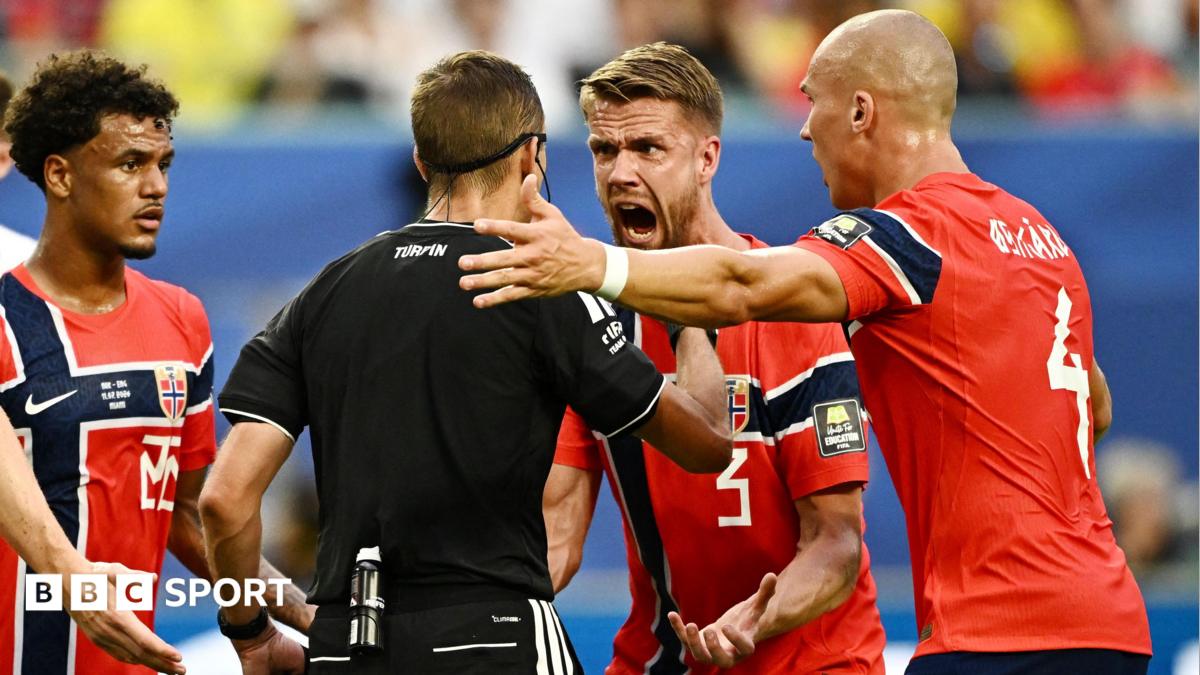
Norway manager Ståle Solbakken was vocal regarding the incident immediately following the 2-1 defeat. He described the moment with unsettling clarity, noting the ball fell from the sky and visibly changed direction without atmospheric interference. While England advanced, the data suggests the integrity of that specific phase of play remains a valid target for scrutiny.
Evaluating the spidercam interference
The Snicko analysis
FIFA’s response to the "Cablegate" controversy centers on their proprietary tracking technology. Officials utilized what they termed a "Snicko" audio-visual overlay to analyze high-frequency vibrations in the cable suspension system. According to reports from the BBC, the data shows zero contact between the sphere and the wire system.
This technical dismissal leaves a gaping hole in the narrative for the Norwegian contingent. If the equipment didn't strike the wire, the erratic movement suggests a localized wind gust or a freak equipment malfunction in the air. Science aside, the decision to allow the goal without a public frame-by-frame breakdown of the wire’s tension creates a transparency deficit in this tournament.
Refereeing under the lights
We see a clear divergence between the officiating bunker and the field-level experience. While FIFA maintains the technology functioned within parameters, the visual evidence detailed by The Guardian shows the ball passing dangerously close to the vertical feed lines. When you aggregate the complaints from Norway’s staff, the frustration isn't about human error, but the reliance on black-box tech that refuses to show its work.
The statistical impact of the error
Before the goal, Norway’s expected goals against (xGA) for the half was a modest 0.34. Bellingham’s strike represented a significant deviation from that tactical profile. FIFA’s official response labeling the complaints as unsupported serves the tournament’s need for momentum, but ignores the mechanical reality of having low-hanging wires above a congested midfield.
If the technology caused a 15% adjustment in ball trajectory, the match output was compromised. England’s progression to the semi-finals is cemented in the record books, but historians will likely note this as the moment the 2026 tournament lost its claim to technical perfection. We are left asking if the spectacle is now too big for the infrastructure that supports it.
Read Next
- England's broken midfield triangles will still get them past Argentina
- Bellingham's opener against Norway sparks spider cam controversy
- England vs Norway: VAR is the real MVP of this dumpster fire
- Argentina await as England enters the final four of 2026
- 🏆 World Cup 2026 — Full Coverage Hub
- 🏴 England World Cup 2026 — Three Lions Hub