Panic at Stockley Park: How a 20-Second Rush Ruined the Manchester Derby
Imagine paying top dollar to watch the Manchester derby, only to watch the fixture decided by an official rushing like he had four seconds left on a game clock. Manchester City walked away with a 1-0 victory over Manchester United because video assistant referee Matt Donohue abandoned basic protocol in favor of speed. The decision handed City three points and left United furious over an obvious officiating breakdown.
Leaked audio from Stockley Park captured total panic rather than calm authority inside the booth. Donohue was repeatedly shouting at his replay operator while trying to validate Erling Haaland's winning goal. The frantic exchange sounded less like an elite officiating review and more like an emergency evacuation.
"Quick, quick, quick, quick! Go, go, go, go, go!"
That is not the language of a methodical video official weighing complex sporting regulations. In his haste to beat an invisible stopwatch, Donohue missed a glaring offside right in front of his eyes. The mistake turned a marquee Premier League matchup into an officiating farce.
The controversy began when Josko Gvardiol touched the ball to cross into the penalty area. Standing a full 3 yards offside was Enzo Fernandez, who actively jumped and attempted to head the cross. Fernandez did not merely exist in the penalty box; his attempt to play the ball directly forced the United defense to scramble.
Instead of watching the full sequence run from Gvardiol's cross to Haaland's finish, Donohue instructed the operator to freeze the first replay frame. He immediately dragged the footage into the semi-automated offside technology to check Haaland's position. By skipping the initial assessment of the entire penalty area, he missed Fernandez entirely.
Donohue and assistant VAR Blake Antrobus focused strictly on whether Fernandez touched the ball. They operated under the assumption that a touch by Fernandez would create a new phase and place Haaland offside. They completely forgot to check if Fernandez was illegally positioned when the original cross was delivered.
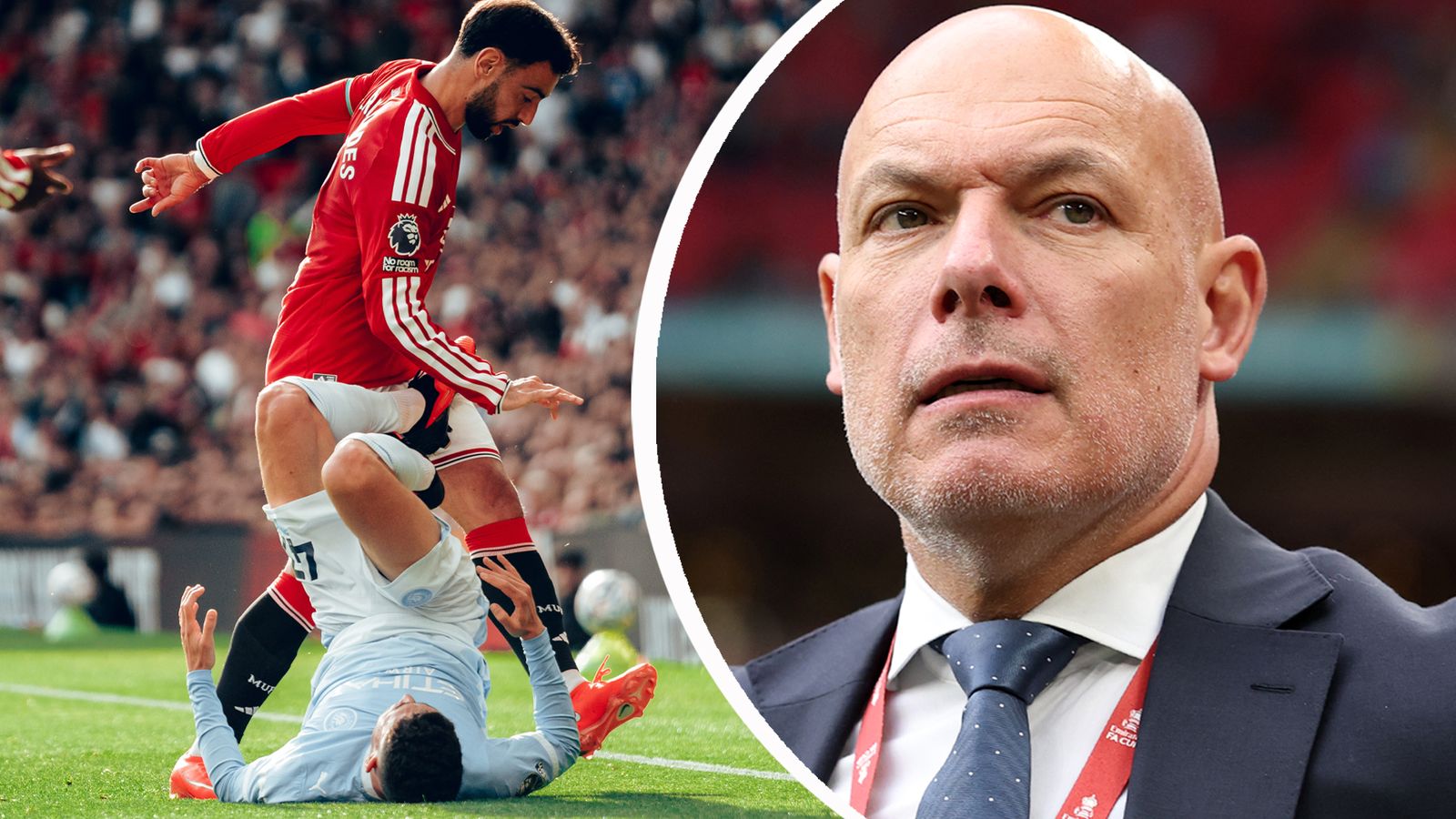
As BBC Sport reported, PGMOL chief Howard Webb confirmed the VAR team never even considered Fernandez's offside position. It is the officiating equivalent of inspecting whether a burglar wiped his shoes while ignoring the shattered window behind him. The basic process collapsed under self-imposed time pressure.
Antrobus offered virtually no checks or balances during the review. His total verbal contribution to the moment was uttering "no, yeah" regarding a potential touch by Fernandez. One second later, Donohue blurted out "final decision is goal, check complete" and closed the review.
Even after Donohue rushed through the review, the error was still salvageable. A support VAR sits in the operations room next to the match hub at Stockley Park specifically to monitor protocol errors. Yet nobody intervened during the brief window between the goal being awarded and the subsequent kick-off.
Howard Webb's Stopwatch and the Speed Metric Trap
This derby catastrophe did not happen by accident. It was the direct result of PGMOL chief Howard Webb pushing video officials to prioritize rapid review times above absolute accuracy. When speed becomes the headline metric, quality suffers every time.
Following feedback from managers, coaches, and fans in the Premier League stakeholders' survey, faster decision-making became a core mandate for the season. The league wanted to eliminate long stadium delays and keep matches moving. Webb responded by pushing his staff to streamline booth procedures.
Statistically, Webb's initiative looked like a success for league administrators. Average VAR delays fell from 46 seconds per game down to 36 seconds season-on-season. Shaving off ten seconds looks impressive in annual corporate reports, but it created an environment where officials panic under the clock.
The Manchester derby was not an isolated breakdown in process. Earlier this season, Arsenal were denied a clear penalty at Aston Villa when video officials cleared the incident too quickly. When referees rush to complete checks in under half a minute, vital camera angles get overlooked.
According to BBC Sport's analysis of the review, psychological pressure from previous media backlash plays a major role in these rushed blunders. Look at Blake Antrobus's recent record to see how that pressure operates in practice. Earlier this term, Antrobus served as AVAR during a fixture between Brentford and Sunderland.
In that match, a Dan Ballard goal was disallowed for a subjective offside against Kevin Danso. The review dragged on for over four minutes as officials analyzed the footage. Antrobus actually guided lead VAR Tim Wood to the correct call that afternoon, but media outlets heavily criticized the lengthy delay.
Fast forward to the derby, and Antrobus sat nearly silent while Donohue rushed through a game-defining check in 20 seconds. He looked like an official traumatized by past headlines, terrified that taking time to double-check would trigger another round of media outrage. Rushing to avoid criticism led directly to the worst error of the season.
The Specialist Myth: Why Dedicated VARs Haven't Solved Officiating
After every major VAR breakdown, pundits and radio callers demand dedicated video specialists. The argument claims that active pitch referees should not operate video monitors, pushing instead for full-time booth specialists who never hold a whistle.
That argument completely ignores the reality of Matt Donohue's career. Donohue is already a trained VAR specialist under the Premier League's official definition. He is not an aging field referee forced to look at monitors against his will.
Three seasons ago, Pro Ref launched an accelerated training program specifically designed to build a dedicated pool of video officials. Applicants underwent cognitive aptitude testing and intensive booth simulations. Out of those who applied, roughly 15 reached final training and 10 officiated Premier League matches from Stockley Park.
Sunday marked Donohue's 65th assignment as a Premier League video official. His performance in the booth was considered strong enough to earn a spot on UEFA's international list, officiating European qualifying ties over the summer. He represents the exact specialized training model critics keep demanding.
Yet out of that entire accelerated specialist class, only two officials—Nick Hopton and Neil Davies—have maintained clean records over the last two seasons. An 80 percent flaw rate across a specialized training initiative proves that specialization alone does not solve human error under pressure.
History shows that full-time video roles are not a silver bullet. PGMOL previously hired retired referees Lee Mason and Mike Riley to serve as full-time VAR specialists. Webb ended up dismissing both Mason and Riley just months into his tenure following a series of disastrous officiating blunders.
Look at La Liga in Spain for further evidence. Spain employs a dedicated pool of officials who work exclusively in the VAR room and never step onto the pitch as head referees. Yet Spanish football experiences constant officiating controversies, including a match last season where the VAR room completely missed a goalscorer standing two yards offside.
Accuracy Over Speed: Fixing Premier League Reviews
Manchester City manager Enzo Maresca offered sympathy for the officials during his post-match press conference. Forgiving officiating mistakes is obviously easy when those mistakes deliver three points in a derby.
blockquote>"To make a decision in 10, 20 seconds is not easy for them. Sometimes they make mistakes. I make mistakes, players make mistakes. It's part of our job."Maresca is right about one thing: evaluating complex offside interactions in 20 seconds is an absurd demand. However, that time pressure is self-inflicted by PGMOL's own operational targets. Referees are rushing because their bosses told them speed matters.
Compare Sunday's derby rush to how Stockley Park handled West Ham's stoppage-time equalizer against Arsenal last season. As noted in official PGMOL review details, that review took over four minutes while officials combed through multiple angles for handball and offside. Supporters groaned at the delay, but the final ruling was undeniably correct.
Nobody remembers a four-minute delay months later, but everyone remembers when a bad call decides a derby. Supporters can tolerate waiting two minutes for a fair result. What fans cannot accept is watching an official scream "Let's go, let's go!" like a panicked gamer while blowing a season-defining moment.
Howard Webb needs to publicly scrap the obsession with clock management. Officiating teams must be instructed to complete every step of the review protocol, regardless of how long the broadcast remains paused. The support VAR inside Stockley Park must also be given clear authority to halt play if a lead VAR attempts to rush a decision before kick-off.
Speed should be a natural byproduct of good officiating, not the primary goal. Until PGMOL replaces clock-watching with rigorous review process, Premier League matches will continue to be decided by panicked men in a remote office.