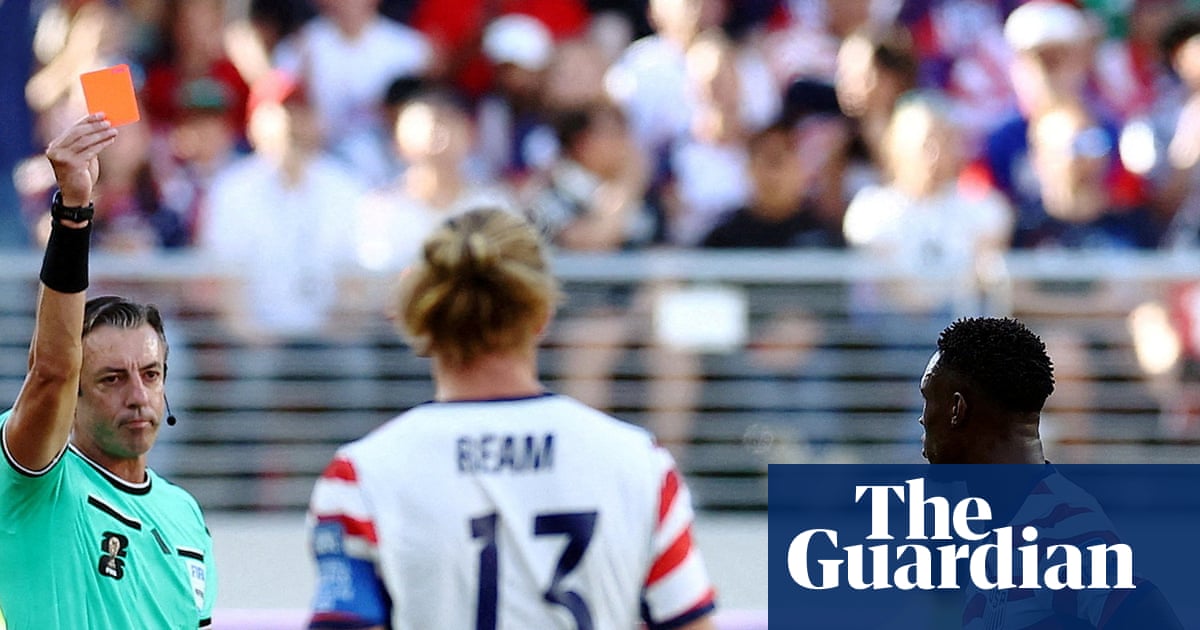
Football is treating match-going fans like second-class citizens over VAR

The Old Trafford Vacuum and Stadium Alienation
Seventy-four thousand people sat inside Old Trafford watching referee Michael Oliver point to the center circle. Erling Haaland was celebrating, Manchester City had taken the lead, and a massive portion of the stadium had no idea why the goal stood. Broadcast viewers were immediately informed by television commentators that the critical offside check centered on Enzo Fernandez.
Those paying premium ticket prices inside the ground saw nothing more than a static graphic on a screen. Exactly 74,161 match-goers were kept completely blind while remote audiences analyzed line-drawings and audio feeds. That opacity creates immediate frustration, turning standard officiating reviews into prolonged hostile standoffs.
This was not an isolated breakdown in communication. At Selhurst Park on Saturday, Axel Disasi stood near the touchline for over sixty seconds while VAR evaluated a serious foul play challenge. The Chelsea loanee had already walked off the pitch, expecting a red card, while Crystal Palace suffered a 3-2 home defeat to Ipswich Town.
The entire stadium waited in absolute silence without a single snippet of contextual information. Match-going supporters stood frozen, staring at a screen that offered zero explanation. Meanwhile, television directors shuffled angles for remote viewers who possessed every scrap of evidence.
We are almost ten years into video assistant refereeing, yet match-going supporters are routinely treated as secondary stakeholders. Broadcasting crews receive direct audio access to video officials, allowing them to explain intricate subjective interpretations in real time. The paying audience inside the venue receives none of that clarity.
When a match hinges on micro-adjustments, silence breeds deep suspicion. Former managers and players have grown increasingly vocal about this systemic disconnect. Refereeing decisions were labeled "baffling" by Wayne Rooney after recent matches exposed how isolated match officials have become from ground spectators.
The current arrangement prioritizes broadcast production values over basic stadium clarity. Matches are paused for minutes while VAR officials debate geometry and contact thresholds in private sound booths. Fans in the seats are left as passive props in a televised entertainment product.
Howard Webb's Experiment and the Global Officiating Divide
When Howard Webb took over as chief of Professional Game Match Officials Limited in 2022, he promised openness and modern transparency. Webb had previously managed refereeing in Major League Soccer, where innovation moved far quicker than in traditional European leagues. In 2019, MLS pioneered public audio releases through their Inside VAR show.
During the August 2020 MLS is Back Tournament, American soccer took its boldest step by broadcasting live VAR audio during match coverage. For a brief moment, viewers and stadium attendees could hear the precise dialogue between the pitch referee and the video booth. It proved that live operational audio could function without collapsing match control.
Six years later, that short experiment remains an isolated historical footnote rather than an industry blueprint. Premier League officials have introduced monthly broadcasts of Match Officials Mic'd Up, but the show airs far too late to address immediate fan outrage. The first edition of this season airs on Tuesday, leaving major controversies cold by the time explanation arrives.
Incident audio from Harry Maguire's handball before Manchester United scored against Ipswich sat in a vault for weeks. Arsenal's denied penalty request at Aston Villa suffered the exact same delayed fate. By the time PGMOL packages these moments for television broadcast, the tactical momentum of the league has already shifted.
European leagues have taken vastly different paths regarding refereeing transparency. As reported in the BBC analysis on VAR audio, Spain's La Liga uploads video and audio of every subjective monitor review to social media within hours of the final whistle. They do not wait weeks for a curated TV show.
Conversely, Italy's Serie A scrapped its Open VAR initiative at the end of last season. The intense public pressure and media scrutiny on referees proved overwhelming for their officiating panel. Italy chose silence over exposure, proving how fragile transparent initiatives become when officiating bodies face sustained public critique.
Germany's Bundesliga refrains from producing a dedicated VAR program, opting instead to release specific audio clips only when extreme errors occur. Their system relies on minimal media intervention, focusing on swift internal reviews rather than public entertainment. This patchwork of global policies demonstrates how fractured the officiating world remains on communication standards.
The Australian A-League offers a partial compromise for supporters inside the venue. When referees walk to the pitchside monitor, stadium screens broadcast the exact footage the referee is evaluating. However, even the Australian model stops short of piping live audio through the stadium public address system.
The Lawmakers' Fear: IFAB, FIFA, and Technical Excuses
The primary barrier to live VAR audio is not technical capability; it is institutional fear. The International Football Association Board and FIFA remain firmly opposed to opening live communication channels to the public. Regulatory discussions stall repeatedly because governing bodies fear live audio will damage referee authority.
Three years ago, IFAB secretary Lukus Brud offered a telling defense of the status quo.
"Allowing the audio to be played live would be chaotic due to the number of people speaking." — Lukus Brud
That argument ignores how successfully rugby union and cricket manage multi-channel referee communications. Referees in those sports manage complex regulatory checks under direct broadcast audio without losing authority.
Opponents of live audio frequently cite the constant background checks conducted during open play. Video assistants analyze passages of play while match action continues, making continuous live audio feeds unfeasible for broadcast producers. Commentators cannot cease speaking for five minutes while VAR quietly double-checks offside lines in the background.
Yet that limitation vanishes entirely during formal pitchside monitor reviews. When a referee stops play and walks to the touchline monitor, the match is fully paused. Delivering live audio during these isolated monitor checks requires zero guesswork from television directors or stadium operators.
The reluctance to share live audio stems from the subjective nature of modern football rules. Offside lines are absolute, but handball calls and serious foul play challenges rely heavily on individual interpretation. Exposing raw, unedited referee debates in real time forces lawmakers to admit that many calls are coin-toss decisions.
Officiating bodies hate admitting error in real time. Just eighteen hours after Manchester City's 1-0 derby victory, refereeing authorities admitted a judgment error regarding Haaland's winning goal. Admitting mistakes a day later does nothing for the thousands of supporters who left the venue feeling cheated.
Managers have grown increasingly vocal about this systemic breakdown in protection.
"Today the game was unprotected." — Mikel Arteta
When elite managers feel the system lacks clarity, match-going fans cannot be expected to accept total silence. The lack of real-time communication erodes trust on both sides of the touchline. Tactical momentum breaks down, crowd energy sours, and match control disintegrates into endless arguments.
Fixing the Match-Day Experience Before Fans Walk Away
The Premier League has experimented with RefCam footage and post-match transcript releases this season. These cosmetic additions miss the fundamental demand of the match-going public. Spectators do not want curated historical archives; they want immediate clarity while the game is being played.
Holding VAR audio for monthly television programs turns refereeing accountability into media content. PGMOL operates as a regulatory service for a multibillion-pound league, not a production house selling content packages. Withholding audio to preserve television rights deals harms the integrity of the live product.
A practical solution exists without overhauling IFAB regulations overnight. Big screens inside Premier League grounds should display live monitor feeds during active reviews, matching the A-League protocol. Furthermore, referees should briefly explain the rationale behind subjective decisions through their stadium microphones immediately after reviewing footage.
Football cannot continue treating ground spectators as background noise for broadcast feeds. Match-going supporters fund the atmospheres that make English football valuable to global rights buyers. Leaving seventy-four thousand people in the dark while commentators parse audio feeds is a policy of active disrespect.
Howard Webb has lobbied within international working groups to relax audio restriction rules. Progress requires FIFA and IFAB to accept that transparency builds authority rather than destroying it. Until lawmakers surrender their obsession with total control, officiating controversies will continue to undermine match-day culture.
If football truly wants to modernize, it must stop fearing its own voice. Secrecy does not protect referees from criticism; it isolates them in a vacuum of public cynicism. The pitchside microphone is already installed, and it is time to turn it on for the match-going fan.
adidas Men's Tiro 23 League Training Pants
The gold standard of soccer training pants.
Frequently Asked Questions
How does VAR information differ for stadium fans versus TV viewers?
What happened during the VAR review involving Axel Disasi at Selhurst Park?
What did Wayne Rooney say about VAR and match-going supporters?
Who is Howard Webb and what changes did he promise for VAR?
Why are stadium fans frustrated by VAR checks like at Old Trafford?
More Coverage

Why rivals think Chelsea will win the £90m race for Alex Scott
an hour ago
Liverpool vs Arsenal has Sunday all to itself — and nowhere to hide
6 hours ago
Liverpool want Lamine Camara after Chelsea stole a march on Alex Scott
7 hours ago
Arsenal are heading to Anfield at the absolute worst possible moment
9 hours ago
Why Liverpool might cash in on Alexis Mac Allister before his prime ends
11 hours ago
Carlos Tevez admitting he joined Man City for revenge is pure comedy
11 hours agoMore Analysis
Howard Webb backs Botman escape but PGMOL logic leaves fans baffled
1 week, 2 days ago
Howard Webb's obsession with speed just broke the Manchester derby
1 month, 1 week ago
Howard Webb's VAR audio exposes the messy truth behind Phil Foden's red card
1 month, 2 weeks ago
Jason Cundy called Mike Dean a liar and football fans are loving the chaos
1 month, 3 weeks ago
FIFA's Balogun U-Turn Proves Football's Rulebook Is Broken
2 months, 1 week ago