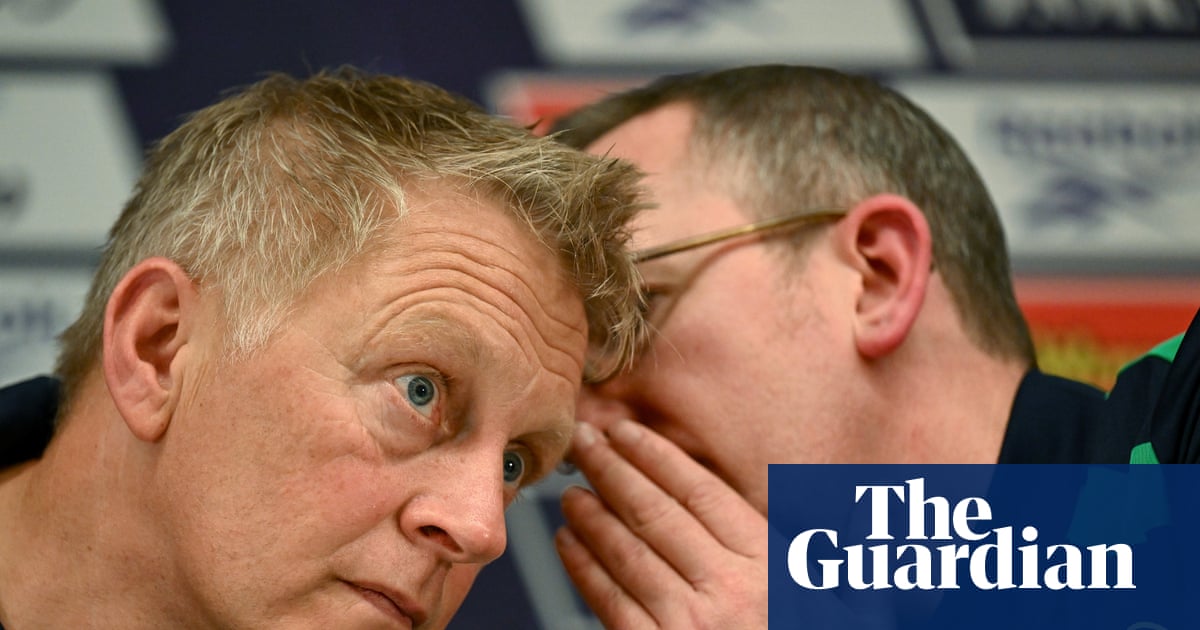
How the Folarin Balogun ruling is pushing FIFA and UEFA toward a bitter divorce

The Collision in the 64th Minute
In the 64th minute of the United States’ round-of-32 victory over Bosnia and Herzegovina, the tactical structure of the match dissolved into a bureaucratic crisis. Folarin Balogun, battling for a loose ball in the penalty box against Tarik Muharemovic, stepped on the defender's ankle as he lost his balance. The Brazilian referee Raphael Claus went to the monitor, reviewed the footage, and pulled out a straight red card.
At that point, the sporting narrative was clear. The USMNT would advance to the round of 16 after a 2-0 victory, but they would do so without their starting striker. A standard one-match suspension was the automatic, non-negotiable consequence.
Or so everyone believed until the political machinery of the host nation began to turn. By July 5, FIFA’s Disciplinary Committee took the unprecedented step of suspending Balogun’s ban. Instead of serving it against Belgium in the round of 16, Balogun was placed on a one-year probationary period.
This decision bypassed the basic rules of the tournament. The decision has sparked a major diplomatic and sporting controversy. As The Guardian reported today, the decision centering on Folarin Balogun has moved beyond a simple footballing dispute.
It has triggered a war footing between the European governing body and FIFA, with Aleksander Ceferin’s absence from the 2026 World Cup serving as a stark reminder of the division. The statistical backdrop of the Bosnia match highlights why the USMNT was so desperate to protect Balogun. Operating in a 4-3-3 system, Balogun was the focal point of the American press.
Before his dismissal, he had completed 14 out of 18 passes, made 4 progressive runs, and recorded an xG of 0.42. His movement dragged Muharemovic out of the defensive block, creating channels for Christian Pulisic to exploit. Without Balogun, the USMNT lacks a player capable of running off the shoulder of the last defender.
This tactical reality explains the frantic effort to overturn a red card that Claus had issued for serious foul play.
A Phone Call to the Oval Office
The intervention did not come from the U.S. Soccer Federation alone. It reached the highest level of American political power. President Donald Trump confirmed his direct involvement in the appeal process.
During a press conference at the Oval Office, Trump admitted that he called FIFA President Gianni Infantino to request a review of the red card. As Mirror Football reported, Trump claimed he did not instruct FIFA on how to rule, saying:
“All I did was ask for a review. I didn’t say, ‘You have to do this,’... didn’t think it was a foul. Two guys running full speed that happened to crash into each other.”
Trump’s remarks went further, targeting Claus directly. The President described the experienced Brazilian official as a little bit suspect and advised journalists to check his past. The insinuation was made without any supporting evidence.
It drew an immediate response from the Brazilian Football Confederation, which issued a statement defending Claus's integrity and career. But the pressure had already achieved its desired effect. Gianni Infantino acknowledged the contact but maintained that the independent judicial bodies of FIFA operate without external influence.
Trump’s defense also revealed a surprising lack of familiarity with the basic mechanics of international football. He admitted that he did not initially understand the consequences of a red card. He remarked that he did not know what it meant and did not think it meant much.
It was only after learning that Balogun would miss the Belgium match that he began to lobby. His logic was simple: penalizing a player for a match that had not yet been played was unfair. This reasoning ignores decades of sporting regulations, but FIFA was willing to listen.
Article 27 and the Precedent of 1962
To accommodate the host nation’s star striker, FIFA turned to Article 27 of its Disciplinary Code. This clause allows the Disciplinary Committee to suspend the implementation of a disciplinary measure. In practice, this mechanism is reserved for minor infractions or administrative disputes.
Applying it to a straight red card for a physical challenge on the pitch is an extraordinary move. It marks the first time since 1962 that FIFA has allowed a player to appear in a match despite a suspension resulting from a World Cup red card. This decision represents a complete departure from established sporting justice.
The Royal Belgian Football Association reacted with astonishment. Their manager, Rudi Garcia, publicly mocked the ruling, comparing it to an April Fools' Day joke. The Belgian federation released a statement confirming they had not received any official explanation from FIFA.
They declared that they had no alternative but to challenge the player’s eligibility for the upcoming match. They are currently exploring legal options, including an appeal to the Court of Arbitration for Sport. The dispute has turned a round-of-16 tie into a legal battleground.
For European observers, the ruling is a clear case of preferential treatment. Other players in the tournament have served their automatic suspensions without any intervention. The suspension of Balogun's ban sets a dangerous precedent.
It suggests that the rules of the World Cup are flexible if the player is valuable enough and the political pressure is strong enough. It undermines the authority of the referee on the field. Claus’s decision was backed by VAR, yet it was overridden by a committee in Zurich after a phone call from the White House.
The Tactical Fallout in the USMNT Setup
Tactically, the presence of Balogun changes the parameters of the match against Belgium. Belgium's defensive structure under Rudi Garcia relies on Wout Faes and Arthur Theate compressing the space. They push up to support Amadou Onana and Orel Mangala in midfield, keeping the lines compact.
If the USA had been forced to play without Balogun, they would have had to rely on Brandon Vazquez or a false nine. Vazquez is a physical target man, but he lacks the speed to exploit the space behind Faes. A false nine like Brenden Aaronson would have dropped deep, playing into Belgium's hands by allowing their center-backs to step up without fear of a vertical threat.
With Balogun cleared to play, the USMNT can maintain their preferred transitional shape. The striker excels at making diagonal runs into the channels between the full-back and center-back. In the group stage, his movements created 6 shooting opportunities for Timothy Weah.
Balogun’s presence forces Faes to drop five yards deeper, which stretches the space between Belgium's defense and midfield. This space is exactly where Pulisic wants to operate. By stretching the pitch vertically, Balogun gives the USA the room they need to find their creative players in the half-spaces.
However, the tactical picture is not entirely positive for the Americans. Balogun’s performance against Bosnia, prior to the red card, showed some worrying trends. He was dispossessed 5 times in the first half and completed only 2 of his 6 aerial duels.
When Bosnia pressed high in the first 15 minutes, Balogun was isolated, unable to hold up the ball. If Amadou Onana can disrupt the supply line from Weston McKennie, Balogun could find himself cut off from the rest of the team. The USMNT’s reliance on a single focal point makes their attack predictable if Belgium can control the midfield transition.
UEFA on a War Footing
The institutional reaction to the ruling has been swift and severe. UEFA issued a statement declaring that FIFA had crossed a red line. The European governing body described the decision as incomprehensible and unjustifiable, warning that it threatens the integrity of the sport.
The conflict has escalated to the point where UEFA officials are openly discussing a breaking point in their relationship with FIFA. Matt Hughes reports that the European governing body has placed its relations with the world body on a war footing, indicating a deeper division that goes beyond a single player's suspension.
This dispute is the latest chapter in a long-standing power struggle between Čeferin and Infantino. The two organizations have clashed repeatedly over the calendar, the expansion of the World Cup, and the creation of the new Club World Cup. UEFA views FIFA's actions as a continuous encroachment on its territory and commercial dominance.
The Balogun ruling is seen in Nyon as the ultimate proof of FIFA’s willingness to bend the rules for political and commercial convenience in the American market. Ceferin’s decision to stay away from the tournament is a clear sign of how deep the rift has become. The Belgian federation's appeal is likely to be supported by UEFA behind the scenes.
If the case reaches the Court of Arbitration for Sport, it could lead to a major legal challenge against FIFA's disciplinary authority. A ruling against FIFA could throw the tournament into chaos, especially if Belgium wins their appeal after the match has been played. But even if the match goes ahead without a legal veto, the credibility of the competition has been compromised. The governing body has shown that the rules can be suspended for the host nation's star, leaving the tournament with a permanent stain.
Official Manchester City FC Fan Scarf - Sky Blue/White
Show your Cityzens pride during the title race or at the pub.
Frequently Asked Questions
Why did FIFA suspend Folarin Balogun's red card ban?
Who did Donald Trump contact to review Folarin Balogun's red card?
How did Folarin Balogun receive a red card against Bosnia?
What is Folarin Balogun's tactical role for the USMNT?
Why is Aleksander Ceferin absent from the 2026 World Cup?
More Coverage

When even the Swiss abandon you, your FIFA presidency is officially cooked
1 day, 11 hours ago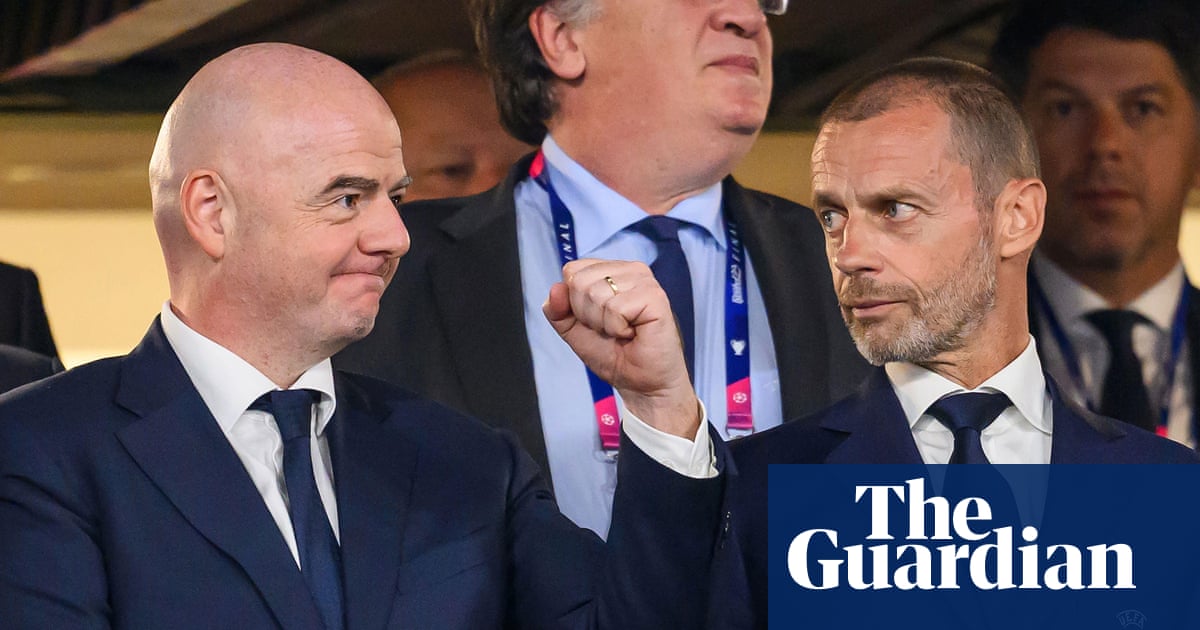
Aleksander Ceferin is right about Infantino, but UEFA has no plan B
5 days, 17 hours ago
Man City got caught and Mauricio Pochettino wants his lost trophies back
6 days, 13 hours ago
England lost to Spain but the Nations League is actually working
6 days, 21 hours ago
Pedro Gallese collision highlights Cavan Sullivan's fiery US debut
1 week, 1 day agoMan City guilty verdict and England's Wembley wobble (Sep 21–Sep 27, 2026)
1 week, 1 day agoMore Analysis
Aleksander Ceferin is right about Infantino, but UEFA has no plan B
5 days, 17 hours ago
Man City got caught and Mauricio Pochettino wants his lost trophies back
6 days, 13 hours ago
England lost to Spain but the Nations League is actually working
6 days, 21 hours ago
Pedro Gallese collision highlights Cavan Sullivan's fiery US debut
1 week, 1 day agoMan City guilty verdict and England's Wembley wobble (Sep 21–Sep 27, 2026)
1 week, 1 day ago