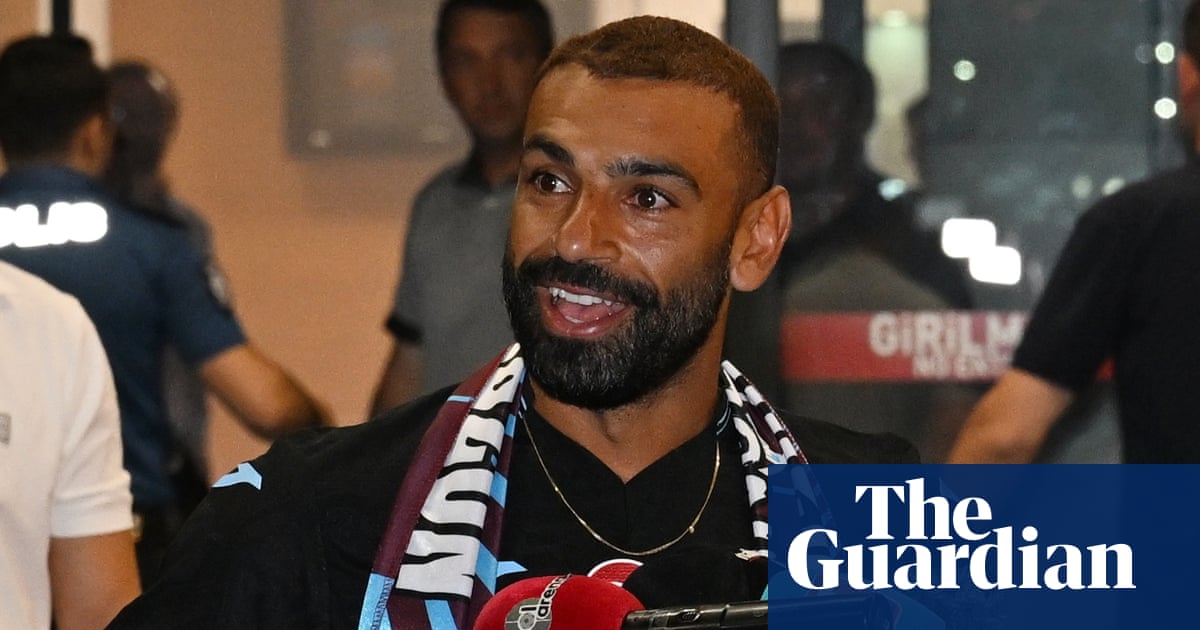
Graham Arnold's goalkeeper gamble cost Australia their World Cup dream
The Goalkeeper Substitution that Backfired in Arlington
The Round of 32 clash at Dallas Stadium on July 3, 2026, was a study in grueling defensive organization and late-game fatigue. Australia and Egypt played out a tense 1-1 draw over 120 minutes, leaving both sets of players visually spent on the Arlington turf. Yet the defining tactical moment occurred just seconds before the referee blew for the penalty shootout.
Australia manager Graham Arnold decided to sub out his starting goalkeeper, Patrick Beach, in favor of veteran Matt Ryan. Beach had just completed a stellar defensive shift, highlighted by a spectacular save in the 94th minute to push Ramy Rabia's goalward header over the crossbar. Benching a warmed-up, confident young keeper who had just rescued his team was a high-stakes roll of the dice.
The gamble failed in spectacular fashion. Egypt converted all four of their penalties with clinical ease, securing a 2-4 shootout victory that sent the Pharaohs into the Round of 16. For Australia, it was a bitter end to a campaign defined by tactical conservatism and a costly piece of overthinking from the bench.
The Mid-Block Battle: How Egypt Choked the Center
Egypt's Defensive Shape
From the opening whistle, Egypt coach Hossam Hassan set his team up in a rigid 4-3-3 shape that functioned as a compact 4-5-1 out of possession. Egypt’s defensive line sat relatively deep, refusing to allow Australia's speedy wingers space to run behind them. The primary objective was to force Australia’s center-backs, Harry Souttar and Kye Rowles, to act as the primary playmakers.
This mid-block structure completely neutralized Australia’s midfield progression. Jackson Irvine and Keanu Baccus were consistently bypassed, unable to find passing lanes through Egypt's narrow midfield trio of Emam Ashour, Marwan Attia, and Mohamed Elneny. The Socceroos possessed plenty of the ball but struggled to advance it into dangerous central areas.
Egypt's defensive triggers were highly specific. Whenever Souttar attempted to carry the ball forward, Egypt’s central striker, Mostafa "Zico" Abdelraouf, would press him from the left, forcing a pass toward Rowles. This simple lateral trigger allowed Egypt to shift their block, closing down the passing lanes to the wings before Australia could build momentum.
Australia's Flank Dynamics
With the center of the pitch congested, Australia was forced to rely on wide areas to create depth. Cristian Volpato, operating in a free-roaming role, was the only Australian player who looked capable of destabilizing Egypt's block in the first half. In the 5th minute, Volpato picked up a loose second ball in the half-space, drove past Attia, and unleashed a looping shot from 25 yards out that clipped the top of the crossbar.
This early warning shot forced Egypt to drop their midfield line even deeper, narrowing the distance between their defenders and midfielders to under ten yards. Australia’s fullbacks, Jordan Bos and Lewis Miller, pushed high up the pitch to provide width, but their crosses were repeatedly cleared by Egypt's physical center-back pairing of Ramy Rabia and Hossam Abdelmaguid. The Socceroos' possession became predictable, lacking the quick combinations needed to unlock a disciplined low block.
During the second half, Arnold attempted to address the spacing issues by instructing Baccus to drop between the center-backs during build-up, forming a temporary back three. This was designed to allow Bos and Miller to push even higher, essentially playing as wingbacks. While this did create temporary overloads on the flanks, Egypt’s wingers tracked back diligently, converting Egypt’s defensive shape into a temporary 6-3-1.
This tactical rigidity meant Australia’s wing play remained slow and predictable. Miller and Bos attempted 18 crosses combined, but only 2 found an Australian shirt in the box. The lack of a creative presence in the final third—someone who could run with the ball or play quick, one-touch passes in the central channels—made it incredibly easy for Hassan’s well-drilled defense to defend their lead until Hany's unfortunate error.
Ashour's Late Run and the Hany Own Goal
Egypt struck first in the 13th minute. It was a routine but poorly defended set piece. Following a short corner routine on the right, Mohamed Salah found space on the edge of the penalty box. Salah floated a crossing delivery to the back post, picking out the run of Emam Ashour.
Australia’s zonal marking system fell apart during the flight of the ball. Souttar and Rowles remained anchored to the six-yard box, watching Egypt's central attackers, while the Australian midfield failed to track Ashour’s late, diagonal run from deep. Ashour had time to adjust his posture and direct an unmarked header past Beach into the bottom corner.
The goal forced Australia to abandon their cautious build-up, but their final-third play remained disjointed. Egypt should have doubled their advantage in the 21st minute when Zico broke behind Rowles on a counter-attack, only to drag his shot wide of the post before being ruled offside by a late flag.
Australia's equalizer in the 55th minute owed everything to a rare lapse in Egyptian defensive concentration. A quick sequence of passes down the right wing released Miller, who delivered a low, hard cross into the six-yard box. Egypt defender Mohamed Hany, tracking back in a panic, found himself with poor body orientation, facing his own goal as the cross arrived.
Instead of clearing the ball wide, Hany’s touch sent the ball glancing off his own shin and past the helpless Mohamed El-Shenawy. The own goal leveled the match, but it did little to improve the overall quality of the contest. Both teams reverted to defensive caution, and the game drifted slowly into extra time as the midday heat took its toll on physical reserves.
Salah's Creative Evolution
While Egypt operated primarily in a defensive posture, Mohamed Salah was the game's outstanding individual performer. The captain has undergone a significant tactical evolution, transitioning from the explosive winger of his youth into a sophisticated playmaker who controls the tempo of the entire team.
During the match, Salah created five chances, often dropping deep to collect the ball and relieve pressure on Egypt's backline. According to the Sky Sports match tracker, Salah has now created 16 chances at the 2026 World Cup, putting him level with Belgium’s Leandro Trossard at the top of the tournament rankings.
Salah’s ability to protect the ball in tight spaces was vital during the closing stages of the match. With Egypt's midfield exhausted and passing accuracy dropping to a meager 72 percent in extra time, Salah repeatedly drew fouls and slowed the game down, preventing Australia from building any sustained pressure.
"It's history. I told the boys before the game 'this is the biggest stage you can play in your life so just enjoy it. Don't let the pressure get to you and not enjoy the moment," Salah said afterward.
Salah’s composure was most visible during the shootout. Taking Egypt's second penalty, he executed a delicate Panenka down the middle of the goal, leaving Matt Ryan diving helplessly to his left. It was a statement of supreme confidence that settled his teammates and put the psychological pressure firmly back on the Australians.
The Fallacy of the Cold Goalkeeper
Graham Arnold’s decision to replace Patrick Beach with Matt Ryan will be analyzed as a classic case of overthinking. Beach was having an outstanding tournament, and his 94th-minute save to deny Rabia was a prime example of a goalkeeper in the zone. By removing him, Arnold disrupted the defensive flow of his team and placed an unreasonable burden on Ryan.
Subbing a goalkeeper solely for a shootout ignores the physical reality of the game. A keeper who has sat on the bench for 120 minutes is cold, lacking the sensory adjustment to the ball's flight and the speed of the match. Ryan looked slow to react, guessing early and diving away from the path of three Egyptian penalties.
The shootout began disastrously for Australia when Harry Souttar blazed the opening penalty over the crossbar. Egypt, by contrast, looked completely unfazed by Ryan's entry. After five consecutive conversions from both teams, 18-year-old Lucas Herrington hit the crossbar with Australia’s fourth attempt, leaving Hossam Abdelmaguid to step up and slot home the winning penalty.
Egypt’s triumph is a historic milestone. They are only the second African nation to win a World Cup penalty shootout, following Morocco's victories over Spain in 2022 and the Netherlands earlier in this tournament. For a country that has often struggled in World Cup knockout stages, the wild celebrations at Dallas Stadium were well-earned.
Egypt now turn their focus to Atlanta on Tuesday, July 7, where they will face the winner of the Argentina and Cape Verde clash. Hossam Hassan’s side will need to improve their ball retention if they hope to progress further, but their defensive resilience and Salah's creative leadership make them a difficult opponent for anyone. The autopsy will be brutal, and Australia’s long flight home will be dominated by thoughts of what might have happened had Beach remained in goal.
Read Next
- How a tactical breakdown and a concussion farce saved the Socceroos
- Why Egypt will edge a physical Dallas dogfight against Australia
- Mohamed Salah is fit but Egypt face a massive World Cup gamble in Dallas
- Why Argentina are in for a tactical nightmare against Cape Verde
- 🏆 World Cup 2026 — Full Coverage Hub
EA SPORTS FC 24 - PlayStation 5
The definitive virtual football experience for the new era.
Frequently Asked Questions
When and where was the Australia vs Egypt 2026 World Cup match played?
Why did Graham Arnold substitute Australia's starting goalkeeper?
What save did Patrick Beach make during the match against Egypt?
How did Egypt block Australia's midfield progression?
Who played in Egypt's midfield trio against Australia?
More Coverage

Jurgen Klopp called out AfD idiocy, but Germany's pitch problems are real
11 hours ago
Scotland's attacking promise died in the 11th minute against Switzerland
2 days, 22 hours ago
England win in Prague but Thomas Tuchel still has tactical puzzles to solve
3 days ago
Ashley Sanchez's 20-goal NWSL season creates a massive USWNT tactical puzzle
3 days, 7 hours ago
Ashley Sanchez is scoring at will, but where does she fit under Emma Hayes?
3 days, 7 hours ago
Northern Ireland bullied Hungary in Belfast, but missed chances cost them
3 days, 16 hours agoMore Analysis

Mohamed Salah built an empire on Anfield's right wing
1 week, 1 day ago
Mohamed Salah redesigned how wingers score goals in modern English football
1 month, 3 weeks ago
Mohamed Salah's move to Trabzonspor is the most baffling transfer of the decade
1 month, 3 weeks ago
Salah's Trabzonspor move derailed by calf strain as medical reveals recovery timeline
1 month, 3 weeks ago
Salah at Trabzonspor is tactical madness that might actually work
1 month, 3 weeks ago