The PGMOL Apology Cannot Hide a Derby Disaster
If you only read the refereeing post-mortem, you might think Manchester United were simply victims of terrible luck at Old Trafford. Professional Game Match Officials Limited (PGMOL) admitted hours after the final whistle that Erling Haaland’s winning goal should never have stood without an on-field review. Enzo Fernandez was standing in an offside position and potentially impacting play, making the decision a clear error of judgment.
As Sky Sports reported, United received a formal private apology over the incorrect VAR decision. But that official apology offers zero comfort to a team that played over half a derby match against ten men without scoring a single goal.
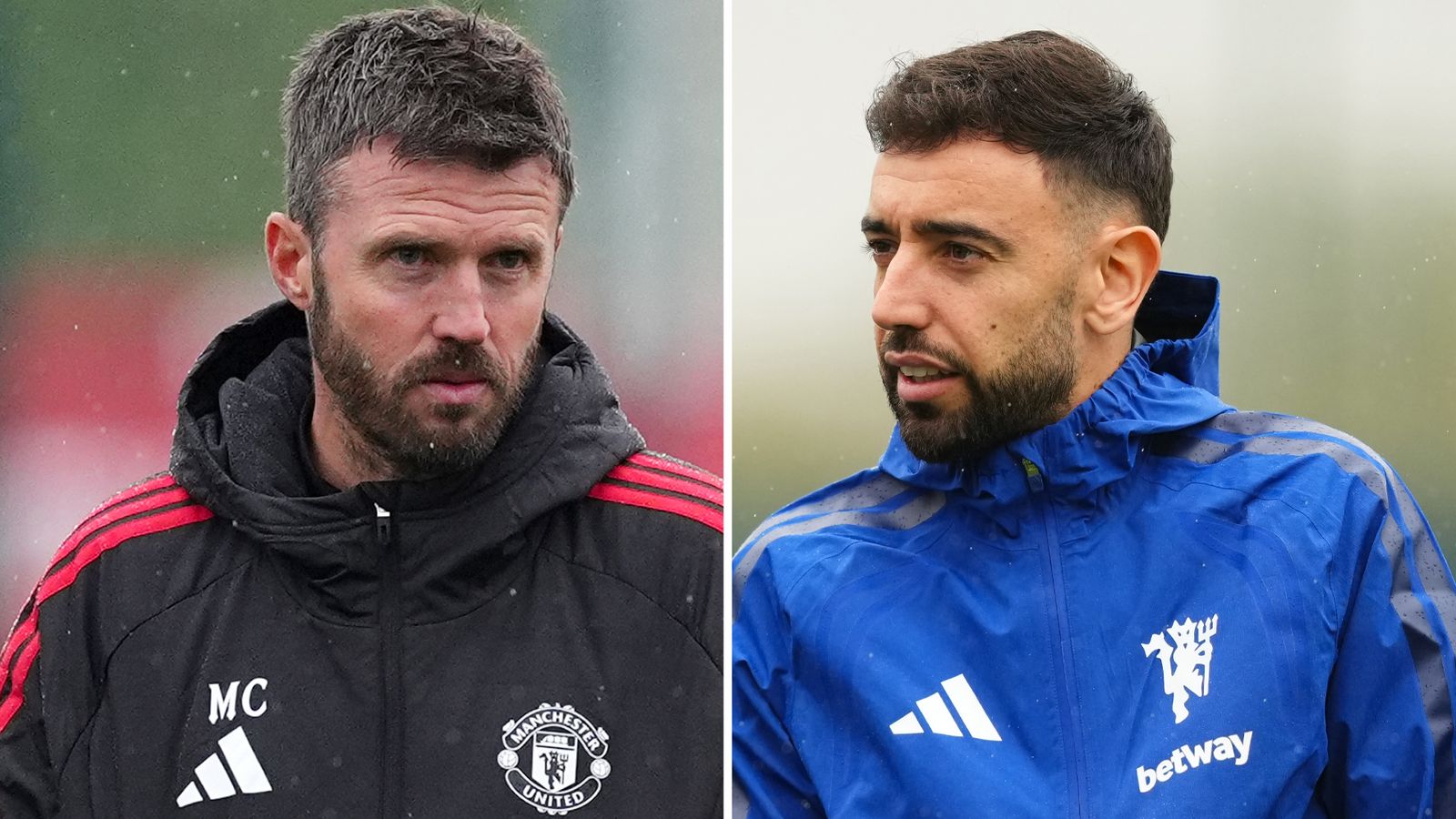
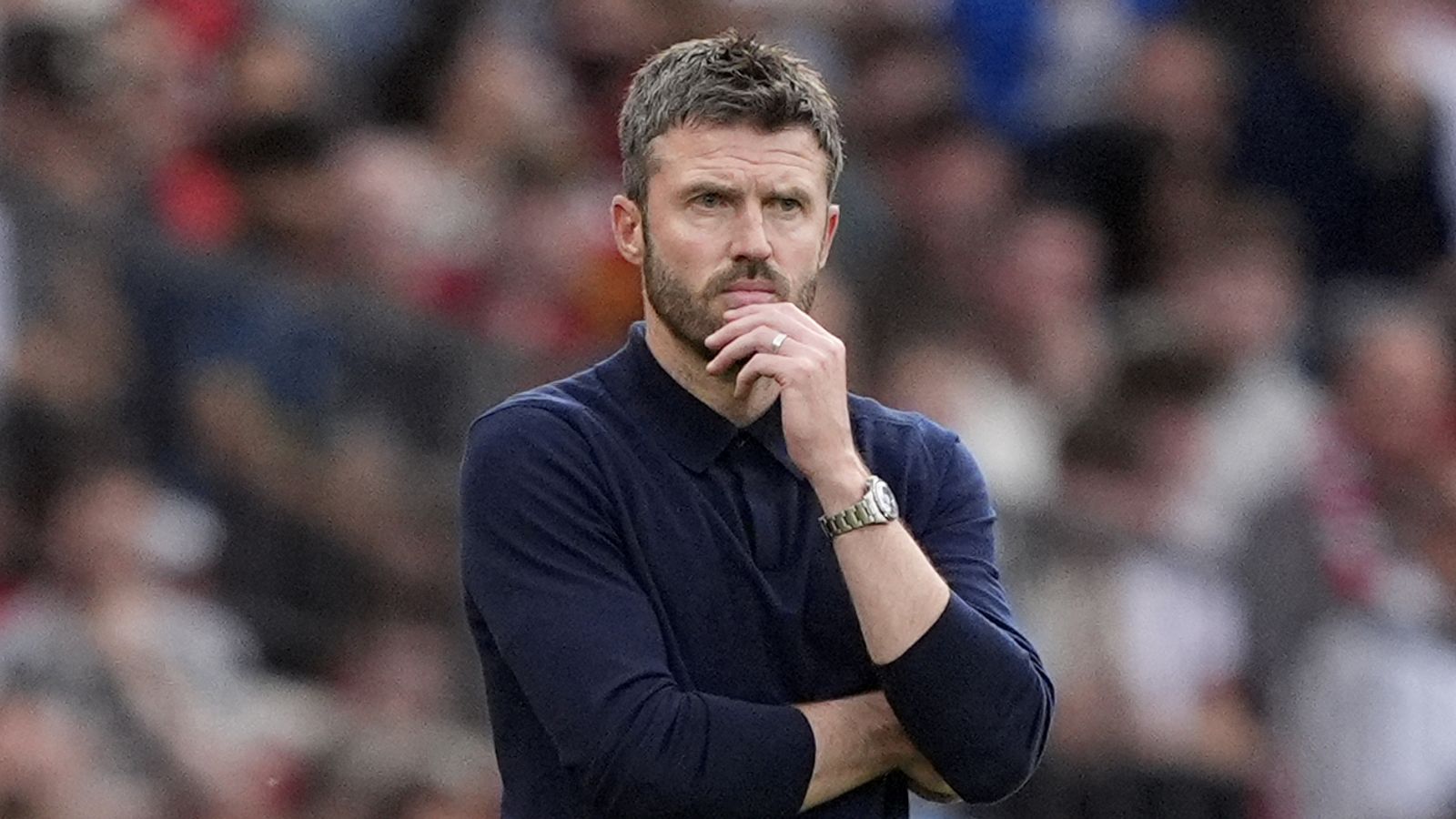
Phil Foden’s first-half red card handed Michael Carrick an ideal tactical advantage on home turf. City lost their primary creative outlet early, forcing Pep Guardiola's side to drop deep and defend their penalty area. Instead of seizing control, United produced a flat and lifeless display that allowed City to dictate the tempo despite being a man down.
Haaland’s controversial strike sealed a 1-0 defeat, but United’s total failure to test City’s reduced lineup was the true scandal of the afternoon. Possession meant nothing because United passed sideways without speed or purpose. Their buildup play was slow, predictable, and remarkably easy for City's defensive block to manage.
Speaking on the Gary Neville Podcast, the former United captain refused to let Carrick off the hook with excuses about refereeing mistakes. Neville made it clear that officiating controversies should not mask fundamental performance defects.
"Michael Carrick can be angry about the goal but he should also be angry about the performance."
Neville drew on his own playing experience at Old Trafford when assessing the emotional weight of derby day. Having lost his fair share of derbies against Manchester City, he recognized the sting of defeat but emphasized that failing to score against ten men was unacceptable. "It was a bad day for Manchester United, it really was," Neville conceded, noting that he fully expected United to find the net once Foden was dismissed.
Neville was equally brutal in his assessment of United's final ten minutes. With the Old Trafford crowd roaring for a late equalizer, United failed to generate sustained pressure or create clear chance opportunities. "It was an awful last 10 minutes from an experience perspective for Manchester United," Neville explained, pointing out how leadership vanished when the game was on the line.
A Serial Inability to Punish 10-Man Opponents
Losing a home derby is always bitter, but the manner of this defeat highlighted a deeper tactical flaw within Carrick's side. Failing to score against a ten-man opponent is no longer an isolated accident for Manchester United. It has become a repeating pattern under Carrick's leadership.
As Gary Neville pointed out on Sky Sports, United have now dropped points or lost three games in the last year when playing against ten men. That statistic reveals an alarming structural weakness when United are tasked with breaking down a compact defense.
Neville highlighted how mature teams capitalize on Old Trafford's atmosphere during high-pressure moments. When an opposing player is sent off, the crowd naturally builds momentum, creating an environment designed to suffocate visitors. Instead of riding that wave, United allowed City to slow the game down, take time over restarts, and comfortably manage their defensive lines.
Recall last season's infamous 1-0 defeat to Everton at Old Trafford. Idrissa Gana Gueye received a red card, leaving Everton to defend with ten players for nearly forty minutes. United responded by throwing aimless crosses into the penalty box, allowing Everton's center-backs to clear every ball without discomfort.
The derby against City followed the exact same script. Once Foden was sent off, United’s midfield flattened out and stopped making forward runs into the channels. Ball circulation slowed to a crawl, giving City time to reset their defensive shape after every pass.
Opposing managers now know how to neutralize United even when down a man. By surrendering the flanks and packing the central corridor, opponents force United into harmless perimeter passing. Carrick has yet to introduce any off-the-ball movement patterns to solve this problem.
Some defenders of Carrick might argue that breaking down elite low blocks takes time and patience. However, three failures in twelve months against ten men prove this is not bad luck. It is a coaching failure that leaves United completely helpless when handed a numerical advantage.
Four Points From Four Games: Carrick Matches Amorim's Low Bar
The Premier League standings do not award points for VAR apologies or high possession numbers. Four matches into the campaign, Manchester United have accumulated just four points from four games. That matches the club's joint-worst start to a Premier League season in history.
What should truly alarm the Old Trafford hierarchy is the direct comparison with recent history. Carrick's record after four games is mathematically identical to Ruben Amorim's record at this exact stage last season. Amorim faced severe criticism for his side's early dysfunction, yet Carrick is currently producing the exact same returns.
Matching Ruben Amorim's opening record is an embarrassing benchmark for Carrick's tenure. Amorim's early days were marked by chaotic tactical transitions and poor results before he was ultimately replaced. For Carrick to match that exact four-point return after four matches undermines the narrative of stability that Old Trafford executives hoped to build.
United's early season troubles did not begin with the City derby. The warning signs were glaringly obvious two weeks ago during their match against Ipswich Town. Ipswich dominated United for 55 minutes at Portman Road, slicing through United's midfield with ease.
Neville highlighted that performance as evidence of a wider team decay. "Even the game against Ipswich; Ipswich were good for 55 minutes and caused big problems," Neville noted. "They could have scored two or three, so there's some questions building."
Against Ipswich, United looked defensively fragmented and lacking physical intensity. They barely escaped with a result, but the underlying performance showed a squad struggling for clear tactical identity. The defeat to City simply exposed those existing cracks on a bigger stage.
When a team cannot dominate Ipswich for nearly an hour and fails to score against ten-man City at home, fundamental questions must be asked. United look short of confidence, deficient in tactical ideas, and fragile under pressure.
Why Next Sunday's Trip to Craven Cottage is a High-Stakes Trap
Michael Carrick desperately needs a swift turnaround, but the fixture calendar offers no relief. Manchester United travel to London next Sunday to face Fulham at Craven Cottage, live on Sky Sports. On paper, a fixture against a side that has also started slowly might seem like a manageable recovery spot.
In reality, Craven Cottage represents a dangerous trap for a coach under fire. As Neville warned on his podcast, Sunday's clash has suddenly transformed into an intense pressure cooker. "Next Sunday against Fulham, that becomes a real pressure game now because obviously Fulham have not started the season that well," Neville said.
Fulham's modest start to the season only increases the stakes for United. If Carrick's side drops points against an opponent that is also struggling, fan frustration will boil over into open discontent. The grace period for the manager is officially over.
Tactically, Fulham are fully equipped to exploit United's current vulnerabilities. Fulham thrive on vertical transitions, waiting for impatient opponents to overcommit before launching fast counter-attacks. If United circulate the ball slowly at Craven Cottage, Fulham will comfortably hold their shape and wait for turnovers.
United's rest defense was practically non-existent in the closing stages against City. When Carrick pushed players forward out of desperation, his midfield left massive oceans of space behind them. Haaland's winning goal originated from a broken sequence where United were completely out of position.
If United display that same positional indiscipline next Sunday, Fulham's attackers will punish them. Playing away from home under mounting public scrutiny tests a team's psychological resilience. Right now, United look like a group easily rattled by adversity.
Carrick cannot afford another passive performance or another post-match list of tactical excuses. PGMOL apologies will not save his managerial record if United remain stuck on four points after five matches. Next Sunday at Craven Cottage will reveal whether Carrick can fix these deep-seated flaws or if United's season is already spiraling out of control.
Read Next
- Michael Carrick must change Man United's midfield shape for the derby
- Michael Carrick is repeating Manchester United's worst habits
- Michael Carrick has nowhere to hide after Man United's derby collapse
- Lisandro Martinez is laughing, but Carrick's derby test is no joke
- 🏆 Europa League Final 2026 — Full Coverage Hub