
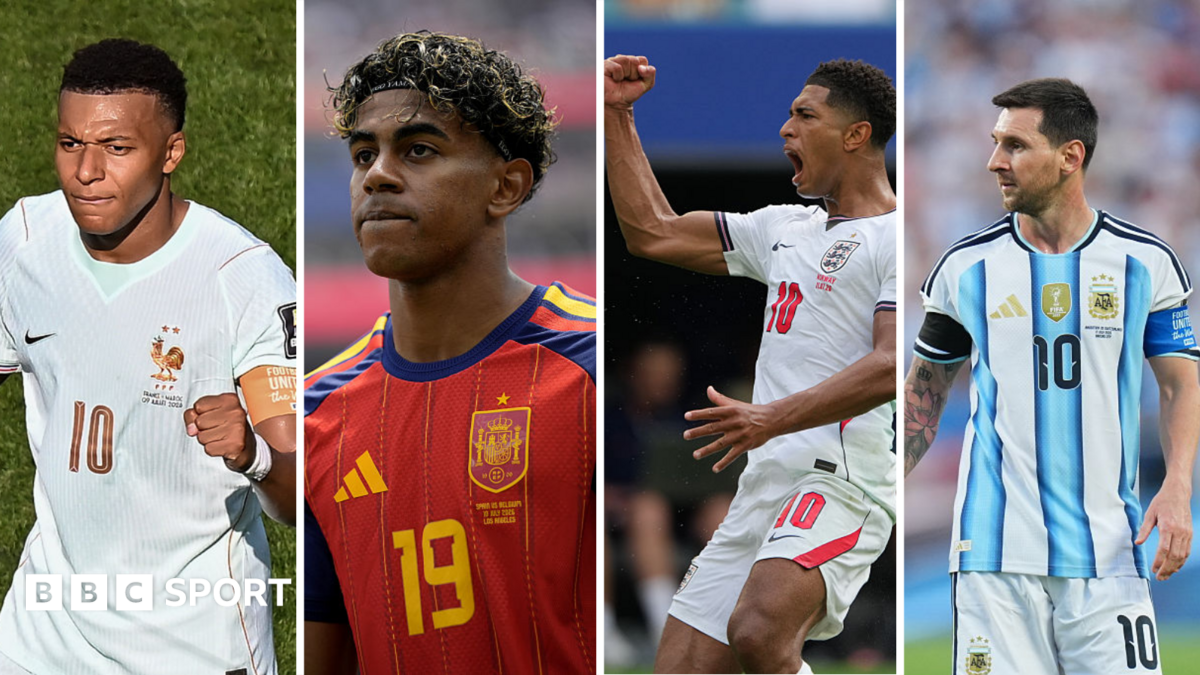
The pragmatism problem in Dallas and Atlanta
Four heavyweights remain in the 2026 World Cup, but none have arrived in the semi-finals playing free-flowing football. Spain, France, England, and Argentina have all built their campaigns on defensive structure and spatial control rather than attacking flair. It is a tournament that has rewarded caution, leaving fans to debate whether surgical organization beats pure talent.
The upcoming fixtures in Dallas and Atlanta will test this defensive pragmatism to its limit. Spain face France on Tuesday in Texas, while England take on Argentina on Wednesday in Georgia. The stakes could not be higher, and the margins will be defined by small tactical shifts.
In both matches, the managers are facing intense pressure to loosen the handbrake. Yet history suggests they will double down on their defensive blocks. We are about to witness a chess match played at the highest tempo imaginable.
France vs Spain: Restricting the width
Didier Deschamps has built a career on refusing to be seduced by beautiful football. France reached the semi-finals by defeating Morocco 2-0 in a match where they happily surrendered possession. They focused instead on denying space in the central channels, forcing Morocco to play wide crosses into a crowded penalty box.
Deschamps will deploy a compact 4-3-3 shape designed to neutralize Spain's primary weapons. Spain rely heavily on their dynamic young wingers, Lamine Yamal and Nico Williams, to stretch opponents. France will counter this by instructing their full-backs to sit deep, rarely crossing the halfway line.
This defensive setup relies on the work rate of Aurelien Tchouameni and Eduardo Camavinga in midfield. They must protect the half-spaces and prevent Spanish midfielders from finding Yamal in isolation. If France can choke the service to the wings, Spain will struggle to find a breakthrough.
Spain, under Luis de la Fuente, have been the most consistent possession side in the tournament. Their 2-1 victory over Belgium in the quarter-finals showcased their vertical passing. They do not just keep the ball; they look to penetrate lines quickly through Rodri and Fabian Ruiz.
Yet Spain have a clear vulnerability on the counter-attack. When their full-backs advance to support the attack, they leave vast spaces behind them. Kylian Mbappe will be licking his lips at the prospect of isolating Aymeric Laporte in transition.
If Spain press too high, one vertical pass from Antoine Griezmann can release Mbappe into space. France do not need dominant possession to win. They only need one defensive error and a clinical finish from their captain to secure a spot in the final.
England vs Argentina: The Bellingham-Tuchel standoff
England enters their semi-final against Argentina on July 15 under a cloud of tactical disagreement. The narrow 2-1 victory over Norway in the quarter-finals was a grinding performance. It was a result managed deep in the trenches of defensive spacing, prioritizing the elimination of transit lanes over attacking risk.
After the match, manager Thomas Tuchel publicly labeled the performance as lucky. This criticism did not sit well with Jude Bellingham, who scored both goals to rescue the team. The friction between Tuchel's rigid spatial demands and Bellingham's desire for positional freedom is now out in the open.
Tuchel wants a structured double pivot of Declan Rice and Kobbie Mainoo to protect the defensive line. He demands that England remain compact and refuse to be stretched. This safety-first approach has kept England solid, but it has starved Harry Kane of service.
Bellingham prefers to roam vertically, breaking lines to join the attack. Against Norway, Bellingham's individual brilliance saved England, but Tuchel wants systematic collective play. This tactical standoff could prove fatal against a team as organized as Argentina.
Argentina reached the semi-finals by defeating Switzerland 3-1 after extra time. Lionel Scaloni's side remains highly adaptable, shifting shapes to exploit opponent weaknesses. They will look to exploit the space between England's midfield and defensive lines.
Lionel Messi continues to be the focal point of the Argentine attack. He floats centrally from the right, looking for pocket spaces to feed Julian Alvarez. If England's spacing is not perfect, Messi will pick them apart.
Rodrigo De Paul and Alexis Mac Allister will provide the defensive cover that allows Messi to rest out of possession. They press aggressively in midfield, aiming to force turnovers and trigger rapid transitions. England's midfield must handle this pressure to avoid being overrun.
Tuchel must decide whether to stick to his conservative blueprint or allow his attackers more freedom. If England sit too deep, they will invite pressure from Messi and Mac Allister. But if they press high, they risk exposing their backline to Argentina's diagonal runs.
The tactical battlegrounds to watch
To see what else to expect, fans can consult the BBC Sport preview for the matches. The key duel in Dallas will be Spain's right flank against France's left. Lamine Yamal will match up directly against Theo Hernandez in a battle of speed and intelligence.
Tchouameni must shift over to assist Hernandez, creating a defensive overload. If Spain can circulate the ball quickly enough to isolate Yamal, France will be in trouble. But if Hernandez wins the duel, Spain's attacking threat will be severely diminished.
In Atlanta, the battle will be won in the center of the pitch. Rice and Mainoo must prevent Messi from receiving the ball on his preferred left foot. If they get too close, Messi will draw fouls; if they stand off, he will shoot or slide passes through.
England's transition play will also be heavily scrutinized. Against Norway, England had a pass completion rate under pressure of just 78.4%. That number must improve if they want to escape Argentina's counter-press.
Argentina will trigger their press the moment Rice receives the ball with his back to goal. Scaloni has identified this as England's weakest link in possession. Rice must release the ball quickly to avoid dangerous turnovers deep in his own half.
Another area of concern for England is the lack of width on the left. With Luke Shaw still building fitness, Kieran Trippier has had to play on his weaker foot. This makes England's build-up predictable, as Trippier constantly cuts inside onto his right foot.
Scaloni will likely instruct Nahuel Molina to push high, forcing Trippier to defend deep. This will isolate Bellingham and Phil Foden, who will have to drop deep to retrieve the ball. England's attack will become even more disjointed if their creative players are forced to play far from goal.
Meanwhile, France will look to exploit Spain's high defensive line. Spain's center-backs tend to push up to the halfway line during sustained possession. This leaves a massive space behind them for Mbappe to exploit.
If Tchouameni can win the ball and immediately feed Griezmann, Griezmann will look for Mbappe's run. This transition pathway has been France's most lethal weapon for years. Spain must decide whether to drop their line or risk Mbappe racing clear.
A pair of confident predictions
Pragmatism usually wins tournaments, but it requires perfect execution. In the first semi-final, Spain's defensive line will eventually get caught out. France's transition threat is too precise, and Mbappe's speed will exploit Spain's high defensive line.
France will sit in their low block, absorb Spain's pressure, and strike twice on the counter. Expect a tight first half followed by a clinical French second half. Didier Deschamps will guide his team to another major final with a 2-0 victory.
The second semi-final will be a much tighter affair. The tactical friction between Tuchel and Bellingham will limit England's attacking cohesion. They will struggle to break through Argentina's midfield screen.
Messi will find the decisive pocket of space in the second half, creating a goal for Julian Alvarez. England's lack of attacking fluidity will prevent them from mounting a successful comeback. Argentina will control the tempo of the game and secure a 1-0 win, leaving England to regret their cautious approach.
Read Next
- England vs Argentina: The tactical cage trap
- England vs Argentina: The tactical cage trap is failing at the wrong time
- England vs Argentina is a collision of two distinct footballing philosophies
- England vs Argentina: The tactical cage trap
- 🏆 World Cup 2026 — Full Coverage Hub
- 🇦🇷 Argentina World Cup 2026 — Defending Champions Hub
- 🏴 England World Cup 2026 — Three Lions Hub







