Durham's gamble on Willie Kirk is a tactical collision course
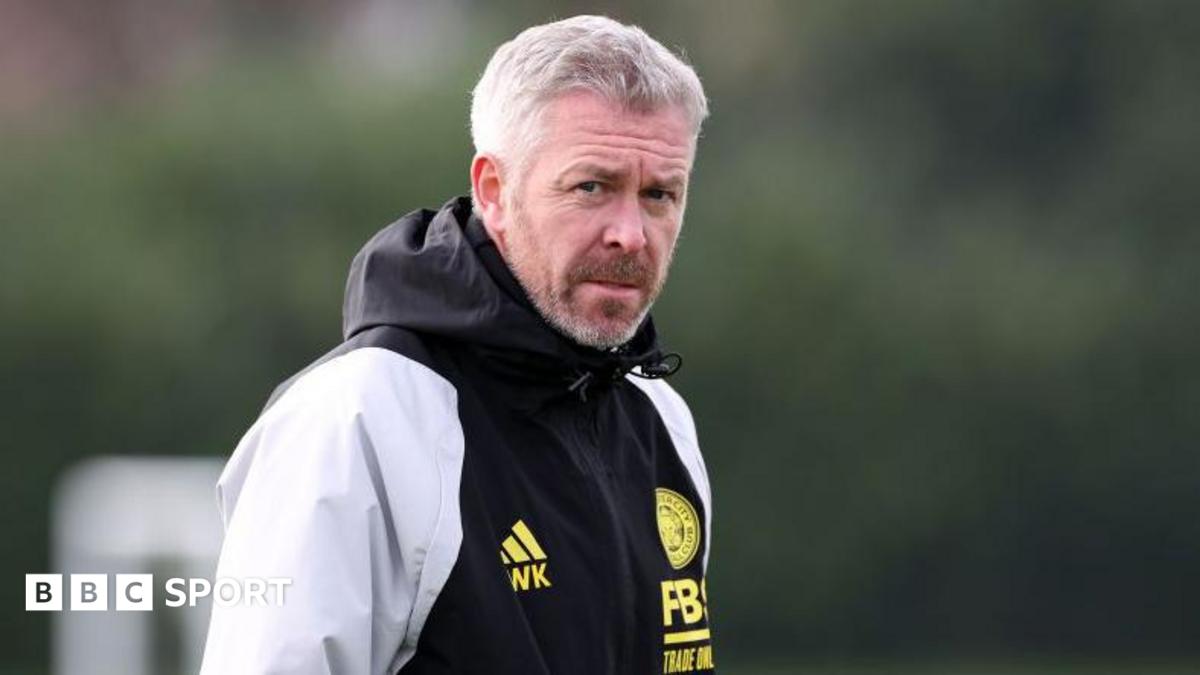
Durham Women have made a high-stakes decision, appointing Willie Kirk as their new head coach. The appointment brings the former Everton and Hibernian manager back into the technical area two years after Leicester City dismissed him for a relationship with a player. As BBC Sport reported, this move ends his period away from the game.
He takes over a Championship side that has struggled to find a modern footballing identity. The decision has divided the club's supporter base. Durham is a very unique club in the Women's Championship, operating as an independent entity without the financial backing of a Premier League men's organization.
They have survived by being stubborn, physical, and defensively robust. Hiring a manager with Kirk's tactical and off-field history is a departure from that model. Kirk's coaching reputation was built on fluid, possession-heavy systems.
During his time at Leicester, he attempted to implement a modern positional game that contrasted with the direct styles of the division's lower half. Now, he faces the task of applying those ideas to a squad built for a different brand of football.
The Leicester Blueprint: Progression and Exposure
To understand what Kirk wants to achieve at Durham, we must analyze his tactical setup at Leicester. He favored a 4-2-3-1 formation that transitioned into a 3-2-4-1 during build-up phases. The system relied on a double pivot to recycle possession and break the initial line of the opponent's press.
In possession, Kirk's teams prioritized central progression. They focused on building short passing triangles in the defensive third, drawing opponents forward before playing vertical passes into the half-spaces. When the movement clicked, Leicester bypassed midfields with ease.
However, the system was highly vulnerable in defensive transition. The central midfielders often pushed too high to support the attack, leaving the central defenders exposed. When opponents won the ball, they exploited the empty spaces left behind the advancing full-backs.
During the 2023-24 season before his suspension, Leicester's defensive metrics showed this vulnerability. They allowed an average of 14.8 shots per 90 minutes. This defensive instability resulted in an expected goals against (xGA) of 1.72 per match, placing immense pressure on goalkeeper Janina Leitzig.
The lack of recovery speed in Kirk's defensive line was exposed repeatedly. In a 5-2 defeat to Chelsea, the opposition wingers targeted the wide channels with direct passes. The center-backs were forced to defend in wide areas, exposing the center of the box to late-arriving runners.
Lessons from the Everton and Hibernian Eras
This tactical vulnerability was not a new development for Kirk. During his second spell at Everton, he utilized a 4-3-3 shape that relied heavily on advanced full-backs like Ingrid Moe Wold. While this created overloads in the final third, it left Everton open to quick counter-attacks down the flanks.
At Hibernian, Kirk developed a reputation for developing young technical talent. He focused on structured positional drills that emphasized ball retention and spatial awareness. This approach yielded domestic cup success but required a squad of technically superior players who could dominate matches.
In the Championship, Kirk will not have the luxury of a superior squad. He will face teams that excel at destroying possession games. If he refuses to adjust his system, Durham will face the same transition problems that ultimately doomed his later projects.
The Durham Contrast: Direct Play and Low Blocks
Durham's traditional style of play is the absolute antithesis of Kirk's possession game. Under long-serving staff and player leadership, the Wildcats built their Championship status on a direct, physical 4-4-2. They do not prioritize possession, averaging just 38.4% of the ball last season.
Their home ground, Maiden Castle, plays a significant role in this identity. The exposed, windy conditions in the Northeast of England make possession football difficult. Durham has mastered the art of playing to the elements, using long, diagonal balls to target their physical forwards.
Instead of building from the back, Durham's goalkeeper and defenders look to bypass the midfield. They send the ball long, contesting aerial duels and aggressive second-ball situations in the opponent's half. This approach minimizes the risk of losing possession near their own goal.
Defensively, Durham relies on a low block that prioritizes central compactness. The center-backs, led by captain Sarah Wilson, excel at defending their own penalty area. They drop deep, narrow the spaces, and challenge every cross that enters the box.
Sarah Wilson won 72% of her aerial duels last season, reinforcing Durham's strength in deep defensive situations. Her center-back partner, Becky Salicki, also excels in physical combat. However, neither player is suited to a high defensive line or playing out under pressure.
The Tactical Friction and the Maiden Castle Experiment
Applying Kirk's principles to Durham's current squad creates immediate friction. The midfield lacks the technical profile required to sustain possession under pressure. Mollie Lambert is an energetic runner who covers 11.4 kilometers per 90, but her pass completion rate of 62.5% reflects a system built on transition rather than control.
Beth Hepple, Durham's long-serving creative midfielder, faces a difficult transition. Hepple has created 34% of the team's chances over the past three seasons, primarily from set-pieces and quick crosses. In Kirk's preferred 4-2-3-1, she will be asked to play as a traditional number 10, receiving the ball under pressure between the opponent's defensive lines.
This tactical shift could neutralize Hepple's greatest strengths. She is most effective when she has space to look up and deliver early crosses. Forcing her to operate in congested central areas will require a rapid adjustment in her body shape and scanning frequency.
The transition from a low block to a high defensive line is equally hazardous. If Durham's defenders step up to compress the pitch, they will expose their lack of recovery speed. The Wildcats could find themselves conceding the same transition goals that plagued Kirk's Leicester.
We can summarize the primary tactical tension points in this appointment:
- Build-up Risk: Kirk wants short passing from the back; Durham's defenders have historically struggled under high pressure in their own third.
- Midfield Rotation: The midfield is built for second-ball recovery, not positional rotations and half-space possession.
- Defensive Height: A high defensive line exposes Wilson and Salicki to fast wingers in wide-open transition phases.
Training sessions at Durham will undergo a significant shift under Kirk. The traditional focus on physical conditioning and defensive shape will be replaced by positional rondos and build-up patterns. Players will be asked to make decisions under pressure that they previously avoided.
This experiment could alienate the squad's senior figures. Players who have spent years playing a specific, successful way may resist a manager who demands a complete overhaul of their habits. If results do not arrive quickly, dressing room skepticism will grow.
The physical demands of Kirk's counter-press are also different from Durham's defensive running. While Durham's players are exceptionally fit, their running is typically deep and defensive. Kirk demands high-intensity sprints immediately after losing possession to win the ball back in the opposition third.
This counter-press requires precise coordination to prevent the midfield from being bypassed. If one player fails to press their trigger, the entire defensive structure collapses. Durham's players must learn these triggers quickly to avoid being shredded on the counter-attack.
The Cultural and Championship Reality
Kirk's return to the Championship, two years after his departure from the top flight, brings significant off-field scrutiny to a club that has long operated away from the media spotlight. His dismissal from Leicester was a major news story in the women's game, setting a precedent for player-coach boundaries. Durham has marketed itself as a community-focused, family club.
The decision to hire Kirk suggests a shift in priorities, where sporting ambition is placed ahead of public perception. The board is gambling that results on the pitch will eventually silence the criticism of his appointment. However, the dressing room dynamic remains a delicate concern.
A manager's authority is built on professional boundaries and mutual trust. If results start poorly, the players' faith in Kirk's methods — and his position — could quickly erode. Kirk must show a willingness to adapt his style to the players at his disposal.
If he insists on an uncompromising possession game, the resulting defeats will only intensify the pressure on his position. A pragmatist would merge Durham's physical strength with more structured possession, but Kirk's history suggests he is a tactical purist. The Women's Championship is a league that punishes tactical vanity.
Teams that try to play beyond their technical capabilities are quickly found out by physical, well-drilled opponents. Durham's independent status means they cannot afford a season of transition that ends in a relegation battle. Last season, Durham survived by grinding out 1-0 victories and defending leads with numbers behind the ball.
If they abandon that resilience in search of aesthetic progression, they risk losing the very foundation of their club. The margin between mid-table safety and relegation is razor-thin. Kirk's success will depend on his ability to find a compromise.
He must improve Durham's ability to keep the ball without stripping away the defensive grit that defines them. If he fails to do so, this appointment will be remembered as a costly error of judgment by the Durham hierarchy. The coming weeks will show if Durham's players can adapt to Kirk's demanding sessions.
Maiden Castle will host a different style of football this season, but whether it leads to success remains highly doubtful. The tactical clash between the coach's philosophy and the squad's capability is simply too wide to bridge.
Read Next
- Willie Kirk lands Durham job two years after Leicester sacking
- Durham just gave Willie Kirk a second chance and it is a massive gamble
- England and Belgium show that keeping the ball is a World Cup trap
- Spain expose the cost of Portugal's deference to Cristiano Ronaldo
- 🏟 EFL Championship 2025-26 — Promotion Race & Play-Off Final Hub
Icon Sports Real Madrid CF Reversible Woven Scarf
A classic matchday essential for showing your club pride.
Frequently Asked Questions
Why did Leicester City sack Willie Kirk?
How does Durham Women's club structure differ from other Championship teams?
What tactical formation did Willie Kirk use at Leicester City?
Why were Willie Kirk's teams at Leicester vulnerable to counter-attacks?
What defensive metrics showed Leicester's instability under Willie Kirk?
More Coverage

Wrexham Tackle Facility Gap as Kop Stand Rebuild Targets 2027
4 hours ago
Portugal are finally better off without Cristiano Ronaldo
23 hours ago
Michael O'Neill's youth movement is ahead of schedule, but flaws remain
1 day, 13 hours ago
Arsenal's crisis deepens while London City redefine WSL pressing
1 day, 22 hours ago
Renée Slegers is running out of time to fix Arsenal's tactical chaos
1 day, 23 hours ago
Arsenal need an instant response against Leeds after the Brighton disaster
2 days, 5 hours agoMore Analysis
Wrexham Tackle Facility Gap as Kop Stand Rebuild Targets 2027
4 hours ago
Preston hiring Graham Alexander is either pure genius or complete panic
1 week ago
Nat Phillips' Molineux nightmare gifts Wolves a furious Black Country derby win
2 weeks, 2 days ago
Wrexham fans are in full meltdown mode after a 6-0 disaster
2 weeks, 4 days ago
Dom Hyam faces a critical turning point at Wrexham after Scotland snub
2 weeks, 4 days ago