
Spain expose the cost of Portugal's deference to Cristiano Ronaldo
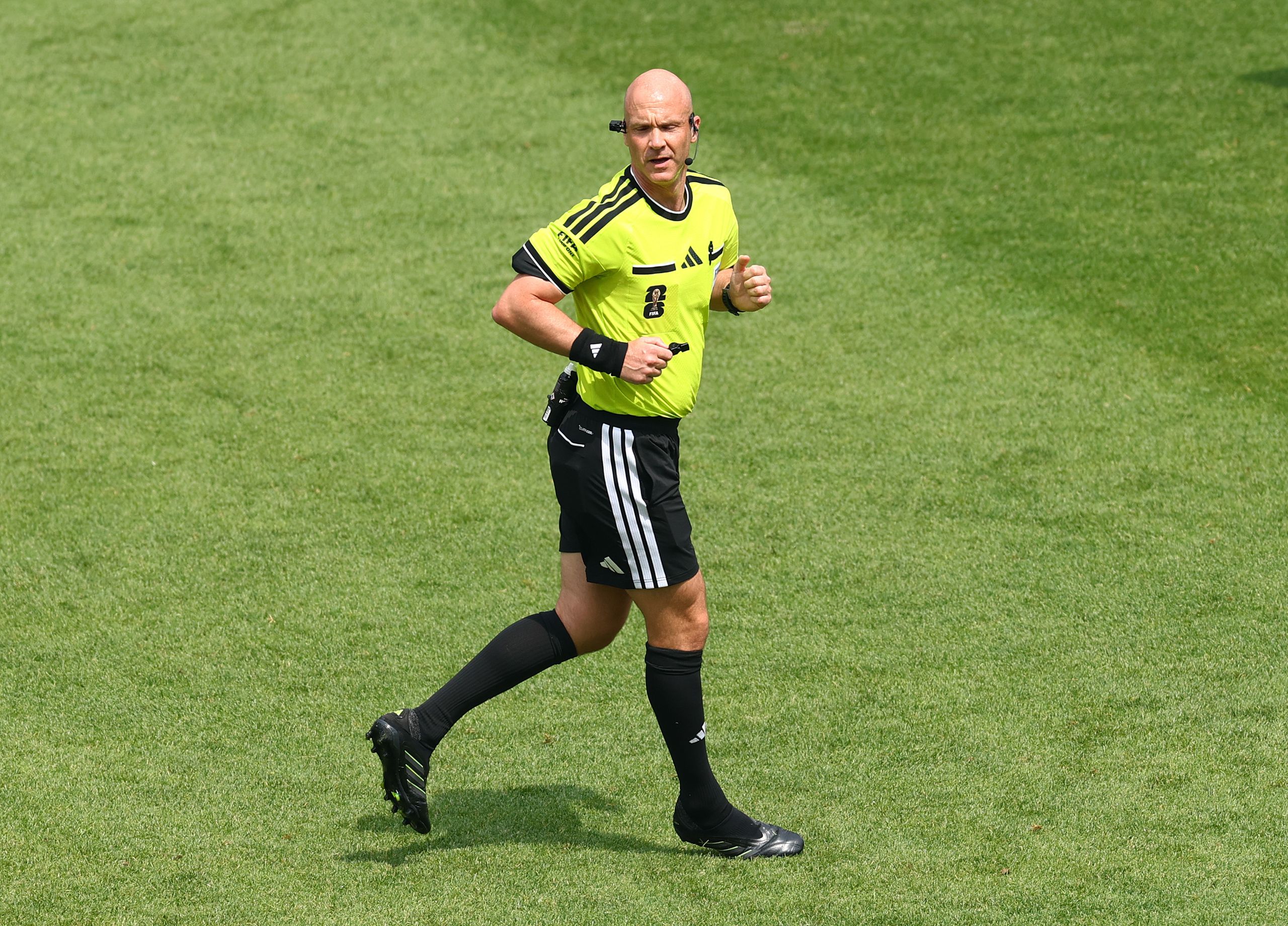
The Arlington Autopsy
The whistle in Arlington did not just confirm Spain's passage to the World Cup quarter-finals. It brought a definitive, painful end to a decade-long tactical compromise that has held Portuguese football hostage.
While Cristiano Ronaldo wept openly on the pitch, the tactical reality of the match was plain for everyone to see. Portugal fell 1-0 to Spain in the Round of 16, a result that felt entirely logical to anyone tracking the structural deficiencies of Roberto Martinez's side.
The margins in tournament football are thin, but this was not a defeat born of bad luck or a refereeing error. It was the predictable outcome of a team playing with a permanent physical handicap in both the defensive and transition phases. Portugal looked like a team stuck between two eras, trying to play modern high-tempo football while carrying a forward who could no longer run.
How Spain Smothered the Service
Luis de la Fuente's defensive plan was simple, disciplined, and executed with absolute precision by his backline. Spain did not engage in a frantic, high press that would leave space behind their defenders for runners to exploit.
Instead, they set a compact mid-block, waiting for Portugal’s center-backs to feed the ball into midfield before snapping their trap shut. As reports from Arlington noted, Spain's defensive performance was extraordinary, keeping Portugal’s dynamic midfield restricted to low-value possession.
The key to Spain's defensive solidity was how they treated Ronaldo. They did not double-team him or drop deep to protect against his speed, because that speed has long since departed. Spain's center-backs squeezed the space, keeping their line high and squeezing the gap between their midfield and defense to a minimum.
This high defensive line suffocated Vitinha and Bruno Fernandes, who found themselves with no space to operate between the lines. Every time they looked forward, the passing lanes to Ronaldo were blocked by Spanish jerseys, forcing them to recycle possession sideways. If they tried to play the ball over the top, Spain's defenders simply collected the ball, knowing Ronaldo could not win a foot race.
Portugal’s possession was therefore forced wide to João Cancelo and Nuno Mendes, who were repeatedly isolated against Spain's wingers. Once the ball moved to the flanks, Spain shifted their block, forcing Portugal into low-percentage crosses from deep. Spain’s defenders cleared these crosses with ease, having no fear of a striker who lacks the lateral mobility or the vertical leap of his prime years.
The frustration was evident on the faces of Portugal's creators. Bernardo Silva was forced to drop deeper and deeper just to get a touch of the ball, which left Portugal with no creative presence in the final third. When they did manage to break into the box, there was no mobility to pull Spain's center-backs out of position.
The Merino Strike and Defensive Collapse
The decisive goal arrived in the 91st minute, a moment that exposed the structural exhaustion of Martinez's side. Spain had spent the second half probing the half-spaces, exploiting the growing distance between Portugal's midfield and their static forward line. When the transition occurred, Portugal did not have the recovery speed to cover the late runners coming from the Spanish midfield.
The ball was worked wide to the right, drawing Nuno Mendes out of position and forcing the center-backs to shift across to cover the space. Mikel Merino saw the gap and made a run from deep into the heart of the penalty box. No Portuguese midfielder followed his run, as they were spent from covering the defensive duties their forward bypassed.
Merino met the cross cleanly, guiding it past Diogo Costa to break Portuguese hearts and send the Spanish bench into wild celebrations. The goal was a tactical punishment for Portugal's insistence on playing with ten men out of possession. It was a simple, vertical attack that a well-structured defensive team would have easily shut down in the early stages of the match.
Spain's late winner was not an isolated breakdown, but the culmination of ninety minutes of physical strain on a midfield forced to run double sessions. Vitinha and Bernardo Silva had spent the match covering miles of green grass to shield a defense that was left exposed by a non-existent first line of press. By the time the game entered additional time, the fatigue was evident, and Spain took full advantage of the gaps.
The Martinez Substitution Dilemma
In the aftermath of the defeat, Roberto Martinez was asked why he refused to substitute Ronaldo even as the game drifted away from his side. His response was telling: "When you need a goal, you cannot take him off." This statement reveals a fundamental misunderstanding of how modern attacking systems create goal-scoring opportunities.
"When you need a goal, you cannot take him off." — Roberto Martínez
As the post-match breakdown shows, Martinez believed Ronaldo's presence alone would spark a breakthrough. He kept a 41 years old forward on the pitch for the entire match, hoping for a moment of individual brilliance that never came.
Martínez's logic treats goal-scoring as an individual act of magic rather than a collective process. In doing so, he sacrificed the fluid movement, pressing, and depth that a player like Diogo Jota or Gonçalo Ramos could have provided in the second half.
By keeping Ronaldo on the pitch, Martinez made his team easy to defend. Spain did not have to adjust their defensive shape or worry about runs into the channels. They could focus entirely on shutting down Bernardo Silva and Bruno Fernandes, knowing the central threat was stationary and predictable.
This is the blind spot that has characterized Martinez’s management of this team. He has prioritized player management and legendary status over tactical functionality. The result is a team that looks brilliant on paper but remains completely dysfunctional against elite, organized opposition in major tournaments.
A Static Point in a Fluid Game
The physical decline of Portugal's captain was impossible to ignore. In the press, observers noted that the veteran striker was moving with severe limitations, even describing his movement as waddling. It was a harsh assessment, but one grounded in the visible physical reality of a match where he was consistently second-best to every ball.
Ronaldo no longer possesses the acceleration required to turn defenders or create half a yard of space for a shot. During this tournament, he recorded a striking statistic of zero completed dribbles. This lack of verticality changed how Portugal had to build their attacks, forcing them into a predictable and slow buildup play.
Every attack had to be directed toward his feet or hung in the air. When the ball went wide to Rafael Leão or Diogo Jota, the cross was the only viable option. Spain quickly recognized this pattern and positioned their central defenders accordingly, winning almost every aerial duel in their own box.
The statistical reality of Portugal’s attack was damning. They generated an xG of just 0.42 over the ninety minutes, with most of their shots coming from distance. Ronaldo himself was limited to speculative efforts that failed to test the goalkeeper, finishing the match without a single shot on target.
This lack of mobility had a domino effect on the rest of the team. The midfielders were forced to play deeper to protect against transitions, knowing their striker could not press. This created a massive space in the center of the pitch that Spain's midfielders dominated, controlling the tempo and rhythm of the game at their own pace.
The Burden of the Past
Ronaldo's post-match comments only highlighted the disconnect between his self-perception and his current on-field utility. "I leave with a clear conscience. I've done everything I could. Portugal had never won a cup before me," he told reporters.
"I leave with a clear conscience. I’ve done everything I could. Portugal had never won a cup before me." — Cristiano Ronaldo
He later doubled down on this sentiment, reminding the press that Portugal had won nothing without him. As reported in the post-match interviews, Ronaldo has confirmed this was his final World Cup.
This historical shield is a poor substitute for tactical relevance. While it is true that Ronaldo was the figurehead of Portugal’s Euro 2016 and Nations League triumphs, those successes belong to history. A national team cannot base its 2026 tactical plan on what occurred ten years ago, especially when the current squad is vastly superior to the one that won in France.
The claim that Portugal won nothing without him ignores the current crop of talent. Players like Rafael Leão, Vitinha, and João Neves represent some of the most dynamic young players in Europe.
They deserve a system built around their strengths, not one tailored to preserve a fading legend's ego. Instead, they are forced to play in a structure that prioritizes one man’s milestones.
Portugal’s matches have become less about winning tournaments and more about facilitating Ronaldo's farewell tour. Spain exposed this vulnerability with ruthless efficiency, showing that a modern team will always defeat a collection of individuals playing for a singular star. The tears in Arlington should not be seen as a tragedy, but as a necessary closing of a chapter that has run its course.
The Path Forward
Portugal has the talent to be a dominant force in world football. The current squad boasts some of the finest technical players in Europe, but they are playing with handbrakes on. The defeat to Spain must serve as a catalyst for change, forcing the federation to re-evaluate their direction.
The national team needs to move past the Ronaldo era and build a system based on mobility, high pressing, and collective responsibility. This requires a manager with the courage to make difficult decisions and bench legendary players when their performance drops. If Martinez cannot or will not make this transition, then the Portuguese federation must find someone who will.
The talent is there, the tactical blueprint is clear, and the lessons of Arlington are written in stone. It is time to let the future begin and build a team that plays for the shirt, not for the legacy of a single player.
Read Next
- The brutal numbers that show how Cristiano Ronaldo held Portugal back
- Spain ended Cristiano Ronaldo's career with a block of pure granite
- Spain's wings will end Cristiano Ronaldo's final World Cup run
- Cristiano Ronaldo confirms the end of his World Cup era before Spain clash
- 🏆 World Cup 2026 — Full Coverage Hub
- 🇪🇸 Spain World Cup 2026 — La Roja Hub
- 🇵🇹 Portugal World Cup 2026 — A Seleção Hub
The Mixer: The Story of Tactical Tales, from Tiki-Taka to Gegenpressing by Michael Cox
The ultimate tactical guide to how the Premier League was transformed.
Frequently Asked Questions
How did Spain defend against Portugal's midfielders?
Who scored the winning goal in the Spain vs Portugal match?
What was the final score of the Spain vs Portugal Round of 16 match?
Why did Spain play a high defensive line against Cristiano Ronaldo?
How did Spain's defense handle Portugal's crosses from the flanks?
More Coverage
Michael O'Neill's youth movement is ahead of schedule, but flaws remain
9 hours ago
Arsenal's crisis deepens while London City redefine WSL pressing
19 hours ago
Renée Slegers is running out of time to fix Arsenal's tactical chaos
20 hours ago
Arsenal need an instant response against Leeds after the Brighton disaster
1 day, 1 hour ago
Fred Calling Ten Hag a Piece of Crap Confirms What We All Knew
1 day, 17 hours ago
This Week in Football: England Rampant and City Fallout (Sep 28–Oct 04, 2026)
2 days, 4 hours agoMore Analysis
Fred Calling Ten Hag a Piece of Crap Confirms What We All Knew
1 day, 17 hours ago
This Week in Football: England Rampant and City Fallout (Sep 28–Oct 04, 2026)
2 days, 4 hours ago
England lost to Spain but the Nations League is actually working
1 week ago
England lost to Spain again, so why is nobody screaming at Thomas Tuchel?
1 week, 1 day ago
Top 10: Top Moments from England's 3-2 Nations League Thriller Against Spain
1 week, 2 days ago