Liverpool are sleepwalking into a Virgil van Dijk succession crisis
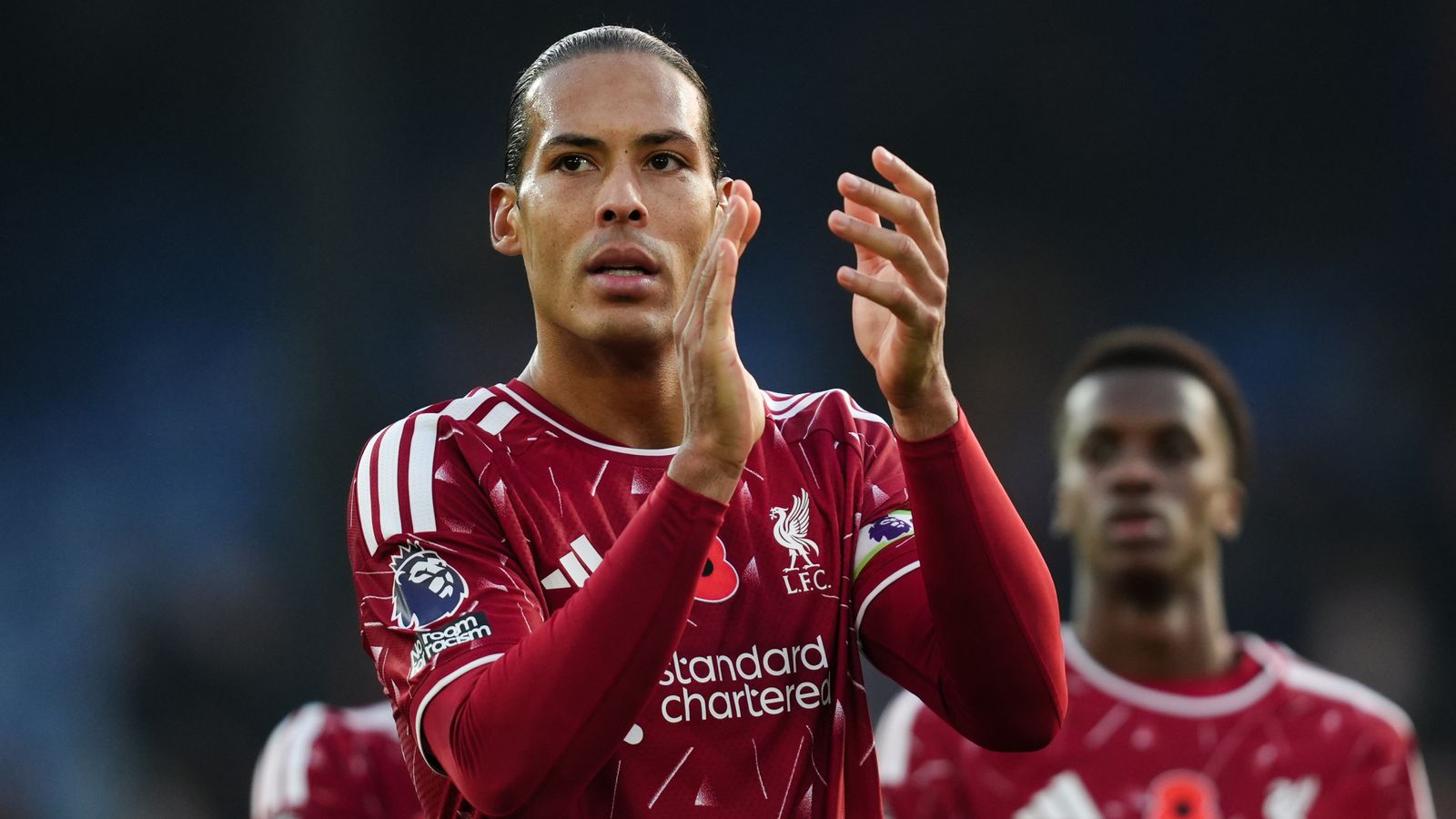
Virgil van Dijk does not panic on the pitch, and he certainly does not panic on camera. Speaking ahead of Sunday's clash with Manchester United, the Liverpool captain looked directly at his interrogators and stated that he has no idea where he will play next season. For a club chasing silverware on multiple fronts, that level of uncertainty is alarming.
His contract expires when this campaign concludes. Nearly a decade after arriving on Merseyside, bringing two Premier League titles and a Champions League trophy along the way, the Dutchman is staring at an unresolved exit ramp. The boardroom silence surrounding his deal contrasts sharply with his commanding presence on the pitch.
In his recent Sky Sports interview, Van Dijk admitted that if no extension materializes, he will pack his bags. That should send a tremor through the coaching staff at Kirkby. Liverpool are competing at the highest level while their primary organizer maintains an open suitcase.
Sunday's fixture against Manchester United kicks off at 4:30pm, followed immediately by Champions League duties. The schedule provides no room for sentiment or protracted negotiating dramas. On the pitch, Van Dijk remains the reference point around which the entire defensive shape rotates.
Yet at age 35, every physical metric faces scrutiny. Van Dijk believes his body can withstand top-flight demands for many more seasons. Whether Liverpool are willing to underwrite that belief is the dilemma currently destabilizing their long-term planning.
The Mechanics Behind the Jacquet Partnership
Central defensive partnerships rely on complementary geometry rather than individual brilliance. Van Dijk's resurgence this season owes plenty to the emergence of Jeremy Jacquet beside him. The 21-year-old French defender has introduced physical dynamism that allows his veteran partner to conserve energy.
Van Dijk was effusive when assessing the youngster, describing him as outstanding and praising his maturity. That praise is earned through hard tactical labor. Jacquet's recovery speed allows Liverpool to squeeze the pitch up to the halfway line without getting caught in behind.
Van Dijk framed the dynamic through a refreshingly pragmatic tactical lens. He explained how modern central pairings must navigate each other's limitations:
"As a centre-back partnership, you have to be able to understand what your qualities and what your flaws are at times and then complement each other on those things."
That admission cuts to the heart of top-tier defending. Van Dijk no longer possesses the blistering straight-line recovery speed that defined his prime years between 2018 and 2020. Jacquet provides that explosive athletic insurance policy, contesting aerial duels and tracking aggressive runs into the channels.
In return, Van Dijk provides the positional compass. He constantly orchestrates Jacquet's body shape, pushing him five yards deeper when the midfield press fails or demanding he step up to trap runners offside. Center-backs do not develop tactical instincts in isolation; they absorb them through constant verbal calibration.
Van Dijk revealed that their communication extends far beyond matchdays into daily film study and training ground drills. He acts as an on-pitch mentor, constantly reminding the young defender that early plaudits can vanish after a single bad afternoon. That guidance prevents a promising talent from becoming another overexposed prospect.
To maintain defensive cohesion over a grueling season, the pairing must satisfy three basic tactical demands. Any breakdown in these fundamentals instantly exposes the goalkeeper to uncontested shots:
- Stagger their positioning to prevent straight vertical balls splitting the central seam.
- Ensure Jacquet initiates aggressive aerial challenges while Van Dijk collects second balls.
- Maintain vocal coordination during rapid defensive transitions to avoid broken offside traps.
Still, leaning heavily on a 21-year-old carries obvious structural pitfalls. Jacquet is still refining his timing in ground challenges, occasionally diving in when patience is required. When a young defender makes a positional error against elite opposition, the entire backline fractures.
Managing Space When the Recovery Pace Fades
Father Time remains undefeated. Watching Van Dijk today reveals a masterclass in positional economy. He rarely sprints at maximum velocity anymore because his brain computes passing angles three seconds before opponents play the ball.
He operates with a lower center of gravity, conceding half a yard of space out wide to protect the central corridor. That adjustment prevents quick forwards from turning him toward his own goal. It is pragmatic, intelligent defending designed to mask the natural physical erosion of turning 35.
However, this tactical compromise creates vulnerabilities when Liverpool face aggressive counter-attacking setups. If the front line fails to register an effective counter-press, opposing playmakers can look up and exploit the gap between Van Dijk and his left-back. Without his vintage recovery stride, those defensive scrambles turn frantic.
We saw glimpses of this friction during isolated moments earlier this season. Van Dijk was caught leaning toward the ball, unable to turn and close down an overlapping run in time. While his aerial dominance remains peerless, his turning circle against nimble dribblers is noticeably wider than it was five years ago.
Liverpool cannot pretend these limitations do not exist. Extending an aging defender requires tailoring the system to shield his declining mobility. If the midfield loses its defensive bite, asking a 35-year-old to hold a 50-yard line is tactical negligence.
Van Dijk counters that his preparation keeps him in elite condition. He insists he looks after himself meticulously and feels capable of performing at the peak level for several additional seasons. His durability to date supports that claim, but defending in the Premier League offers zero room for athletic deterioration.
The margin between an imperious defensive display and a catastrophic afternoon is razor thin. One mistimed step can leave a goalkeeper exposed and turn a match upside down. Van Dijk knows this better than anyone, which explains his relentless focus on positional discipline.
The Structural Danger of Contract Limbo
Elite football clubs despise uncertainty, yet Liverpool have walked directly into an avoidable standoff. Allowing their captain and defensive anchor to reach the final months of his deal is poor squad management. It invites endless speculation that distracts from on-pitch objectives.
Van Dijk addressed the situation with cold clarity during his media appearance. His stance makes no effort to soothe supporter anxiety:
"If it's getting extended, we'll see then. If not, then I'm going to say goodbyes in the summer."
Those two sentences should terrify the Anfield boardroom. Van Dijk is not begging for a renewal or using backchannel leaks to force Liverpool's hand. He is comfortable with walking away on a free transfer if the club hesitates.
Replacing an iconic center-back is historically treacherous for elite European teams. Real Madrid spent seasons scrambling after Sergio Ramos departed, while Manchester United endured a decade in the defensive wilderness after Rio Ferdinand and Nemanja Vidic left. Replacing Van Dijk's leadership cannot be solved simply by signing a new prospect.
Jacquet may represent the future, but he is nowhere near ready to direct an entire defensive line alone. Without Van Dijk shouting instructions and setting the defensive line, Jacquet's development could easily stall under excessive responsibility. A young center-back needs a reliable partner to absorb pressure while they find their feet.
If Liverpool decide to part ways, they must spend massive capital to reconstruct their central defense from scratch. Very few defenders on the market possess the height, passing range, and psychological stature required to anchor Anfield's high line. Letting Van Dijk walk out the door creates an unnecessary rebuilding headache.
The financial calculation seems obvious, yet modern analytics departments often view players over thirty with extreme skepticism. They see depreciating physical assets rather than irreplaceable leadership capital. That analytical blindness could cost Liverpool their defensive foundation.
Furthermore, contract standoffs inevitably seep into dressing room dynamics. Teammates notice when the club stalls on rewarding their undisputed leader. When results dip, unresolved contract questions become an easy scapegoat for external critics and internal frustration.
The Manchester United Acid Test
All contract discussions pause when Manchester United visit Anfield. This fixture demands total tactical immersion from the opening whistle. Van Dijk pointed out that his immediate attention belongs entirely to Sunday, not next season's employment status.
Manchester United will test Liverpool's defensive structure with direct vertical transitions into the channels. Their game plan inevitably involves pulling Jacquet away from his station to isolate Van Dijk in footraces. How Liverpool's central pair handles those split-second decisions will dictate the outcome of the match.
If Jacquet stays disciplined and Van Dijk dominates his aerial duels, Liverpool control the tempo from the back. The Dutchman's diagonal switches to the wingers remain one of Liverpool's most potent offensive weapons. When he steps forward into midfield with the ball, opposing defensive blocks immediately warp.
However, a single miscommunication between the veteran and the apprentice will concede high-value chances. United's forward line thrives on defensive hesitation during turnover phases. Van Dijk must produce a flawless organizing display to keep Liverpool's defensive unit compact and composed.
A commanding clean sheet on Sunday would strengthen Van Dijk's negotiating position immeasurably. It would demonstrate that despite his birth certificate, he remains the Premier League's most authoritative defensive general. A sloppy defeat, conversely, would embolden critics who argue his era is drawing to a close.
Van Dijk has survived two Premier League title triumphs and lifted the European Cup by maintaining emotional detachment. He refuses to indulge in dramatic farewell tours while trophies remain on the line. That icy professionalism is admirable, but it also means he will not hesitate to walk out the door in May.
Liverpool hold the pen, but time is running out to write the next chapter. If the club refuses to reward the man who reconstructed their modern identity, they will soon learn how cold the world looks without him. The next move belongs to the Anfield hierarchy, and they cannot afford to miss their cue.
Read Next
- Virgil van Dijk admits he could leave Liverpool this summer
- Mauricio Pochettino is walking straight into an Anfield ambush
- Pochettino walks into Anfield with zero time and everything to prove
- Pochettino cannot fix Manchester United before Liverpool arrive on Sunday
- 🇳🇱 Netherlands World Cup 2026 — Oranje Hub
Nike Pitch Premier League Soccer Ball
Official replica of the ball used in England's top flight.
Frequently Asked Questions
When does Virgil van Dijk's contract with Liverpool expire?
How does Virgil van Dijk assess his physical condition at age 35?
Who is Jeremy Jacquet and how has he performed alongside Van Dijk?
How does the partnership between Van Dijk and Jeremy Jacquet function?
Why is Virgil van Dijk's contract situation alarming for Liverpool?
More Coverage
Virgil van Dijk admits he could leave Liverpool this summer
an hour ago
Why Man United's January transfer wishlist solves none of their problems
2 hours ago
Man United's reported £100m move for Victor Osimhen makes zero sense
2 hours ago
Why Tottenham's £75m gamble on Mykhailo Mudryk is falling apart
2 hours ago
Top 10: Top Moments
3 hours ago
Mauricio Pochettino is walking straight into an Anfield ambush
4 hours agoMore Analysis
Virgil van Dijk admits he could leave Liverpool this summer
an hour ago
Mauricio Pochettino is walking straight into an Anfield ambush
4 hours ago
Mikel Arteta bans Arsenal stars from FPL after Tzolis team leak
5 hours ago
Man United enter Anfield in 18th as Berrada speaks out on fan anger
5 hours ago
Carrington drone leak exposes training ground fitness secrets
7 hours ago