Welcome to Glasgow football, the only sporting environment on earth where finishing second out of twelve teams gets you treated like a disgraced politician caught fleeing the country with the state treasury.
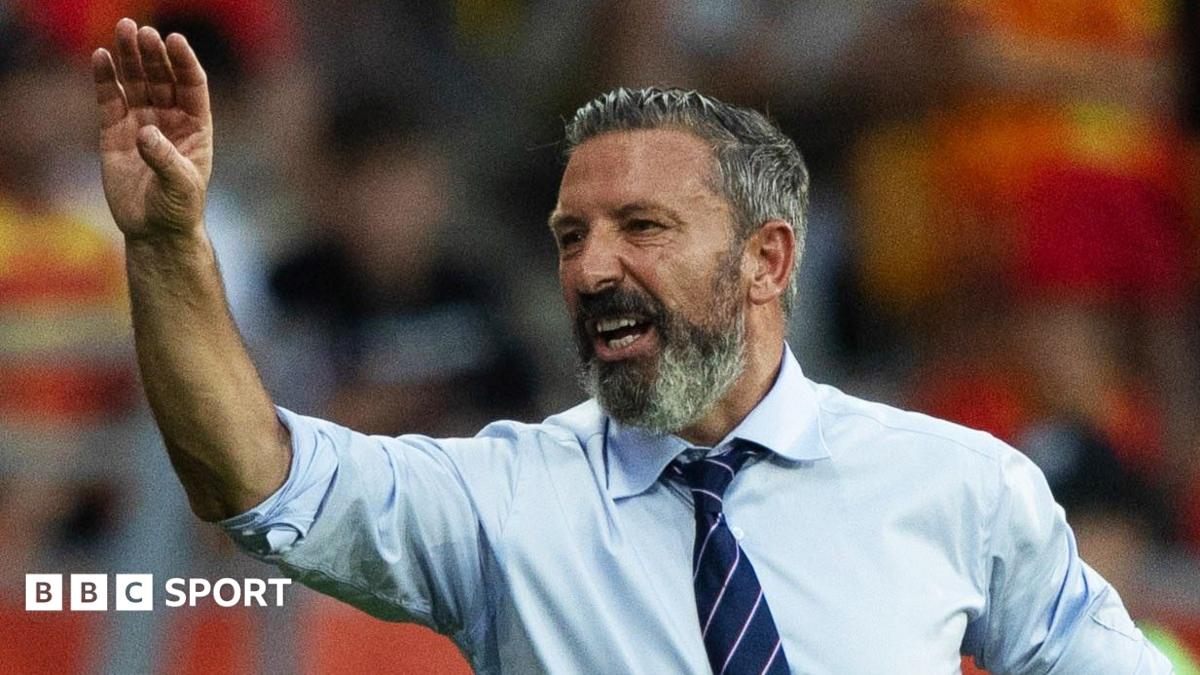
Derek McInnes knew what he was stepping into when he took the top job at Ibrox. He played in that Rangers midfield under Walter Smith and Dick Advocaat in the late nineties when the money flowed like champagne and lifting trophies was as routine as brushing your teeth.
He knows the culture inside out. He knows that Rangers supporters do not care about long-term squad rebuilds, statistical progression, or patient five-year plans.
If you do not put a shiny piece of silver into the trophy room at Edmiston Drive by May, you are a dead man walking. It really is that simple.
Managing Rangers is not a normal managerial position; it is a weekly survival test where sympathy is non-existent. The fans expect dominance, and they expect it immediately.
Look at what happened to Giovanni van Bronckhorst. The Dutchman led Rangers to a miraculous Europa League final in Seville and lifted the Scottish Cup in 2022, yet he was handed his P45 before the autumn leaves hit the ground because Celtic opened up a nine-point lead.
Then came Michael Beale with his endless tactical PowerPoint presentations, high-line jargon, and slick press conference rhetoric. He lasted ten months before the Ibrox crowd booed him out of the stadium.
Now McInnes sits in the manager's office with the crowd watching his every move, ready to turn the moment results slip.
The Ghost of 2017 and the Aberdeen Comfort Zone
To understand why the margin for error for McInnes is practically non-existent, you have to rewind the tape to December 2017.
Rangers spent weeks openly courting McInnes to leave Aberdeen and take over following the unmitigated disaster of the Pedro Caixinha era. Caixinha had managed to get knocked out of Europe by Progrès Niederkorn and famously argued with fans while standing inside a bush.
McInnes weighed up the offer, looked at the board level instability at Ibrox, and decided to stay at Pittodrie. A vocal section of the Rangers support never quite forgave him for saying no to the club.
For eight years in Aberdeen, McInnes was the undisputed champion of Scottish football stability. He snapped Aberdeen's nineteen-year trophy drought by winning the 2014 League Cup on penalties against Inverness Caledonian Thistle.
He consistently kept Aberdeen in second place while Rangers were battling their way back up through the lower divisions. He established a solid, respectable baseline.
The problem is that stability at Aberdeen is viewed as complacency at Ibrox. Rangers fans do not want respectable 1-0 away wins; they want total domestic dominance.
During his peak years with Aberdeen, McInnes reached four domestic cup finals and lost three of them to Celtic without landing a single punch. His teams consistently looked timid on the big stage at Hampden Park.
That cautious approach kept Aberdeen afloat, but bringing that mindset to Ibrox is like taking a knife to a gunfight.
Tactical Limitations and the Low Block Trap
Let's talk about what happens on the pitch, because this is where the squad's glaring flaws become impossible to ignore.
McInnes has always been a traditional, physically oriented manager in a modern game that increasingly demands fluid, high-tempo positional play.
His teams are well-drilled, aggressive in aerial duels, and lethal on set pieces. When Rangers travel to hostile venues like Tynecastle or Easter Road, his side can scrap and grind with anyone.
The nightmare begins on cold Tuesday nights at home against sides who park the bus. When opponents stack ten men inside their own penalty box, McInnes's tactical blueprint frequently grinds to a halt.
We have seen this movie dozens of times in Scottish football. The ball gets shuffled lazily across the back line, the tempo drops to a crawl, and the attacking plan devolves into slinging desperate crosses into a crowded penalty box.
If your primary plan against a compact defense is hoping a center-back headers a corner into the net, you are going to drop points. And in Glasgow, dropping points to mid-table opposition is treated like a national crisis.
If Rangers drop points early in the campaign and end up locked in a 0-0 draw against bottom-tier opposition, the groan that echoes around Ibrox can be heard across the River Clyde.
The supporters will tolerate a lack of style if you are winning matches four-nil, but pragmatic football without victories gets managers fired in record time.
The Financial Chasm and the Celtic Machine
The task facing McInnes is made ten times harder by the green-and-white monster operating across the city at Parkhead.
Celtic have spent the last decade building a formidable financial machine backed by guaranteed Champions League income and elite player trading.
When Celtic make a transfer mistake, they can write off a multi-million-pound player and replace him in the next window without missing a beat.
Rangers do not possess that safety net. When Rangers spend big money on a recruit who fails to perform, it cripples their budget for two full seasons.
Celtic operate like Roman Reigns during his multi-year title run—even when they look vulnerable or fall behind in a match, they usually find a way to hit a Spear and retain the belt.
McInnes is effectively playing the role of Mick Foley in 1998, thrown off the top of the Hell in a Cell structure every single weekend while trying to convince the crowd he can win the big one.
He is fighting an opponent with a bigger bank balance, deeper squad depth, and years of muscle memory when it comes to closing out title races.
That means McInnes cannot afford a single slip-up in domestic cup competitions. The cups are his only realistic shortcut to establishing credibility.
Deliver Silverware or Prepare the Severance Package
Let's map out the harsh realities of the Scottish football calendar for Derek McInnes:
- The League Cup final in December is not an early-season bonus; it is an absolute mandatory requirement for job security.
- Losing an Old Firm derby at home destroys months of goodwill in ninety minutes.
- A domestic double by Celtic usually results in immediate managerial purges at Ibrox.
- Rangers fans take immense pride in their record of 55 titles, and watching Celtic edge closer to that number sends the support into outright meltdown.
The Ibrox board can talk all they want in corporate announcements about building modern scouting networks and giving managers time to implement a vision.
However, football directors in Glasgow inevitably panic the moment forty thousand fans start aiming their fury at the boardroom after a defeat.
McInnes does not have the cushion of a honeymoon period. He was brought in to provide immediate stability and restore domestic bite to the team.
If he manages to lift a domestic trophy this season, he buys himself the authority and time needed to overhaul the squad next summer.
If he ends the campaign empty-handed, his tenure will end precisely like his predecessors—with a brief statement released on the club website on a gloomy Monday morning.
The margin for error is zero, the pressure is suffocating, and McInnes knows better than anyone that only silver shields him from the axe.
Read Next
- The Pragmatist's Odyssey: Bob Bradley on Talent Ceilings and Structural Illusions
- Post-Pep Power Shift: Inside Man City's Transition & Arsenal's Emerging Dynasty
- Anatomy of an Ineffective Assembly: Tottenham Hotspur's £300M Sterility Crisis
- Arsenal won ugly at Sunderland, but their striker problem isn't going away
- ⚽ Scottish Premiership 2025-26 — Celtic vs Rangers Hub