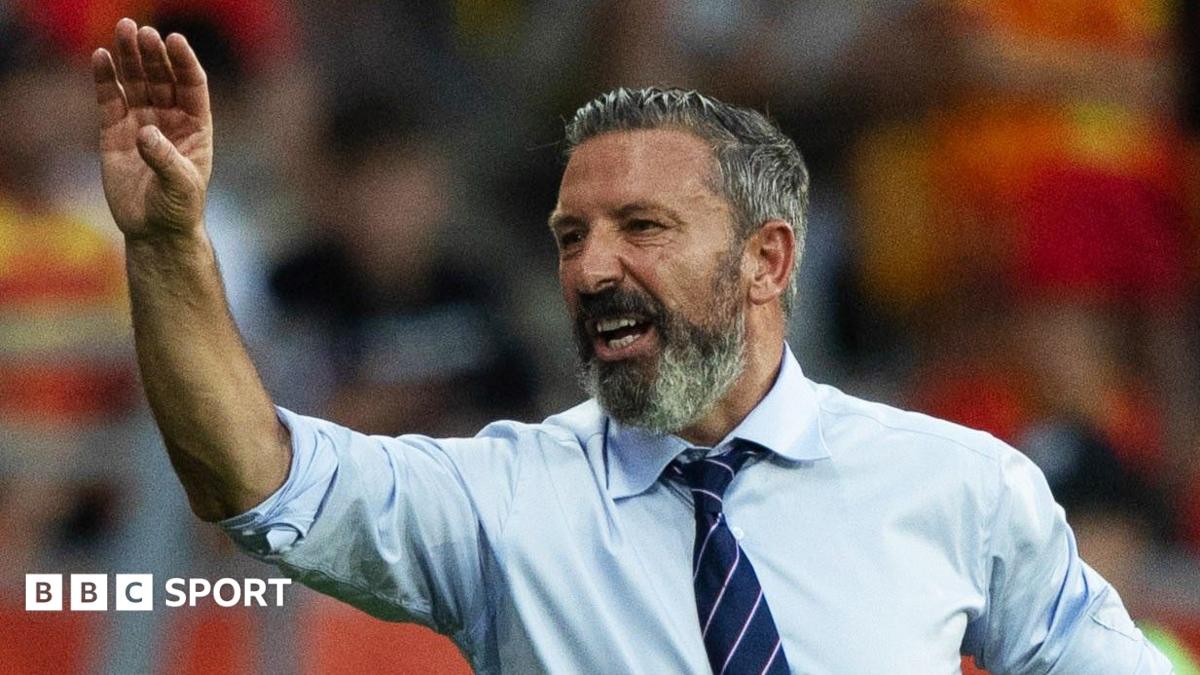
Self-destruction in Bialystok
Derek McInnes didn't mince words after the whistle blew in Poland, admitting his team was "guilty of beating ourselves" during their 2-1 defeat to Jagiellonia Bialystok. The first leg of this Europa League qualifier exposed every familiar defect Rangers fans hoped had been left behind last season. Conceding cheap goals on European nights has transitioned from an occasional nuisance to an institutional habit.
The underlying numbers tell an equally frustrating story. Rangers surrendered two goals off an expected goals against (xGA) figure of just 0.84, illustrating how catastrophic defensive lapses continue to punish them out of proportion. Transition tracking showed the midfield twice failing to recover into the central block, leaving the backline completely isolated against simple direct channels.
When Jagiellonia broke forward in the 63rd minute, Rangers' defensive spacing collapsed within seconds. The primary pivot drifted wide, opening a 20-yard chasm right through the center of the pitch. That failure to protect the zone edge turned a routine sequence into a tap-in.
The structural puzzle McInnes must solve
McInnes operates with a pragmatic blueprint, but his current Rangers setup is caught between two identities. They want to control possession, topping 62% in Bialystok, yet they generate remarkably little penetration from that ball dominance. Of their 14 recorded cross attempts in the first leg, only three connected with a blue shirt in the penalty area.
The return leg at Ibrox demands urgent recalibration. Maintaining heavy possession without progressive passing lanes simply invites Jagiellonia to sit in a compact mid-block and wait for turnover triggers. The Polish side completed 88% of their defensive half passes, comfortably absorbing pressure before launching quick counter-attacks into open space.
A major area of concern remains the left-back channel. Opponents have targeted that specific flank in three straight competitive fixtures, exploiting high positioning when Rangers build out from the back. If McInnes does not adjust his full-back rotations, Jagiellonia will find the same operational space on the break again.
What to watch for in the return leg
Expect Rangers to push their pressing line ten yards higher from the kickoff, attempting to force early mistakes out of Jagiellonia's center-backs. However, high pressing without defensive discipline is a gamble that cost them dearly in Poland.
- First 20 minutes: Can Rangers convert territorial pressure into high-quality chances rather than low-percentage crosses?
- Rest defense structure: How McInnes positions his central midfielders when full-backs overlap to prevent counter-attack triggers.
- Set-piece execution: Rangers wasted six corner kicks in the first leg, failing to test the keeper once from stationary deliveries.
Jagiellonia do not need to expand the game; a draw sends them through. That dynamic puts the burden of initiative entirely on Rangers, who have looked brittle whenever forced to chase a tie under pressure.
Verdict and prediction
Ibrox on a European night still exerts a unique pull, but emotion alone will not fix structural defensive gaps. Rangers have the technical quality to overturn a 2-1 deficit, but only if they eliminate the unforced errors that McInnes correctly identified as their primary enemy.
Expect an aggressive start, an early breakthrough, and plenty of nervous moments on the counter. Rangers should squeeze through on aggregate, but it will be far messier than it ought to be.
Prediction: Rangers 2-0 Jagiellonia Bialystok (Rangers advance 3-2 on aggregate)
Read Next
- Top 10: Top Moments from Rangers' Europa League Qualifier Collapse
- Rangers are window shopping for a miracle in the Eredivisie
- Arsenal and Rangers fans are losing their minds over preseason TV schedules
- Top 10: Defining Moments in Modern Football
- ⚽ Scottish Premiership 2025-26 — Celtic vs Rangers Hub
- 🏆 Europa League Final 2026 — Full Coverage Hub