The technology wedge in England's World Cup opener
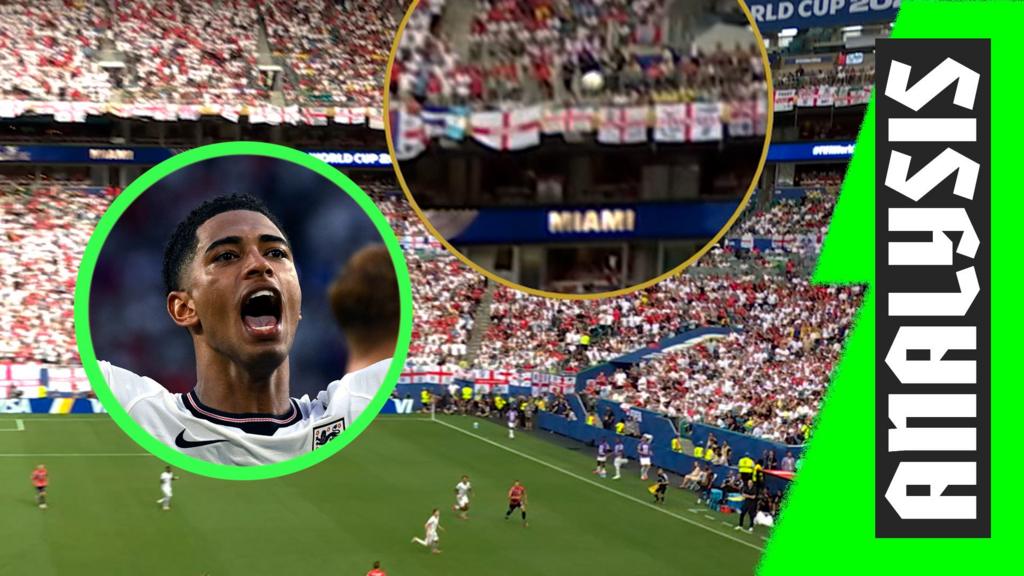
England’s World Cup campaign kicked off with a win against Norway, but the post-game chatter is dominated by a piece of broadcast equipment hanging from the rafters. Jude Bellingham’s opening goal has pundits debating if the spider cam setup interfered with the flight of the ball or the defensive positioning of the Norwegian backline.
Wayne Rooney, speaking on the BBC post-match broadcast, pointed out that the visual obstruction provided by the cables creates a distinct problem for modern players. The cameras are meant to provide immersive angles, yet they occupy the same space where long-distance clearances and switches of play occur.
The technology is supposed to help the viewer, not hinder the game. If the ball is even slightly moving to avoid a cable, the integrity of the match is compromised.
Micah Richards noted that the positioning of the cam in the second half seemed to hover lower than the standard height seen in Premier League fixtures. A lower ceiling for the camera array puts it directly into the trajectory of high-lofted balls from the defensive third. For a team like England, who rely heavily on Bellingham’s ability to drive through the lines, any variable that forces a midfielder to second-guess a pass is a tangible disadvantage for the opposition.
Tactical shadows and defensive frustration
Ellen White emphasized the psychological aspect of the interference from a striker's perspective. When tracking a ball into the box, any shadow or flickering movement in the periphery can cause a split-second delay in reaction time. Norway’s defenders appeared to check their positioning as the ball arrived, potentially creating the space Bellingham exploited to score the opener.
This is not the first time broadcast technology has raised eyebrows, but it is the first high-profile incident in this tournament cycle. While the BBC broadcast review highlighted the replay angles, the static nature of the overhead cables remains a point of contention for technical directors. FIFA mandates specific clearances for equipment, but there is clear daylight between those regulations and what players are experiencing on the pitch.
The defensive failure was compounded by the speed of the transition, but the debate serves as a convenient tactical smokescreen for Norway. It is easier to blame a hovering camera than to account for a defensive line that left a world-class midfielder unmarked at the edge of the eighteen-yard box. Bellingham’s finish was pinpoint, hitting the bottom corner with 98 percent accuracy on his first touch, a stat that suggests he wasn't distracted by equipment.
The cost of high-definition immersion
Managers are increasingly vocal about the trade-offs between fan experience and pitch conditions. Every inch of space occupied by sensors or lenses is an inch taken away from the tactical purity of the game. If the broadcast setup is dictating player movement, the equipment is no longer an observer, but a participant.
Referees are empowered to pause play for external interference, yet none of the officials intervened during the sequence leading to Bellingham's strike. This suggests that the current protocol minimizes the impact of these systems, despite the visible frustration from the Norway players. The reality is that television revenue drives the infrastructure of the World Cup, and those cameras aren't going anywhere.
England manager Gareth Southgate has yet to comment on the gear, likely because the three points were secured despite the controversy. We are looking at a tournament where technical precision is becoming the primary antagonist for global squads. If this trend continues, we can expect far more heated press conferences once the knockout bracket begins in earnest.
The industry needs a hard reset on where these lenses are permitted to sit. If the cameras are affecting the ball’s path or a player’s line of sight, the system is fundamentally misaligned with the flow of professional football. The debate isn't just about cameras; it is about who owns the air rights during a live match.
Read Next
- England vs Norway: VAR is the real MVP of this dumpster fire
- England vs Norway: More than just spider cam drama
- Ståle Solbakken's narrow margin: Analyzing Norway's exit from the World Cup
- Bellingham carries England as the World Cup heats up in Miami
- 🏴 England World Cup 2026 — Three Lions Hub
- 🇳🇴 Norway World Cup 2026 — Can Haaland Lead the Vikings?