The Numbers Behind Morocco's Structural Serenity
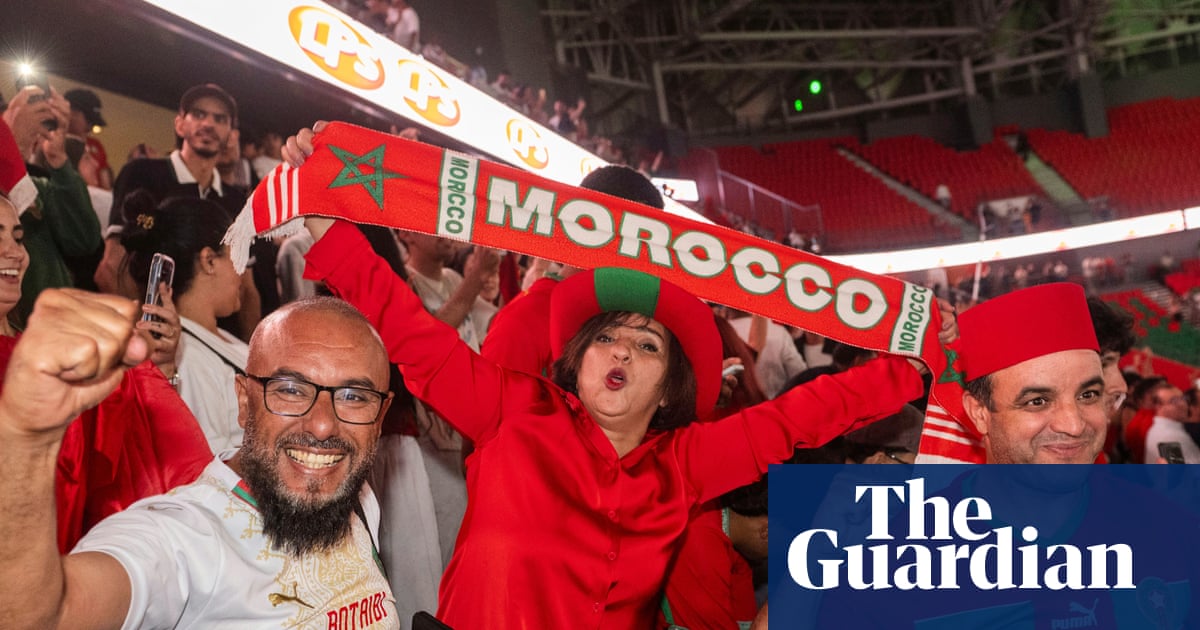
Morocco are the first African nation to reach successive World Cup quarter-finals. As The Guardian reported, this milestone is no accident. It is the product of structural preparation and tactical maturity.
While their continental peers crumbled under late-game pressure, the Atlas Lions showed a rare composure. It has redefined their tactical ceiling.
From Low-Block Survival to Possession-Based Control
Under Walid Regragui in 2022, Morocco conquered Qatar by retreating into a low-block 4-1-4-1, averaging just 32% possession. In 2026, manager Mohamed Ouahbi has initiated a tactical shift. Morocco now dominate matches through controlled possession, averaging 54% of the ball.
The team maintains a defensive line ten yards higher up the pitch, shrinking the space between their lines. This changes their pressing triggers from passive containment to active recovery in the middle third. Opponents are squeezed into wide areas where Achraf Hakimi and Brahim Díaz construct numerical overloads.
This system relies on passing lanes built over months, not weeks. Under Ouahbi, Morocco completed 482 passes per 90 minutes in the group stage, a massive jump from their 2022 average of 298. Their passing accuracy in the opponent's half rose from 71% to 83%.
Ouahbi’s four-year tenure with the under-20 and under-23 squads allowed him to integrate young talents like Neil El Aynaoui into this passing web. By the time he took the senior job in early March, the tactical foundations were already solid. He had five preparatory warm-up fixtures to refine the team's spacing before the tournament began.
The Netherlands and Canada Blueprints
The Round of 16 victory against the Netherlands showed how robust this system is under pressure. The match ended 1-1 after 120 minutes of intense tactical chess. Morocco did not panic when the Dutch pushed their wing-backs high to pin Hakimi back.
Instead, Ouahbi adjusted his midfield, dropping El Aynaoui into a double pivot to stabilize the center. Morocco restricted the Netherlands to just 0.82 expected goals (xG) over two hours. According to analysis on The Guardian, their shootout win cemented the new manager's status.
This win erased any doubts about Ouahbi’s ability to manage elite European opposition. It established him as a premier tactician on the world stage.
Against Canada, the tactical flexibility of the Atlas Lions was tested. Despite a difficult first half where Canada pressed aggressively, Morocco adapted. They bypassed the Canadian press by utilizing diagonal long balls to Brahim Díaz, who won 8 of his 11 ground duels.
Morocco capitalized on their moments of control to run out 3-0 winners. This victory demonstrated their transition from defensive specialists to a balanced outfit that can punish defensive errors. Their defensive solidity remained intact, allowing only two shots on target throughout the entire match.
The Preventable Ruin of Senegal and Egypt
Morocco’s progress stands in sharp contrast to the tactical collapses that ruined the campaigns of Senegal and Egypt. Both teams squandered advantageous positions. Their failures show that talent alone cannot survive without rigorous organization.
Senegal's 86th-Minute Defensive Deconstruction
Senegal’s exit in the Round of 32 was a failure of game management. The Lions of Teranga held a comfortable 2-0 lead against Belgium until the 86th minute. What followed was a total defensive deconstruction.
Instead of dropping into a compact low block and running down the clock, Senegal's midfield remained stretched. This left massive gaps between the defensive line and the double pivot. Belgium scored their first goal in the 86th minute, exploiting a vacant half-space on Senegal's left flank.
The equalizer from Youri Tielemans came just three minutes later, in the 89th minute, as Senegal's defense failed to clear a simple cross. Belgium scored a third in stoppage time to win 3-2. Senegal's campaign ended in avoidable tatters.
The numbers from the final ten minutes paint a damning picture of Senegal's failure. They completed only 4 passes in the opposition half during this period, turning the ball over 12 times in their own defensive third. Senegal's experienced players failed to take control of the tempo.
They allowed Belgium to build sustained pressure without disruption. The team's defensive shape collapsed from an organized 4-4-2 into a desperate, disorganized line of six. This invited the Belgian crossers to pick out targets at will.
This collapse was entirely preventable. It highlighted a lack of tactical leadership on the pitch.
Egypt's Narrow Failure of Nerve in Atlanta
Egypt suffered a similar tactical collapse in Atlanta against Argentina at the Mercedes-Benz Stadium. Egypt had Lionel Scaloni’s side exactly where they wanted them. Their compact 4-4-2 block was narrow and structured, limiting Argentina's central progression.
When Mostafa Zico scored in the 67th minute to make it 2-0, Egypt looked destined for the quarter-finals. Yet, the final twenty minutes revealed a severe failure of nerve. Egypt dropped their defensive line too deep, retreating into their own box and allowing Argentina to dominate the ball.
Egypt’s possession dropped to a microscopic 18% in the final twenty minutes. Their pass completion rate fell to 43% as they repeatedly booted the ball away, giving Argentina immediate possession. By retreating so deep, Egypt allowed Argentina to accumulate 1.95 xG in the second half alone.
The pressure eventually told, and Argentina clawed their way back to win. Egypt's narrow defensive shape became their undoing. They failed to maintain any outlet player to relieve the pressure, leading to their elimination.
Governance and the Tactical Illusion
The difference between Morocco and the rest of the continent is not just tactical; it is administrative. Success on the pitch is impossible without stability off it. As experts highlighted in The Guardian's coverage, Morocco’s federation has invested in long-term planning while others falter.
The Queiroz Trap: Ghana's Rushed Offensive Impotence
Ghana’s campaign is the perfect example of administrative failure affecting tactical performance. The federation hired Carlos Queiroz less than two months before the World Cup. He had only two warm-up matches to prepare the squad.
This short preparation time made it impossible for the players to adapt to his complex defensive setup. Ghana's captain, Jordan Ayew, admitted the squad struggled to adjust to the coach's ideas. The team fell short offensively, failing to find the right balance between defense and attack.
Ghana managed just 3 shots on target across their group matches before losing 1-0 to Colombia in the Round of 32. This was a direct result of their rushed preparation.
Queiroz's defensive system helped Ghana concede fewer goals, but it destroyed their offensive output. Under Queiroz, Ghana’s pass completion rate in the final third was a dismal 58%. The players looked confused about their positioning in transition.
They often hesitated when passing forward, choosing safe lateral options instead. The lack of preparation meant that automatic movements in possession were non-existent. Queiroz resigned immediately after their elimination.
“Black Stars’ success must start off the field, by creating the best possible environment to prepare, protect and develop Ghana’s extraordinary football talent.”
Senegal’s football federation should take a leaf from Queiroz’s timely counsel to Ghana. Their World Cup ended in avoidable tatters due to administrative instability. They failed to create the necessary conditions for tactical success.
Building Success Off the Pitch
“football does not begin with footballers”
Morocco's success proves that good governance is a prerequisite for tactical excellence. The Moroccan federation has created a stable environment where the coaching staff and players can focus entirely on football. They do not have to worry about administrative disputes or unpaid bonuses.
This allows the team to maintain their composure during difficult moments on the pitch. They do not lose their temper or focus when facing adversity. This professional environment is what separates Morocco from teams like Ghana and Senegal.
If African football wants to reach its full potential, other federations must copy Morocco's model of long-term planning. For now, the Atlas Lions bear the continental burden alone.
Read Next
- The tactical numbers that will define the World Cup quarter-finals
- Argentina survived Egypt in Atlanta, but their defense looks broken
- Why Erling Haaland will expose England's defensive crisis in the last eight
- Enzo Fernandez saves Argentina from a tactical disaster in Atlanta
- 🏆 World Cup 2026 — Full Coverage Hub
- 🇲🇦 Morocco World Cup 2026 — Atlas Lions Hub
- 🇧🇷 WC 2026 Group C — Brazil, Morocco, Scotland, Haiti