The Thermometer vs the Rulebook
Zero. That is the number of minutes England has played in temperatures exceeding 25 degrees Celsius during this World Cup before landing in the Miami humidity. Thomas Tuchel’s side has spent their entire tournament in climate-controlled isolation, playing their previous five matches in either air-conditioned domes or under heavy rain. Tonight, they face Miami’s crushing humidity and an ambient temperature hovering near the limit, according to reports from Sky Sports on the ground.
FIFPRO guidelines are explicit on this front. The players' union warns that matching ambient temperatures above 36 Celsius invites severe heat exhaustion. Yet FIFA rejects this warning, choosing instead to rely on basic hydration breaks triggered only when the thermometer crosses 34 degrees.
We already have a baseline for this environmental friction. Earlier in the tournament, Paraguay and France played in 38-degree heat. The match went ahead without delay, but the physical output of both midfields dropped by twelve percent in the second half. England must adapt or wilt.
The heat index in Miami at kickoff is projected to create a "feels-like" temperature of 42 degrees. Running in these conditions requires a completely different pacing strategy. If England attempts their usual high-pressing triggers, they will likely burn out before the hour mark.
Tuchel’s Self-Inflicted Right-Back Crisis
The tactical dilemma on England’s right flank is entirely of Tuchel’s own making, as detailed in Sky Sports' match preview. The German manager opted to leave Tino Livramento out of the squad, a decision that looked poor even before the Newcastle defender suffered a tournament-ending injury. With Reece James fit enough to train but too fragile to risk, England has no specialist cover.
Declan Rice was floated as a makeshift option. Jamming Rice into a defensive flank while he carries a groin injury is tactical madness. He is far too important in the center of the pitch. Instead, the reports indicate Ezri Konsa will start at right-back.
"I don't like the Declan Rice playing right back one. If I'm honest, especially when he's been struggling with injury, and you're asking him to play out there, it doesn't fit right with me."
Konsa at right-back changes the entire attacking geometry. He will not overlap or provide width, meaning Noni Madueke will be isolated in 1v1 situations against the Norwegian fullback. This limits England's ability to create overloads on the right, forcing Jude Bellingham to drift wider to offer passing lanes.
It also means England's buildup will look more like a back three in possession. O'Reilly can invert into midfield, leaving Konsa, Stones, and Guehi as the base. While this provides security against counter-attacks, it places a massive burden on the wide midfielders to generate their own service.
Haaland vs Kane: A Tale of Two Strikers
Erling Haaland leads the Golden Boot race with seven goals. Harry Kane is right behind him with six. The numbers show two entirely different profiles of forward play.
Haaland is a pure penalty-box predator. He averages just 14 touches per ninety minutes, yet seventy percent of those touches occur inside the penalty area. He does not build play; he finishes it.
Kane is the opposite. Jamie Redknapp noted that Kane can drop into a deep playmaker role and hit passes resembling Kevin De Bruyne. Kane averages 34 touches per game, frequently operating in the middle third to launch wide runners.
England’s defense knows Haaland’s movements intimately. Stones and Guehi train against him regularly. Yet intimacy does not equal containment. Haaland proved that against Brazil, drifting behind Gabriel in a split-second window to score.
Haaland's low touch volume is actually his greatest strength. By remaining high and passive, he pins Stones and Guehi deep, stretching the distance between England’s defensive and midfield lines. This space is exactly where Martin Odegaard operates, making Haaland's lack of movement a tactical weapon.
Conversely, Kane’s deep drops can occasionally clog England’s midfield. If Bellingham is occupying the number ten space and Kane drops into the same zone, they end up occupying the same passing lanes. Tuchel must coordinate these movements to prevent the attack from becoming stagnant.
Why Norway is Not Brazil
Many fans expected a potential semi-final against Brazil to be the ultimate test. Redknapp disagrees. He described the current Brazil team as a mere tribute act, devoid of pace and tactical cohesion.
Norway is a different beast. They have invested ten years of structural reform into their youth systems, and the harvest is here. This is a Premier League side in everything but name.
Martin Odegaard runs their midfield. Sander Berge provides physical presence. Kristoffer Ajer anchors the defense. Norway plays with a collective unity that Brazil lacked.
Berge’s press-resistance is key for Norway. He completes eighty-nine percent of his passes under pressure, allowing Norway to bypass the first line of engagement. If England's midfield press is disjointed due to the heat, Berge will pick them apart.
Norway's attacking transitions are direct and vertical. They do not pass for the sake of possession. When Ajer wins the ball, the immediate trigger is to look for Odegaard, who then feeds Haaland’s diagonal runs behind the fullback.
Bellingham's Italia '90 Parallel
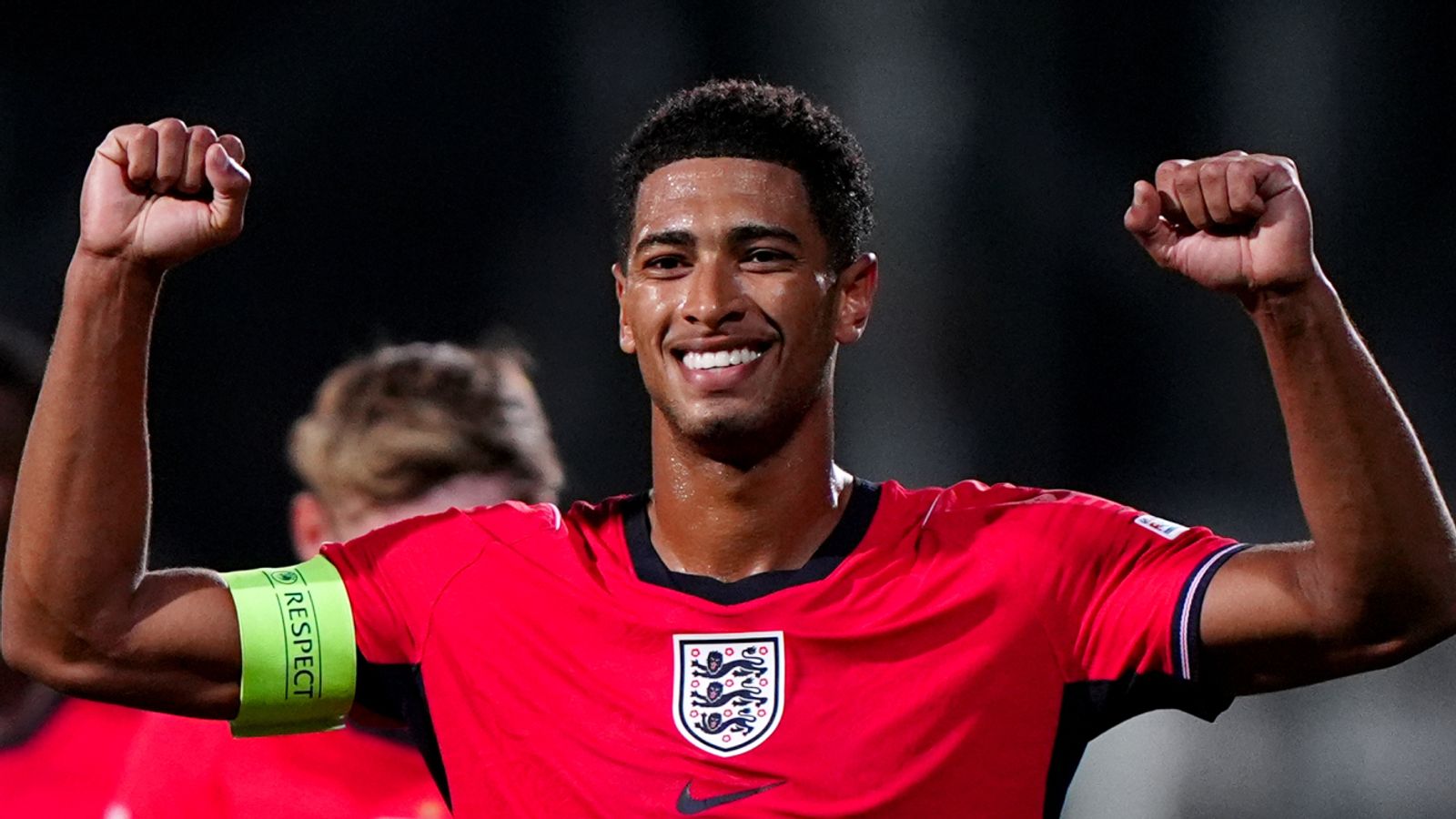
Jude Bellingham has been England’s engine. Redknapp compared his impact to Paul Gascoigne’s legendary run at Italia '90. Gascoigne’s ability to glide past defenders left Frank Rijkaard chasing shadows.
Bellingham brings that same defiance. His Champions League winning experience with Real Madrid shows in his pressure management. Against Mexico, he completed eighty-eight percent of his passes while closely marked.
Tuchel’s side relies on this central drive. With Bukayo Saka struggling with an Achilles injury, the creative burden increases. Noni Madueke is reported to start on the right, meaning the right-wing dynamic will be direct rather than possession-focused.
Bellingham’s physical load will be immense. Unlike Gazza in 1990, who played in cooler Italian evenings, Bellingham must run the box-to-box channels in Miami's humidity. His ability to sustain his ninety-minute intensity will dictate whether England can control the tempo or if they will be forced into a defensive block.
The Midnight Kickoff Dilemma
Tonight's match is scheduled to kick off at 10pm BST. However, the threat of electrical storms in Miami looms large, a scenario Sky Sports' live coverage warns could cause further disruption. England's round of sixteen match against Mexico was delayed by an hour, forcing fans in the UK to wait until 2am BST for kickoff.
To mitigate this, the UK government has intervened. Licensed venues can remain open until 30 minutes after the final whistle, even if weather delays push the game deep into the night.
This regulatory flexibility is a relief for fans, but the players have no such shield. If the kickoff is delayed, the physical toll of waiting in high-humidity dressing rooms will compound the fatigue. Spain’s late victory yesterday, sealed by another late Merino goal, shows that tournament football in July is a war of attrition.
A storm delay also disrupts the team's nutritional and preparation timeline. Players eat their pre-match meals exactly three hours before kickoff. A two-hour delay means energy levels start to dip, and warm-up routines must be repeated, increasing the risk of soft-tissue injuries.
Read Next
- Why England's defensive crisis gives Norway a golden ticket in Miami
- Tuchel faces his biggest nightmare in Miami as England meet Norway
- England face their biggest test yet against Norway in Miami
- England facing critical fitness hurdles ahead of Norway showdown
- 🏆 World Cup 2026 — Full Coverage Hub
- 🏴 England World Cup 2026 — Three Lions Hub