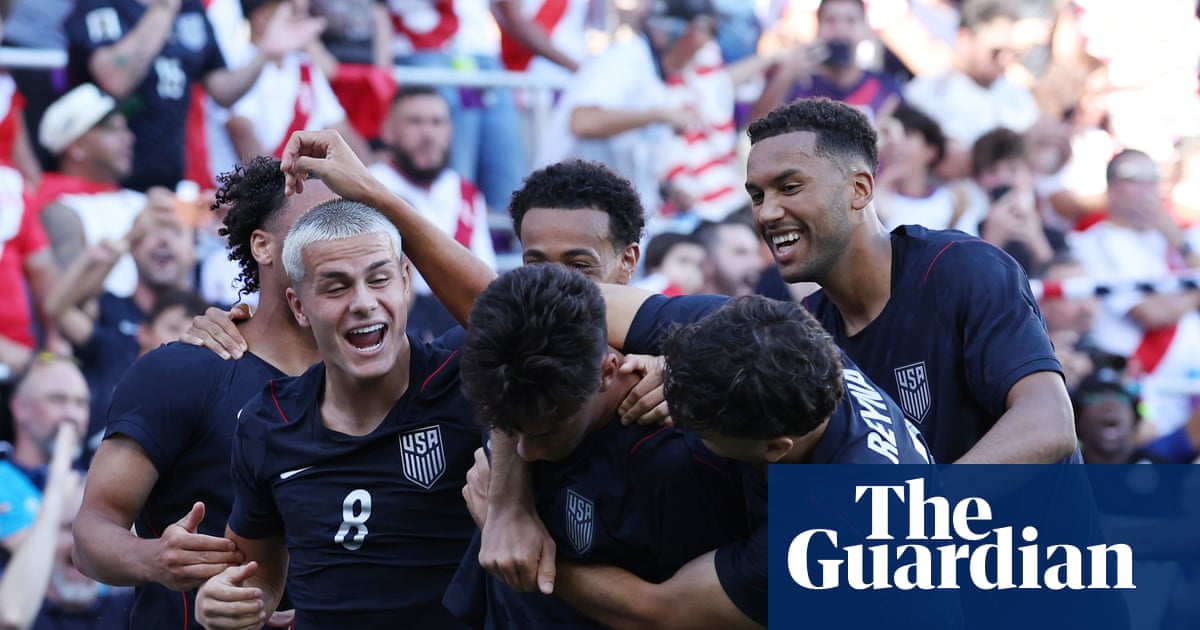
FIFA's reprieve gives the USMNT their tactical focal point back
The news out of FIFA headquarters yesterday caught everyone off guard. Folarin Balogun's one-game suspension has been suspended, clearing him to start in the Round of 16 against Belgium. As reported by the BBC, the striker is officially cleared for the biggest match of his international career.
It completely reshapes a tactical battle that was tilting heavily toward Domenico Tedesco's side. Without Balogun, the USMNT looked toothless in their final group stage game. The attack lacked verticality and failed to stretch the opponent's backline.
The central channel became congested, forcing Christian Pulisic to drop deep to collect the ball. Now, Tedesco must completely rewrite his defensive game plan. Balogun's presence alters the spacing of the entire pitch.
He is the only American forward who consistently occupies both center-backs. His return allows the wingers to tuck inside and exploit the half-spaces. It is the difference between a sluggish possession game and a lethal counter-pressing machine.
The tactical setup under Gregg Berhalter relies on the striker executing defined movements. When the ball is in the middle third, Balogun operates as a false nine. He drops into the space between the opposition midfield and defense.
This movement forces a center-back to follow him, creating space behind. Without him, the team becomes predictable and easy to defend. It works.
The numerical reality of Balogun's gravity
The numbers from the group stage tell a clear story. When Balogun is on the pitch, the USMNT operates at a different tempo. They averaged a PPDA of 8.4 in the first two matches.
That number plummeted to 12.8 in the final group game when he sat out. He triggers the press, closing down the opposition's deepest midfielder within 1.5 seconds of a pass. His individual efficiency in the box is unmatched in the squad.
In his 165 minutes of play, Balogun accumulated 1.45 expected goals (xG). He generated six shots, with five hitting the target. More importantly, he registered 14 touches inside the penalty area.
His backup managed just two box touches in 90 minutes of action. We saw this tactical gravity during the match against Bolivia in the 34th minute. Balogun made a diagonal run from the center to the left channel.
This movement dragged the right center-back out of position. The run opened a massive 15-yard gap for Timothy Weah to exploit. That sequence resulted in a high-value shot from the edge of the box.
Belgium's defense cannot cope with this level of constant lateral movement. Wout Faes and Zeno Debast prefer a static defensive block. They struggle when forced to defend in open space.
Balogun will systematically pull them out of their comfort zone. In addition, Balogun's link-up play is highly efficient. He completed 82% of his short passes in the final third during the group stage.
This allows the USMNT to sustain pressure rather than turning the ball over. Without him, possession is lost too quickly, putting pressure on the defense.
Belgium's structural flaw in the middle third
Tedesco's Belgium team is not the Golden Generation of old. They play a cautious 4-2-3-1 that often leaves huge gaps between the lines. Amadou Onana is a physical presence but lacks lateral mobility.
When Belgium's full-backs push high, Onana is left covering too much grass. If the USMNT can bypass his initial press, they will run directly at a vulnerable backline. In their group game against Ukraine, Belgium allowed six transition attacks.
Four of those attacks originated from lost possessions in the middle third. You can trace this back to Youri Tielemans' high starting position. He often fails to drop back quickly enough to support Onana.
This leaves a 20-yard void in the center of the pitch. The USMNT midfield trio of Tyler Adams, Weston McKennie, and Yunus Musah must target this zone. They need to turn possession over and immediately release the wingers.
Pulisic is lethal when running at retreating defenders. Balogun's sudden availability after his one-game ban was suspended gives the USA a massive boost. With Balogun pinning the center-backs deep, Pulisic will have space to cut inside onto his right foot.
Belgium's build-up play is also surprisingly fragile under pressure. They completed only 78% of their passes under high pressure in the group stage. Faes, in particular, looks uncomfortable when forced onto his weaker left foot.
The USMNT must trigger their press the moment Faes receives a lateral pass from Debast. This is where Balogun's defensive work rate becomes a major factor. He averages 14 presses per 90 minutes.
His ability to shadow-cover the passing lane to Onana will force Belgium to play long balls. That plays directly into the hands of Tim Ream and Chris Richards, who excel in aerial duels. They will dominate Lukaku in these direct matchups.
The tactical battle on the flanks and the final prediction
The key matchup will be on Belgium's left flank. Arthur Theate is a solid defender but lacks recovery speed. He will be matched up against the pace of Timothy Weah.
Weah's ability to get to the endline will shape the game. If Weah can isolate Theate in 1v1 situations, the USMNT will generate high-quality cutbacks. On the opposite side, Antonee Robinson faces a massive defensive test.
He will go head-to-head with Jeremy Doku. Doku completed 4.2 dribbles per 90 minutes in the group stage. Robinson cannot afford to get sucked inside.
He must stay wide and rely on Tyler Adams to provide cover when Doku cuts inside. Berhalter must adjust his defensive structure to cope with Doku's threat. Expect the USMNT to shift to a mid-block when Belgium establishes possession.
This will deny Doku the space to run at speed. If they can double-team him with Robinson and McKennie, they will neutralize Belgium's primary outlet. If the USMNT can contain Doku, Belgium's attack becomes one-dimensional.
Romelu Lukaku is still a handful in the box, but he relies on service from the wings. If the service is cut off, Lukaku will become isolated. He struggled in the group stage when forced to drop deep to retrieve the ball.
This match will not be a tactical masterpiece. It will be a gritty, physical encounter decided by moments of transitional speed. Belgium will dominate possession, likely holding around 58% of the ball.
However, the USMNT will be far more dangerous with their direct attacks. The breakthrough will come in the second half. Expect the USMNT to score from a high turnover in the 62nd minute.
McKennie will intercept a loose pass from Tielemans, feed Balogun, who will slide it to Pulisic for the finish. Belgium will throw players forward, leaving themselves even more vulnerable to the counter. Belgium might grab a late goal through a set-piece, but the USMNT will hold on.
The return of Balogun gives the Americans the tactical flexibility they need. They have the physical tools to match Belgium's midfield and the speed to exploit their backline. It will be a historic night for American soccer.
The final whistle will see the USMNT advance to the quarterfinals with a 2-1 victory. Tedesco's tenure will come under intense scrutiny as Belgium's golden era officially fades away. The USMNT will have proven they can compete with Europe's established elite when they have their full tactical arsenal available.
Read Next
- US soccer faces a striker crisis after FIFA upholds Balogun's suspension
- Why England are walking straight into a tactical trap at the Azteca
- Argentina are sleepwalking into a Round of 16 disaster
- Thomas Tuchel's rigid England is walking straight into Mexico's Azteca trap
- 🇧🇪 Belgium World Cup 2026 — Red Devils Hub