Tottenham Hotspur's close escape from relegation last season should have served as a sobering wake-up call. Under the temporary stewardship that guided them through the final weeks of the campaign, Spurs managed to secure their Premier League status by the narrowest of margins. It was a stressful period for supporters, characterized by tactical incoherence and defensive panic.
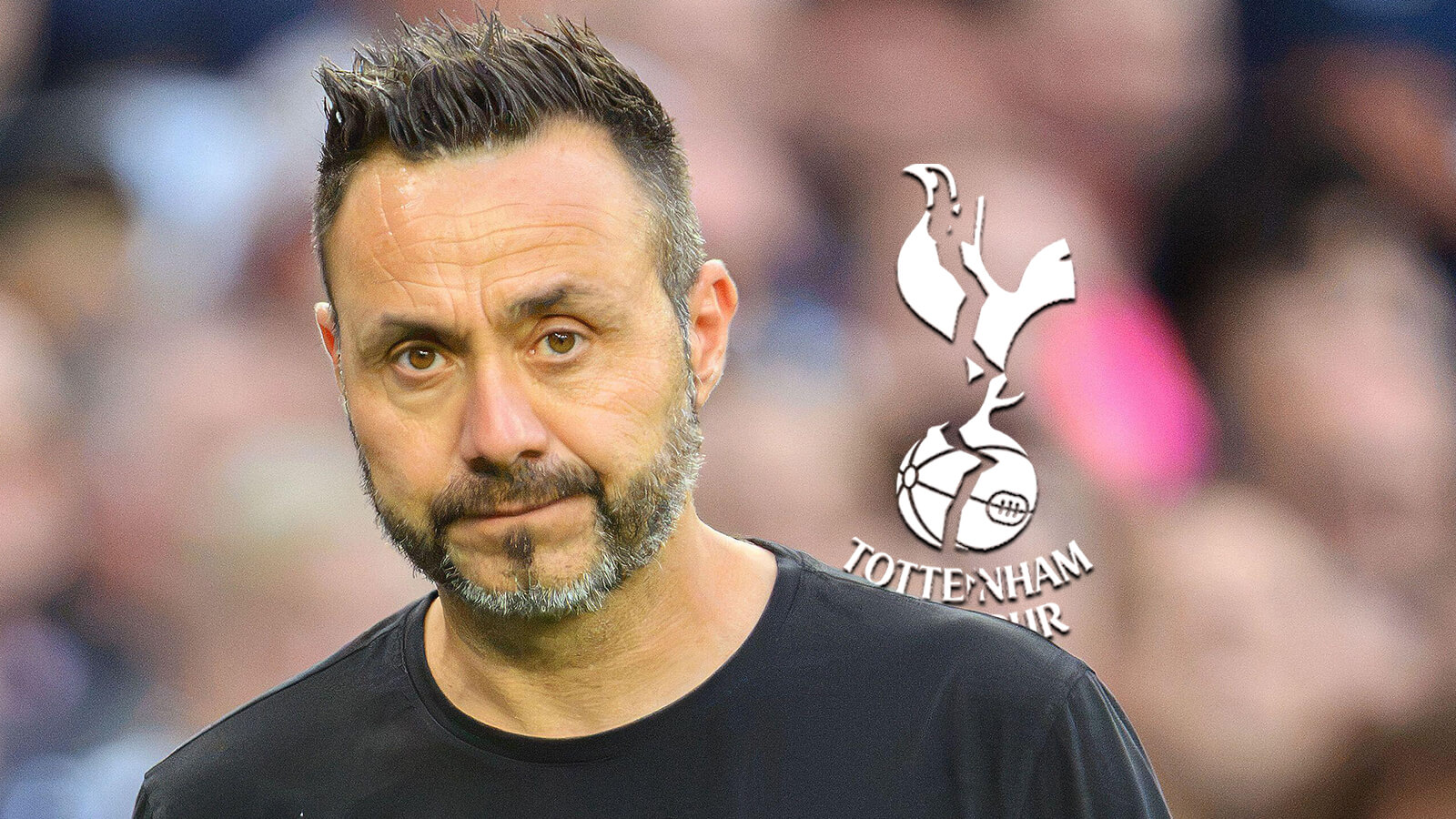
Yet, as the new season approaches, the club has opted for a radical, highly expensive reset under Roberto De Zerbi. The Italian manager brings a clear, uncompromising philosophy to North London, but the early signs suggest that the club is repeating old errors in new, more expensive ways. The decision to let Joao Palhinha depart while spending astronomical sums on replacement midfielders represents a massive tactical gamble.
The Cost of Avoiding Another Disaster
Joao Palhinha was the glue that held Tottenham together during the darkest periods of last season. The Portuguese midfielder completed 45 appearances across all competitions, acting as a defensive shield in front of a backline that consistently leaked high-value chances. His defensive metrics were elite, averaging 4.6 tackles per 90 minutes and winning 62% of his ground duels. He was their savior.
His contribution culminated in the final-day showdown against Everton at the Tottenham Hotspur Stadium. With relegation still a distinct mathematical possibility, the pressure was immense. Palhinha rose to the occasion, scoring the only goal in a nervy 1-0 victory that finally guaranteed safety.
Instead of building on this foundation, the club confirmed Palhinha's departure on July 3, returning to Bayern Munich before an expected move to Sporting. Replacing a player of that defensive profile is difficult enough, but the manner in which Spurs have chosen to do so is baffling. The club has sanctioned a double swoop in midfield, securing Sandro Tonali for £100 million and West Ham's Mateus Fernandes for £85 million.
To spend £185 million on two players immediately after escaping relegation is a major financial risk. If this new midfield fails to click instantly, the club will find itself in an even deeper hole than last year. As reported on the Sky Sports Spurs live blog, the recruitment strategy represents a radical departure from the club's traditional prudence. The pressure is on.
The De Zerbi Double-Pivot Puzzle
To understand why this recruitment drive is so risky, one must look at how Roberto De Zerbi sets up his midfield. In his preferred 4-2-3-1 system, the two central midfielders are not there to simply win tackles and shield the defense. De Zerbi demands that his double pivot drop deep, often level with the center-backs, to draw the opposition press.
This baiting process is highly structured. The midfielders must receive the ball under intense pressure, turn, and find vertical passing lanes into the attacking midfielders or wide forwards. This requires a specific skill set that Palhinha lacked, which explains why he was allowed to leave.
Whether Sandro Tonali fits this mold is highly debatable. Tonali is a player of immense talent and integrity, having voluntarily given up £7 million in wages to show his respect to Newcastle United during his ten-month ban. Upon his return, he was instrumental in driving Newcastle to a League Cup trophy and Champions League qualification. He is a winner.
Yet, Tonali's best work has always been done as an active, vertical runner. At AC Milan and under Eddie Howe at Newcastle, Tonali operated best when he could break forward into the half-spaces, using his physical power and direct running to transition the team. In a De Zerbi system, he will be asked to play a much more disciplined, positional game, sitting deep and recycling possession.
If you take away Tonali's ability to drive forward, you are paying a record fee for a restricted version of an elite box-to-box midfielder. This is a tactical mismatch. The player will need to adjust quickly to avoid becoming a liability in possession.
Mateus Fernandes represents another high-priced tactical gamble. The Portuguese midfielder joined from West Ham, citing the manager's presence as the decisive factor.
"De Zerbi was the reason I joined." — Mateus Fernandes
Fernandes has excellent technical qualities and is highly press-resistant, but his defensive output is low. He averaged just 1.8 tackles per 90 minutes last season, meaning Spurs will lack a genuine ball-winner in the center of the park. If Fernandes and Tonali fail to coordinate their movements during the build-up, opponents will exploit the spaces behind them with ease.
The Bergvall Hostage Situation
While the club has spent lavishly on new arrivals, the situation surrounding Lucas Bergvall has turned into an unnecessary distraction. The 20-year-old Swedish midfielder has made it clear that he wants to leave Tottenham. Bergvall spent the summer starting regularly for Sweden before their exit from the World Cup, proving that he is ready for regular first-team football. He wants out.
He wants to play in his preferred No. 8 position, where he can use his ball-carrying ability to influence games in the final third. However, Spurs have blocked any potential move, informing Bergvall that he will remain at the club. Nottingham Forest have shown strong interest, indicating they are willing to pay a fee comparable to the £45 million Brighton paid for defender Luka Vuskovic.
Spurs refuse to budge. Keeping a young player against his will is always a dangerous strategy, particularly when the tactical system does not suit him. Under De Zerbi, there is no natural role for a roaming No. 8 like Bergvall.
The double pivot requires disciplined, deep-lying distributors, while the advanced midfield role demands a creative playmaker who can operate in tight spaces. Bergvall's strengths lie in transition and late runs into the penalty box, features that are restricted by De Zerbi's rigid positional play. By forcing him to stay, Spurs are depressing his market value and keeping a disgruntled player in the squad.
Tottenham's interest in Eli Junior Kroupi of Bournemouth further illustrates this scattergun approach. While a source dismissed the speculation by asking, "Who isn't interested in him?", the reality is that Bournemouth have no intention of selling a player prized by Marco Rose. Spurs are chasing attackers when their defensive foundation remains completely unaddressed.
The Chaos of Pre-Season and the Brentford Test
Tottenham's preparation for the new season does not inspire confidence. The pre-season schedule is a logistical nightmare that prioritizes commercial revenue over tactical preparation. The team will play MK Dons on July 22 before flying to the Southern Hemisphere for matches against Auckland FC on July 26, Sydney FC on July 29, and Chelsea on August 1.
This grueling tour will subject the squad to jet lag and fatigue just weeks before the season begins. While details of the Getafe friendly emerged in the latest Spurs schedule updates, the reality is that a behind-closed-doors match on August 8 at Hotspur Way offers little preparation for the intensity of the Premier League. The team will then face Hoffenheim twice in mid-August.
This disjointed schedule leaves De Zerbi with very little time to drill his complex defensive and offensive patterns into the squad. The true test of this rebuild will come on the opening day of the season. Spurs travel to Brentford on August 22 for a 5.30pm kick-off, a match that will be broadcast live. This will be brutal.
Brentford are famously organized and possess one of the most efficient high presses in the division. Thomas Frank's side will look to exploit any hesitation in Spurs' new-look midfield. If Tonali and Fernandes have not developed a seamless understanding, Brentford's forward line will press them high up the pitch and create high-value turnovers.
Last season, Spurs conceded 14 goals from high turnovers. Without Palhinha's physical presence to break up play, those numbers could get even worse. De Zerbi's insistence on short passing from the back will be tested to its absolute limit at the Gtech Community Stadium.
The Verdict: A Disjointed Start for De Zerbi
The opening fixture at Brentford feels like a mismatch in terms of preparation. While Brentford have a settled squad and a clear identity, Spurs are still trying to integrate expensive new components under a demanding manager. De Zerbi's system takes months to perfect, and the combination of jet lag and lack of defensive cover will prove costly.
Expect a frantic, disjointed performance from the visitors. Brentford will exploit Spurs' defensive vulnerabilities and secure a comfortable victory. I am predicting a 2-1 win for Brentford, leaving De Zerbi with plenty of tactical homework to do.
Read Next
- Spurs are taking a massive fitness gamble on Sandro Tonali
- Why West Ham and Everton's winger gamble is bound to backfire
- Why Folarin Balogun is the wildcard Tottenham need to rebuild their attack
- Tuchel's tactical geometry is about to clash with the Azteca heat
- 🏆 Europa League Final 2026 — Full Coverage Hub