Welcome to the Border Patrol Invitational
Pull up a stool, grab a cold one, and let's talk about the absolute geopolitical comedy currently unfolding in Washington. You might think the World Cup is about high-press systems, overlapping fullbacks, or whatever tactical buzzwords the talking heads are throwing around.
But this week, the biggest storyline didn't happen in the penalty box. It occurred at a press briefing in Washington, D.C., and was delivered by a cabinet member.
U.S. Homeland Security Secretary Markwayne Mullin decided to drop the diplomatic filter entirely. Speaking to reporters on June 30, 2026, Mullin looked like a guy who had just won the lottery.
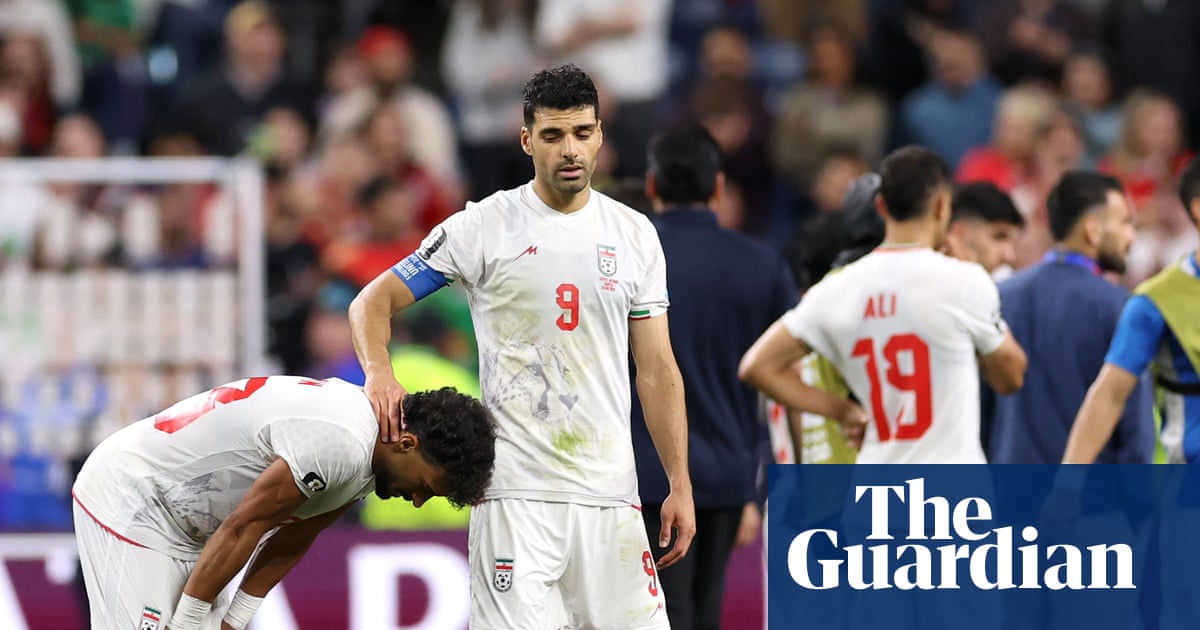
Instead of talking about border policy or airport security queues, he was talking about football. Specifically, he was celebrating the fact that the Iranian national team had just been booted out of the tournament.
Mullin did not hold back. According to reports from The Guardian, Mullin openly cheered the elimination.
He told the press room he was glad they were done and not coming back. He even confessed to pulling their visas and singing a song or two, and maybe doing a happy dance.
"I'm just glad they're done, and they're not coming back. I was so happy when we were able to pull their visas and said they could leave the U.S. soil, and I might've sung a song or two or maybe even danced a happy dance"
Let that sink in. The head of Homeland Security, confirmed by the Senate back in March, was doing a little jig over a football team.
He claimed the Iranian squad required more security management than any other group in the tournament. Honestly, it sounds like he was dealing with a diplomatic crisis instead of a roster of athletes.
But if you look at how this team was treated, you can see why they were a headache.
For weeks leading up to the tournament, the drama was building behind closed doors. The U.S. government had been dragging its feet on visa approvals for the Iranian delegation.
Players, coaching staff, and support personnel were left in limbo while politicians used them as bargaining chips. Sports are supposed to be neutral ground, but in the summer of 2026, that neutrality went right out the window.
When the tournament finally kicked off, the host nation made it clear that Iran was not welcome to stay. While other squads enjoyed luxurious training camps in California and Florida, Iran was treated like a security risk.
They were forced to set up camp in another country entirely. The logistics alone would have broken most teams before they even stepped onto the pitch.
Tijuana is Not a World Cup Base Camp
Let's talk about the logistics. The tournament organizers decided that the Iranian team could not stay in the United States between games.
They were forced to set up their base camp in Mexico. Specifically, they stayed in Tijuana.
Imagine being a professional athlete at the pinnacle of your career. You are playing on the biggest stage in the world.
Yet, instead of resting in a quiet hotel in California, you are commuting across the border. They were allowed into the United States shortly before kickoff and ordered to leave immediately after.
It is the sporting equivalent of being a retail worker on a temporary shift.
This setup was a direct result of the toxic political climate between Washington and Tehran. The visa approval process was a bureaucratic nightmare.
The team originally wanted to base themselves in Tucson, Arizona. That plan was shot down faster than an offside winger, forcing the move to Tijuana.
Iran's head coach, Amir Ghalenoei, was absolutely furious about the situation. He labeled his team the "most oppressed" squad at the tournament.
He argued that the constant travel and border checkpoints completely ruined their preparation. He has a point, even if his tactics on the pitch did not help matters.
Think about the physical toll this took on the players. They played their group-stage matches in Los Angeles and Seattle.
They had to fly in, play, get back on a bus, and cross back into Mexico. That is not a professional training regime.
That is a weekly border-crossing grind that would exhaust a commuter, let alone an elite athlete.
The behind-the-scenes reality was even more chaotic than the public statements suggested. Security detail accompanied the team everywhere, treating them more like prisoners than competitors.
Every border crossing involved hours of waiting, passport checks, and suspicious looks from customs officers. It is a miracle they managed to field eleven players who could run for ninety minutes.
Three Draws and a Heartbreak
Now, let's get into the actual football. Iran was drawn into Group G alongside Belgium, Egypt, and New Zealand.
It was a tough group, but not impossible. Yet, they played like a team that was already exhausted before the whistle blew.
They started their campaign with a wild 2-2 draw against New Zealand at SoFi Stadium. That game was pure chaos, with both defenses looking like they were running on sand.
Then came the match against Belgium on June 21, which was a cure for insomnia. It ended in a boring 0-0 draw, even though Belgium's Nathan Ngoy was sent off.
Despite playing against ten men, Iran could not find the net. Thibaut Courtois barely had to stretch his arms.
Meanwhile, Alireza Beiranvand made a couple of decent saves to keep the clean sheet. It was a cowardly performance from a team that needed a win to secure their destiny.
If you are playing with an extra man for the final half-hour against a European giant, you have to go for it. Instead, Ghalenoei had his team sitting back, protecting a point like they were defending a lead in a cup final.
It was negative, defensive football at its worst. They got what they deserved for their lack of ambition.
Everything came down to the final match against Egypt in Seattle on June 26. Egypt took the lead in the 5th minute through Mahmoud Saber.
Iran fought back, with Ramin Rezaeian scoring a brilliant equalizer in the 14th minute. The rest of the game was a slugfest, with both teams trading heavy blows.
Then, the drama reached a boiling point in the 93rd minute. Substitute Shoja Khalilzadeh slid in at the back post to convert a cross.
The stadium erupted, and the Iranian bench stormed the pitch. They thought they had secured a historic victory.
But the football gods are cruel, and they carry a whistle. The VAR officials reviewed the build-up and spotted an offside.
Khalilzadeh was ruled offside by a matter of millimeters. The goal was wiped off the board, and the match ended in a 1-1 draw.
Iran finished the group stage with three points from three draws. They had to wait for other groups to finish to see if they could sneak through.
That dream died when Austria and Algeria played out a wild 3-3 draw, sealing Iran's fate. They were going home, and Secretary Mullin was putting on his dancing shoes.
Cabinet Members Dancing Like Toddlers
The reaction from Iran was swift and angry. The Iran Football Federation called Mullin's comments "hostile" and accused the U.S. of a total disregard for international principles.
They pointed out that sports are supposed to be above politics. But anyone who believes that has not been paying attention to the last fifty years of sports history.
Let's be real here. Mullin's public celebration is a bad look. It is petty, unprofessional, and unnecessary.
A high-ranking government official should not be bragging about visa manipulation like he is a bouncer at a cheap nightclub. It makes the host nation look insecure and hostile.
Imagine if the UK Home Secretary danced a jig because Argentina got knocked out of a tournament. The media would have a field day, and diplomatic cables would fly.
But Mullin seems to think he is on a talk radio show rather than running a major federal department. It is embarrassing behavior for a diplomat representing a host nation.
At the same time, the Iranian delegation's complaints ring a bit hollow. Yes, the travel was ridiculous. Yes, the Tijuana commute was a logistical disaster.
But they had Belgium on the ropes with a red card and failed to register a single shot on target. You cannot blame the border patrol for your own toothless attack.
The reality is that both sides played their roles in this circus. The U.S. government used security concerns to make life miserable for an adversary's sports team.
The Iranian government used the restrictions as a built-in excuse for a disappointing tournament run. In the end, the only victims were the fans who had to watch some incredibly dull defensive football.
This whole episode leaves a bad taste in the mouth. The 2026 World Cup was promoted as a tournament of unity and global partnership.
Instead, we got a security chief acting like a victorious internet troll and a football team commuting from Tijuana.
Let's hope the knockout rounds give us some actual soccer to talk about, because this political theater is exhausting, especially after the details of this briefing went public.

.jpg)