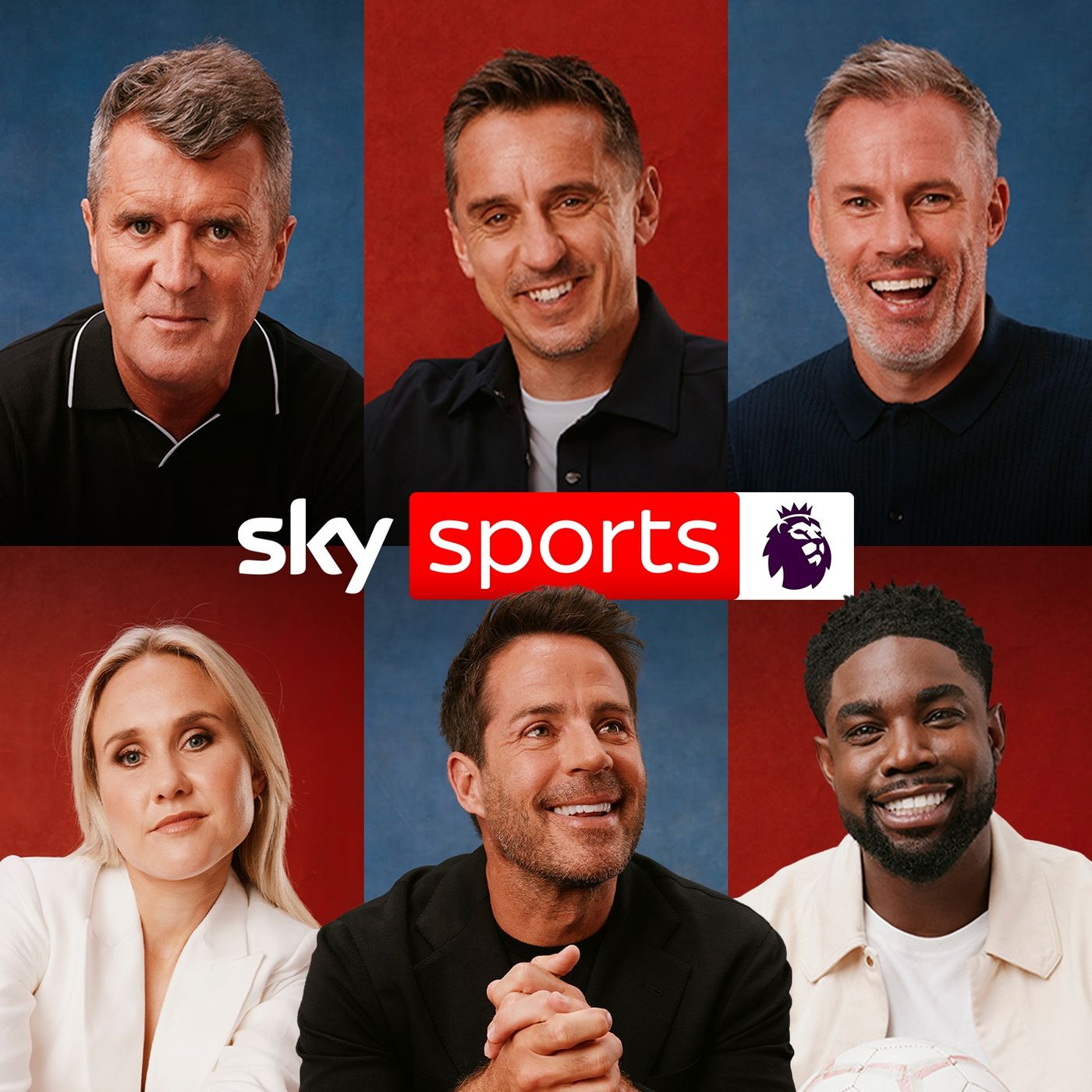
🎙️ Sky Sports Premier League Podcast •August 3, 2026 •⏱️ 36 min

A big summer for... Manchester United

🎧 Listen to Original Episode →

1. Executive Overview: Core Theses & Key Revelations

The latest installment of the Sky Sports Premier League Podcast, featuring senior news reporter Dan Carr and football analyst Will Bitterberry alongside host Joe, marks a watershed moment in the media narrative surrounding Manchester United. Following a decade defined by reactive managerial appointments, sprawling transfer sagas, and inflationary expenditure, the panel's reporting confirms that the Old Trafford club has quietly established a far more disciplined operational blueprint. Anchoring this structural transformation is the official confirmation that Michael Carrick has been awarded a two-year contract extension, tying him to the club through June 2028. Carrick's transition from interim caretaker to permanent manager comes on the back of securing Champions League qualification—a feat that has fundamentally redefined the club's short-term trajectory and restored a degree of internal stability unseen since Sir Alex Ferguson's departure.

Central to the podcast's investigative revelations is a radical departure in recruitment strategy. Dan Carr confirmed that Manchester United explicitly walked away from bidding wars for primary midfield targets when market values escalated beyond rational boundaries—most notably refusing to match Tottenham Hotspur's £90 million valuation for Mateusz Fernandez and stepping back from early inquiries for Atalanta's Ederson. In their stead, the sporting hierarchy executed swift, confidential moves to acquire Yuri Tielemans for £36 million via an undisclosed release clause—a deal wrapped up within 24 hours without prior media leaks—alongside Chelsea's highly rated 20-year-old playmaker Andrey Santos for £50 million. Combined with the arrival of free-agent goalkeeper Carl Dahl and developmental left-sided asset Tyne Thompson, United's summer business signals an intentional move toward technical progression, market opportunism, and squad malleability rather than headline-grabbing vanity signings.

Concurrently, the episode laid bare the symbolic and tactical marginalization of Marcus Rashford. Bitterberry and Carr detailed how the academy graduate's formal loss of the number 10 shirt—now assigned to summer signing Mateusz Cunha—reflects an organizational evolution past the forward. Following an uninspiring loan spell at Barcelona, where head coach Hansi Flick ultimately declined to trigger a permanent purchase option in favor of younger, lower-wage alternatives, Rashford returns to Carrington facing an uncertain future. While his retention provides depth on the left flank behind Cunha and Patrick Dorgu, his historical deficiencies in defensive pressing work rate present a direct tactical friction with Carrick's demanding out-of-possession structure.

Finally, the reporting highlighted critical roster vulnerabilities and squad governance priorities. While Dan Carr confirmed unequivocally that captain Bruno Fernandes will remain at Old Trafford despite persistent overseas interest, the panel emphasized an urgent structural deficit at left-back. With Luke Shaw unable to sustain a multi-competition schedule demanding three matches per week, United have identified Newcastle United's Lewis Hall as a realistic, achievable target before the transfer deadline. Coupled with the planned integration of academy prospects Shea Lacey and JJ Gabriel, Manchester United are attempting to construct a sustainable, multi-year Champions League baseline designed to break the boom-and-bust cycles of their recent past.

2. Context & Background: The Landscape Leading to This Conversation

To fully appreciate the significance of the revelations shared on the podcast, one must contextualize the turbulent landscape Manchester United inhabited prior to Michael Carrick's arrival. The post-Ferguson era had degenerated into a series of mismatched managerial epochs, ranging from the rigid positional play of Louis van Gaal and the pragmatic low-block counter-attacking of José Mourinho to the systemic pressing ambitions of Erik ten Hag and Ruben Amorim. Each successive regime left behind an eclectic, high-wage squad lacking tactical cohesion or structural identity. The football club had become infamous within global scouting circles for paying the so-called "United Tax"—an arbitrary premium attached to any player target once Old Trafford expressed interest, resulting in protracted transfer sagas that eroded leverage and inflated wage structures.

When Carrick assumed control mid-season on an interim basis, the team was languishing in mid-table obscurity, burdened by structural fragility in central midfield and an unsustainable reliance on individual moments of brilliance. Carrick's initial mandate was merely to stabilize a fractured dressing room and navigate an arduous fixture list. However, by implementing a refined possession framework—drawing heavily upon the fluid 3-2-5 build-up patterns he perfected during his managerial tenure at Middlesbrough—Carrick orchestrated a remarkable surge in form. His ability to elevate key personnel, most notably guiding Kobbie Mainoo toward defensive maturity and tactical discipline during high-stakes encounters like the victory at Stamford Bridge, transformed an outside top-four bid into guaranteed Champions League qualification.

This qualification arrived at a pivotal juncture for the Premier League's broader competitive hierarchy. While rival institutions have succumbed to widespread managerial turnover and squad disruption—with Chelsea navigating yet another tactical overhaul under Xabi Alonso and Newcastle adjusting to new leadership—Carrick's formal appointment through 2028 positions him as the seventh longest-serving manager in the English top flight despite having taken charge mid-campaign. This rare structural continuity, paired with strict Profitability and Sustainability Rules (PSR) oversight, forced Manchester United's new football executive structure to abandon outdated recruitment habits. The conversation between Carr, Bitterberry, and Joe serves as the first comprehensive audit of this new operational reality as the club prepares for its opening fixture against Hull City.

3. Deep-Dive Thematic Breakdown

3.1 The Carrick Contract & Tactical Paradigm Shift

The confirmation of Michael Carrick's permanent two-year contract through 2028 represents far more than administrative continuity; it validates a fundamental overhaul of Manchester United's tactical identity. For years, the club's midfield strategy was obsessed with acquiring a singular "destroyer"—a physical anchor in the mold of Casemiro designed to break up opposition counter-attacks through raw tackling and interception metrics. However, as Dan Carr and Will Bitterberry observed during the podcast, Carrick's tactical vision eschews the traditional ball-winning 6 in favor of a fluid, dual-pivot progression system heavily inspired by Paris Saint-Germain's modern central midfield structures.

Rather than demanding an exact replica of Casemiro's defensive profile, Carrick prioritizes technical security under pressure, line-breaking passing range, and spatial intelligence. In Carrick's setup, the central midfielders are tasked with receiving the ball in tight, deep-lying zones, drawing opposition presses, and accelerating ball movement into the half-spaces. This approach relies on positional rotation rather than brute physical force to protect the defensive line. During pre-season, this paradigm shift was evident in the deployment of Kobbie Mainoo alongside summer arrivals. Mainoo's evolution from a purely ball-carrying prospect into a tactically disciplined controller—a development highlighted by Bitterberry regarding his out-of-possession display against Chelsea—illustrates how Carrick uses collective positioning to compensate for individual defensive limitations.

Furthermore, Carrick's tactical framework incorporates asymmetrical full-back behavior developed during his time at Middlesbrough. By advancing one full-back high into the attacking line while overloading the central corridors with technical midfielders, United aim to pin opposition sides deep within their own defensive third. This tactical evolution explains why the recruitment team shifted away from pure ball-winners like Kalvin Phillips or high-cost physical profiles, focusing instead on players capable of sustaining heavy possession dominance and manipulating defensive blocks.

3.2 Opportunistic Recruitment & The End of 'United Tax'

The summer transfer window of 2026 will be remembered as the point where Manchester United dismantled their reputation as gullible market participants. The podcast revealed how the club's sporting leadership operated with unprecedented stealth and financial discipline. The acquisition of Yuri Tielemans from Aston Villa serves as the primary case study for this new methodology. Completed within a 24-hour window for £36 million by triggering a confidential release clause, the transaction caught both rival clubs and mainstream media entirely off guard. Tielemans brings proven Premier League pedigree, elite set-piece delivery, and multi-trophy experience, offering immediate tactical depth without requiring a lengthy adaptation period.

Equally revealing was the £50 million deal for Chelsea's Andrey Santos. Despite Chelsea supporters expressing widespread frustration on social media regarding the departure of the 20-year-old Brazilian, United moved decisively to secure a player whose pre-season performances have drawn glowing reviews from analytical observers. Santos possesses a rare hybrid profile: capable of picking up the ball in deep-line areas under extreme opposition pressure while possessing the physical capacity to cover ground defensively. His arrival, alongside developmental left-sided asset Tyne Thompson from Tottenham and free-agent goalkeeper Carl Dahl, underscores a multi-tiered recruitment model that balances immediate Premier League readiness with long-term athletic ceiling.

Crucially, this opportunistic approach was made possible by United's willingness to walk away from overpriced deals. When Tottenham Hotspur pushed the market value for Mateusz Fernandez to £90 million, United immediately terminated negotiations, refusing to be dragged into an inflationary bidding war. Similarly, when initial inquiries for Atalanta's Ederson proved unfeasible prior to the World Cup, the recruitment team seamlessly pivoted to Santos and Tielemans for a combined fee barely exceeding Fernandez's single price tag. This financial discipline represents a decisive end to the "United Tax."

Player Previous Club Fee (£M) Profile Type Operational Efficiency Index
Yuri Tielemans Aston Villa £36M Experienced Premier League Controller / Release Clause High (Completed in 24 Hours)
Andrey Santos Chelsea £50M Deep-Line Playmaker / Malleable Dynamic Engine High (Opportunistic Stealth Buy)
Tyne Thompson Tottenham Hotspur Nominal / Youth Developmental Left-Sided Utility Option Medium (Future Depth)
Carl Dahl Free Agent £0M Experienced Cover Goalkeeper High (Zero Financial Risk)
Mateusz Fernandez N/A (Targeted) £90M (Walked Away) High-Valuation Central Midfielder Aborted (Refused Inflation)

3.3 The Marcus Rashford Dilemma and the Cunha Paradigm

Few developments illustrate Manchester United's cultural and tactical reset more vividly than the status of Marcus Rashford. As revealed by Will Bitterberry during the podcast, Rashford's symbolic standing within the squad has suffered a definitive downgrade, punctuated by the structural decision to strip him of the number 10 jersey and reassign it to new marquee attacker Mateusz Cunha. This jersey re-allocation is not merely administrative; it reflects a harsh footballing assessment of Rashford's fit within Carrick's tactical ecosystem following his loan spell at Barcelona.

In Catalonia, despite earning praise from Hansi Flick for his off-field integration, Rashford failed to convince Barcelona's hierarchy to activate his permanent transfer clause. Instead, Barcelona opted for a younger, lower-wage English international alternative. The underlying rationale for Barcelona's decision mirrors the tactical reservations harbored by successive managers at club and international level. Both Bitterberry and Carr highlighted Rashford's chronic out-of-possession deficiencies—specifically his reluctance to engage in high-intensity defensive pressing, track back to support his full-back, or execute repetitive defensive recoveries. This press-averse profile stands in stark contrast to Thomas Tuchel's observations with the England national team and Erik ten Hag's prior structural complaints.

Conversely, Mateusz Cunha embodies the exact physical and defensive intensity Carrick demands from his forward line. Cunha's willingness to execute slide tackles, press opposing center-backs, and track deep into midfield corridors established him as an indispensable component of United's tactical setup toward the end of last season. While Rashford retains undeniable value as a direct, transitional threat off the bench—particularly given Patrick Dorgu's physical recovery from injury—his presence on high wages presents an operational paradox. Unless a late European suitor emerges before deadline day, Carrick must manage a world-class asset who must re-earn his place in a team that has structurally evolved beyond him.

3.4 Full-Back Fragility & The Lewis Hall Pursuit

While Manchester United's central midfield rebuild has progressed smoothly, the podcast panel identified a severe structural vulnerability on the left flank of the defense. Luke Shaw's established history of physical breakdown makes it functionally impossible for him to sustain the rigorous demands of a Champions League campaign alongside a 38-game Premier League schedule. As Dan Carr emphasized, expecting Shaw to play three high-intensity matches per week across domestic and continental competitions is an operational impossibility that threatens to destabilize United's defensive stability.

This physical limit has been exacerbated by the tactical repositioning of Patrick Dorgu. While Dorgu possesses the physical capability to operate as a traditional left-back, Carrick strongly prefers utilizing him in more advanced attacking areas, where his explosive power and line-breaking carries yielded exceptional metrics prior to his injury. Consequently, using Dorgu as primary full-back cover severely diminishes United's attacking variation on the left wing.

To resolve this structural imbalance, Dan Carr reported that Manchester United have set their sights on Newcastle United's Lewis Hall. Hall's profile aligns perfectly with Carrick's tactical demands: a technically gifted, inverted full-back capable of stepping into central midfield during build-up phases while possessing the mobility to defend wide spaces. Crucially, Carr noted that from a financial and negotiation standpoint, securing Hall feels "achievable" before the transfer window closes. Acquiring Hall would not only safeguard Shaw's physical durability through rotational load management but would also provide Carrick with the tactical flexibility required to navigate mid-week Champions League fixtures against elite European opposition.

3.5 Youth Pipeline & Multi-Year Compounding

Beyond immediate first-team recruitment, the podcast detailed a clear strategic commitment to internal youth integration as a mechanism for long-term squad sustainability. Analyst Will Bitterberry highlighted two academy talents slated for substantial first-team exposure this season: winger Shea Lacey and teenage prodigy JJ Gabriel. Lacey, whose technical dribbling and press-resistant ball control from the right flank offer a unique tactical alternative, is expected to feature regularly as a rotation option to balance United's right-sided attack. Meanwhile, 16-year-old JJ Gabriel is scheduled for domestic cup debuts and inclusion in expanded Champions League matchday traveling squads.

This emphasis on home-grown talent integration is directly tied to United's overarching macro-economic objective: establishing multi-year Champions League compounding. As Dan Carr astutely noted, the modern financial landscape dictates that a single season in the Champions League does not yield the transformational revenue required to overhaul a squad. Elite European clubs maintain their competitive advantage through three to four consecutive years of Champions League revenue generation, which builds the financial foundation needed to sign tier-one talent and absorb PSR constraints cleanly.

Having experienced historic low points in recent campaigns—finishing as low as 8th and 15th under previous managerial iterations—Manchester United's primary goal under Carrick is not necessarily an immediate, high-risk title charge, but rather the cementing of top-four consistency. By combining youth academy integration with sensible wage structures and sustained European qualification, the club is constructing a sustainable operational model designed to weather domestic volatility.

4. Speaker Perspectives & Analytical Contrast

The dialogue between host Joe, reporter Dan Carr, and analyst Will Bitterberry showcased a sophisticated mix of insider reporting, tactical interrogation, and realistic fandom perspective. Examining the subtle areas of agreement and tension between the speakers provides valuable insight into how media professionals view Manchester United's trajectory.

Host Joe performed the role of the probing skeptic, consistently pushing the panel to define the explicit parameters of success for Carrick's first full season in charge. Joe repeatedly raised questions regarding whether United had stumbled into favorable outcomes by accident—such as pivoting to Tielemans after missing out on primary targets—or whether these moves reflected genuine strategic foresight. He also drove the discussion surrounding external expectations, challenging the panel on whether a Champions League qualification finish represents genuine ambition or mere baseline consolidation.

Dan Carr provided authoritative, news-driven reporting grounded in direct access to executive networks. Carr was careful to frame United's transfer window as a work in progress, rating their current business as "on par" with sensible expectations rather than hyperbolic triumph. His key reporting contributions—confirming Bruno Fernandes's absolute retention, revealing the stealth 24-hour execution of the Tielemans clause, detailing the financial discipline in walking away from Fernandez, and breaking the news of United's achievable pursuit of Lewis Hall—served as the empirical foundation of the episode. Carr maintained a pragmatic stance, emphasizing that United's window must ultimately be judged by their ability to complete key outgoings before deadline day.

Will Bitterberry offered granular tactical analysis filtered through the lens of an informed Manchester United supporter. Bitterberry was particularly expressive regarding the Yuri Tielemans acquisition, identifying it as the most exciting transfer due to Tielemans' immediate Premier League readiness and proven trophy-winning experience at Leicester City and Aston Villa. Bitterberry was also uncompromising in his evaluation of Marcus Rashford, drawing direct parallels between Hansi Flick's reluctance to sign Rashford permanently and the historical pressing concerns highlighted by Thomas Tuchel and Erik ten Hag. However, Bitterberry balanced this critique by framing Rashford's retention as a luxury depth option, arguing that having a motivated Rashford competing against Mateusz Cunha creates healthy squad friction.

Speaker Primary Focus / Role Key Tactical / Market Stance Assessment of Summer Window
Joe (Host) Editorial Moderation & Expectation Framework Questions whether squad profiles represent deliberate planning or reactive pivots. Skeptical Optimism; Demands clear definition of season objectives.
Dan Carr Sky Sports News Reporter (Insider Access) Emphasizes market discipline, confirmed retention of Fernandes, and Lewis Hall target. "On Par"; Pragmatic evaluation dependent on late window outgoings.
Will Bitterberry Sky Sports Football Journalist (Tactical Analysis) Lauds Tielemans/Santos technical profiles; highlights Rashford's pressing deficits. Highly Optimistic; Values Premier League readiness and youth integration.

5. Strategic & Industry Implications

The insights articulated throughout the podcast reverberate far beyond Old Trafford, signaling a structural recalibration within the broader Premier League ecosystem. For over a decade, Manchester United operated as an inflationary force in the global transfer market—a club whose panic-driven, late-window spending routinely distorted player valuations and provided selling clubs with excessive leverage. By explicitly refusing to spend £90 million on Mateusz Fernandez and executing stealth release clauses for Yuri Tielemans, United have signaled to European football that they will no longer act as a buyer of last resort. This operational pivot forces selling clubs to re-evaluate their pricing strategies when negotiating with English institutions under strict PSR regulations.

Furthermore, Michael Carrick's contract extension through 2028 highlights the emerging value of managerial continuity in a league defined by volatility. With rivals undergoing turbulent managerial transitions, Manchester United's decision to provide Carrick with long-term structural backing creates a stable environment for player development. Carrick's status as the seventh longest-serving manager in the division—despite taking charge mid-season—underscores how rapidly rival setups are churning through coaching staff. This stability provides United with a distinct competitive advantage in tactical implementation, squad cohesion, and physical preparation during the grueling autumn fixture schedule.

Finally, the strategic shift away from vanity signings toward multi-year Champions League compounding reflects a mature understanding of modern football economics. In an era governed by strict financial fair play parameters, sustainable success cannot be purchased in a single transfer window. By building a squad rooted in technical versatility, lowering the average wage bill through sensible contract management, and opening defined pathways for elite academy talent like Shea Lacey, Manchester United are laying the groundwork for sustained structural competitiveness capable of challenging the dominant hierarchies of European football.

6. Looking Ahead: Unresolved Questions & Next Milestones

As Manchester United prepare to kick off their Premier League campaign against Hull City, several vital operational and tactical questions remain unresolved. The immediate focus centers on the final fortnight of the summer transfer window. While incoming business for Tielemans and Santos has stabilized the central midfield, the club's ability to secure Newcastle's Lewis Hall will dictate whether the left-back position remains a single point of failure. Simultaneously, resolving the futures of fringe squad members and determining whether a late European offer materializes for Marcus Rashford will determine whether United meet Dan Carr's criteria for a fully successful window.

Tactically, the opening block of fixtures—featuring matches against Hull City, Ipswich Town, and the highly anticipated Manchester Derby live on Sky Sports—will provide the first definitive evidence of Carrick's evolved possession system. Analysts will be scrutinizing central progression metrics, looking to see how effectively Andrey Santos and Yuri Tielemans share build-up responsibilities alongside Kobbie Mainoo. Furthermore, observing out-of-possession pressing structures will reveal whether Mateusz Cunha can maintain his defensive intensity and whether Rashford, if called upon from the bench, demonstrates the tracking back required to earn Carrick's trust.

Ultimately, the metric of success for Manchester United's 2026/27 campaign extends beyond short-term silverware. The true benchmark lies in establishing back-to-back Champions League qualification, cementing tactical continuity, and verifying that the operational discipline displayed throughout this summer represents a permanent structural transformation. If Carrick and the new sporting executive can maintain this trajectory, Manchester United will have finally closed the door on a decade of dysfunction and opened a compelling new chapter in their modern history.

💬 Key Quotes & Speaker Breakdown

Manager contract

"It has now been confirmed that Michael Carrick will remain as manager next season. His contract will now go for two years until 2028."

— Host

Transfer rumors

"Lewis Hall is someone they really admire and actually feels a little bit achievable now this summer. From a Manchester United perspective, he is achievable."

— Dan Carr

"I can put my pride aside and say we had absolutely no idea about the Yuri Tielemans signing for Manchester United. That was a surprise, maybe 24 hours that we knew they were interested, but the deal was done."

— Dan Carr

"Bruno Fernandes's future—I've been told he is absolutely staying. In case anyone still thought there was any chance that he could leave this summer, he is absolutely staying."

— Dan Carr

Player future

"It feels like a closing of the Marcus Rashford chapter at Manchester United. He hasn't got a squad number anymore; the number 10 shirt is now being occupied by Mateusz Cunha."

— Will Bitterberry

Transfer strategy

"I don't think Manchester United were ever going to spend 90 million for a midfielder. As soon as they saw Tottenham were probably going to outbid them, they walked away."

— Dan Carr

Transfer window

"I think we're probably on par with where we thought Manchester United would be. The midfield has been partly solved, but I think this is very much going to be dependent on a few more outgoings."

— Dan Carr

Squad depth

"They really need a left-back because Luke Shaw cannot play three games a week. You can't expect him to play Champions League and then back to the Premier League as well."

— Dan Carr

Transfer analysis

"The one that for me that probably excites me most would be the Yuri Tielemans signing because that's someone who follows on from the plan that we saw last season where you buy players who are already playing in the league."

— Will Bitterberry

Tactical analysis

"I think that ability to just pick up the ball from deep-lying areas and look forward and progress the ball through the lines is ultimately what Michael Carrick would have been looking for."

— Will Bitterberry
📜 View Full Episode Verbatim Transcript 41,208 characters
Colby Bader, who rattles an end in a straight blend. It's a special match. It's a terrific finish. Michael Carrick will be relieved. The champ as we felt in the distance a little bit, we're honest. It's a bit at one point. We want more. We want a good finish and high up the league. But certainly this huge credit is it. It goes for the players and the staff for putting us in this position at this stage. It has now been confirmed that Michael Carrick will remain as manager next season. He came in until the end of the season. However, his contract will now go for two years until 2028. He's done such a fantastic job on and off the pitch. I think most people in football would say that he deserves the job now. Permanent manager comes to a different level of pressure, a different level of expectation. So Manchester United with the Champions League next season and all those games midweek are going to need to really support Michael in the summer. I'm sure that's what their aim is. Manchester United summer rebuild continues. So today we are here to discuss everything about the club from transfers to next season's expectations and what two better gentlemen to join me today. The Sky Sports news report, Dan Carr and he's out as a manager tonight fan. Now I think Sky Sports football journalist Will Bitterberry feels like there's so much to discuss. Dan, let's come straight to you. The summer market. Do you think Manchester United happy with their business so far? I think we're probably on par with where we thought Manchester United would be. Look, we went into the summer thinking they need to really reinforce that midfield. They were under no illusions. That was a priority going in. It was a very interesting first month with Edison. We thought Manchester United would start their summer very quickly trying to wrap up Edison before he then went to the World Cup and obviously that's not materialised. But then they moved very quickly once Mercedes Fernandez didn't look very likely to then wrap up André Santos and Yuri Tillman's for just less than what Fernandez has cost Tottenham. So in my eyes, the midfield has been partly solved. Probably need another midfielder. But I think this is very much going to be dependent on a few more out goings. That's how I want to judge United a little bit. See what they can do with their out goings as well as maybe one or two more significant signings. What do you think? I mean, André Santos at 50. Carl Dahl is coming for free. Yuri Tillman's 36 million pounds. And of course, Tyne Thompson, formerly in plus four, isn't it from Spurs? Sort of more of a U-fordition but could offer an option on that left hand side. Where are you at? I guess the one that for me that probably excites me most or should excite Manchester United fans the most would be the Yuri Tillman signing because that's someone who it kind of follows on from the plan that we saw last season that sort of paid dividends at Manchester United where you buy players who are already playing in the league, who already have the understanding and have performed. And Yuri Tillman's fits that bill a bit of an experienced head as well. So I think that one would be the most exciting. Look, look, the others, you know, you're looking at Tyne Thompson, some one for the future obviously. Carl Dahl is not going to be playing a hell of a lot in the Premier League. But in terms of Yuri Tillman's, that is one that I think that a lot of Manchester United fans will be excited for. I think it's interesting, isn't it? Because obviously when you look at the business, you know, we're hoping to do. And Edison was clearly high on their agenda as was Mateusz Fernandez. They are quite different profiles to Yuri Tillman, who is much more of an experienced Premier League name, seemingly a really good fee because he had that release clause. Have you not, it sort of stumbled into potentially the better half of a deal here? Because I know some fans weren't happy with that Edison move, were they? Yeah, I mean, I think it's very much how you look at this. I think you can look half cup empty or half cup full. I mean, you could argue like Manchester United have been slightly indecisive because they went for Edison, found something they didn't like, and actually, like you said, you could argue, oh, this is their Plan B CD. However, I would probably see more of the value of where used to Manchester United in previous years under a different leadership, being involved in long drawn-out transfer sagas, where I have no issue, and I can put my pride aside and say, we had absolutely no idea about Yuri Tillman signing for Manchester United. Yeah. That's a very sad toss, maybe 24 hours that we knew that they were interested, but deal was done. You know, and Yuri Tillman, as you mentioned, well, this is a guy who has years of experience in the league, is one trofe he's, by the way, of both clubs he's been at, where you'd probably argue, you know, he's left them better than they were. Lester obviously got relegated when he left, but you see my point. So, look, I think with Manchester United's window generally, we will have to judge them at the end of it. You know, do they end up, I know we'll talk about possible additions later, where they end the window, I think will be much more reflective of there when it was a whole, but I still think there's a lot to do in terms of incoming and outgoing. Yeah, I mean, I think one addition that we have to talk about is Andre Santos, we mentioned him a couple of times. Another player that really came out of the blue, like you said, 24 hours, 40 hours, that was wrapped up here, and I have to say, I've been incredibly impressed by him in preseason. I think his ability to pick the ball up in those deep-line areas is what you're not out of list for an awfully long time. But, you know, again, some Chelsea fans were saying, we're happy to let him go here, Chelsea seemingly are happy to let him go, because they have at 50 million pounds. Where are you at, on Andre? Like Dan says, it was a surprise, Andre Santos kind of came out of nowhere as a name. It was before, when you're talking about the rumblings before the transfer window opens, you're not necessarily talking about Andre Santos to Manchester United, but like yourself, I have been impressed with him during preseason. You know, he's like, listen, we took... It's preseason now. Can we really get the track? It's preseason. It's preseason. No, listen, I think that ability to just pick up the ball from deep-line, saying, and look forward, and just like progress the ball through the lines, I think that's ultimately what I guess Carrick would have been looking for when you're talking about midfielders to come in. You want midfielders with a bit of personality on the ball that can take the ball under pressure and play forward. We have ticked off a profile in getting Andre Santos. And looking at the sort of reaction on social media as well, I don't know if you guys have seen this, too, but I think a lot of Chelsea fans aren't happy that Andre Santos is now playing in Manchester United. Yeah, definitely. And I think that would be some food for a bit of positivity around the signing as well, because listen, he's coming, he's coming, he's had a lot of time. He wasn't involved in the World Cup, so he's had said some time to sort of train and like, with from the start of preseason, too. So that is someone that I'm looking at throughout the course of the season. He could develop, and we could turn around and say, wow, what a sign in he was. I think something you mentioned, Joe, was how these targets all seem different profile. I think we also fall into a trap, I think, because Castamero left in the summer of, they need to replace Castamero. They need an exact replica of Castamero. And we look at these replacements, or the midfielders coming. Andre Santos, do a Castamero did, or how does Yuri Tillman do anything there. But I don't think that's the point here. And I think we need to give Michael Carrick some space to maybe change how Manchester United were playing in those six months he had last season, to maybe transition to play a bit more football. I mean, I think there has been an outcry in the Manchester United fan base that they want like a midfield destroyer, which, look, Collis Belieber, for example, someone they long admire, I would absolutely love to see Manchester United shirt. But not every team needs to have a midfield, tough tackling. You know, you look at Arsenal, right? Declan Rice is incredibly good at inception and recoveries. But you wouldn't necessarily say any of Arsenal's midfielders are a Roy Keane Patrick Vieira type, right? There are many ways to profile a midfield. And I think for Manchester United, if Yuri Tillman's, for example, is one of those deeper options next to a Kobe Manu, Andre Santos. I think Andre Santos just seems very malleable. You know, he's so young still that there's so much room to develop. You can make him into a slightly deeper Casamiro type if you need him to be, because clearly very good at long line-breaking passes as well. So I think, you know, I think everyone's vision of what Manchester United should be and will be and could have been with Casamiro or not. I think it'll be just very interesting to see once they get going in the league. Do you think that's the plan then to kind of move away this vision that Michael Carrick kind of has for Manchester United's midfield? I think a lot of fans have been raven about Michael Carrick, you know, being a big fan of the PSG midfield, for example. And maybe that's a direction he wants to take. He's a Manchester United team. And when you look at the profiles that we've brought in, like you say, we haven't have we replaced Casamiro for what Casamiro was, not necessarily, but we've kind of prioritized maybe technical ability. So you've got that rather than like you're saying, the destroyer. So is that how we got an insight into Michael Carrick's vision for Manchester United's midfield? Well, I think, you know, it's not that long ago under Ruben Ammarim with some of the players, right? That we would watch many, many games. Okay, slightly in a different system. It couldn't break a team down no matter who it was in the league. You know, where there was high in the league, lower in the league. So that's definitely something I think Michael Carrick will be aware of. And you see what he did at Middlesbrough. Now I'm honest, you know, I said where he essentially has three at the back and he progresses one of the full backs quite high wide. And, you know, what you don't have to go into all the tactics. But he clearly wants this team to dominate the football and peg teams back. And you need the players to be able to unlock defences to do that. Andres Santos and Yuri Tillman are two players who can do that. All symptoms of defensive qualities. I think we can all agree. Kobe Manu really developed in that side of his game towards end of last season. I mean, Michael Carrick, I was in many press conferences last season. Especially the Chelsea game of Stanford Bridge. To me, that was Kobe Manu showing a different side of his game. Look, he's still so young. We kind of discount Kobe Manu. Like he can't defend or he's not capable. He's still very young. You can still learn that side of the game. I mean, my questions are both of yours. You know, it's not too long now until the first game of the season against Hall. What's your ideal? Who are you two in midfield starting that game? Well, I think first game of the season, I would be surprised to see Yuri Tillman straight into the team just because he's arrived latest from the World Cup. I think Mason Mount has really put a name down for himself in his preseason performances to say, I should be starting in the midfield alongside Andre Santos. Of course, Kobe Manu is coming back from the World Cup as well when extremely deep. I know he didn't play, but still traveling and stuff. So I would say first game of the season, I can see it being Santos and Mount. But I think as the season progress, I think you'll see Manu and Tillman's. Yeah, I think Mason Mount's a very interesting one. Listen, he's, he had, again, had a very, very good preseason. And, you know, he's, he's won that, listen, coming into it. He hasn't, he's had this summer break. He's been able to play, you know, to train Michael Carrick seems to be a very big fan. Every manager seems to be a big fan of Mason Mount. And I look at him and I say, that's someone who's, he's got the right attitude. Is he better deeper in that eight position? I think he's, he's, he's played there. And I think he's like, it's, it's not a position that's alien to him. I think we kind of look at Mount and we think number 10, we think about some of the Chelsea days, probably higher, higher up in a pitch, maybe behind the striker. I think he's played there for England as well. But I think Mason Mount can do, can play alongside Kobe Manu, for example. And we saw that towards the back end of last season, the bright end. And he was brilliant. It was brilliant then. So it's not, it's not this revelation that we see in Mason Mount playing deep. But Michael Carrick clearly trusts him and sees a player that can play as an eight. And I think that's interesting. So for me, I, I think Mason Mount should probably start just based on preseason alone. And then perhaps Andre Santor. So maybe Kobe Manu comes back and we see something during preseason, because again, not playing for England, it might help you. Is, I mean, is there going to be a third arrival in that midfielder role? Because obviously it's much talked about, isn't it? And I think most of my United fans that you see online, or you speak to in person, are saying, well, they've spent 50 million on Santos 36 on two runs. Where's the big ticket arrival? And obviously they chose not to pursue Masez Fernandez in the end to the tune that Tottenham Hotspur ended up going to. Do we actually see that happening? I personally don't see you not going out spending that much money on midfielder. No, I agree with you. I think, look, from my understanding right now, and of course things can change, so I'll always cover you out. Without that, I'll raise that. 124 money in August. But I think even going into the transfer window, I mean, it was always my understanding, Manchester United, who were never going to spend 90 million for a midfielder. I mean, yes, they were very close to Masez Fernandez. But soon as they saw Tottenham, we're probably going to outbid them if that ended up being a bidding war. I think also what you've seen in their recruitment is they're very much, you know, they put a lot of weight on players wanting to play for Manchester United. And look, I know this sounds very cliche, but we saw it with Mateusz Kuhnjeb, right now, we're a Benjamin Cheshko who could have gone to Newcastle. And I think with Masez Fernandez, there didn't feel to be the same desire to play for Manchester United. They walked away. Alia Anderson, once Manchester City went over 100 million, they were never in that race. Alex Scott, similar, Collis Believer, similar, might be one for next summer, but for this summer, those options at this moment are off the table. Do I still see them looking at another midfielder for sure? They're analyzing this mark and seeing what's developing. But I also think they're also looking at a leftback, which, you know, I've been saying since March, and, you know, on my language, I know it's not a sexy position to talk about, but they really need a leftback. Like, they really need a leftback, because Luke Shaw cannot play three games a week. You know, he was brilliant to get through 38 games last season. Great achievement. And this isn't a disservice to him, but you can't expect him to play Champions League, then back to Premier League as well. So I would argue the necessity, as you mentioned, mount is a £55m potential replacement in midfielder. The necessity has to be future-proofing leftback. Hold that thought. We'll be back to do the transfer to do list right after this. Hi there, I'm Pete Graves. And why are you enjoying this show? I just wanted to let you know that we are back with another round of transfer talk. We'll be talking about who's on the move, where they're going, what they could bring to your team. So if you don't already, please like and subscribe. You can watch three-sky TV on YouTube, or wherever you get your podcasts. See you soon. Welcome back. So let's have a look at Manchester United's transfer to do list in terms of the left-back. Is that top priority for you over a midfielder now? Does that know you were saying you was analysing the score earlier? Listen, listen. I think when you look at Manchester United's midfielder options, it looks a little bit like, I know you've brought in your experience. Right, the left-back. No, but listen. The midfielder was the priority before the start of the season. And in terms of the kind of energy that was kind of a round Manchester United, and driven up a lot by a fan base. There was a lot of excitement about just off the back of the season. Listen, you finished third, you're like, cool. Can Manchester United find a couple of midfielder's and all of the names that were being linked? There was Elliot Anderson towards the start of the window, also linked to Manchester United. These are good names. And then now, fast forward to, at this point in the window, it doesn't feel like Manchester United kind of quenched that thirst, that a lot of fans and a lot of people were thinking where Manchester United should be in terms of them in field. So for that reason alone, the idea of not having another Manchester United midfielder I think should worry some. But I do agree that left-back is very light. Luke Shaw, you fought for how good? I personally think he was the last season. He can't play every game. I don't see it happening. So yeah, left-back is very important. There is no doubt the biggest drop in the next player up is left-back. There is no doubt in that squad. If you look at their depth chart, it's left-back. So they absolutely need left-back. But I think on Will's point, I totally get what you're saying about players they were leading to with and potential targets, etc. And maybe actually look at this point in the transfer window, would they have hoped to get more in potentially? But I also think there are factors that they couldn't have planned for. Going into the window, they were looking and making over £100 million. Getting back in the Champions League, you have players off the wage books like Jane Sancio, Castamero, but then also what was going to be included were potential sales of Marcus Rashford, Manuel Lagarte. We can talk about Marcus Rashford a bit later, but Manuel Garte's injury, very disappointing for him as a person and as a player. But it may seem silly money, but that is money they were hoping to then reinvest into the squad. Marcus Rashford coming back. We all know he's on significant wages. That isn't necessarily what they were planning for going into the summer. So plans also do it have to change, and you also cancel everything in one window. The desire to get this big midfielder was there last summer, and they finished third. And this isn't me excusing the recruitment so far, but I just think they're trying to work with San Sony's data team, who are very data-driven, and we've heard a lot about this, but their logic last summer was improved the attack, but I'll get your highest up the table from where they finished previous season, and you kind of walk backwards. And that's what they're trying to do. Appreciate your point though. They absolutely need that star midfielder. Yeah, but it just might not happen this summer. But if, you know, we're talking about quenching first, but if Lewis Hall is the name that's being banded round, you know, as United fans, I can imagine that quenching a lot of first. I can imagine Newcastle fans watching this go and get his name out of your mouth. Like, he's not joining you. He's not leaving us in a summer where they've already seen potentially the exit Bruder G, Tanali, Anthony Gordon, Eddie Howe, the likelihood of Lewis Hall leaving Newcastle down from your perspective. Yeah, I mean, it's been a funny one, because we first reported his name in March, and I think a lot of people raised their eyebrows like, oh, Lewis Hall, that's never going to happen. You know, look, I think from my perspective, it shifted a little bit, you know, it's gone from someone on that list to someone they really admire and also actually feels a little bit achievable now this summer in terms of, you look at when Newcastle ended last season, you know, they have no Champions League football to look forward to. You look at the change in manager, the, you know, ownership and how they're having to raise funds and players leaving the club. And also, you look at Lewis Hall's kind of role in that, right? And he's not Bruder Gamerage, he looks destined for Arsenal. You know, so actually Lewis Hall, yes, they wouldn't be happy to lose him, but I wouldn't say from a Newcastle perspective, he's irreplaceable. You know, he was out of the team a little bit in April anyway, you know, in the end of the season. He was one of the best players, if not the best player. No, absolutely, in the Champions League, it was Bruder. Let's not forget, I mean, I think that's where he really, you know, everyone kind of was like, wow, he's really developed in a short space of time here. All I'm saying is, I think from Manchester United's perspective, with all of these factors in, I mean, they kind of think, actually, you know, he is achievable this summer. Wow. You know, if all the factors go their way, now, as I mentioned earlier with their recruitment, they want player buy-ins, so they're going to have to get that from Lewis Hall. Can I get that from Lewis Hall? I think they will, because I think when Manchester United have to offer him, and again, people are listening to this, so maybe I'll mention it as fans are like, oh, it's Manchester United, they're going on that again. It's not to do that, it's the footballing reasons. That's not forget Lewis Hall, missed out on England squad. You know, he didn't go to the World Cup. He has no Champions League football. Well, Manchester United can offer him is Champions League football and a lot more exposure to the England team. Unfortunately, that's how it works, right? When you play for the so-called bigger clubs, right? And I also think, for him, he can be Manchester United's left back for the next 10 years. You know, you get mentored a little bit by Luke Shaw, who was in a similar position when he joined from Southampton as the next biggest thing. I think as a player and on his own footballing journey, there's a lot to be gained just from his perspective. We're not even talking about Manchester United. Yeah, I think from him as a player, there's kind of not many better left backs around that are kind of available. If that makes sense, I wouldn't describe this sort of being available, man. Listen, from Newcastle perspective, he's not, is he? No, he's not. He's not from Newcastle's. But this is what I mean. They're going to need player by and say, not necessarily Alexander Ezek situation, but maybe more Bruno Gilmerich such a situation where, respectfully, I'd like to explore this opportunity. You know, and if there is a fee that you agree that I am valued at, that Manchester United and Manchester... What fee would that be? It's really tough. I think, you know, you consider he's a left back. He's not going to go as, you know, he's bit his English, he's a young player. I think you're probably looking at 50, 60 million pounds. That is an educated guess. But... That feels cheap. No. I mean... Absolutely. But then, I have to caveat that with, I've also, you know, sources around Manchester United to tell me that, you know, I also think it's to caveat them and make sure that they're covered, but I also think it's, you know, do they have the funds to splash out? I think if the possibility is just Louis Hall, you might not get out of midfield, but as you say, Joe, I think that would quench a lot of thirst because you all are getting a star name who could be a left back for the next 10 years. So I think it could be one of the other, because I think the situation reminds me a little bit of sort of Benjamin Cesco last summer, where you know, seemingly didn't have loads of funds left for business, and then when they knew that absolute priority target wanted to join them, we're like, okay, we're going in heavy. But it was dependent on Rasmus Hall and going, though. That was the only caveat with that. Yeah, so it was Rasmus Hall and leaving to go one out and one in, and that was the only caveat where as Manchester United at the moment, I think the situation is there a bit stuck. You know, there are some young players who likely leave the club on loan or opponents, like some Harry Amas, Radik Vitech, Ultibounder, you know, there's some players there that they will get money for, but there's not that one big sale, unless something changes the Marcus Rashford, but it doesn't seem to me that I'm hearing there's a big marker for Joshua Zerksley, who the club on, they're certainly shopping, like that they're happy from stay at the club for sure. If they could upgrade that position, would they for sure? So it's kind of like neither here or there with Zerksley, but there isn't that Rasmus Hall and, you know, where they can bank on a conditional obligation where money will definitely come in. So what about Rashford then? Where are we at on Rashford? Because as things stand today, obviously Barcelona haven't chosen to make that move permanent. He's back at the club. Well, reintegration? Reintegration. It's weird, because it's another one that splits a lot of Manchester United fans. I know that we've spoken in the past a lot of our Marcus Rashford and, you know, what he's been for Manchester United, et cetera. But I think one thing we can both kind of agree on is that Manchester United moved on from Marcus Rashford. The second, he went on his first loan, even Barcelona loan. It was kind of a closing of Marcus Rashford chapter at Manchester United. Under a different gaffer, though. It is under a different gaffer. But I do think he hasn't got a squad number anymore. He's number 10 sure. He's now being occupied by Mateusz Kuhniew. So it does feel like it looks like a spare... It feels a bit awkward. I don't know if that's the feeling. It feels very awkward to say, listen, in a couple of weeks, in a few days' time, Marcus Rashford is going to turn up at Carrington, turn up into the dressing room, and see someone else sitting where he used to sit. And it's just... I just think there's so much at play there. And I just... I'm just curious to see what kind of unfold. Is that potentially a positive unit, though? You're getting a player that comes back from a loan that was very successful. You know, he went out there, won La Liga, scored a bunch of goals in Spain. And yes, it wasn't successful enough to warrant a permanent deal. And they obviously opted for a different style of forward. But I think a hungry Marcus Rashford, who comes back and maybe isn't guaranteed a spot. And he is looking at my tears, and he's got my shirt, he's got my spot in the dressing room. I will show United what I can do here. Like, is that a positive to have a player like that come back? When he's worked, he played with character before. They know each other extremely well, don't they? Big point. Yeah, look, I think one thing you can deny is Manchester United have another star on their team with Marcus Rashford in the team. You know, regardless of whether level people think he is that, and that can be something we all discuss in a pub or whatever. But, you know, there's no doubt after Bruno Fernandez, you look at star like proper stars and football. Marcus Rashford is one of those names, right? I think it's very interesting footballing wise. I think we haven't seen him in a Manchester United show. Let's not forget for a year and a half. You know, he's played for two clubs since he's last played for Manchester United. And he seemingly, you know, not burn the bridges, but seemed pretty content to move on. Like, he's done podcasts, he's done social media statements, where he's not really referenced the club too much. I know he then walked back on that, but even interviews at Barcelona didn't seem that he was, he had his heart set on coming back to Manchester United. He said if he was in a magician, he'd stay at Barcelona. Yeah, you know, there was no, I'm just trying to prove a point in Barcelona. I want to come back to Manchester United. Now, look, he might have been told a dream at Barcelona as well. So you have to empathize with the player. I mean, I spent a few days with Barcelona last week when they played Birmingham. You know, look, they were very complimentary about Marcus Rashford. I have to say that, you know, in terms of integrating in Catalonia, in the team, Hansi Flick was a huge fan of him. But then, as you said, Joe, not enough to take up that option, you know, not enough where you sign his England teammate, who, yes, will be younger on less wages, but, you know, is in Marcus Rashford. So it does leave Manchester United in a very strange position. They will do their best to integrate him as well. I still don't think we can say for certain, after Deadline Day, he will be in a Manchester United shirt. I think very likely we could see him potentially play in that first game in the hole. But I also wonder in that week, will we see teams around Europe or in the Premier League, depending on what happened in that first weekend, you know, maybe panic and look to sign a Marcus Rashford. And then does that give Manchester United room to strengthen or reinvest in that final week? I wonder, but at the moment it looks like he's going to be re-enighted with Michael Carrick and... I think he's... I honestly think he's a positive for United. To have Rashford in that position. I think he might have looked a little bit light at left wing. And I really prefer Patrick Dorgu playing hard at the pitch and I think he was excellent there prior to his injury. But having an asset like Marcus Rashford at left wing who isn't a guaranteed starter, who you know Mateus Kurnier is probably ahead of in the first 11, but he's hungry enough to come and show him. But that should be seen as a positive for United. On the training ground, I guarantee you, United players are looking at Rashford's return and thinking, this could be a good thing. Yeah, I can see that because I look at Manchester United's options in attacking areas and there's not quite anything like Marcus Rashford. He's a little bit unique in that sense where he's a physical presence, but also we know what he is on the ball when going that way. So from that perspective, I understand that. And I understand the appetite to reintegrate Marcus Rashford. It almost feels like Manchester United are going this way, they're going up under Michael Carrick. It feels like at this moment in time, they're going one way and they're going in a positive direction. And for all Manchester United have gone through over the last decade for Marcus Rashford, not to kind of be a part of that where Manchester United are improving, it feels very, very strange. But like I say, I do think Manchester United have evolved beyond Marcus Rashford at this moment in time. Listen, Michael Carrick will have the biggest say in that. And if he does end up staying beyond deadline day, I think there will have been conversations between the two of them. And they'll be very much primed and set up to continue a beautiful relationship. But there's two points I would add. First of all, I do agree, Joe. He will be positive also for the fan base. I mean, you can imagine that first home game against Manchester United. Think you have to wait around a bit. I think yes, but then I would also argue that first home game against Ipswich, he will get incredible ovation. I mean, I think he'll get, you know, because the fans will back him. The fans will support him. And, you know, if he comes off the bench, he will get a huge ovation. I don't think there's any doubt about that. My footballing kind of brain, though, and kind of not issue. But I guess warning that Marcus Rashford comes with is there have been multiple managers who seemingly kind of wanted to, you know, you talk about Mason Mount, how many managers just love him. Absolutely, you know, want him in the team. Marcus Rashford has had a few managers where he's come out the team, especially because of his defensive work. And look, I think Manchester United, we saw Mateus Kunia, great example when Michael Carrot came in against Arsenal Manchester City. Mateus Kunia was dropped, you know, because he put Patrick Dorgu in, because I don't think he quite trusted Kunia yet at that point to do the work going backwards. I think we saw Kunia's performances after that were brilliant defensive. He's putting slide tackles in and all of that with Marcus Rashford. We saw in the World Cup a great example of this, you know, Congo until France. He didn't play, because Thomas Tuchel clearly didn't trust his defensive work. He had some great cameos in the group stages. But I also think that's why Hansi Flick has moved on from Marcus Rashford. He's gone France and he got in. You look at the numbers. I don't need to put out the numbers. The presses, the defensive work going backwards, helping your fallback. Marcus Rashford's going to have to buy into that. And, you know, I hope he does, by the way. But I'm just saying there is a track record Eric Tenharg had a similar, I'm not going to say issue, but, you know, contention with Marcus Rashford's play with that aspect as well. So I just think, he needs to buy into a Manchester United a building like you said, well, and we'll see. But he has to do that if he's going to stay and play in these last few years of his contract. Let's talk a little bit about the exploitation for the season, the hopes then, before we wrap this thing up. Where do United finish the season? Where is the goal, do you think, for United to finish the season? I think off the back of last season, you've got to be looking at the very least another Champions League qualifying campaign. At the very least. At the very least. At the very least. At the very least. Listen, I read Lenny Oro speaking and he said Manchester United should be, of course, Manchester United should be thinking about winning the league title. And I think that does both well. It's always nice during pre-season when you do get players coming out and saying, listen, we can win the league. There's clearly a positive energy within the Manchester United squad. And winning the league has far fetched as that sounds. You're never too far off are you? Listen, everyone starts the league with zero points, including Arsenal. So I say, let's see. But I think a Champions League qualifying season should be, at very least, the ambition. Well, do you think that? Well, what will United internally be thinking? Because when Carrick came in, I think that noise changed, and it was sort of, we want to get Champions League football here and that's a price in people. So are the club thinking behind the season now we want to go to the next level? Or is it a consolidation season? I think that I'm really optimistic in terms of reporting on Manchester United this season, first of all, because I think there's so much to be excited about. You know, there's so many unknowns, right? First of all, the transfer window. But also, like, Shay Lacey, can't wait to see him play a bit more. Yeah, we're going to be a first team player this season. You know, brilliant. Like, they need someone on that right-hand side. Very exciting prospect. You know, so JJ Gabriel, we will probably see a debut of in some sort of cup competition, and I'll probably travel with the team on Champions League trips, because you're allowed to bring such huge squads. So first of all, there's like the Academy aspect, which is very exciting going forward. And then the team. And I think in terms of the answer to your question, Joe, internally. Look, I don't think Manchester United, last year, they weren't being unrealistic when they just wanted to return to European football. And then, as you said, they adjusted that, because actually, they saw the rest of the league and have the team they thought more may be underperforming in Champions League football is attainable. I think going into this season, I'm sorry if any Manchester United fans are listening, but I think they just need a few of our tetra years, you know, in terms of like, you just need a few years. Not, I don't mean just this season, but a few consecutive years of finishing in the Champions League, because I don't think... I think the perception is, teams just go into Champions League for one year, they get an influx of money. It's not quite how it works. They need three or four years in the Champions League to really build that financial picture to then bring in all these excellent players, right? So to me, they need back-to-back season in the Champions League. I mean, let's not forget this is a team who, you know, finished 15th, 14th, a few years ago, under our turn hog, 8th, 7th. You know, they haven't had back-to-back Champions League. See, I don't think the Champions League has been missing Manchester United in that sense, you know, it hasn't been the norm compared to when we were growing up, whether they're there every single year, that's what they need to get back to. Yeah, it's interesting, isn't it? Because in terms of the rest of the traditional sort of big six in quotation marks, there's a lot of flux there, there's a lot of change there, basically everybody has changed manager. See, Astor de Villa has stayed very consistent, though. Haven't they? Newcastle have changed manager as well. I think Michael Carrick is maybe the seventh longest serving effort in the league at this stage, and he came in, you know, second half of the season. So in terms of continuity, I think United have every shot of being right up there. And it also feels like there's not any doubts over any player and certainty, either. You know, Bruno Fernandez's future. You know, I've been told he is absolutely staying. The summer in case anyone's still thought there were any chance that he could leave this summer. He's absolutely staying. You know, so in terms of the club, the squad, everything seems to finally kind of just be heading the same direction, where there's no off-field distractions, either. And as you mentioned, Joe, I mean, so many other teams have either lost to be significant players. I mean, you mentioned Villa. Yes, they have signed a few players, but these Morgan Rodgers, for example, who played every minute of almost every game. Huge Chelsea. I mean, what are they going to do on the Javier Lonce? I don't, I really don't know. You know, also might be without Celeba for a few months. I know they have some great defenders, but if I mentioned United, I think they need a strong start to the season. I'm absolutely not disrespecting Ipswich and Hull, but they need six points from that. You know, to then start that Champions League campaign in September and October, where if you do drop a few points, you know, it's all right, because you have that bit of buffer. You know, that three-week break, by the way, in September, is going to be a killer. We're going to have to do another one of these. They're going to have three-week breaks. But you can watch loads of many United football on Skysport. Hull is the opening day of weekend. That's not on Skye, but their next four matches are alive on Skysports, including the Manchester Derby. So big thanks, Dan, and Will. Thanks very much for watching and listening at home. If you want to listen to more Skysports podcasts, you can get them in your usual podcast location. Enjoy United. Enjoy the football. We'll see you later. Bye-bye.