
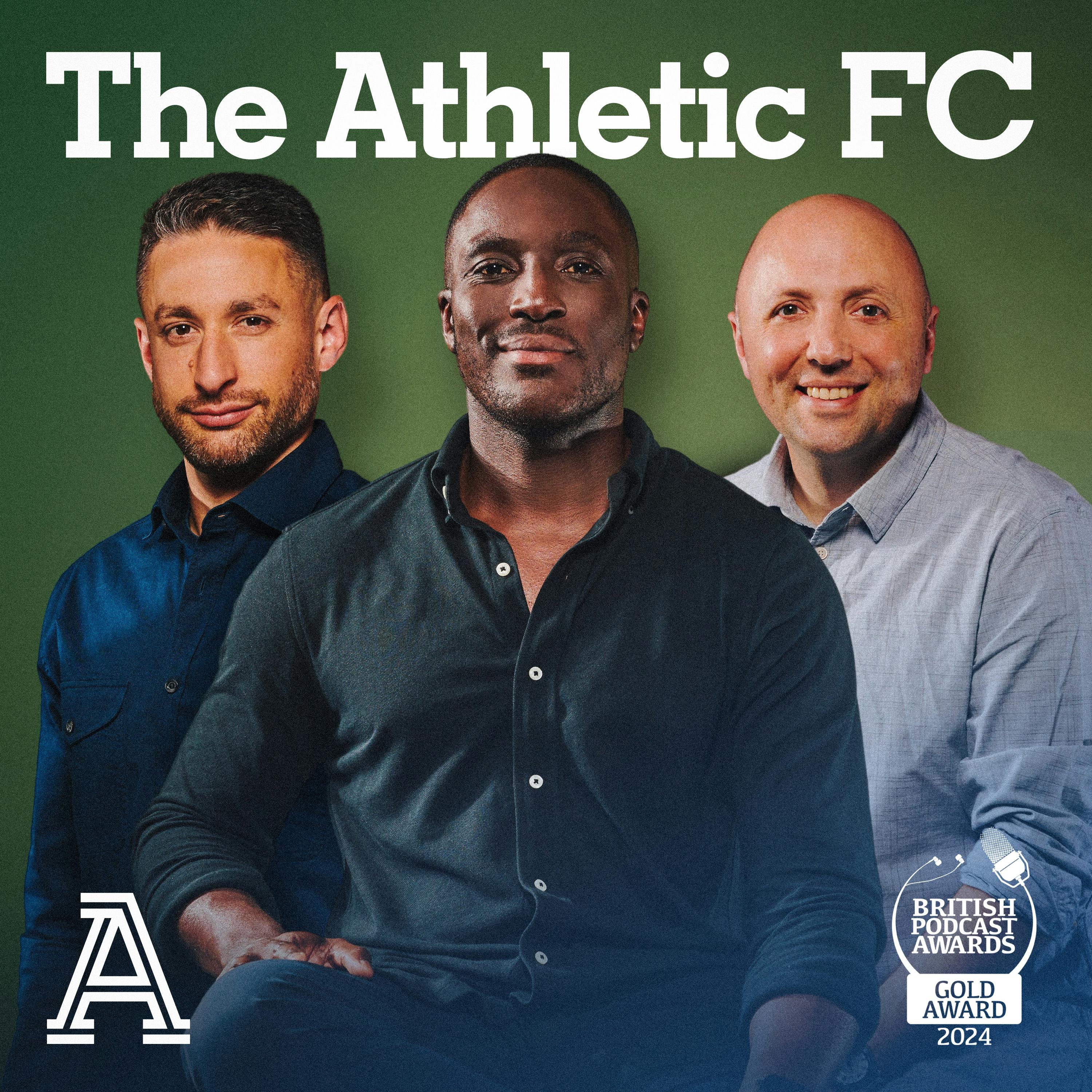
Kylian Mbappe interview: Liverpool talks, Mourinho at Madrid and idolising Ronaldo
🎧 Listen to Original Episode →1. Executive Overview: Core Theses & Key Revelations
When Kylian Mbappé sat down with Daniel Taylor of The Athletic inside Real Madrid's Valdebebas training complex, the resulting conversation transcended the conventional parameters of a routine player interview. It represented a milestone moment in contemporary sports journalism and player communications—a rare, unvarnished window into the operational philosophy of modern football's most potent individual enterprise. For years, the narrative surrounding Mbappé was mediated through transfer sagas, state-backed contract negotiations at Paris Saint-Germain, and third-party commentary. In this dialogue, however, Mbappé presented himself not merely as an elite athlete, but as a fully realized, sovereign operator navigating the apex of global sport with acute strategic awareness.
The conversation established four core analytical theses that define Mbappé’s current career epoch and illuminate wider structural shifts within elite football:
- Linguistic Autonomy as Strategic Enterprise Control: Mbappé’s deliberate, self-directed acquisition of English and Spanish during his teenage years was not an aesthetic hobby, but a foundational business decision. By mastering global media languages, he systematically eliminated reliance on agents, translators, and corporate handlers—ensuring total ownership over his public identity and commercial negotiations.
- The Liverpool Counterfactual and Micro-Factors of Elite Transfers: The disclosure that Mbappé came remarkably close to joining Liverpool—driven largely by his mother Fayza Lamari's profound admiration for Jürgen Klopp—highlights how personal relationships and familial influence intersect with structural football finance. It offers an intriguing counterfactual to his eventual, long-destined migration to Real Madrid.
- The Paradox of Elite Stardom (Self-Described Arrogance vs. Desired Anonymity): The exchange highlighted an extraordinary psychological dichotomy. While Taylor noted Mbappé’s unashamed self-assessment as a "global superstar"—a level of self-assurance bordering on necessary competitive arrogance—Mbappé simultaneously revealed a deep-seated yearning to exist as "a ghost" off the pitch to escape the suffocating panopticon of modern fame.
- The Institutional Magnetism of Real Madrid: Mbappé’s move to the Santiago Bernabéu represents the ultimate fulfillment of a childhood blueprint anchored by childhood posters of Cristiano Ronaldo and early reverence for Zinedine Zidane. This transfer demonstrates that even in an era dominated by Premier League wealth and state-owned mega-clubs, Real Madrid retains an unparalleled cultural and historical pull that remains European football's ultimate summit.
2. Context & Background: The Landscape Leading to This Conversation
To fully appreciate the reverberations of this interview, one must reconstruct the volatile landscape of elite football across the preceding three seasons. Mbappé’s journey to Real Madrid was neither straightforward nor devoid of geopolitical friction. In the summer of 2022, following an intense tug-of-war between Real Madrid president Florentino Pérez and the French political apparatus—up to and including personal intervention from French President Emmanuel Macron—Mbappé opted to sign a lucrative short-term extension with Paris Saint-Germain. That decision temporarily paused a transfer that had appeared pre-ordained since his breakout season at AS Monaco in 2016-17.
During his remaining tenure in Paris, PSG functioned under an unprecedented state-backed economic model funded by Qatar Sports Investments (QSI). Yet, despite assembling a glittering forward line alongside Lionel Messi and Neymar Jr., the Parisian project repeatedly faltered in the knockout stages of the UEFA Champions League. This structural failure highlighted a fundamental truth in elite football: financial capital and individual star power cannot bypass the institutional culture and tactical discipline required to dominate Europe. Mbappé’s eventual decision to decline his player option for a further year in Paris set off the final, inevitable sequence that culminated in his free transfer to Real Madrid in 2024.
Simultaneously, the media landscape surrounding elite players had undergone a profound transformation. Traditional sports media outlets increasingly found themselves blocked by multi-layered public relations machinery, restrictive club communications teams, and protective agency entourages. Daniel Taylor’s narrative of securing this exclusive interview within a tight three-week window underscores the operational anxiety and secrecy that governs access at this tier. Flying to Madrid without confirmed interview times or precise locations illustrates the absolute power held by top-tier athletes over media access. When Mbappé agreed to sit down at Valdebebas, it signaled a conscious choice to engage directly with global audiences through an authoritative editorial channel, bypassing corporate soundbites in favor of genuine intellectual engagement.
3. Deep-Dive Thematic Breakdown
3.1 The Liverpool Counterfactual: Klopp, Family Influence, and Tactical Bifurcations
Among the most compelling revelations in the conversation was Mbappé’s candid admission regarding his historical negotiations with Liverpool Football Club.
"I was close to Liverpool for Jurgen Klopp, because my mum was a big fan,"Mbappé disclosed, shedding light on a transfer narrative that had previously existed largely in the realm of speculative tabloid reporting. This admission demands a thorough examination of both the personal dynamics and the tactical counterfactual it presents.
First, the quote underscores the central role played by Fayza Lamari, Mbappé’s mother and primary managerial advisor. In the modern ecosystem of player management, family-led representation structures have increasingly displaced traditional agencies. Lamari’s admiration for Jürgen Klopp was not merely emotional; it reflected a recognition of Klopp’s capacity to elevate elite talent within a high-tempo, collective structure. Liverpool’s recruitment strategy under Fenway Sports Group (FSG) has historically relied on algorithmic efficiency and strict wage structures. However, for a player of Mbappé’s generational caliber, FSG was prepared to explore creative financial arrangements, recognizing that his arrival would revolutionize the club’s commercial footprint.
From a tactical perspective, imagining Mbappé within Klopp’s heavy-metal 4-3-3 framework presents a fascinating study in system dynamics. At Liverpool, Klopp demanded relentless out-of-possession counter-pressing from his front line. Had Mbappé joined Liverpool, he would have occupied the left-sided attacking vector traditionally held by Sadio Mané, positioning him as the primary transitional weapon ahead of creative passers like Trent Alexander-Arnold and Andy Robertson. While Mbappé’s terrifying acceleration in transition would have dismantled Premier League high lines, it would have required a higher defensive workload than he was accustomed to at PSG. Ultimately, Liverpool’s structural inability to match the absolute financial and institutional leverage of Real Madrid meant the deal remained an tantalizing historical 'what-if'.
3.2 The Santiago Bernabéu Sanctum: Ronaldo’s Ghost and Madridista Destiny
If Liverpool represented a compelling alternative vector, Real Madrid was always the psychological baseline of Mbappé’s career design.
"I was a big fan of Cristiano, a big fan of Real Madrid. And yeah, I wanted to play here. It was my biggest dream to play for Real Madrid to be able to play for the biggest club in the world,"Mbappé stated. This admission connects directly to iconic imagery from his youth: the famous photograph of a 13-year-old Mbappé in his bedroom in Bondy, walls entirely covered in posters of Cristiano Ronaldo in Real Madrid kit.
The interview also contained a charming, self-deprecating anecdote that humanized this lifelong obsession. Taylor recalled how a ten-year-old Mbappé walked into a Parisian barbershop and asked for a "Zidane haircut"—literally asking the barber to shave the crown of his head to mirror Zinedine Zidane’s distinct bald patch, unaware that it was natural hair loss rather than a fashionable styling choice. Mbappé laughed off the memory, demonstrating an ability to poke fun at his childhood naivety while reinforcing how deeply embedded Real Madrid figures were in his psychological development.
Stepping into the Bernabéu, however, means confronting the formidable shadow of Cristiano Ronaldo's legacy—450 goals in 438 appearances, four Champions League titles in five years, and an relentless standard of athletic performance. Florentino Pérez’s construction of 'Galácticos 3.0'—integrating Mbappé alongside Jude Bellingham, Vinícius Júnior, and Rodrygo—aims to establish an era of sustained European dominance. Unlike previous iterations of the Galáctico model, which often prioritized star status over tactical balance, this current squad pairs elite individual talent with young, high-volume athletic engines. For Mbappé, fulfilling his childhood dream requires accepting the intense pressure of a fanbase that views anything short of European triumph as a operational failure.
3.3 Autonomous Branding and Linguistic Sovereign Control
Perhaps the most strategically illuminating segment of the interview involved Mbappé’s explanation of his linguistic capabilities. Speaking fluent English and Spanish, Mbappé articulated a clear philosophy of independence:
"I always wanted to speak different language because it's fun... You can talk with everybody around the world. And you can be an entrepreneur. You don't depend off someone who can trust everything you say."
This statement exposes a profound understanding of sports business dynamics. Historically, foreign players operating in major leagues relied heavily on translators, agents, and club press officers to mediate their interactions with local media, corporate sponsors, and boardroom executives. This reliance frequently created information asymmetries, misinterpretations, and a loss of personal agency. By mastering English and Spanish at age 17 and 18, Mbappé intentionally removed these intermediaries.
| Dimension | Traditional Player Model | Mbappé Autonomous Enterprise Model |
|---|---|---|
| Media Communication | Filtered through translators and club PR officers; high risk of misquotation. | Direct, fluent multilingual engagement; complete control over nuance and tone. |
| Commercial Negotiation | Managed almost exclusively by third-party agents and sports agencies. | Direct oversight by family office (KEWFT) and player; direct brand interaction. |
| Linguistic Capability | Single language dominant; delayed adaptation to foreign leagues. | Trilingual (French, English, Spanish) acquired deliberately early in career. |
| Public Persona | Strictly managed script; risk of appearing aloof or corporatized. | Calculated candor; authentic self-expression coupled with sharp brand focus. |
By positioning himself as an "entrepreneur," Mbappé aligns with modern athlete-investors like LeBron James and Serena Williams. Through his company KEWFT (Kylian Mbappé Enterprise), he manages image rights, production ventures, and strategic investments. Language is the fundamental infrastructure of this enterprise; it allows him to negotiate contracts, review media narratives, and build global partnerships directly. His refusal to remain inside the traditional "football bubble" reflects a conscious effort to prepare for a multi-faceted career after his playing days conclude.
3.4 Unfiltered Arrogance vs. Hyper-Scrutiny: The Psychological Cost of Global Stardom
In analyzing Mbappé’s persona, journalist Daniel Taylor offered a nuanced commentary on the fine line between self-assurance and arrogance.
"I suppose a couple of times when it crosses over into arrogance, but I like that arrogance. I really feel that it's not misguided arrogance. If you're the level that he is, he talks about himself. He describes himself as a global superstar at one point,"Taylor observed. This observation highlights a essential component of elite sports psychology: at the absolute peak of competitive athletics, healthy arrogance is not a character flaw, but a functional necessity.
To perform under the relentless pressure of a World Cup final or a Champions League knockout tie, an athlete must possess an unwavering belief in their superiority. Mbappé does not offer faux modesty; he acknowledges his status as a generational talent candidly. Yet, this public confidence is balanced by an underlying psychological burden. Taylor revealed that during their conversation, Mbappé expressed a poignant wish:
"He talked about, at one point, wanting to be almost like a ghost in his life because he's got so much scrutiny on it."
This desire to be "a ghost" illuminates the claustrophobic nature of modern hyper-visibility. For an icon of Mbappé’s magnitude, normal human experiences—walking down a street, visiting a restaurant, or enjoying private leisure—are entirely impossible without elaborate security protocols. Every movement is recorded, analyzed, and monetized across social media platforms. Mbappé’s pragmatic response to this environment is reflected in his competitive mindset:
"My goal when I go out of my house is not to say, 'Oh, today I hope everybody gonna love me.' No, it's not true. But of course, I want to win Champions League, I want to win titles collectively."He has abandoned the desire for universal affection, replacing it with a relentless focus on objective competitive achievement.
3.5 Tactical Integration and On-Pitch Dynamics at Real Madrid
On the pitch, Mbappé’s arrival at Real Madrid presents Carlo Ancelotti with both an incredible attacking asset and a complex tactical puzzle. For several seasons at PSG and with the French national team, Mbappé demonstrated a clear preference for starting on the left wing—a position that allows him to cut inward onto his dominant right foot, utilize his burst of speed, and curl shots into the far corner. However, Real Madrid already possesses Vinícius Júnior, who has established himself as arguably the most devastating left-winger in world football.
Ancelotti’s tactical solution relies on positional fluidity rather than rigid structural assignments. Rather than fixing Mbappé as a static central striker (No. 9), Real Madrid’s system encourages dynamic rotation between the front three:
- Left Half-Space Overloads: Vinícius Jr. and Mbappé frequently interchange positions during sustained possession, overloading the opponent’s right fullback and central defender. When Vinícius holds the wide touchline, Mbappé attacks the left half-space; conversely, when Mbappé drifts wide, Vinícius attacks the central box area.
- Vertical Transitional Exploitation: With Jude Bellingham operating in an advanced midfield role, Madrid possesses a elite link player capable of breaking lines. Mbappé’s timed runs behind opponent high lines force defensive units to drop deeper, creating vacant space between the lines for Bellingham and Rodrygo to exploit.
- Pressing Triggers and Defensive Balance: The primary structural challenge for Ancelotti lies in out-of-possession organization. Neither Mbappé nor Vinícius traditionally record high defensive tracking numbers. To maintain defensive equilibrium against elite opposition, Real Madrid relies on intense midfield coverage from Federico Valverde, Eduardo Camavinga, and Aurélien Tchouaméni to cover lateral spaces when the fullbacks overlap.
4. Speaker Perspectives & Analytical Contrast
A critical analysis of this podcast episode requires examining the interaction between interviewer Daniel Taylor and interviewee Kylian Mbappé. The dialogue reveals a fascinating dynamic between a veteran investigative journalist navigating the anxieties of modern sports reporting and a global superstar exercising measured transparency.
| Dimension | Daniel Taylor (Journalist Perspective) | Kylian Mbappé (Player/Brand Perspective) | Analytical Synthesis |
|---|---|---|---|
| Access & Environment | High anxiety; uncertainty around flight schedules and Valdebebas arrangements; surprise at rapid 3-week turnaround. | Relaxed, welcoming, polished; fully at ease inside Real Madrid’s elite training environment. | Demonstrates the extreme power imbalance in access journalism, where elite athletes control the timeline entirely. |
| Assessment of Persona | Identifies a strong aura, polished charisma, and acceptable arrogance; strikes by his warmth and self-deprecation. | Describes himself unreservedly as a global superstar, while retaining lightheartedness over childhood mistakes. | Elite performance requires supreme ego; Mbappé packages this arrogance with charm to maintain public rapport. |
| Views on Public Scrutiny | Observes the psychological strain of fame; notes Mbappé’s underlying love for pure football despite cynicism. | Expresses a desire to be "like a ghost" off the pitch; rejects the need for universal public affection. | Highlights the modern athlete's coping mechanism: insulating private life while focusing purely on competitive outputs. |
| Linguistic & Business Focus | Impressed by Mbappé’s English fluency and studious approach outside the football sphere. | Frames language acquisition as an entrepreneurial necessity for independence and self-governance. | Illustrates the evolution of the modern elite athlete from sports performer to self-managed business entity. |
Taylor’s post-interview commentary provides invaluable context. He admits to experiencing professional apprehension prior to the sit-down—fearing that asking about the childhood "Zidane haircut" anecdote might derail the conversation or cause Mbappé to view him with disdain. Instead, Mbappé’s warm response revealed a player capable of laughing at himself. This contrast between external perception (an unreachable, hyper-corporatized superstar) and internal reality (an engaging, multilingual football enthusiast) highlights how public relations barriers often obscure the genuine personality of top-tier athletes.
5. Strategic & Industry Implications
The broader implications of Mbappé’s statements and current career trajectory extend far beyond his individual performance at Real Madrid. They signal fundamental shifts across the global football economy, media rights landscape, and player governance models.
1. The Demise of Traditional Agency Structures: Mbappé’s reliance on a family office (headed by Fayza Lamari and supported by specialized legal counsel) coupled with his personal language mastery reflects a growing trend among elite talents. Traditional sports agencies, which often take substantial commission fees and manage hundreds of players, are increasingly bypassed by top-tier stars who demand tailored, in-house management. This shift threatens the long-term business models of legacy sports agencies.
2. Institutional Prestige vs. Premier League Capital: Mbappé’s choice of Real Madrid over Liverpool and other Premier League suitors confirms that historical prestige and individual brand elevation still outrank absolute broadcast revenue. While the Premier League dominates global TV revenues and overall financial depth, Real Madrid maintains a unique ecosystem capable of propelling players to individual honors like the Ballon d'Or. For elite superstars, the Bernabéu remains the ultimate platform for global legacy building.
3. The Shift in Player-Media Disintermediation: This interview demonstrates how modern stars use longform, selective media appearances to shape their narratives. By granting access to a respected investigative journalist from The Athletic, Mbappé engaged in high-level editorial storytelling that contrasts sharply with superficial post-match flash interviews or controlled club media output. Expect more top-tier athletes to curate their media engagements tightly, favoring high-depth platforms over routine press obligations.
6. Looking Ahead: Unresolved Questions & Next Milestones
As Kylian Mbappé enters the prime years of his career at Real Madrid, several critical analytical questions and operational milestones will determine his ultimate legacy in European football:
- The Champions League Benchmark: Having won multiple Ligue 1 titles and the 2018 FIFA World Cup with France, the UEFA Champions League remains the missing crown in Mbappé’s club trophy cabinet. Achieving European glory with Real Madrid is the explicit benchmark by which his move will be judged by the global media and Madridista fanbase.
- Tactical Cohesion and Squad Equilibrium: How Carlo Ancelotti (and future Real Madrid managers) balance the offensive talents of Mbappé, Vinícius Jr., Jude Bellingham, and Endrick without compromising defensive structure will be a defining tactical narrative over the coming seasons.
- Ballon d'Or Ambitions: In the post-Messi/Ronaldo era, the race for individual supremacy is wide open. Mbappé’s performance at Real Madrid, combined with his leadership of the French national team at upcoming major tournaments, positions him as a perpetual favorite for football's highest individual honor.
- Expansion of KEWFT and Post-Career Architecture: As Mbappé continues to build his off-pitch portfolio—spanning film production, tech investments, and philanthropic foundations—his model of direct, autonomous enterprise will serve as a blueprint for the next generation of global sporting icons.
Ultimately, Kylian Mbappé’s appearance on The Athletic FC Podcast offered far more than answers to standard transfer queries. It provided a masterclass in modern sports stardom—a portrait of an athlete who has mastered the game on the pitch, controlled his narrative off it, and firmly established himself as the defining football enterprise of his generation.
💬 Key Quotes & Speaker Breakdown
Transfer rumors
"I was close to Liverpool for Jurgen Klopp, because my mum was a big fan."
Real Madrid transfer
"I was a big fan of Cristiano, a big fan of Real Madrid. And yeah, I wanted to play here. It was my biggest dream to play for Real Madrid to be able to play for the biggest club in the world."
Player personality
"I suppose a couple of times when it crosses over into arrogance, but I like that arrogance. I really feel that it's not misguided arrogance. If you're the level that he is, he talks about himself. He describes himself as a global superstar at one point."
Player mental health/scrutiny
"He also really gave me an impression that he's still really lost football. He talked about, at one point, wanting to be almost like a ghost in his life because he's got so much scrutiny on it."
Player ambition
"My goal when I go out of my house is not to say, 'Oh, today I hope everybody gonna love me.' No, it's not true. But of course, I want to win Champions League, I want to win titles collectively."
Player lifestyle
"I always wanted to speak different language because it's fun. You can talk with everybody around the world. And you can be an entrepreneur. You don't depend off someone who can trust everything you say."
