The Broadcast Breakup That Shocked Alternative Football
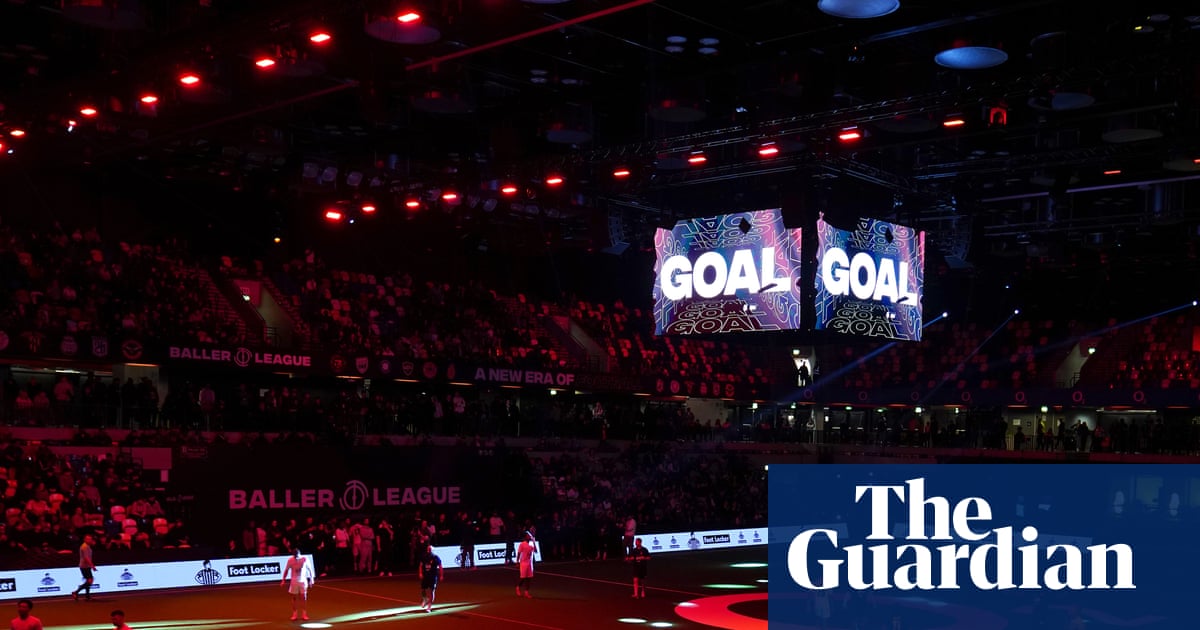
Sky Sports officially pulled the plug on its live coverage of Baller League on August 17, 2026. The move came right after KSI's Prime FC packed London's O2 Arena to win the Season 3 crown in May. On paper, the tournament looked like an unqualified triumph for modern sports broadcasting.
The venue sold out every seat, and online feeds generated massive social engagement throughout the UK campaign. Yet, behind the scenes, executives at Sky decided against renewing their contract for Season 4. As The Guardian reported, sources inside the network claimed the partnership had simply reached a natural conclusion.
That polite corporate explanation masks a much harsher business reality. Traditional cable networks operate on strict subscription models that require consistent viewership beyond viral clips. While casual fans clicked on highlight reels of influencer meltdowns, full-match broadcasts struggled to command prime-time television slots.
The decision leaves alternative football at a critical crossroads. Baller League chief executive Felix Starck insisted the organization actually preferred to walk away from subscription television. He claimed management wants to make every upcoming match completely free-to-air on YouTube instead.
However, corporate maneuvers tell a far more complicated story. Behind closed doors, tournament executives spent months negotiating a broader investment deal with Sky's parent company, Comcast. Those high-stakes investment talks collapsed completely, leaving Baller League without major institutional media backing.
It is a stark reminder that social media hype does not automatically convert into long-term broadcast stability. Satellite networks expect reliable linear ratings, while digital properties thrive on fragmented attention spans. When those two business incentives clash, traditional broadcasters usually walk away first.
Inside the German Prototype and the Premier League Star Power
To understand how Baller League reached this tipping point, you have to look back at its origins. German World Cup winners Mats Hummels and Lukas Podolski launched the original competition in Germany in 2024. They built a fast-paced six-a-side format designed specifically for younger audiences who find traditional 90-minute fixtures tedious.
The concept expanded rapidly into the UK market in 2025, borrowing heavily from influencer culture and ex-professional star power. Management recruited prominent names to run the dugouts, including former Arsenal goalkeeper Jens Lehmann and former Manchester City defender Micah Richards. Lionesses star Chloe Kelly also took on a managerial role, bringing elite professional standards to small-sided tactics.
The roster of backers grew to include heavyweights like Idris Elba, Ian Wright, Alan Shearer, and Gary Lineker. Creator Angry Ginge added constant touchline drama, keeping younger viewers locked into live streams. That blend of viral online personalities and respected football icons gave the UK launch instant credibility.
The pitch setup itself was engineered for non-stop action on Monday nights. 12 teams competed in back-to-back matches featuring rolling substitutions, eliminating the slow passages of play that plague standard football. The top four teams at the end of the regular season advanced directly to a high-stakes playoff weekend.
When Prime FC clinched the Season 3 title at the O2 Arena in May, it seemed to validate the entire enterprise. KSI’s team combined legitimate small-sided technical skill with unmatched promotional reach. Thousands of screaming fans bought physical tickets to watch influencers and unattached former professionals compete inside an arena.
Yet that physical arena success highlighted the central paradox of alternative sports formats. Selling out a single marquee event in London is very different from building a profitable, multi-year sports league. Once the initial novelty wears off, keeping fans invested week after week requires real competitive substance.
Why Trading Linear Television for YouTube Is a Massive Risk
Pivoting exclusively to YouTube for Season 4 puts tremendous pressure on Baller League's balance sheet. Subscription broadcast rights provide sports properties with guaranteed, predictable revenue streams. Without a steady check from Sky, the league must fund venue rentals, production crews, and player compensation entirely through sponsorships and ad revenue.
As reported by the Daily Mail, tournament organizers are betting that free-to-air access will maximize overall viewership volume. They argue that locked paywalls restrict growth among teenage fans who do not own traditional TV packages. In theory, broader reach allows the league to charge premium rates for corporate brand integrations.
In practice, digital ad revenue is notoriously volatile compared to rights deals with major broadcasters. YouTube CPM rates fluctuate wildly, and corporate sponsors can pull spending at the first sign of an economic downturn. Betting an entire organization on digital ad impressions is a massive financial gamble.
Furthermore, producing high-end live broadcasts for indoor football is remarkably expensive. Multicam setups, professional commentary teams, lighting rigs, and arena leases consume millions in capital each season. Operating without Comcast’s financial safety net means every single production choice will face extreme budget scrutiny.
There is also the problem of talent retention and management fatigue. High-profile managers like Chloe Kelly, Jens Lehmann, and Micah Richards lend immense prestige to the product. But if league budgets shrink or public interest wanes, retaining busy top-tier personalities will become increasingly difficult.
Even the US expansion tournament, launched for the first time in 2026, faces an uphill battle for attention. North America already has a saturated sports market dominated by established professional leagues. Breaking through the noise without a major domestic television deal requires burning through capital at an alarming rate.
The Kings League Shadow and Alternative Football's Reckoning
Baller League does not operate in a vacuum; it is fighting for space in an increasingly crowded alternative football market. Former Barcelona star Gerard Piqué launched the seven-a-side Kings League in Spain four years ago, establishing the blueprint for creator-led tournaments. That project expanded across 8 countries and secured a global broadcast contract with DAZN.
Piqué’s league proved there is a global appetite for short-form, rule-bending football competitions. However, Kings League’s success also set off a frantic rush among copycat properties. Investors rushed to fund similar concepts, assuming influencer audiences would follow creators anywhere they played.
Now, the market is showing obvious signs of fatigue. Casual viewers only have so many Monday evenings to dedicate to exhibition six-a-side matches. When multiple leagues compete for the exact same demographic, audience drift happens fast.
Sky's decision to walk away from Baller League reflects a wider skepticism across traditional media circles. Legacy sports executives are beginning to question whether influencer sports leagues are enduring entertainment properties or temporary social media trends. If the audience only tunes in for individual creators, the league itself holds very little standalone value.
If KSI or Idris Elba step back from their team roles, a significant chunk of the viewership vanishes overnight. Traditional football clubs survive for generations because fan loyalty belongs to the badge, not the team president. Creator sports properties have yet to solve that fundamental institutional challenge.
As Season 4 approaches, Baller League faces its definitive test on YouTube. Starck and his executive team must prove that free-to-air distribution can generate enough cash flow to replace pay-TV revenue. If live streaming figures surge and corporate sponsors line up, their gamble will look visionary.
If viewership drops once the pay-TV spotlight fades, Baller League could quickly join a long list of failed sports experiments. Alternative football spent three years promising to revolutionize sports broadcasting. Now, stripped of its biggest television contract, the league has to prove it can survive on its own terms.