The Creative Void in Portugal's Attack
Cristiano Ronaldo left a statistical footprint of exactly zero completed dribbles during his five World Cup matches this summer. For a player who built his early reputation on electric step-overs and vertical acceleration, the statistic is a damning indictment of age. It is a number that looks even worse when compared to Cape Verde goalkeeper Vozinha, also in his forties, who managed one successful dribble.
The tournament in North America was supposed to be a grand final act for the legendary forward. Instead, the captain of Portugal cut a frustrated, static figure as his team collapsed in the first knockout stage. His presence on the pitch became a tactical anchor that dragged down a highly talented generation of Portuguese players.
While Ronaldo chased individual records, the rest of the squad was forced to compromise its collective efficiency. The manager, Roberto Martinez, refused to make the hard choice until it was far too late. The result was a team playing with ten men in possession and eleven in name only.
This was Ronaldo's sixth World Cup tournament, a career spanning two decades of international football. He has scored 11 career World Cup goals, cementing his name in the history books. But the numbers from this summer suggest that his continuation was a vanity project rather than a sporting necessity.
The Stagnation of the Final Third
The Microscopic Creative Output
To understand how Ronaldo's presence broke the Portuguese attack, one must look at the passing networks. Portugal boasted a midfield containing Vitinha, Joao Neves, and Premier League Player of the Season Bruno Fernandes. Yet, this creative engine was consistently bypassed in favor of hopeful, low-percentage crosses to a static target.
Ronaldo took 17 shots at the tournament before he created a single opportunity for a teammate. That lone chance did not arrive until the 75th minute of their last-16 exit, setting up a Vitinha shot that was blocked. For a central striker in a dominant possession team, that ratio of self-interest to creation is almost impossible to justify.
Congested Passing Networks
His expected assists tally across five matches was a microscopic 0.01. This indicates that when Ronaldo received the ball, the play ended with him, regardless of the positioning of his teammates. Modern elite goalscorers like Erling Haaland, Kylian Mbappe, and Harry Kane are expected to link play and create space.
By contrast, Ronaldo occupied areas that Bernardo Silva and Pedro Neto needed to penetrate. His lack of lateral movement allowed opposing center-backs to keep their defensive lines compact. The spaces in the final third were congested, stifling the creative freedom of Portugal's elite playmakers.
The tactical stagnation was particularly obvious in the half-space occupations. Instead of stretching the defense, Ronaldo remained glued to the penalty spot, demanding service. This positioning forced Bernardo Silva to remain wider than usual, reducing his ability to combine in central areas.
The Uzbekistan Illusion
Defenders of the captain will point to his two goals against Uzbekistan in the group stage. After scoring, the forward shouted down the lens that he was back, celebrating as if he had silenced his critics. But a tactical breakdown of that match reveals the goalscoring outburst was a complete anomaly.
Uzbekistan was playing in their first-ever World Cup and possessed one of the worst defensive shapes in the tournament. Only Iraq and Tunisia conceded more goals than the Central Asian side during the group stage. Scoring against a disorganized, low-ranked opponent did not mean Ronaldo was ready for elite European competition.
The reality of his declining influence was exposed in the Round of 32 match against Croatia in Toronto. Ronaldo did manage to score a penalty, giving him his first-ever knockout goal in a World Cup. But with the match in the balance and extra-time looming, Roberto Martinez made a decision that would have been unthinkable years ago.
The manager substituted Ronaldo, removing his captain from the pitch when the stakes were highest. Portugal eventually won the match 2-1, but the substitution was a clear signal that the coaching staff saw him as a liability. The future of the team belonged to Goncalo Ramos, the AC Milan record signing who waited on the bench.
This substitution also highlighted the growing physical divide between Ronaldo and his teammates. While the midfield covered massive distances to press, the striker managed only a handful of pressures per ninety minutes. It was a defensive disconnect that left Portugal vulnerable in transition against organized opponents.
A Tactical End of an Era
Substituted When it Mattered Most
The end arrived on Monday night in Dallas with a 0-1 defeat to Spain. Martinez set his team up in a conservative mid-block, successfully containing the Spanish attack for ninety minutes. But when Portugal recovered the ball, they had no outlet to transition from defense to attack.
Ronaldo could not run the channels, nor could he win physical duels against Aymeric Laporte and Robin Le Normand. The Spanish defenders squeezed the midfield, knowing the Portuguese striker posed no threat in behind. The defensive containment worked until stoppage time when Spain finally broke the deadlock to seal the win.
According to the Sky Sports match report, Portugal looked completely devoid of ideas in the final third. The players seemed caught between the tactical instruction to possess the ball and the internal pressure to feed their captain. The defeat was a natural end to a campaign that valued legacy over current performance.
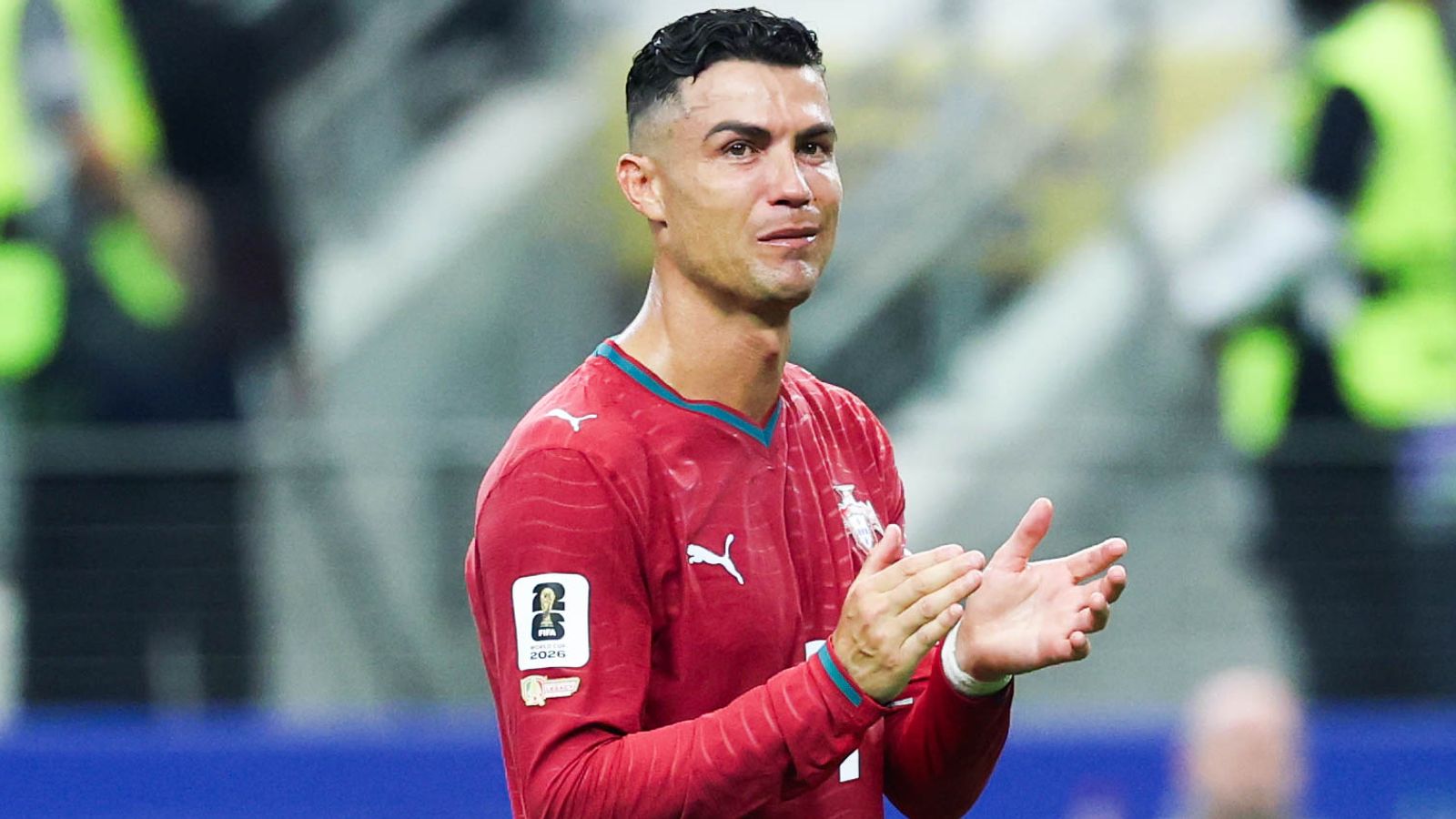
After the final whistle, Ronaldo was seen in tears as he realized his World Cup career was over. While he has yet to announce his international retirement, as he noted in post-match remarks, the decision should be made for him. The national team cannot afford to carry his shadow into the Euro 2028 qualification campaign.
The Spanish Defensive Blueprint
The Spanish tactical setup exposed this physical decline by simply denying space in the box. By playing a high defensive line, Spain pushed Ronaldo away from his preferred finishing zones. Without the speed to run behind them, the Portuguese captain was effectively neutralized before the ball even reached him.
The debate over Ronaldo's legacy will continue to dominate Portuguese football for years. His failure to win the World Cup will always be compared to Lionel Messi's triumph in Qatar. It is the stick that critics will use to beat him in the modern era's greatest debate.
But the immediate concern for Portugal must be tactical evolution under a new leadership model. Goncalo Ramos must be given the keys to the attack, allowing the team to press from the front. The squad possesses too much talent to be held hostage by the fading powers of a single superstar.
The numbers from this summer do not lie. They show a great player who stayed on the stage for one act too many. Portugal must finally choose the path of collective modern football over individual nostalgia.
The transition will be painful for a nation that idolized its Euro 2016 trophy-winning captain. But the evolution is necessary if the country wants to maximize the potential of its younger generation. The first step is accepting the hard truth that legacy cannot score goals in the present.
Read Next
- Spain ended Cristiano Ronaldo's career with a block of pure granite
- Spain's wings will end Cristiano Ronaldo's final World Cup run
- Cristiano Ronaldo confirms the end of his World Cup era before Spain clash
- Why starting Cristiano Ronaldo against Spain is a tactical trap
- 🏆 World Cup 2026 — Full Coverage Hub
- 🇵🇹 Portugal World Cup 2026 — A Seleção Hub