
Spain ended Cristiano Ronaldo's career with a block of pure granite
The Granite Block in Arlington
The 2026 World Cup was supposed to be Cristiano Ronaldo’s grand American swan song. Instead, the 41-year-old captain found himself trapped inside a shifting cage of red shirts in Arlington, Texas. Spain’s 1-0 victory over Portugal at Dallas Stadium was not a display of artistic brilliance, but a cold demonstration of structural control.
Luis de la Fuente has built a Spanish side that rejects the romanticism of its possession-heavy ancestors. The team that ruled the world from 2008 to 2012 sought to control matches by starving opponents of the ball. This current group dominates by starving them of space, operating with a defensive block that feels less like a football team and more like a slab of solid granite.
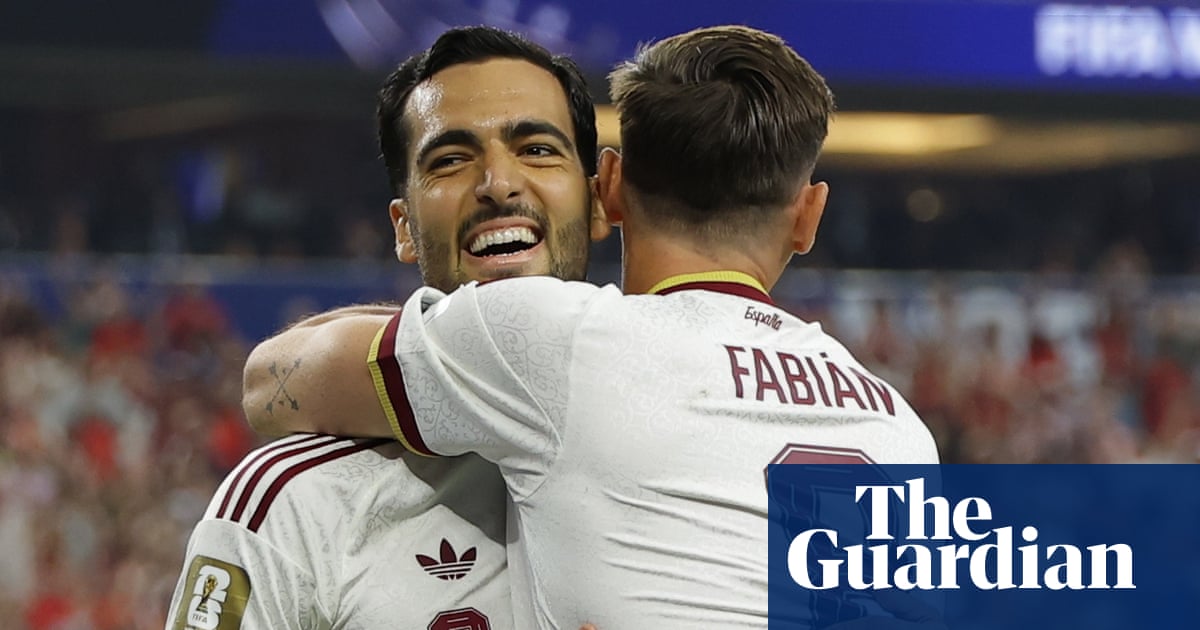
Mikel Merino’s strike in the 91st minute was the ultimate reward for this exhausting approach. The midfielder, who has spent the spring recovering from a fractured shoulder, arrived late in the box to convert a low cross from Ferran Torres. It was a classic piece of penalty-box movement that broke a grueling deadlock and sent Spain into the quarter-finals.
For Portugal, the defeat marks the end of an era. Ronaldo’s international career, which has spanned more than two decades, concluded in the humid Texas air with a quiet whimper rather than a bang. His presence on the pitch has become a tactical anchor that drags down Portugal’s offensive transition.
Roberto Martínez’s side has consistently struggled to balance the demands of modern high-pressing football with the limitations of their aging superstar. Against Spain’s compact defensive structure, those limitations were laid bare. The Spanish center-backs, Pau Cubarsí and Aymeric Laporte, had a remarkably comfortable evening.
The Mechanics of Space Denial
De la Fuente’s defensive scheme is built around specific pressing triggers. Spain does not chase the ball aimlessly; instead, they wait for the opponent to play a lateral pass to the fullback. The moment the ball travels toward the touchline, Spain’s near-side winger and central midfielder sprint to close the passing lanes.
Spain’s defensive structure operates on three primary defensive keys:
- The lateral fullback trigger, which initiates a hard double-team on the touchline.
- Rodri’s counter-pressing positioning, designed to choke central passing lanes within three seconds of a turnover.
- The vertical compression of the backline, keeping the distance between Laporte and the central midfielders under fifteen meters.
This defensive coordination has yielded incredible results in this tournament. Spain has now kept four consecutive clean sheets in the 2026 World Cup. Unai Simón has not conceded a single goal in 360 minutes of football, establishing Spain as the most defensively secure team in the competition.
Yet, this defensive rigidity has a dark side. Spain’s progress has often looked sluggish, and their attacking play can become painfully predictable. The group stage draw against Cape Verde in Atlanta was a warning sign.
In that match, Cape Verde sat in a compact 5-4-1 formation and refused to engage Spain in transition. Spain finished the game with 68% possession but generated only 0.45 xG. With Lamine Yamal and Nico Williams doubled on the wings, Spain’s midfield was reduced to lateral passing.
Without the vertical space to exploit, De la Fuente’s team struggled to create high-quality chances. The sluggish performance in Atlanta showed that when Spain is forced to play as the protagonist, their lack of a creative playmaker in the final third becomes a major issue.
Ronaldo's Slow-Motion Demise
Against Portugal, Spain faced similar difficulties for long stretches. The first half was a sterile affair, with both teams refusing to commit players forward. Portugal’s midfield double-pivot of João Palhinha and Vitinha sat deep, screening their center-backs and forcing Spain to play wide.
Spain’s wingers found themselves isolated. Nico Williams was repeatedly forced into crowded areas by João Cancelo, while Lamine Yamal struggled to find room against Nuno Mendes. The lack of central penetration made Spain’s possession feel hollow, reminiscent of the worst days of the tiki-taka era.
The difference, however, lies in De la Fuente’s willingness to adapt. Unlike his predecessors, who treated possession as a dogma, the current manager is comfortable playing direct. He understands that a compact defensive structure allows Spain to stay in matches even when the attack is stalling.
By keeping the score at 0-0, Spain waited for the opponent to tire. The tactical plan was clear: absorb Portugal’s pressure, deny them any space in the center, and exploit the spaces that would inevitably open up in the final fifteen minutes.
Portugal’s structural flaws played directly into Spain’s hands. Martínez’s insistence on starting Ronaldo up front meant that Portugal played with ten men out of possession. Ronaldo’s defensive output was virtually non-existent, allowing Spain’s defenders to build play from the back without pressure.
When Portugal did win the ball, their transitions were slow. Because Ronaldo could not stretch the Spanish defense with runs in behind, Laporte and Cubarsí could squeeze the space in front of them. This compressed the midfield, making it easy for Rodri to intercept passes and restart Spanish attacks.
Rodri’s performance was a masterclass in positional discipline. The Spanish captain finished the match with a 92% pass completion rate, but his most valuable contributions were defensive. He made four interceptions and won three tackles, acting as a shield in front of the Spanish backline.
With Rodri anchoring the midfield, Fabián Ruiz was free to press higher up the pitch. This counter-pressing system suffocated Bruno Fernandes, who was unable to find the space needed to create chances for Portugal’s wingers. Fernandes was reduced to speculative long-range efforts that failed to trouble Simón.
The 91st-Minute Breakthrough
As the match entered the final ten minutes, the physical demands of Martínez’s system began to take a toll on Portugal. The central midfielders were no longer able to cover the lateral spaces, and gaps began to appear between Portugal’s defensive lines.
De la Fuente reacted immediately. In the 85th minute, he made a double substitution that changed the course of the match. Nico Williams and Fabián Ruiz were replaced by Ferran Torres and Mikel Merino. It was a bold move that injected fresh energy into Spain’s attack.
Ferran Torres went to the right wing, while Lamine Yamal moved to the left. Merino took up an advanced position in the midfield, looking to make runs into the box. The tactical adjustment paid off almost immediately.
In the 91st minute, Cancelo lost possession under pressure from Marc Cucurella. Rodri reacted quickest, picking up the loose ball and driving forward. He spotted Ferran Torres making a run down the right flank and played a perfectly weighted pass into his path.
Torres drove at Nuno Mendes, drawing Gonçalo Inácio out of the defensive line to cover. This movement left a gap in the center of Portugal’s defense. Merino, recognizing the opportunity, sprinted from deep into the vacated space.
Torres delivered a low, hard cross across the face of the goal. Merino arrived ahead of Rúben Dias and side-footed the ball past Diogo Costa into the bottom corner. It was a moment of pure tactical execution, exploiting the exact spaces that Spain had spent ninety minutes preparing.
The Full Circle
The goal sparked wild celebrations in the Spanish corner. Merino ran toward the corner flag, circling it with his arms outstretched. It was a celebration rich in history, a direct tribute to his father, Ángel Miguel Merino.
In 1991, Ángel Miguel had celebrated a goal for Osasuna in the Stuttgart Arena by circling the corner flag. Mikel had replicated that celebration during Euro 2024 against Germany, and he repeated it tonight in Arlington. It was a full-circle moment for a player who has battled back from a fractured shoulder.
The Merino family’s connection to Spanish football runs deep. Mikel was born on June 22, 1996, the very day Spain was eliminated from Euro 96 by England. Mikel Merino’s emotional return from injury reached its peak in Arlington, sending Spain to the quarterfinals.
According to Sid Lowe’s analysis in The Guardian, this tournament run is a family affair. Merino's two-month-old son, Marco, was in the stands to watch his father emulate Ángel Miguel. The story of fathers and sons has become the emotional heartbeat of Spain's campaign.
For Portugal, the post-mortem will be painful. The decision to build an entire World Cup campaign around a 41-year-old striker will be heavily criticized. While Ronaldo’s legacy is secure, his insistence on playing every minute has ultimately hindered Portugal’s development.
Martínez’s team had the talent to go further, but they lacked the tactical flexibility of their opponents. By refusing to adapt, Portugal became predictable, allowing Spain’s granite block to absorb their attacks and strike the decisive blow.
Spain now advances to the quarter-finals, where they will face the winner of the match between the United States and Belgium. Addressing the media after the match, Luis de la Fuente remained focused on the challenge ahead.
"At this stage, it doesn't matter to us who we face; we're happy to be in the quarterfinals and will give it our all until the very end."
On this evidence, Spain will be difficult to beat. Their defensive stability gives them a platform that few teams in this tournament can match. However, if they are to win the World Cup, De la Fuente must find a way to make his attack more fluid. Relying on late substitutions and defensive solidity is a risky strategy. Against more clinical opponents, Spain’s lack of creativity could prove fatal.
For now, Spain can celebrate a hard-fought victory. They have shown that they can win ugly, a quality that is essential for any team with championship aspirations. The block of granite remains unbroken, and Mikel Merino has written another chapter in his family’s extraordinary football history.
Read Next
- Spain's wings will end Cristiano Ronaldo's final World Cup run
- Cristiano Ronaldo confirms the end of his World Cup era before Spain clash
- Why starting Cristiano Ronaldo against Spain is a tactical trap
- Spain face a tactical puzzle in Los Angeles after Dallas drama
- 🏆 World Cup 2026 — Full Coverage Hub
- 🇪🇸 Spain World Cup 2026 — La Roja Hub
- 🇵🇹 Portugal World Cup 2026 — A Seleção Hub
Adidas Unisex-Adult MLS Club Competition Soccer Ball
Professional-grade feel for your Sunday league or weekend park kickabout.
Frequently Asked Questions
Who scored the winning goal for Spain against Portugal?
Where was the Spain vs Portugal 2026 World Cup match played?
How does Spain's defensive structure operate under Luis de la Fuente?
What is the clean sheet record for Spain's goalkeeper in this tournament?
Why did Portugal struggle to transition offensively during the match?
More Coverage
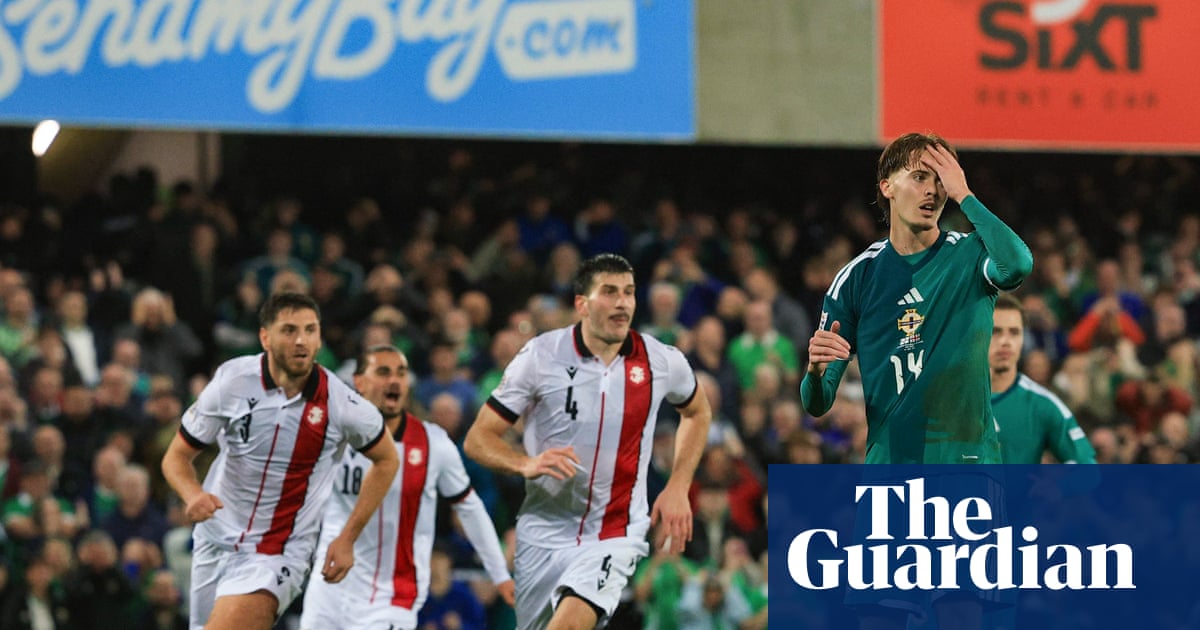
Michael O'Neill's youth movement is ahead of schedule, but flaws remain
7 hours ago
Arsenal's crisis deepens while London City redefine WSL pressing
17 hours ago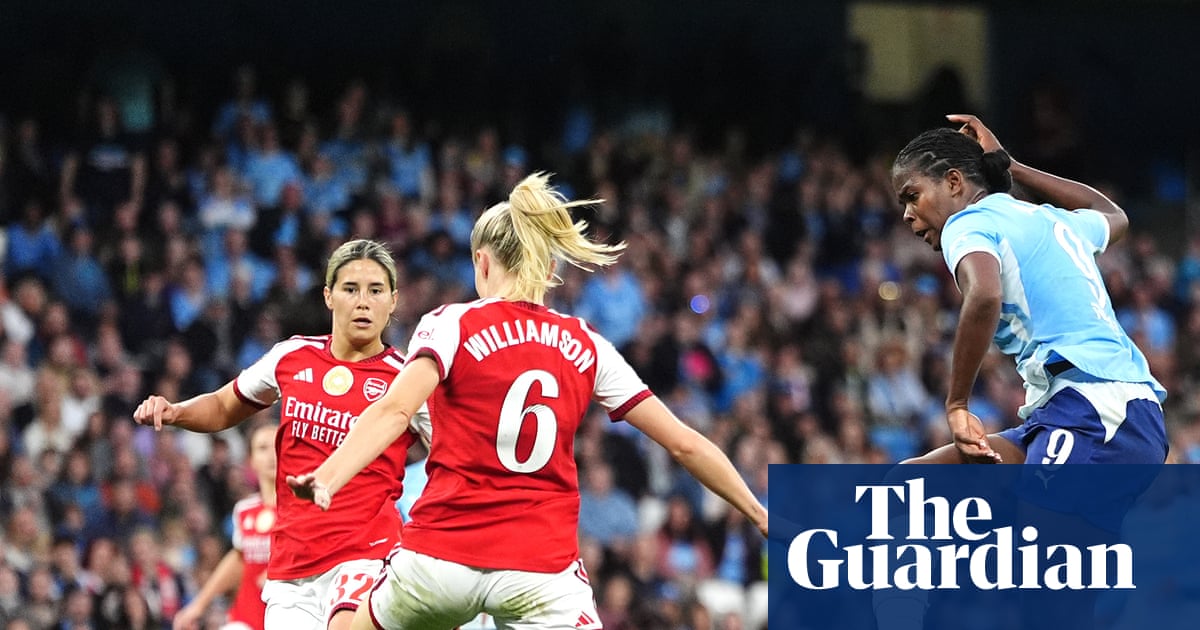
Renée Slegers is running out of time to fix Arsenal's tactical chaos
18 hours ago
Arsenal need an instant response against Leeds after the Brighton disaster
23 hours ago
Fred Calling Ten Hag a Piece of Crap Confirms What We All Knew
1 day, 15 hours ago
This Week in Football: England Rampant and City Fallout (Sep 28–Oct 04, 2026)
2 days, 2 hours agoMore Analysis
Fred Calling Ten Hag a Piece of Crap Confirms What We All Knew
1 day, 15 hours ago
This Week in Football: England Rampant and City Fallout (Sep 28–Oct 04, 2026)
2 days, 2 hours ago
England lost to Spain but the Nations League is actually working
1 week ago
England lost to Spain again, so why is nobody screaming at Thomas Tuchel?
1 week, 1 day ago
Top 10: Top Moments from England's 3-2 Nations League Thriller Against Spain
1 week, 1 day ago