The Pressing Dilemma in Arlington
AT&T Stadium in Arlington is set to host an Iberian derby that feels less like a football match and more like a referendum on a single man's mortality. On July 6, 2026, Portugal and Spain face off for a spot in the World Cup quarter-finals. The stakes are immense.
Roberto Martínez has guided his team to this stage through a mixture of individual brilliance and defensive survival. The Round of 32 clash against Croatia at Toronto Stadium was a case in point. Portugal scraped a 2-1 victory, but the performance was far from convincing.
Ivan Perišić exposed Portugal's defensive transitions in the 53rd minute to give Croatia the lead. Ronaldo equalized from the penalty spot in the 68th minute after Renato Veiga was brought down by Nikola Vlašić. But it took a 94th-minute winner from Gonçalo Ramos to salvage the game.
Now, they face a Spanish side that looks far more coherent under Luis de la Fuente. Spain dismantled Austria 3-0 in their Round of 32 match at SoFi Stadium. Mikel Oyarzabal scored in the 36th and 89th minutes, while Pedro Porro added another in the 66th.
Spain did this without breaking a sweat, holding Austria to a meager 0.41 xG. They look balanced, athletic, and ruthlessly efficient in possession. In contrast, Portugal look heavy, slow to press, and tactically compromised by their forward line.
Spain's Build-Up and Portugal's Passive Front Line
Luis de la Fuente's midfield is built to dominate space and time. Rodri and Pedri form a double pivot that invites pressure, only to bypass it with vertical passes to Dani Olmo or Alex Baena. Against Austria, Rodri completed 92% of his passes under pressure, slicing through the midfield lines.
To disrupt this, Portugal must press from the front. But with Ronaldo starting, a high press is functionally impossible. The 41-year-old forward simply does not possess the physical capacity to cover the ground, managing only three pressing actions in his 90 minutes against Croatia.
This passivity gives Spain's center-backs, Pau Cubarsí and Aymeric Laporte, clean looks to pick passes. If Rodri is allowed to turn and face forward without pressure, Portugal's midfield will be overrun. Vitinha and João Neves will be forced to chase shadows for 90 minutes.
Martínez has attempted to mask this weakness by playing a back-five, tasking João Cancelo and Nuno Mendes with pushing high to assist the press. But this leaves massive spaces behind them. Against Colombia, this space was repeatedly exploited, resulting in a sterile 0-0 draw where Portugal conceded nine counter-attacks.
Analyzing the Space: The Central Bottleneck
The problem is not just defensive. Ronaldo's physical decline has fundamentally altered how Portugal attack, as he no longer makes the diagonal runs that stretch opposing center-backs. Instead, he occupies the central channel, waiting for service that rarely arrives.
This central camping restricts the movements of Rafael Leão and Bruno Fernandes. Leão thrives when he can cut inside from the left into the half-space, but with Ronaldo static in the box, that space is congested. The winger is forced to stay wide, where he is easily doubled by Pedro Porro and Dani Olmo.
The metrics support this analysis. In the group stage match against Colombia, Portugal registered a miserable 0.54 xG while doing nothing with their possession. Ronaldo had only two shots, both speculative efforts from distance that went wide.
Compare this to the 5-0 win over Uzbekistan where Ronaldo scored twice in the 6th and 39th minutes. Uzbekistan's low defensive block allowed him to play as a pure poacher, but Spain will not be so accommodating. They play with a high defensive line, leaving space behind that Ronaldo cannot run into.
As discussed in the BBC's tactical preview, the debate over whether Ronaldo should start has divided Portugal. His supporters point to his three goals in four matches, which made him the first player to score in six different World Cups. However, raw goals in the group stage hide the tactical cost he imposes on the team.
The Midfield Engine Battle
Portugal's midfield trio of Vitinha, João Neves, and Bruno Fernandes has been the engine of their team throughout this tournament. They controlled the tempo in the 5-0 thrashing of Uzbekistan, moving the ball quickly and maintaining a 91% pass completion rate. But against Spain's counter-press, their passing lanes will be choked, forcing them into hasty clearances.
Vitinha thrives when he has a runner to target in the channels, yet Ronaldo's lack of mobility forces Vitinha to play lateral passes. João Neves will be occupied defensive tracking of Dani Olmo, who excels at finding space between the lines. Without an outlet forward who can stretch Spain's defense, Bruno Fernandes will be isolated in the final third, starved of the ball.
The Nico Williams Injury and Spain's Adjusted Attack
Spain have their own selection issues. Winger Nico Williams is expected to miss this match due to an adductor injury, which is a massive blow to Spain's transition play. Williams' pace on the left wing has been a primary weapon for De la Fuente.
Without him, Mikel Oyarzabal will likely start on the left. Oyarzabal is a very different player who does not seek one-on-one duels on the touchline. Instead, he looks to combine inside with Pedri and Olmo, creating overloads in the central areas.
This change actually works against Portugal's defensive shape. If Spain concentrate their attack centrally, they will drag João Neves and Vitinha out of position. That leaves Lamine Yamal with isolated matchups against Nuno Mendes on the right, where the teenager has been completing four dribbles per game.
If Mendes is left without cover, Yamal will create high-value chances. Renato Veiga will be forced to cover, leaving Rúben Dias isolated against Oyarzabal in a domino effect of defensive mismatches. All of this stems from the lack of pressure at the source of the pass.
The Defiance and the Alternative
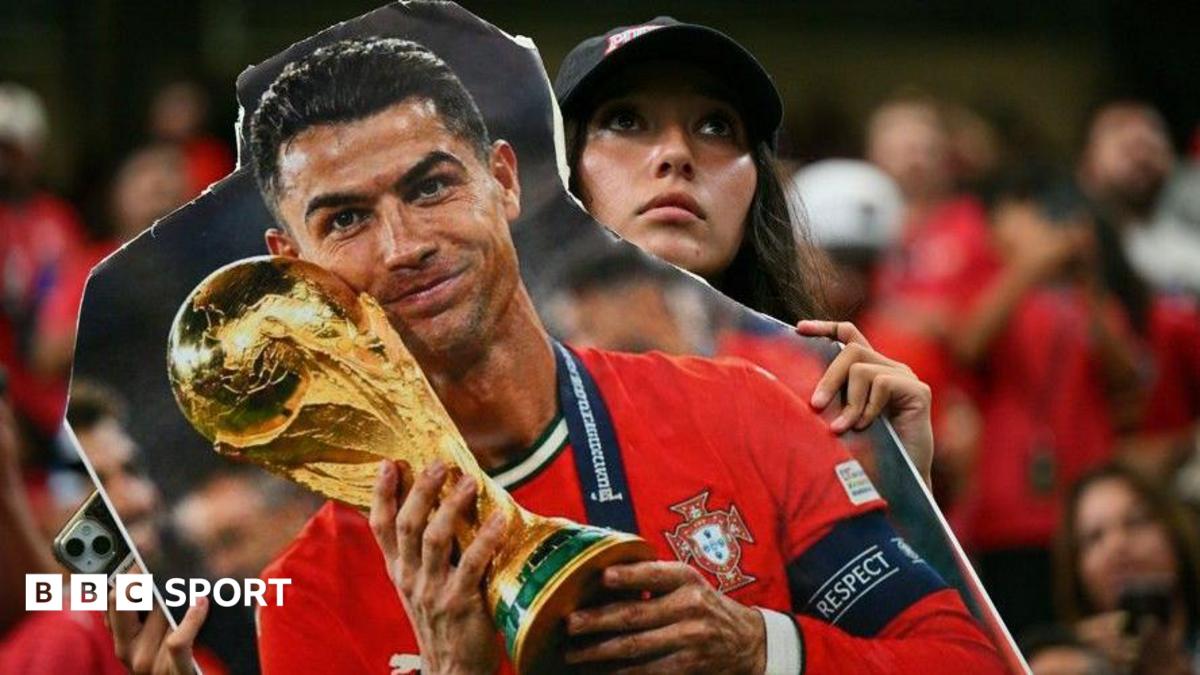
Ronaldo remains entirely unbothered by these tactical concerns. In his press conference on July 5, 2026, he delivered a scathing message to his critics, as reported by BBC Sport. He claimed that the media has been trying to kill him for the past 23 years, making it clear that he will retire on his own terms.
"You have been trying to kill me for the past 23 years, but you must have seen that is not worth it, it's a waste of time."
This defiance is classic Ronaldo, but it is also a trap for Martínez. The manager is seemingly unable or unwilling to drop his captain. In the Round of 32, it was Gonçalo Ramos who provided the spark by scoring the winner in the 94th minute after coming off the bench.
Ramos offers the mobility that this team desperately needs. He runs the channels, presses the center-backs, and drops deep to link play. In his 15 minutes against Croatia, Portugal's PPDA dropped from 14.8 to 8.2, with his movement dragging Joško Gvardiol out of position to create the space for Leão's assist.
Starting Ramos would allow Portugal to match Spain's physical intensity and force Cubarsí and Laporte to play under pressure. It would also free up Bruno Fernandes to play key passes in transition. However, Martínez seems set to stick with his captain, hoping for one more moment of magic.
A Prediction Grounded in Spacing
This match will be decided by how Spain exploit Portugal's passive front line. Without pressure, Rodri will dictate the tempo of the game. Spain will starve Portugal of possession, keeping the ball for long periods in the middle third.
Yamal will win his individual duel against Nuno Mendes, pinning Portugal's back-five deep. Ronaldo will be isolated, cut off from his midfielders by Spain's high block. When Portugal do win the ball, they will have no outlet to escape the counter-press.
Martínez will wait too long to make changes. Ramos will come on, but the damage will already be done. Spain are too organized and athletic to let a lead slip, controlling this game from start to finish.
Expect Spain to win 2-0. Oyarzabal will score early, exploiting space behind Cancelo. Yamal will seal it in the second half, cutting inside to curl a finish past Diogo Costa as Portugal's World Cup campaign ends in Arlington.
Read Next
- Why Folarin Balogun's political reprieve changes everything for the USMNT
- Norway and the name on Haaland's back just broke Brazil
- Tuchel is walking England straight into an Azteca trap
- England are walking into a tactical trap at the Azteca
- 🏆 World Cup 2026 — Full Coverage Hub
- 🇪🇸 Spain World Cup 2026 — La Roja Hub
- 🇵🇹 Portugal World Cup 2026 — A Seleção Hub