The Miami Crucible and the Opta Numbers
The Opta supercomputer has calculated an 81% probability of an Argentina victory within the regulation ninety minutes. This represents the widest statistical gulf of the Round of 32, pitting the defending champions against a nation of just 520,000 residents. Yet, those who expect a straightforward procession in Miami are ignoring the defensive spacing patterns of this tournament.
This knockout clash at the Hard Rock Stadium marks a significant milestone as Lionel Scaloni takes charge of his 100th match as manager of the national team. His tenure has delivered a World Cup and consecutive continental trophies, but this fixture presents a unique tactical headache. He must dismantle a defensive unit that has spent the last month defying mathematical projections.
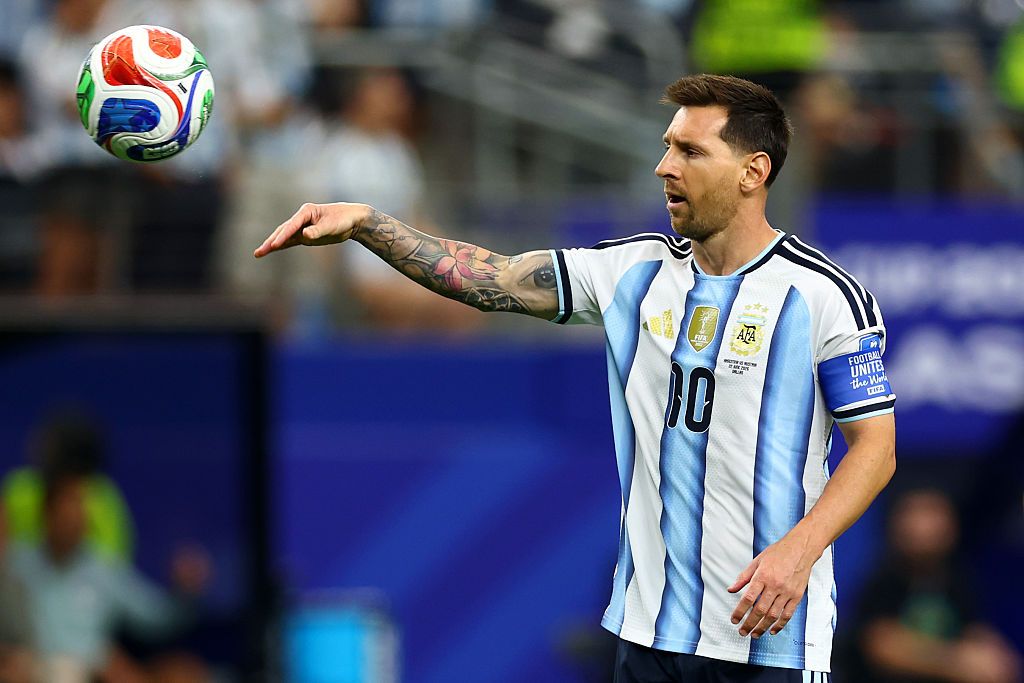
As Sky Sports reported in their live coverage, Lionel Messi starts tonight as Argentina continues its title defence. The matchup in Miami has generated massive excitement, especially after the underdogs defied expectations to reach the knockouts. You can follow the build-up and predictions on FourFourTwo's match preview.
Bubista's Blueprint and the Spanish Template
Cape Verde coach Bubista has constructed a defensive system that refuses to yield central territory. The Blue Sharks reached the knockouts without losing a single match in a group featuring Spain and Uruguay. They achieved this by deploying a hyper-compact 4-1-4-1 defensive block that forces opponents into sterile lateral possession.
Their defensive masterpiece came in a 0-0 draw against Spain, where they surrendered seventy-four percent of the ball. The Blue Sharks completed just 142 passes compared to Spain's 684, yet they blocked nine shots and made twenty-eight clearances to protect the box. This defensive discipline prevented Spain from registering a single pass inside the penalty area in the first half.
Bubista's defensive scheme relies heavily on the lateral coordination between his fullbacks and wide midfielders. In the Spanish draw, Cape Verde's defensive lines shifted an average of fourteen times per possession sequence to close down passing corridors. This restricted Spain to low-value crosses from deep positions, which were easily cleared by the central defensive pairing.
The hero of that defensive rearguard was goalkeeper Josimar Dias, the 40-year-old shot-stopper known as Vozinha. He made seven saves against the Spanish attack, with four of those interventions preventing shots from inside the six-yard box. Vozinha will need a similar performance to keep his country alive against the defending champions.
Facing Lionel Messi on this stage is a lifelong dream, but we are here to represent our country and fight.
The Midfield Void and the Romero Controversy
However, Cape Verde must execute their defensive plan without their primary midfield engine. Telmo Arcanjo was ruled out of the clash after suffering a muscle injury in training. His absence forces Bubista to rely heavily on Ryan Mendes and Jovane Cabral to lead transitions and relieve pressure on the backline.
Arcanjo was a critical component of the midfield, averaging an eighty-eight percent pass completion rate and registering twelve ball recoveries during the group stage. Without his mobility, the Blue Sharks will likely sink even deeper, defending the edge of their own eighteen-yard box. This approach will test the physical fitness and lateral mobility of Argentina's central defenders.
Cristian Romero's presence in the squad remains a massive talking point back in London. The Tottenham defender chose to leave his club early to work with the national team to prepare for the World Cup. This decision left Spurs fans furious, especially as the club fought a tense relegation battle.
As former England midfielder Glenn Hoddle noted, the move was scandalous. Romero's stats with Spurs before his early departure included an average of 3.2 tackles and 2.1 interceptions per ninety minutes. However, his focus has shifted entirely to international glory, leaving his club to struggle without their defensive anchor.
Romero's lateral mobility will be tested by the speed of Mendes on the counter. While Romero has returned to training, any lingering stiffness in his knee will be a target. If Romero cannot cover the spaces behind Nahuel Molina, Argentina will be vulnerable to quick transitions.
The Messi Conundrum and the Pressing Deficit
This defensive risk is amplified by Argentina's tactical setup. Lionel Messi remains the focal point of the Albiceleste attack, leading the tournament charts with six goals. However, at 38, Messi is largely exempt from pressing duties, completing just 2.4 defensive pressures per ninety minutes.
This lack of defensive work rate places a heavy burden on Argentina's midfield. Rodrigo De Paul, Enzo Fernandez, and Alexis Mac Allister must cover massive horizontal distances to prevent counter-attacks. If the midfield trio tires, the central defenders will be left exposed in isolation.
The statistical impact of Messi's defensive passivity is clear when examining Argentina's recovery times in the opposition half. When Messi starts, Argentina's average time to recover possession in the final third increases from 6.8 seconds to 9.2 seconds. This delta highlights the transition vulnerability that a disciplined counter-attacking opponent can exploit in the middle third.
To offset this deficit, Scaloni must choose between Lautaro Martinez and Julian Alvarez to partner the captain. Martinez provides a physical presence inside the penalty box, winning fifty-four percent of his aerial duels to distract physical defenders. Alvarez offers high-intensity running and pressing, averaging 18.4 pressures per ninety minutes to cover the spaces Messi leaves vacant.
If Scaloni chooses Martinez, Argentina risk becoming too static against a low block. If he chooses Alvarez, they lose their most clinical aerial threat in the box. It is a tactical trade-off that Scaloni has struggled to balance throughout his tenure.
The Tactical Verdict and Centenary Prediction
As fans prepare to watch the action on ITV's live broadcast, the tactical battle lines are clear. Cape Verde will defend deep, restrict central space, and look to frustrate the champions. Argentina will dominate possession but must avoid circulating the ball in a harmless U-shape around the penalty area.
The match will likely follow the template of Cape Verde's draw with Spain, with the Blue Sharks remaining compact and relying on Vozinha's key saves. Argentina's superior bench depth and Messi's individual quality should eventually break the deadlock. However, it will not be the comfortable blowout many expect.
A single defensive error from Romero or a slow transition in midfield could turn this match into a nightmare. Scaloni's centenary match will be a grinding, attritional affair. Argentina should advance, but the match will expose the defensive vulnerabilities that could derail their title defence in the later rounds.
Read Next
- Why Argentina must watch their step against the World Cup's greatest fairytale
- Why Argentina's centenary party is heading for a tactical nightmare
- Messi's Miami homecoming is a tactical trap waiting to happen
- Why Argentina will break Cape Verde's historic run in Miami
- 🇦🇷 Argentina World Cup 2026 — Defending Champions Hub