The Tactical Context in Miami
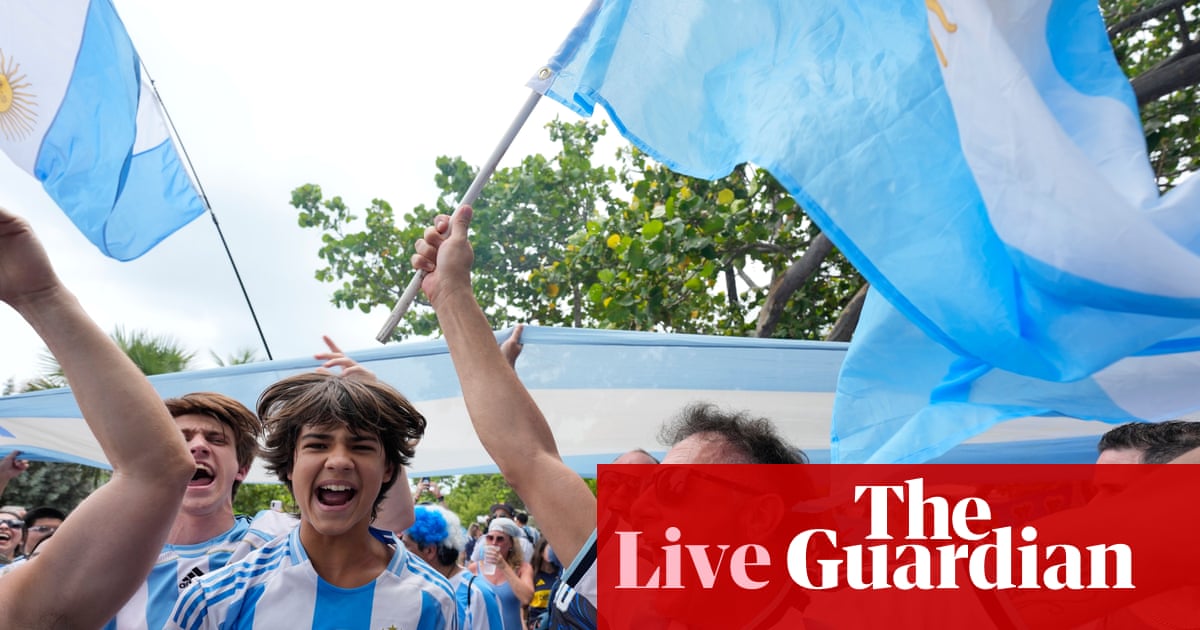
The Round of 32 has reached its most intriguing mismatch. Argentina, the defending champions, meet Cape Verde at the Hard Rock Stadium on Friday, July 3, 2026.
The winner of this clash will face Australia in the Round of 16, following the Socceroos' extra-time victory over Egypt in Dallas. You can follow the action unfold on The Guardian's live coverage.
You can also trace potential routes to the final using the World Cup bracketology. Every match in the knockout stage shifts the tournament dynamics significantly.
The thermometer will read 30C/86F at kick-off, bringing a heavy blanket of Florida heat. For Cape Verde, this is familiar territory, with many players used to warm climates. Even center-back Pico Lopes, who plays for Shamrock Rovers, will find the breeze-capturing design of the stadium manageable.
Lionel Messi is also well-accustomed to this pitch from his MLS campaigns. The heat will test squad depth as the match wears on. Scaloni must manage his substitutions wisely to maintain physical intensity.
The Opta Supercomputer gives the Blue Sharks a mere 10% chance of winning. This projection underestimates the structural discipline Bubista has drilled into his side. They did not reach this stage through luck.
How Bubista Built the Group H Wall
Cape Verde qualified for their first World Cup and immediately made history. Their squad, detailed in the complete player guide, features unheralded individuals who have performed exceptionally. They emerged unbeaten from Group H, securing draws against Spain, Uruguay, and Saudi Arabia.
Their defensive record is built on a compact 4-5-1 block that denies space between the lines. During their draw against Spain, they limited the opponent to an xG of 0.82 despite conceding 68% possession. Logan Costa and Pico Lopes formed a rigid central partnership, refusing to be pulled out of position by Spain's shifting forwards.
They maintained a defensive line height of just 18 yards from their own goal. This low block eliminated any possibility of runners getting behind them. The midfielders stayed narrow, clogging the half-spaces and forcing Spain to play wide.
Cape Verde only pressed when the opposing fullback received a lateral pass with their back to goal. This trigger allowed the wingers, Garry Rodrigues and Ryan Mendes, to trap the fullback against the touchline. The strategy forced opponents into hurried long balls or negative backpasses.
Uruguay suffered the same frustration, failing to record a single big chance in their match. Bubista will deploy the exact same defensive blueprint against Argentina. He knows that giving Messi space in the final third is fatal.
The plan is to starve Argentina of central passing lanes. Bubista has also shown a willingness to adjust his shape under pressure. Against Uruguay, he switched to a back five in the 78th minute to neutralize cross-field deliveries.
Expect a similar defensive shift if Argentina begins to overload the penalty box late in the game. It is a pragmatism born of necessity. They will look to stretch the game as long as possible.
Argentina's Progression and the Ageing Messiah
So far, Argentina's defense of their crown has been spotless. They maintained a perfect record through the group stage, scoring eight goals and conceding just once. Their game is functioning at a very high level under Scaloni.
"Even at 39, Messi is unmatched when it comes to deciding a match at the elite level," noted the pre-match guide.
Messi has been in sensational form, scoring six goals in three matches. Scaloni has structured the team to compensate for the captain's lack of defensive running. Argentina transitions into an asymmetrical 4-4-2 when out of possession, with Rodrigo De Paul shifting wide right.
De Paul covers the defensive duties that Messi vacates, shielding the right fullback. In possession, Enzo Fernandez acts as the primary deep playmaker. He sits in the pivot role, dictating the tempo and feeding Messi in the right half-space.
De Paul's physical contribution is critical to this structural balance. He routinely covers over 12 kilometers per match to cover the vacant space. This work rate allows Messi to conserve energy for explosive attacking bursts.
Once Messi receives the ball, Julian Alvarez begins his diagonal runs to pull the center-backs away. This movement creates a pocket of space for Messi to exploit. It is a highly rehearsed pattern that few teams have managed to stop.
The Flaw in Scaloni's Machine
Yet, Argentina are not invulnerable. Their transition defense has shown moments of weakness when their initial counter-press is bypassed. Against Canada in the group opener, they conceded three clear transition opportunities when Enzo Fernandez was caught too high up the pitch.
If the opponent can play through the first wave of pressure, Argentina's center-backs are left isolated. Cristian Romero and Lisandro Martinez are excellent in isolation, but they cannot defend massive spaces indefinitely. Ryan Mendes and Garry Rodrigues possess the pace to exploit these exact gaps.
Cape Verde's transition speed is their primary weapon. When they win the ball, they do not look to build slowly.
They immediately seek diagonal passes to the wings, bypassing the midfield entirely. If Argentina's fullbacks push too high, they will find themselves caught in footraces they cannot win. Scaloni's preference for high fullbacks could play right into Bubista's hands.
If the fullbacks are pinned back, Argentina's attacking width is severely compromised. This forces them to play through a crowded center, which is exactly what Cape Verde wants. If Scaloni fails to address this spacing issue, a frustrating evening awaits.
The Final Verdict
This match will not be the walkover many fans expect. Cape Verde's low block will frustrate Argentina for long stretches of the first half. They have already proven they can nullify Spain's elite passing lanes.
However, the Miami heat and Argentina's relentless possession will eventually take a toll. As the Cape Verdean block tires, gaps will open in the final third. Messi is too clinical to miss those opportunities when they arise.
Expect Argentina to break the deadlock in the second half. Messi will find the net in the 68th minute with a signature curling effort. A late counter-attack goal from Lautaro Martinez will seal the result.
Argentina will win 2-0 to set up a Round of 16 clash against Australia. The Blue Sharks will bow out, but only after proving their defensive organization belongs at this level. Argentina's journey continues, though their transition flaws will need fixing before they face tougher opponents.
Read Next
- Why Argentina must watch their step against the World Cup's greatest fairytale
- Messi's Miami homecoming is a tactical trap waiting to happen
- Pico Lopes vs Lionel Messi is the wildest matchup of the World Cup
- Portugal must resolve their identity crisis before facing Spain
- 🏆 World Cup 2026 — Full Coverage Hub
- 🇦🇷 Argentina World Cup 2026 — Defending Champions Hub