The Last Stand in Arlington
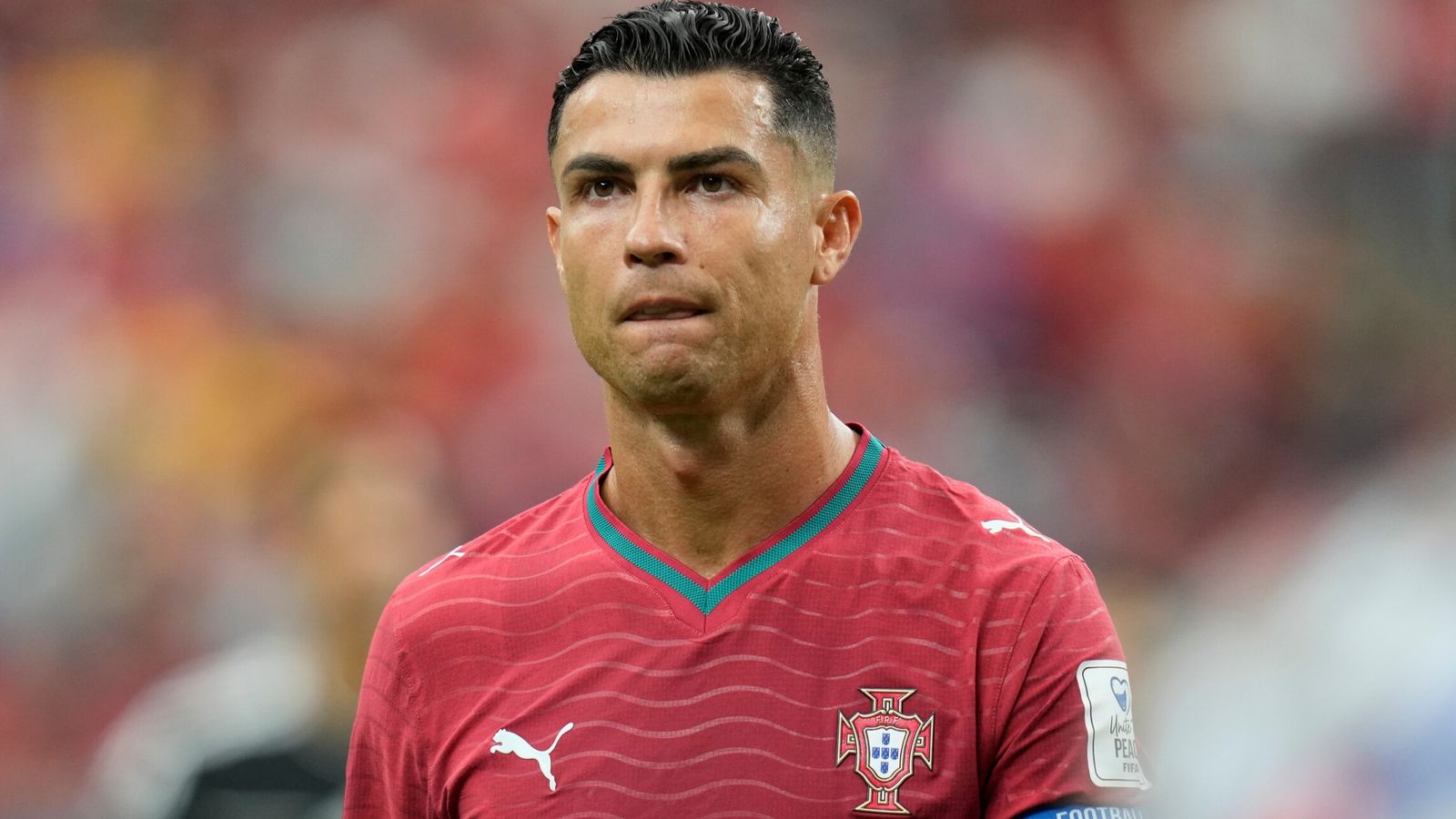
Cristiano Ronaldo is playing on borrowed physical time. At 41, the Portuguese captain has confirmed that the 2026 World Cup in the United States, Mexico, and Canada will be the final global tournament of his international career. The legendary forward addressed the media in Arlington, Texas, ahead of Portugal's high-stakes Round of 16 clash against Spain, stating that while he hopes tomorrow isn't his last game, this represents his final World Cup chapter.
The veteran striker enters the knockout stage having started all four of Portugal's matches in this tournament, scoring three goals along the way. Yet, this heavy workload comes just four months after a severe hamstring tendon injury threatened to end his season prematurely. For Portugal manager Roberto Martinez, managing the physical limits of a 41-year-old forward has become a daily balancing act that directly dictates the team's tactical structure.
The player's international retirement timeline is now locked to Portugal's survival in the bracket. As Sky Sports reported, Ronaldo has made it clear that he will exit the World Cup stage on his own terms. The medical reality of keeping a player of his age functional at this level is unprecedented in modern international football.
The Biomechanics and Medical Reality of Ronaldo's Fitness
The 41-Year-Old Hamstring
In late February 2026, Ronaldo sustained a hamstring tendon tear during Al-Nassr's Saudi Pro League match against Al-Fayha. This was not a minor muscular strain, but a structural tendon injury that required immediate specialized intervention. Tendon tissue loses elasticity and vascularity as athletes age, making healing times twice as long as they are for a player in their twenties.
The injury occurred during a sudden deceleration phase, a motion that puts immense shear stress on the biceps femoris tendon. In younger athletes, micro-tears in the tendon heal rapidly due to robust blood flow. For a 41-year-old athlete, the recovery is slow, prone to scar tissue formation, and highly susceptible to reinjury under high-intensity sprints.
The Madrid Recovery Plan
Rather than utilizing Al-Nassr's domestic facilities, Ronaldo flew to Madrid, Spain, to work with his personal physiotherapist. This decision bypasses club medical staff, highlighting the absolute autonomy the veteran maintains over his recovery. The rehabilitation program was highly structured to avoid early loading while maintaining cardiovascular fitness.
The recovery process took nearly five weeks, causing him to miss international friendlies in March before he returned to competitive play. The therapy team implemented specific modalities to stimulate tendon repair without causing further micro-tears. His daily program included three core components:
- Eccentric load exercises to build tendon resilience
- Hyperbaric chamber sessions for oxygenation
- Structured double-session daily conditioning
This customized approach allowed him to regain full fitness just in time for the summer tournament. However, it also highlights the disconnect between the player's personal medical team and his club's internal staff.
Tactical and Commercial Fallout
Tactical Compromise on the Pitch
While Ronaldo's physical recovery is a marvel, his presence on the pitch forces severe tactical compromises. Modern football is defined by high-intensity pressing and rapid transitions. At 41, Ronaldo cannot lead a modern defensive press, forcing Portugal to defend in a mid-block that exposes their midfield.
Martinez has structured the team to shelter their captain, utilizing energetic wingers like Rafael Leao to cover the defensive distance Ronaldo leaves behind. This structural adjustment decreases Portugal's defensive efficiency against elite passing sides. In the group stage, opponents easily bypassed Portugal's first line of defense, leaving midfielders isolated and overworked. If Spain dominates possession in Arlington, Portugal's defensive structure will face its ultimate test.
Furthermore, keeping Ronaldo on the pitch limits the development of younger forwards. Benfica's Goncalo Ramos, who famously replaced Ronaldo during the 2022 tournament, remains sidelined despite offering the mobility Portugal lacks. This selection bias shows a conservative approach that prioritizes star power over tactical fluidity. Martinez is gambling the tournament on a physical miracle rather than tactical evolution.
Commercial Pressures and the Saudi Project
The stakes extend far beyond the pitch for Al-Nassr and the Saudi Pro League. Ronaldo's physical fitness is the cornerstone of a multi-billion-dollar sports expansion project. A recurring injury at the World Cup would devastate Al-Nassr's upcoming domestic campaign and damage the commercial appeal of the league.
Sponsors like Nike and Al-Nassr's primary backers require Ronaldo's active presence to drive global engagement. His contract, worth an estimated $200 million annually, is built on the assumption that he remains the central figure of Saudi football. The decision to allow him to manage his rehab independently in Madrid shows how much power Al-Nassr has ceded to keep their star happy. This creates a precedent where player power overshadows club authority. It raises questions about Al-Nassr's long-term organizational control.
Competitors in the Saudi Pro League, such as Al-Hilal and Al-Ittihad, watch this physical management closely. They have managed their own aging stars, like Karim Benzema, with mixed results. Ronaldo's ability to stay fit at 41 sets a standard, but it also increases the financial pressure on rival clubs to support similar personalized medical entourages.
Historical Context and the Final Verdict
Comparing Legends
History is unkind to 40-year-old strikers at the World Cup. Roger Milla scored for Cameroon at age 42 in 1994, but his role was limited to late-game substitute appearances. Zlatan Ibrahimovic attempted to play at the highest level into his early forties with AC Milan, but his final years were plagued by constant knee surgeries and muscle tears, ultimately forcing his retirement.
Ronaldo's attempt to play full 90-minute matches at 41 is a physical anomaly. Dino Zoff won the World Cup at 40 as a goalkeeper, a position requiring far less cardiovascular output than a center-forward. Ronaldo is attempting to rewrite the rules of sports science in real time. His strict diet of six high-protein meals a day and scheduled sleep cycles are designed to fight natural biological decline.
The Arlington Test
Tomorrow's match against Spain will show if this physical experiment has succeeded. If Portugal exits, the post-mortem will focus on whether Martinez sacrificed team performance for one player's swan song. If they win, Ronaldo's medical team will have achieved the most impressive rehabilitation feat in modern sports history.
"This will be my last World Cup, but let's hope tomorrow isn't my last game."
The physical preparation has been completed. Now, only the grass of Arlington will decide if Ronaldo's 41-year-old body can sustain the demands of elite international football for one more round.
Read Next
- Why starting Cristiano Ronaldo against Spain is a tactical trap
- Roberto Martinez finally has to choose between Cristiano Ronaldo and winning
- England lose Jordan Henderson for the rest of the World Cup after bizarre injury
- Jordan Henderson's World Cup is over after bizarre celebration injury
- 🏆 World Cup 2026 — Full Coverage Hub
- 🇵🇹 Portugal World Cup 2026 — A Seleção Hub
- ⭐ Saudi Pro League 2025-26 — Ronaldo, Al Nassr & the Title Race