The Nice Guy's Last Stand
Roberto Martinez is widely regarded as one of football's genuine gentlemen. When Kieran Gill approached him in April 2014 during a Spanish football event at Goodison Park, the Everton manager was in a rush but later sent an apology through a colleague, a gesture detailed in his column for the Daily Mail. This anecdote paints a vivid picture of a manager who values human connection over raw media duty.
But nice guys do not win World Cups by default. Since leaving Everton in 2016, Martinez has spent a decade coaching on the international stage with Belgium and Portugal. His tenure with the Belgian Red Devils is remembered primarily for failing to win a trophy with their greatest ever generation of players.
Now, his contract with the Portuguese Football Federation is entering its final hours. With no renewal expected regardless of how Portugal fares in the knockout stages, this tournament represents his last opportunity to make his mark internationally. To do so, he must overcome his biggest tactical and political hurdle: his management of Cristiano Ronaldo.
The Croatia Precedent
Portugal booked their place in this round with a tight 2-1 victory over Croatia in Toronto. That match offered a blueprint for how Martinez must manage this squad if they are to progress. Croatia had dominated early proceedings, exposing Portugal's inability to defend transitions with a static forward line.
Martinez reacted with a bold quadruple substitution after 62 minutes, introducing Goncalo Ramos to inject energy into the frontline. Ronaldo remained on the pitch long enough to score a penalty, making him the oldest player to score in a World Cup knockout match. But with nine minutes of normal time remaining, Martinez made the call that surprised the crowd.
In the 81st minute, the fourth official's board flashed the number seven. Ronaldo walked off, visibly frustrated, to be replaced by Ruben Neves. The tactical shift worked immediately, as Neves anchored the midfield and Ramos scored the winning goal in stoppage time.
The Battle of Systems
Luis de la Fuente has constructed a Spanish team that functions as a single collective unit. The manager has made his philosophy clear, stating before the tournament that he wants no "selfishness" and no "egos" in his squad. Instead, Spain relies on a disciplined counter-press and rapid vertical movement.
On the right wing, Lamine Yamal provides the creative spark, but he is expected to track back and support his fullback. Spain entered the knockout stages with a perfect defensive record in the group phase. The cohesion between their midfield trio and defensive line has made them the most balanced team in the tournament.
Portugal presents a sharp contrast because their media narrative remains entirely centered on one individual. Every press conference and headline revolves around Ronaldo's quest for international glory in what FourFourTwo's preview terms his international "last dance." This constant spotlight places immense pressure on Martinez's tactical decisions.
The Nations League Final Echoes
Portugal and Spain are no strangers to high-stakes encounters. Their last competitive meeting in the Nations League final ended in a penalty-shootout victory for Portugal after a tense scoreless draw. That match highlighted Spain's possession dominance but also their struggle to break down Portugal's low block.
De la Fuente has spent the last year addressing that specific attacking deficiency. By incorporating more direct wingers like Nico Williams, Spain can now stretch opponents who try to sit deep. Portugal's defensive block will face a much more vertical and dynamic Spanish attack than the one they frustrated last summer.
The Midfield Squeeze
The primary tactical issue for Portugal when Ronaldo starts is defensive spacing. Modern high-pressing structures require all ten outfield players to coordinate their movement. Ronaldo, at 41 years of age, simply does not possess the physical capacity to press Spanish center-backs.
This lack of pressure allows Aymeric Laporte and Robin Le Normand time to pick out passes into Rodri. When Rodri receives the ball without pressure, he can dictate the tempo of the entire match. Portugal's midfielders, Bruno Fernandes and Joao Palhinha, are forced to cover extra ground to compensate for their striker's lack of mobility.
Against Croatia, this spacing gap was clear in the first half-hour. Croatia's midfield rotated easily, creating numerical superiorities in wide areas. If Portugal repeats this approach against Spain, Pedri and Fabian Ruiz will exploit the half-spaces behind Palhinha.
The individual matchup on Spain's right flank will be critical. Lamine Yamal's ability to cut inside on his left foot forces opposing left-backs into difficult defensive decisions. Nuno Mendes will need disciplined support from Vitinha to prevent Yamal from creating overload situations.
On the opposite wing, Nico Williams poses a different threat with his direct running. Joao Cancelo must balance his attacking instincts with the necessity of tracking Williams' vertical runs. If Cancelo stays high, Spain's center-backs will launch diagonal balls directly into the space behind him.
Spain's possession-based style is designed to stretch the opponent's defensive line until gaps appear. Portugal must remain compact and resist the temptation to press individually. A disjointed press will play directly into Spain's hands, allowing them to carve Portugal open through central combinations.
The Taylor Factor
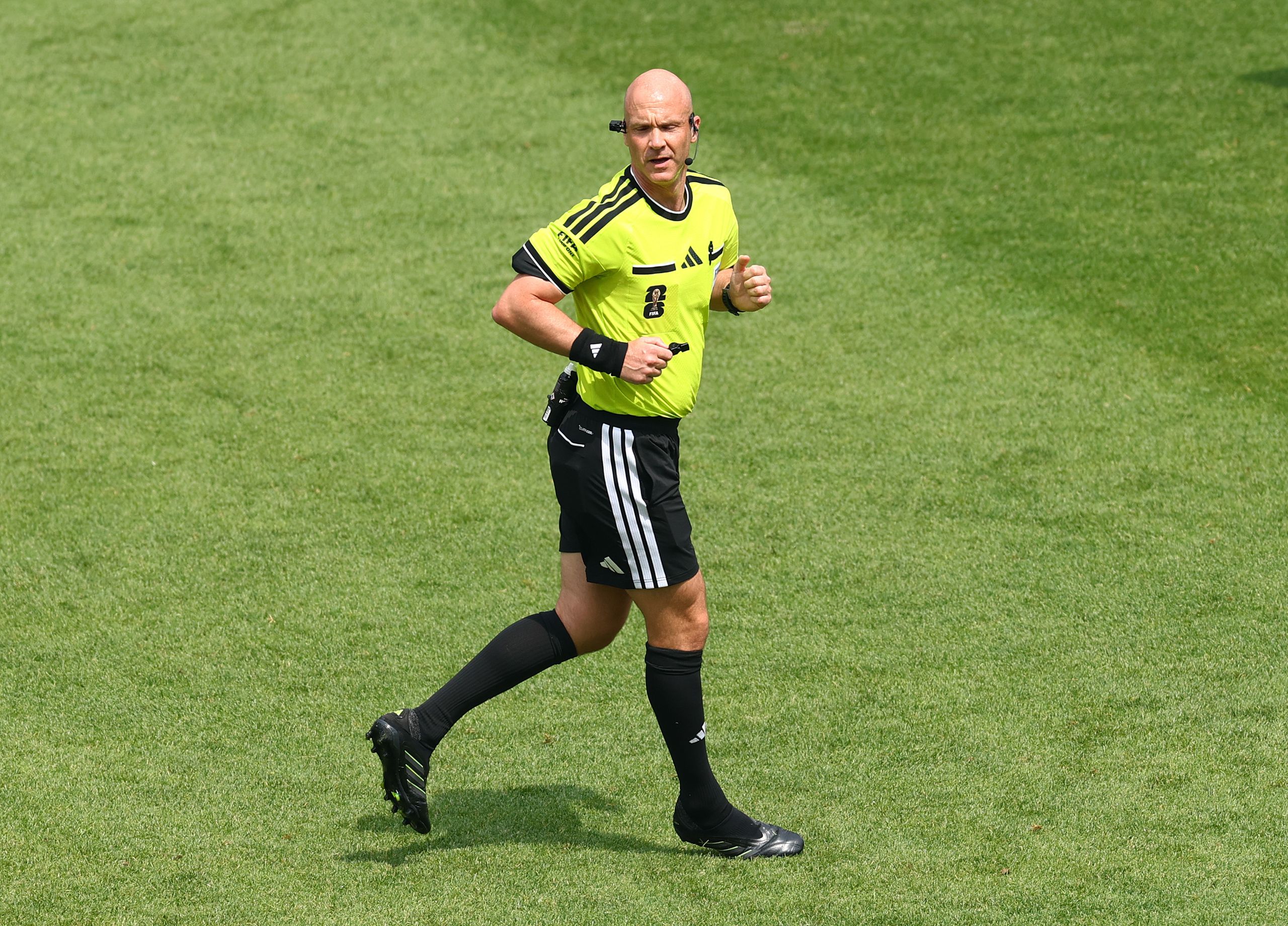
The match will be officiated by English referee Anthony Taylor, as confirmed by FourFourTwo's referee profile. Taylor has a reputation for letting physical contact slide, preferring to let the game flow. This style of officiating could benefit Portugal's physical midfielders if they seek to disrupt Spain's rhythm.
However, Taylor's reluctance to blow his whistle early can lead to escalating tensions on the pitch. In a high-stakes Iberian derby, tempers are guaranteed to flare. Both teams must maintain their discipline to avoid unnecessary bookings that could affect their defensive structures.
Portuguese players have a history of complaining to officials when decisions go against them. Martinez must instruct his team to focus on their positioning rather than debating calls with Taylor. A single defensive lapse during a moment of distraction will be punished by Spain's clinical attack.
The Arlington Verdict
Opta's supercomputer has weighed the data and declared Spain the clear favorites. The model gives Spain a 49.2% chance of victory within the 90 minutes. Portugal's chance of winning in regulation time stands at a modest 25.6%, with a draw rated at 25.2%.
These numbers reflect the structural consistency Spain has shown under De la Fuente. They do not rely on individual moments of magic; they rely on a system that systematically minimizes risk. Portugal, by contrast, remains a collection of high-quality individuals searching for a cohesive identity.
Martinez holds the key to defying these statistics. If he starts Goncalo Ramos and leaves Ronaldo on the bench, Portugal can match Spain's physical intensity. But if he bows to political pressure and starts his aging captain, Spain's midfield will dominate from the opening whistle.
Expect Martinez to compromise, starting Ronaldo but hooking him earlier than he did against Croatia. Spain's defensive solidity will prove too much for a disjointed Portuguese attack. Spain will control the tempo, exploit the gaps in transition, and secure a comfortable victory in Arlington.
My prediction is a 2-0 victory for Spain. Spain's midfield will choke the service to Ronaldo, and Yamal will score the opener before Williams seals the match on a counter-attack. Portugal's golden dream will end in the Dallas heat.
Read Next
- Why starting Cristiano Ronaldo against Spain is a tactical trap
- Why Folarin Balogun's political reprieve changes everything for the USMNT
- England's makeshift backline faces a brutal reality check against Norway
- Pochettino has a tactical puzzle now that Folarin Balogun is cleared
- 🏆 World Cup 2026 — Full Coverage Hub
- 🇵🇹 Portugal World Cup 2026 — A Seleção Hub