The group stage of the 2026 World Cup has concluded, and the tournament's scoring charts have thrown up a baffling statistical anomaly. Traditional English powerhouses like Manchester City and Arsenal have been left in the dust. Instead, Crystal Palace and Sunderland sit proudly at the top of the Premier League goal contribution table.
As reported by BBC Sport, players from Selhurst Park and the Stadium of Light have accounted for seven goals each. Only global behemoths Real Madrid and Paris Saint-Germain have seen their contracted players score more in North America. This is not a product of blind luck, but a reflection of how these mid-table and rising sides have built squads filled with specialized international talent.
Now, as the historic 48-team tournament transitions to the newly minted Round of 32, these unexpected stars face their ultimate tests. According to the bracket tracked by CBS Sports, the knockout phase leaves no margin for error. We are about to find out if this group-stage scoring surge was a brief flash in the pan or a sign of tactical shifts to come.
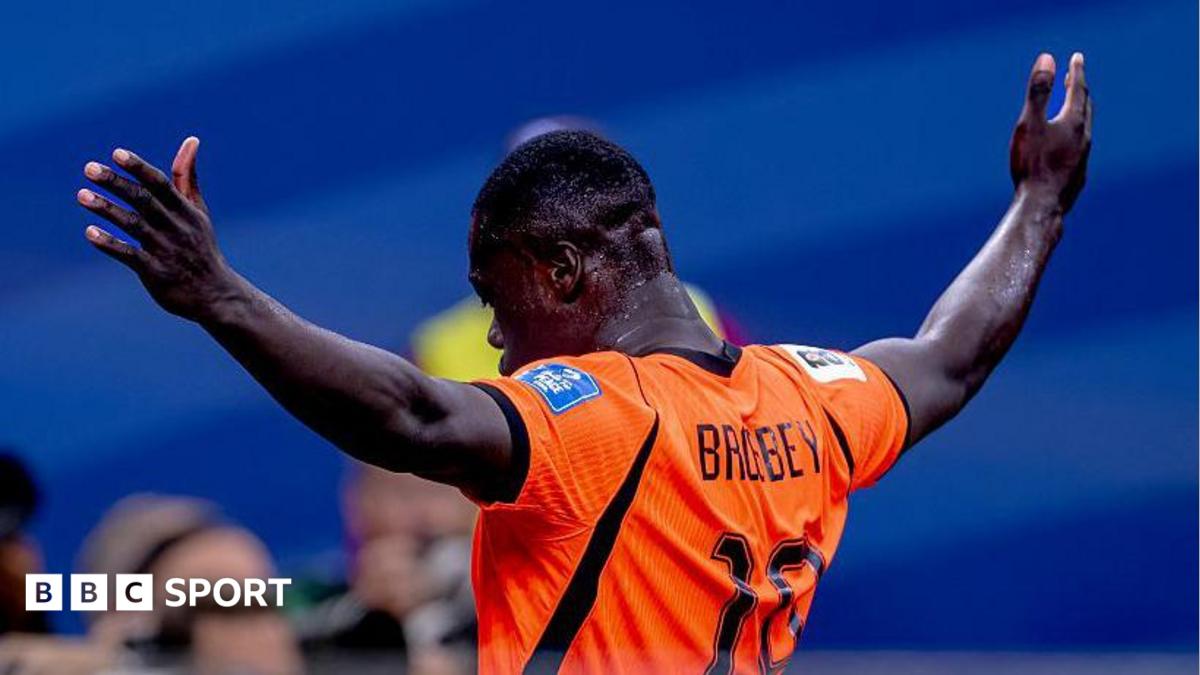
Brobbey and the Dutch Blueprint Against Morocco
Netherlands face Morocco tonight in a match defined by contrasting spatial demands. Ronald Koeman has abandoned the traditional Dutch possession game in favor of a direct, transition-heavy approach. At the center of this functional shift is Sunderland forward Brian Brobbey.
Brobbey has already netted three goals in this tournament by acting as a physical focal point. His ability to pin central defenders allows the Dutch wing-backs to underlap into the half-spaces. He does not just run the channels; he dominates them with his back to goal.
Morocco's defensive shape relies on Achraf Hakimi's recovery pace to bail out their central defenders. Brobbey must use his physical frame to shield the ball and release runners like Cody Gakpo into the space Hakimi leaves behind. This dynamic will force Morocco's midfield to drop deeper, creating room for Dutch long-range efforts.
Morocco will look to restrict this space by dropping into a compact mid-block. Romain Saïss and Nayef Aguerd will attempt to double-team Brobbey to deny him turn-and-strike opportunities. If Morocco can sever the passing lanes from Frenkie de Jong to Brobbey, the Dutch offense will stall.
Yet, Brobbey’s link-up play has matured rapidly under the pressure of international knockout football. He is currently averaging an impressive 84% pass completion rate in the final third.
A major weakness in the Moroccan setup is their vulnerability to set-pieces, an area where Brobbey excels. The Oranje have averaged six corner kicks per match in the group stage, scoring twice from near-post runs. If Brobbey can isolate Saïss at the near post, Morocco's defensive structure will crumble.
Kamada’s Half-Space Hunt and Muñoz’s Colombian Engine
For Japan, the challenge today is even steeper as they square off against Brazil. Crystal Palace midfielder Daichi Kamada has been the quiet architect of Japan's progress, scoring twice from late runs into the penalty area. His role in Hajime Moriyasu's 3-4-2-1 system is highly specific.
Kamada occupies the left half-space, operating in the blind spot of opposing defensive midfielders. He waits for the wing-back to stretch the play before darting inside. Against Brazil's defensive pairing of Marquinhos and Gabriel, these late movements will be Japan's best route to goal.
Brazil's defensive midfielder, Casemiro, often pushes high to initiate the counter-press, leaving space behind his back. Kamada’s role is to exploit this transition phase by receiving the ball and turning immediately to feed Japan's speedy wingers. If Kamada is slow to release the pass, Marquinhos will quickly step out of the backline to intercept.
Meanwhile, Colombia will look to exploit Ghana's narrow defensive shape on July 3. Daniel Muñoz has been a revelation on the Colombian right flank, scoring two goals while essentially playing as a auxiliary winger. His stamina allows Colombia to transition instantly from a back-four to a back-five.
Colombia's tactical flexibility depends entirely on Muñoz's ability to cover the entire right corridor alone. When Colombia loses possession, Muñoz must sprint sixty yards back to form a compact defensive block. If Ghana can catch Colombia in transition, they will target the space Muñoz vacates.
Muñoz’s runs are timed to exploit the space left when Luis Díaz drags defenders to the opposite side of the pitch. Ghana's left-back, Gideon Mensah, has struggled with back-post tracking throughout the group phase. Muñoz will target this specific defensive vulnerability relentlessly.
The Midfield and Wing Battles in the Knockouts
Senegal's Dual Threat: Sarr and Diarra
On July 1, Senegal will take on Belgium in what promises to be the most physically demanding fixture of the round. This match features a unique sub-plot as Crystal Palace’s Ismaila Sarr and Sunderland’s Habib Diarra team up for the Teranga Lions. Sarr has been Senegal’s primary outlet, matching Brobbey with three goals of his own.
Senegal head coach Aliou Cissé has built a system that maximizes Sarr's vertical speed. Sarr sits on the shoulder of the last defender, waiting for direct balls over the top. Belgium's aging center-back partnership will find it incredibly difficult to defend these long-distance sprints.
Behind Sarr, Sunderland youngster Habib Diarra provides the necessary defensive ballast. Diarra is a destructive midfielder who averages four tackles per ninety minutes. His ability to disrupt Belgium's build-up play will determine how much service Romelu Lukaku receives.
However, Senegal have shown a worrying tendency to drop too deep once they take a lead. This passivity cost them against England in the previous tournament and could be fatal against Belgium. Diarra must maintain his aggressive positioning even if Senegal score first.
Xhaka's Swiss Shield Against Algeria
Switzerland face Algeria on July 2, relying heavily on the experience of Granit Xhaka. In the match schedule detailed by Sky Sports, the Sunderland midfielder has transitioned into a deeper playmaker role for his country, acting as the team's tactical anchor. He controls the tempo, dictates the distribution, and orchestrates the press.
Algeria’s attacking threat lies in their quick transitions through Ismaël Bennacer. Xhaka’s primary task will be to nullify Bennacer’s forward passing lanes before the Algerian wingers can run at the Swiss full-backs. It is a battle of chess rather than a track meet.
Xhaka's ability to break the first line of press with vertical passes will be critical for Switzerland. He will look to find Breel Embolo in the pockets of space between Algeria's midfield and defense. If Algeria can force Xhaka into sideways passes, the Swiss possession will become predictable and harmless.
Switzerland's main concern remains their lack of pace when defending counter-attacks down the flanks. Xhaka must use his tactical fouling and positioning to stop Algeria's wingers before they gather speed.
The Swiss offense has looked sluggish when Xhaka is pressed aggressively by opposing forwards. If Algeria deploy a two-man press to cut off Xhaka, Switzerland will struggle to progress the ball. The burden will then fall on Manuel Akanji to carry the ball out of defense.
Knockout Predictions
The fairy-tale group stage for Palace and Sunderland is over, and reality is about to bite. While Japan will likely fall to a superior Brazil side despite Kamada’s tactical intelligence, the other stars should progress. Look for Brobbey to bully Morocco's defense and Muñoz to exploit Ghana's back-post weakness.
Senegal will pull off the shock of the round by eliminating Belgium in extra time. Sarr's pace will ultimately prove too much for the Belgian defense to handle over one hundred and twenty minutes. The Premier League's unexpected goal-scorers are not done making headlines just yet.
Read Next
- Why Enzo Maresca faces an impossible task succeeding Pep Guardiola
- Top 10: Top Moments
- Chelsea bid for Granit Xhaka triggers furious Sunderland transfer battle
- Why Charlie Cresswell is a massive gamble for Crystal Palace's rebuild
- 🏆 World Cup 2026 — Full Coverage Hub
- 🏟 EFL Championship 2025-26 — Promotion Race & Play-Off Final Hub