The Etihad Ghost
Pep Guardiola has finally stepped away from the touchline, leaving behind a vacuum that cannot be filled by ordinary means. After a 10-year tenure defined by tactical hegemony, the Manchester City hierarchy has opted for familiarity over raw star power. As Manchester City's official announcement confirmed, the Italian has signed a three-year contract to walk these corridors as the sole focal point of pressure.
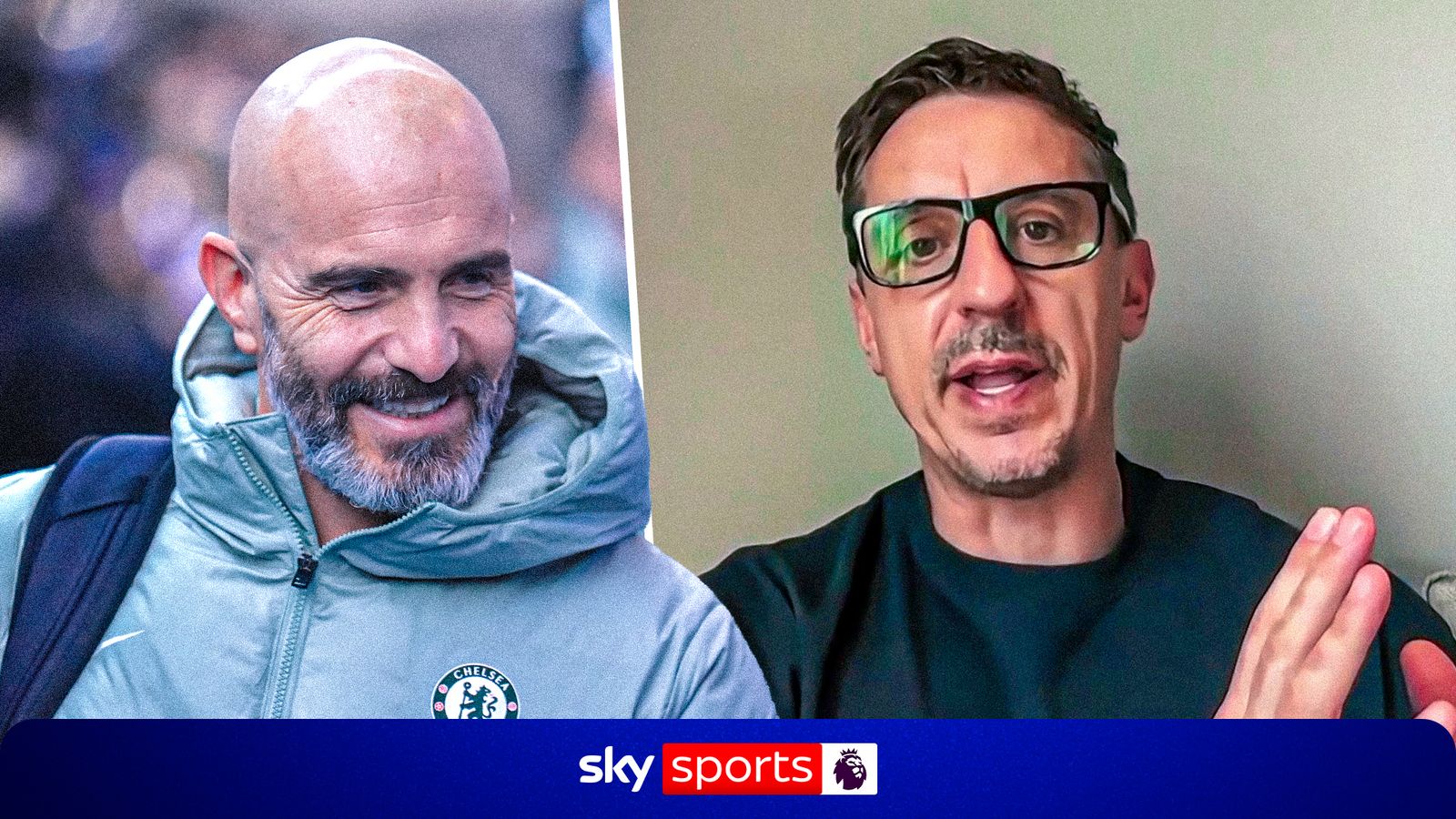
As Gary Neville argued on Sky Sports, this is the ultimate challenge in modern coaching. The former assistant has returned to the club where he once coached the development squad and stood at Guardiola’s shoulder during the treble season. Yet, the expectations have not diminished with Pep’s departure.
Guardiola left a legacy of 20 major trophies, including six Premier League titles. Any drop in performance will be magnified by the British press and dissected by rival fanbases. There is no grace period for a coach entering a stadium where victory is the baseline expectation.
"Ultimate test - he has to win!"
The £17 Million Divorce
The appointment was not a clean break. Chelsea released a statement dripping with institutional fury, revealing that private discussions between City and Maresca had been ongoing since December 2025. To secure his signature, the City board had to pay a settlement of £17 million.
Chelsea's statement noted that they were disappointed by the lack of transparency during the negotiations. The Stamford Bridge executives believed Maresca was building a long-term project, only to find he was already preparing his exit strategy. According to reports from The Guardian, this departure marks the second time in three years that City have disrupted a rival's planning to secure their coaching staff.
Maresca’s time in West London was a mixture of silverware and structural chaos. He delivered a Conference League title and secured Champions League qualification. Yet, his departure in January 2026 came after Chelsea's form degraded into a volatile sequence of results.
The Stamford Bridge hierarchy felt a change was necessary, but the manner of his exit has left bitter feelings. City are paying premium prices for a coach who has yet to prove he can navigate a full season of elite domestic pressure without his squad tuning out. The Chelsea hierarchy grew tired of the slow, methodical possession that occasionally looked like passing for passing's sake.
The Restructuring of Positional Play
Now, Maresca must show that his methods can survive the scrutiny of a title race. Tactically, Maresca is a purist who refuses to compromise on his build-up patterns. At Chelsea, he demanded a strict 3-2-4-1 structure in possession.
Marc Cucurella was tasked with leaving his left-back position to form a double pivot alongside Moises Caicedo. This left three central defenders to manage defensive transitions, a setup that frequently exposed their lack of raw recovery speed. At City, he inherits a squad built for this exact blueprint.
Yet, there are significant differences in execution. Guardiola's City was fluid, adapting its pressing triggers to the opponent’s shape. Maresca’s Leicester and Chelsea teams were more rigid, maintaining their positional grid even when the opponent refused to press.
During his Championship campaign with Leicester City, Maresca's team averaged 62% possession but frequently struggled against stubborn low blocks. The Foxes struggled to break down opponents who packed the middle third and denied space to the advanced midfielders. At Chelsea, this issue persisted, as the team often recorded high possession numbers without creating high-value scoring opportunities.
We can identify several key deviations in the Italian's tactical approach. Maresca's system hinges on three primary structural adjustments from Guardiola's era:
- A more rigid positional grid that limits spontaneous midfield rotations.
- A slower, risk-averse build-up designed to drag the opponent's press forward.
- An absolute reliance on the double pivot to protect the space in front of the center-backs.
We saw this rigidity cost Chelsea in their 2-0 defeat to Liverpool last season. The midfield remained flat, refusing to drop and assist the center-backs when the press was locked. If Maresca brings this dogmatic approach to Manchester, opponents will quickly map out the passing lanes.
The slow build-up could easily become a cage of City's own making. The squad Maresca inherits is older than the one he left in 2023. Kevin De Bruyne turned 35 yesterday.
The Aging Engine Room
Bernardo Silva is approaching 32. Kyle Walker is 36, and his recovery speed is no longer the ultimate insurance policy against counter-attacks. City can no longer rely on physical superiority to bail them out of defensive transitions.
This creates a direct selection dilemma on the left flank between Josko Gvardiol and Nathan Ake. Gvardiol has the passing range to invert from left-back, but his defensive instincts are naturally suited to a wider role. If he tucks inside, the space behind him will be the primary target for rapid transitions.
Rodri remains the pivot around whom everything rotates. But if the opposition successfully man-marks the Spaniard, Maresca's system requires the inverting full-back to assume playmaker duties. Rico Lewis has the technical qualities for this role, but he lacks the physical presence to anchor a midfield against elite transitions.
If Walker is phased out, the right flank becomes a major defensive vulnerability. Furthermore, Erling Haaland's role in this system will require adjustment. Maresca prefers a striker who drops deep to link play, similar to how Nicolas Jackson operated at Chelsea.
Haaland is a master of attacking space, not receiving the ball with his back to goal in crowded central areas. Forcing the Norwegian into a possession-heavy recycling role could blunt City’s sharpest weapon.
Last season, Chelsea's progressive pass distance was one of the lowest among the top-six teams, reflecting Maresca's preference for short, horizontal recycling. This style requires immense patience from the players and the stands alike. City fans, accustomed to the direct verticality of Leroy Sane or the early Haaland era, may find this slower tempo frustrating.
"He has to become a champion!"
The Defensive Transition Problem
Defensively, Maresca's teams have historically struggled when the ball is lost in the middle third. Because the full-back is inverted, the wide channels are left open. If the counter-pressing trigger is missed, the remaining three defenders are forced to defend wide areas in isolation.
In the Premier League, elite wingers will exploit this space ruthlessly. During the 2025/26 season, Chelsea conceded 48 goals, many of which came from simple direct passes into the channels behind the advanced full-backs. Ederson will be asked to play even higher up the pitch to sweep these zones.
With the Brazilian keeper showing signs of decline in his shot-stopping metrics, this is a dangerous defensive strategy. The pressing structure must also be addressed. Guardiola's press was aggressive and coordinated.
Maresca's teams tend to drop into a mid-block if the initial press is bypassed. This concession of territory is uncharacteristically passive for City and could invite unnecessary pressure on a backline that is losing its physical peak.
Prediction: A Season of Friction
The post-Pep transition was always going to be painful, but appointing Maresca makes it unnecessarily tense. The Italian is a coach who demands absolute obedience to his tactical grid. When results falter, this dogmatism will clash with senior players who have won everything under a more flexible genius.
The dressing room dynamics will be his first major hurdle. Manchester City will not win the league this season. The transition is too steep, the squad is too old, and Maresca's tactical rigidity will cost them points in games where flexibility is required.
Arsenal and Liverpool are primed to exploit this period of Manchester instability. Expect City to struggle early, find their rhythm by February, but ultimately fall short of the title. We predict a third-place finish for City, ending the season with 78 points.
Maresca will survive his first year, but the whispers of discontent will start before the autumn leaves fall. Succeeding Guardiola was always a trap, and Maresca is walking straight into it with his tactical notebook in hand.