The friction between perception and pitch reality
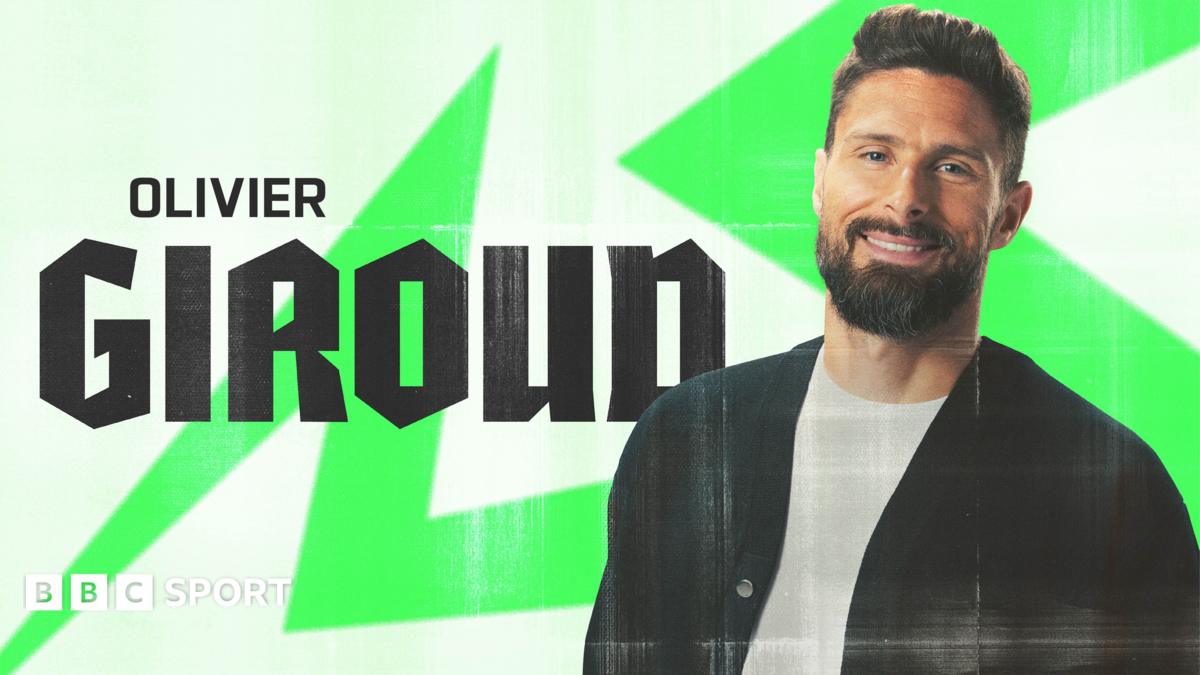
Olivier Giroud’s recent comments regarding his relationship with Kylian Mbappe strip away the veneer of the toxic dressing room narratives that fans have obsessed over since the 2022 World Cup. Giroud suggests that the perception of Mbappe as an arrogant individual is a fundamental misunderstanding of his drive. When you look at France's current setup, this defense is timely. Managers rarely struggle with Mbappe’s talent; they struggle with the gravitational pull he exerts on a tactical formation.
We are watching a superstar who demands a specific geometry. When Mbappe drifts into the left half-space, he often vacates the touchline, putting immense pressure on his full-back to provide overlapping width. This becomes a defensive liability if the midfielder covering that flank fails to tuck in. It is not a failure of character, but a structural demand that requires 10 other players to work in perfect synchronization.
The math behind the superstar
Critics frequently point to Mbappe’s defensive work rate—or lack thereof—as the primary reason for France’s occasional stagnancy. However, the data reveals a different story. If you track his pressing triggers, they are rarely reactive. They are opportunistic by design. He saves his energy for high-intensity bursts, aiming to hit the back line with transition speed rather than chasing a lateral ball in the second third.
This is a calculated risk. If the team wins the ball, the reward is an xG spike higher than almost any other forward in the world. If the team loses the ball and fails to recycle, the team is exposed. The 3-1-4-2 shape sometimes used by French management attempts to mitigate this, but it often leaves the transition game disjointed if Mbappe and his partner do not calibrate their movement sequences.
The danger of becoming one-dimensional
Despite his elite production, France faces a recurring problem. Relying on an individual to solve structural rigidity leads to predictable patterns. In matches where the opponent sits in a low block, the temptation to force the ball to Mbappe results in a steep decline in passing accuracy. We saw this during recent international breaks, where his pass completion percentage dropped below 78% against organized defensive lines.
The lack of a secondary creative outlet means that if Mbappe is man-marked by a disciplined defensive midfielder, France has to rely on pure individual brilliance to break the deadlock. It is a fragile way to play. The team is currently ranked among the favorites for the next tournament, yet the margin for error against technically gifted midfield units is thinner than the media narrative suggests.
Predicting the tactical evolution
Predicting how France manages its next outing requires looking at personnel shifts. I expect them to integrate more dynamic central midfielders who can progress the ball without needing to look for the long diagonal pass toward the flank immediately. If they persist in isolating him, they will continue to frustrate their own supporters who want to see a more fluid, collective attacking structure.
My prediction? France will struggle to break down low-block opponents in their next qualifier, finishing the first half with 65% possession but zero shots on target from inside the six-yard box. They will eventually grind out a narrow win through a set-piece or an individual moment of magic from Mbappe, proving that while the individual is elite, the collective mechanism still needs a significant upgrade.
Read Next
- Kylian Mbappe injury concerns mount ahead of France's next knockout stage
- Kylian Mbappé is finally embracing his role at the center of the football world
- Emma Hayes is the best pundit on television despite the social media noise
- Why the opening week of the World Cup feels like a tactical grind
- 🇫🇷 France World Cup 2026 — Les Bleus Hub
- ⚽ La Liga 2025-26 — Title Race Hub