Inter Miami hiring Kily González feels like a massive tactical mistake
The Rosario Nostalgia Trap
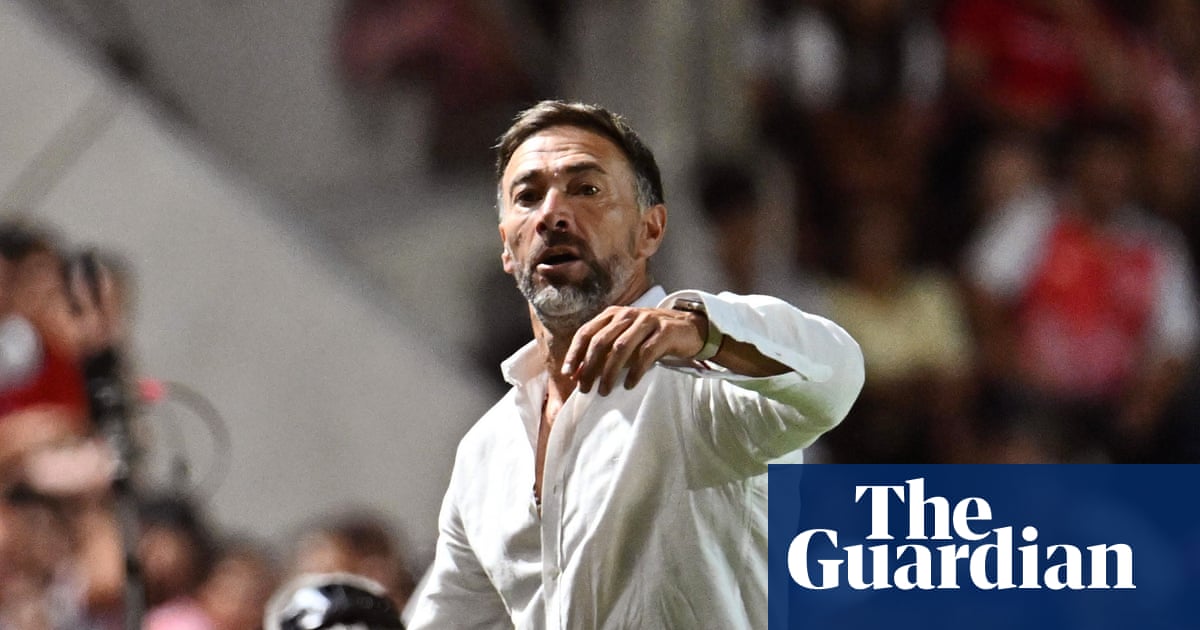
Inter Miami have chosen sentiment over structure. The hiring of Cristian "Kily" González as head coach, reported yesterday by César Luis Merlo, signals a front office desperate for emotional resonance rather than tactical order. Replacing interim boss Guillermo Hoyos with a manager possessing a dismal career win rate is a staggering risk for the reigning MLS Cup champions.
The romantic hook is obvious to anyone tracking the South Florida project. Both González and Lionel Messi hail from Rosario, sharing deep roots in Argentine football culture. Their brief international overlap in 2005 included World Cup qualifiers against Uruguay and Peru, capped by Messi entering as a second-half substitute for González against Uruguay.
Nostalgia does not fix a leaking mid-block. Nor does shared heritage stop opponents from attacking the vacant channels left behind high-pressing full-backs. By turning to González, Inter Miami owners are betting on locker room aura to solve structural defects that require meticulous tactical coaching.
A 32.5% Win Rate Meets a Championship Squad
González arrives with a coaching resume that should alarm every supporter in Fort Lauderdale. Across spells at Rosario Central from 2020 to 2022, Unión from 2023 to 2025, and a 14-game stint at Platense last year, he lost more matches than he won at every single club. Overall, he owns a career win percentage of just 32.5%.
That figure is damning for an executive team that built one of the most expensive rosters in North American sports history. Champions do not hand the keys to a manager who wins less than a third of his career matches. The disparity between squad valuation and coaching pedigree is staggering.
Miami do not lack elite individual talent across their starting eleven. Summer additions were explicitly designed to secure a back-to-back title run following last season's MLS Cup triumph. The front office brought in wide defender Sergio Reguilón, Monterrey striker Germán Berterame, 2025 MLS Goalkeeper of the Year Dayne St Clair, and post-World Cup midfield anchor Casemiro.
Despite those high-profile signings, the team has stalled on the field. They sit third in the Supporters' Shield table, trailing Western Conference leaders Vancouver Whitecaps and Eastern Conference pacemakers Nashville SC. The gap behind Nashville now stands at a daunting 10 points.
The Tactical Collapse Under Hoyos
The decline under interim coach Guillermo Hoyos was swift and painful. Hoyos took control on April 14 after Javier Mascherano resigned for personal reasons, shortly after the club crashed out of the Concacaf Champions Cup last 16 against Nashville SC. What was meant to be a steadying hand turned into a slow downward drift.
Miami's post-World Cup form has been miserable by any professional standard. Since returning from the break, the Herons have managed just 3 wins in 9 games across all competitions. Their last victory came back on August 5, when they scraped past Atlético San Luis in the Leagues Cup.
The wheels completely came off the campaign over the past three weeks. Recent results paint a grim picture of a squad losing its competitive edge:
- August 5: 1-0 victory against Atlético San Luis in Leagues Cup play
- August 12: 3-2 defeat to León, resulting in group stage elimination
- August 17: 4-1 drubbing by Nashville SC in MLS league play
On August 12, Mexican side León knocked Miami out of the Leagues Cup group stage with a bitter defeat. That result exposed structural vulnerabilities that opponents throughout MLS quickly copied. León targeted the vast spaces between Miami's central midfielders and advancing full-backs, walking away with a 3-2 victory.
Things quickly deteriorated when league play resumed against familiar tormentors. Nashville SC handed Miami a 4-1 drubbing, dominating the central third and punishing every turnover with ruthless counter-attacks. The match highlighted a side completely stripped of defensive intensity and spatial awareness.
The club now finds itself mired in a five-match winless streak. Remarkably, the final four games of this barren run occurred with Lionel Messi back on the pitch, following his return after the death of his father, Jorge. Even the presence of the world's greatest player could not mask systemic flaws.
Systemic Disorganization on the Pitch
Messi's return was supposed to reignite an engine that had lost its rhythm. Instead, Miami looked stagnant, relying on individual moments of genius to bail out passive defensive shape. When opponents double-teamed Messi in the right half-space, Miami had no automated positional play to exploit the open turf elsewhere.
Off-field operational discipline hit rock bottom alongside results on the pitch. On Thursday, MLS officially suspended Hoyos for one game due to the club's repeated violations of the league's late kickoff policy. Inter Miami had developed a persistent habit of delaying their return from half-time breaks.
A head coach getting suspended for tardiness sums up the recent culture around the facility. When a club cannot manage to step onto the pitch on time, expecting organized defensive rest structure in the 85th minute is foolish. Hoyos leaves behind an academy methodology background that never translated to top-tier execution.
Why Kily's System Will Fail to Fix the Gap
This brings us to the core tactical conflict facing Kily González. In Argentina, González favored a high-intensity, emotion-driven style built on quick vertical transitions and heavy physical duels. At Rosario Central and Unión, his setups prioritized direct verticality over patient, positional buildup.
That approach is fundamentally mismatched with Inter Miami's current roster profile. You cannot play a chaotic, end-to-end pressing game with an aging core squad. Expecting veteran stars to cover 60 yards of recovery sprint distance when a high press gets bypassed is a tactical blueprint for disaster.
Consider the midfield dynamics involving Casemiro. The Brazilian arrived after the World Cup to anchor the central third, protecting space ahead of the center-backs. But Casemiro thrives in a compact unit where distance between lines is strictly limited to 15 yards.
When Reguilón surges forward down the left flank, Miami's defensive shape must rotate instantly to form a three-man rest defense. Under Hoyos, that rotation rarely happened on time. If González demands high-risk direct attacks, Casemiro will be left stranded on an island against quick opposition transitions.
The problems extend to the back line and goalkeeper setup. Dayne St Clair won 2025 MLS Goalkeeper of the Year by excelling behind a Minnesota defense that funnelled shots into predictable angles. At Miami, he has faced constant high-xG cross-box pass attempts and direct one-on-one breakaways.
St Clair cannot save Miami from their own structural generosity every single week. Without defensive compactness ahead of him, even an elite shot-stopper looks vulnerable. The four-goal loss to Nashville showed how easily opponents can force St Clair into impossible recovery positions.
The Forward Line Dilemma
Up front, the balance between Germán Berterame and Messi remains unresolved. Berterame arrived from Monterrey as a proven finisher who requires service inside the penalty box. Yet Miami’s sluggish buildup forces Berterame to drop deep into midfield simply to touch the ball.
When Berterame drops deep, he occupies the exact central pockets Messi prefers to navigate. The result is spatial congestion, slowing down Miami's attack and allowing opposition low blocks to settle without stress. González must solve this spatial overlap immediately or watch his focal forward stagnate.
Can Kily González suddenly morph into a tactical pragmatist? His coaching history offers little reason for optimism. Across 14 games at Platense last year, his team repeatedly struggled to break down organized low blocks, relying almost exclusively on set-pieces and long-range shots.
MLS is a league defined by parity and physical transitions. Opponents do not grant time for famous managers or iconic rosters to figure things out on the fly. Teams like Vancouver Whitecaps and Nashville SC have clear structural identities built over years of intentional roster construction.
Nashville in particular have turned into Miami's tactical kryptonite. From knocking them out of the Champions Cup in March to crushing them in league play this month, Gary Smith's side has exposed every flaw in South Florida. They sit 10 points clear in the standings because their system amplifies player strengths rather than relying on individual talent.
Inter Miami's front office appears to believe that emotional alignment between coach and star player can overcome structural deficiencies. Having Messi and González share Rosario origins makes for an appealing story in press releases. But football matches are won through spatial control, pressing triggers, and defensive transitions.
If González attempts to impose a chaotic, duel-heavy style, Miami will concede even more high-value chances in transition. If he attempts to play passive low-block football, he surrenders the ball-dominant identity that Messi and Casemiro require to dictate tempo. He is caught in a tactical trap of his own making.
The clock is ticking on Inter Miami's title defense. With five matches winless and the Supporters' Shield slipping out of reach, there is zero margin for error. A manager with a career 32.5% win rate is not the architect needed to fix a championship engine.
Miami needed a tactician who could implement precise pressing triggers and establish rest-defense principles. Instead, they selected a familiar face from Rosario. Unless Kily González defies six years of coaching history, this appointment will be remembered as the moment Inter Miami surrendered their grip on the league.
Read Next
- Why Manchester United's set-piece crisis is worst in the Premier League
- Brighton cannot afford another tactical misfire against Tromso
- Swansea's £3.4m grab of Stephen Eustaquio fixes Vitor Matos' midfield
- Liverpool drawing Spurs in Carabao Cup creates an early tactical headache
- 🇦🇷 Argentina World Cup 2026 — Defending Champions Hub
- ⚽ MLS 2026 Season Hub — World Cup Year Guide
The Soccer 100: The Story of the Greatest Players in History
The ultimate GOAT debate settler from The Athletic.
Frequently Asked Questions
Who replaced Guillermo Hoyos as Inter Miami head coach?
What is Kily González's career manager win rate?
What connection do Kily González and Lionel Messi share?
What player signings did Inter Miami make in the summer?
Why did Javier Mascherano step down as Inter Miami manager?
More Coverage

Arsenal face Leeds with Arteta locked in and a point to prove
4 days, 14 hours ago
Portugal are about to play their best football in a decade without Ronaldo
4 days, 16 hours ago
Portugal are finally better off without Cristiano Ronaldo
5 days, 22 hours ago
Messi bids farewell to Argentina as his club ownership plan takes shape
6 days, 3 hours ago
Michael O'Neill's youth movement is ahead of schedule, but flaws remain
6 days, 11 hours ago
Arsenal's crisis deepens while London City redefine WSL pressing
6 days, 21 hours agoMore Analysis
Portugal are about to play their best football in a decade without Ronaldo
4 days, 16 hours ago
Messi bids farewell to Argentina as his club ownership plan takes shape
6 days, 3 hours agoFrom Wayne Rooney's debut to Bernabéu shockers: Football's wildest September 28
2 weeks ago
Harry Kane is planning his NFL career while chasing the Ballon d'Or
2 weeks, 4 days ago