Mourinho's Paper Props and La Liga's Executive Civil War
International breaks usually offer a quiet lull, but Spanish football spent Sunday night descending into familiar press conference theater. Following Real Madrid's 2-1 defeat to city rivals Atlético, José Mourinho took the stage armed with a printed sheet of A4 paper. The document featured freeze-frames of two Atlético tackles that Mourinho insisted warranted straight red cards.
"We can save ourselves the bother of the press conference because the story is right here," Mourinho declared, waving his printout before launching into a classic monologue about official bias against his team. It was a vintage performance from a manager whose rap sheet for badgering referees stretches back over two decades. Ever since his touchline tirades in 2005 preceded fan threats that forced Swedish referee Anders Frisk into premature retirement, Mourinho has refined referee criticism into a high-art form of press room deflection.
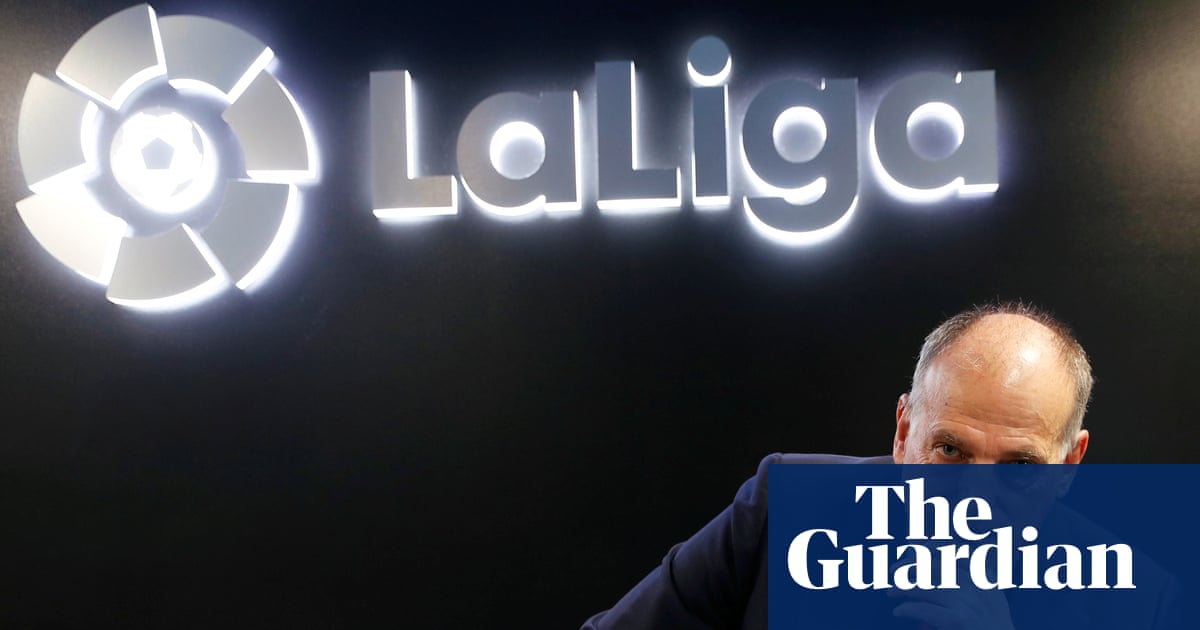
Rather than fading by Tuesday, the drama escalated when La Liga president Javier Tebas waded into the fray on social media. Tebas was reacting to an article by columnist Tomás González-Martín in El Debate, which suggested that referees damage the league by failing to pander to Real Madrid. González-Martín went so far as to assert that La Liga has no commercial value without Madrid, arguing refereeing decisions should protect the club's investment.
Tebas did not hold back in his public response to the column. "Here they go again, the mouthpieces and the regime’s television, building the same old narrative: the permanent conspiracy," Tebas wrote on Twitter. He questioned whether critics were asking for refereeing based on revenue, viewership, or team badges rather than basic sporting fairness, as noted in The Guardian's coverage of the dispute.
Real Madrid responded with an official club statement of their own, escalating a touchline grievance into executive warfare. The club labeled Tebas's public commentary "intolerable" and claimed La Liga urgently required leadership capable of maintaining fundamental neutrality. Naturally, Madrid's definition of neutrality involves officiating that does not hinder their title pursuit or challenge their domestic authority.
Tebas was right to defend officiating integrity against the absurd notion that commercial clout should dictate refereeing decisions. However, targeting an opinion piece by a media columnist rather than directly addressing Mourinho's press room theatrics was a tactical error. By fighting a proxy war in the media, Tebas opened himself up to predictable accusations of personal bias against Real Madrid.
Meanwhile, Real Madrid's insistence on framing themselves as put-upon underdogs remains one of European football's most bizarre political tropes. As the wealthiest club on the planet, claiming a league-wide refereeing conspiracy every time a derby result goes against them is pure theater. Yet Mourinho knows that paper props and institutional outrage effectively shift public attention away from his team's performance on the pitch.
England's Messi Panic: Why Tactical Blame Belongs on the Pitch
Across the channel, England's defeat to Argentina yesterday in the Geopolitics World Cup sparked immediate outrage among pundits and supporters. Critics were quick to point fingers at manager Thomas Tuchel, blaming his tactical setup and second-half substitutions for the loss. However, a closer look at the match footage reveals that individual defensive panics, rather than bench management, caused the collapse.
The opening goal conceded by England served as a masterclass in spatial misjudgment. Djed Spence and Harry Kane already had Lionel Messi double-teamed near the right touchline, containing the threat effectively. Suddenly, midfielder Elliot Anderson sprinted thirty yards out of position to join the crowd around Messi. Anderson's impulsive rush vacated the entire central area, allowing Enzo Fernández to stroll unmarked into the box and score comfortably.
Things devolved further on Argentina's second goal due to elementary marking errors. When Messi received the ball out wide, defenders Spence and Nico O'Reilly stepped up to meet him. Instead of staggering their positioning diagonally to cover both the inner cut and the crossing lane, both defenders lined up completely parallel to each other.
Standing side by side against Lionel Messi is defensive suicide at any level of the sport. Messi read the parallel alignment instantly, taking a single touch before floating a precise cross into the penalty box to seal the match. The structural breakdown was not a complex tactical failing engineered by Argentina, but rather a basic geometric error by two defenders caught in Messi's gravitational pull.
Blaming Tuchel's system is an easy escape hatch for a team that lost its composure under pressure. When three separate English players abandon their designated zones simply because Messi touches the ball, the system is not failing; the players are panicking. Tactical game plans require disciplined execution, and England's backline threw discipline out the window the moment danger appeared.
Tijjani Reijnders Drops the PR Mask on Saudi Cash
While managers argue with league presidents and defenders forget basic geometry, midfielder Tijjani Reijnders provided the most refreshing moment of the week. Reijnders finalized his transfer from Manchester City to Saudi club Al Qadisah on a deal worth a reported €100m over four years. Rather than repeating standard corporate scripts about exciting sporting projects or expanding league footprints, Reijnders chose absolute honesty.
In an era where players routinely spout PR nonsense about new challenges, Reijnders addressed the obvious financial driver behind his move. He noted that while critics like to play the moralist, very few people would turn down life-changing wealth. His candid explanation put an end to the usual hypocrisy surrounding high-profile Saudi transfers.
blockquote>"You can always play the moralist, but I think everyone would say yes to that. I don’t want to have to work any more after my career. I didn’t need to after City either, but now I can also set up future generations of my family well. If this choice means my grandchildren can also live comfortably, why wouldn’t I do it?"Reijnders' admission is a rare breakthrough in a sport dominated by sanitized media training. Modern football supporters understand that professional careers are short and extraordinarily lucrative offers are impossible to reject. By admitting that generational wealth for his family was his primary motivation, Reijnders respected fans enough to skip the customary corporate theater.
The contrast between Reijnders' frankness and the sport's usual narrative spin is glaring. Football clubs and players spend millions crafting pristine images, yet everyone knows financial gain dictates major career decisions. Reijnders simply said out loud what dozens of elite players whisper behind closed doors before signing massive contracts.
AFA's Escherian Mini-Cups and Chelsea Women's Professionalism
While players secure their family fortunes, South American football administration continues to push the boundaries of scheduling absurdities. The Argentinian Football Association (AFA) officially announced yet another domestic trophy this week: the Recopa de Campeones. This new competition forces the winners of the Copa Argentina, SuperCopa Argentina, and SuperCopa Internacional into a round-robin tournament for additional silverware.
The endless creation of micro-tournaments makes Argentinian football look like a structural drawing by M.C. Escher. Fixture congestion is already a global concern, yet the AFA remains determined to invent new trophies out of thin air. It is the administrative equivalent of adding extra wheels to a bicycle that is already struggling to stay upright.
Such bureaucratic farce is nothing new for the AFA, a federation famous for historical math blunders. Football fans still recall the legendary AFA presidential election where 75 committee members managed to produce an impossible 38-38 tie vote. Creating a round-robin tournament out of three separate cup winners is entirely on brand for an organization that once failed basic addition.
Amid the administrative noise and touchline meltdowns across the men's game, Chelsea Women quietly demonstrated how professional teams ought to handle business. On Wednesday night, Chelsea secured a controlled 2-0 victory over Austria Vienna in the Women's Bigger Cup group stage. Daniel Harris provided detailed match coverage as Chelsea executed a disciplined game plan without any off-field theatrics.
Chelsea Women kept Austria Vienna pinned in their own half for ninety minutes, displaying the tactical maturity currently missing in North London or Madrid press rooms. Ruthless competence may not generate angry social media posts or emergency league statements, but it wins matches. In a week dominated by drama, Chelsea's quiet efficiency stood out as a reminder of what pure sporting execution looks like.
Ultimately, the past week demonstrated that football's off-pitch theater remains as unpredictable as the matches themselves. From Mourinho's A4 sheets to England's defensive panics and Reijnders' financial candor, the sport's endless political and personal dramas continue to captivate. As Spanish football braces for further executive fallout, as reported in The Guardian's Football Daily analysis, the line between sport and soap opera remains entirely erased.
Read Next
- Jose Mourinho is playing his old tricks again but Real Madrid look vulnerable
- Mourinho rants, Chelsea collapse, and Rangers shock Celtic before the break
- Mourinho brought printer paper to a presser and Atletico cooked him for it
- Mourinho brings printouts to presser after Real Madrid fall to Atletico
- 🇦🇷 Argentina World Cup 2026 — Defending Champions Hub
- 🏴 England World Cup 2026 — Three Lions Hub
- ⚽ La Liga 2025-26 — Title Race Hub