The Gelsenkirchen Crime Scene
Crack open a cold lager, pull up a bar stool, and let’s talk about the summer of 2006. It was the peak of the mid-2000s, an era when oversized designer sunglasses ruled the world and English fans genuinely believed they were bringing football home. Instead, we got Gelsenkirchen, a penalty shootout disaster, and a Portuguese winger winking like a cartoon villain.
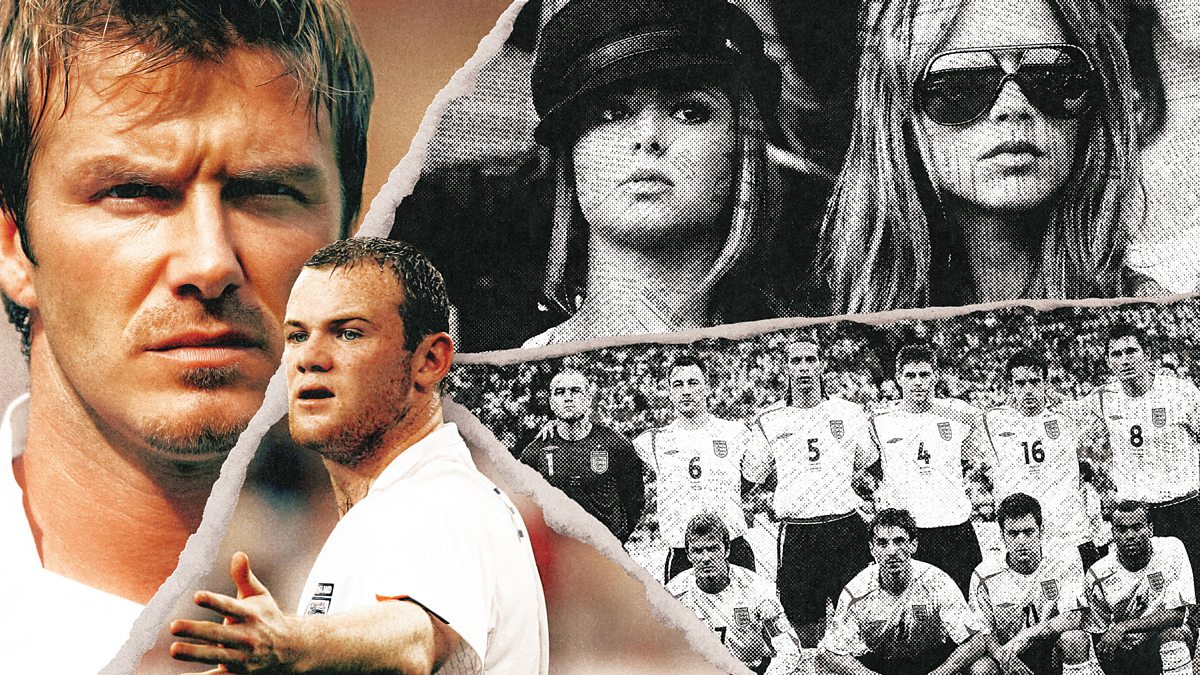
On paper, this squad looked like a fantasy draft from a teenage gamer's wet dream. You had prime Wayne Rooney, Steven Gerrard, Frank Lampard, John Terry, Rio Ferdinand, and David Beckham. Yet, they played some of the most boring, turgid football known to mankind with zero flow.
As the BBC's retrospective on England's 2006 World Cup campaign shows, this was a team carrying the hopes of an entire nation. But they were weighed down by their own egos and tactical confusion. It was less a team and more a collection of rival club factions forced to share a training ground.
Sven-Göran Eriksson was the man tasked with steering this Ferrari. Instead, he drove it straight into a ditch at 90 miles per hour. Let’s dissect exactly how this national tragedy unfolded.
The Tactical and Mental Meltdown
The Sluggish Summer Walk
Let's look at the group stage where England crawled through Group B like a snail on a salt path. They needed a Carlos Gamarra own goal to beat Paraguay 1-0. Then they spent 83 minutes struggling against Trinidad and Tobago before Peter Crouch pulled a defender's hair to score a header.
Then came the Sweden match, a 2-2 draw only memorable because Joe Cole caught a ball on his chest and sent a 35-yard dipping volley into the top corner. It was a goal of absolute genius in a sea of mediocrity. Unfortunately, that game also cost them Michael Owen.
Even the Round of 16 match against Ecuador was a chore. David Beckham saved the day with a trademark free-kick in the 60th minute, though he was so sick he vomited on the pitch. The entire team looked like they were running through wet cement.
The Lampard and Gerrard Midfield Disaster
Let’s start with the elephant in the dressing room. Steven Gerrard and Frank Lampard were two of the best goal-scoring midfielders in the world, playing as absolute monsters for Liverpool and Chelsea. Putting them together in a flat 4-4-2 was like trying to put two steering wheels on a car.
Neither midfielder wanted to stay back and hold. They both wanted to charge forward, leave their defensive duties behind, and blast shots from 30 yards. The result was a massive hole in the center of the pitch that opponents easily exploited.
Sven refused to drop either of them. He was too terrified of the British media and the players' high-profile reputations to make a hard tactical decision. Instead of playing Michael Carrick in a 4-3-3, Sven just crossed his fingers and hoped they’d figure it out.
They didn't. They ran into each other’s zones, pointed fingers, and looked completely miserable. This failure to adapt is a major talking point in the BBC's review of the Golden Generation.
To make matters worse, England’s squad selection was a complete joke. Sven took a 17-year-old Theo Walcott who hadn’t even played a minute of Premier League football for Arsenal. It was a public relations stunt masquerading as a selection choice.
Meanwhile, proven strikers like Jermain Defoe were left at home. When Michael Owen suffered a horrific knee injury just 51 seconds into the final group match against Sweden, England’s striker options evaporated. Rooney was already playing on a half-healed foot, leaving the team with zero backup plan up front.
Baden-Baden and the WAG Circus
If the tactics on the pitch were bad, the off-pitch environment was an absolute carnival. The FA decided to base the squad in Baden-Baden, a sleepy spa town in the Black Forest. It quickly became ground zero for a media frenzy that overshadowed the actual tournament.
Every tabloid in Britain sent photographers to follow the players' wives and girlfriends. Victoria Beckham, Coleen McLoughlin, and Cheryl Tweedy dominated the front pages. They were shopping, dancing on tables, and running up massive bar bills while the players were living in a reality TV show.
The focus wasn't on beating Ecuador or preparing for Portugal. It was on who wore what trousers to lunch. It was a massive distraction that the camp simply couldn't handle.
Other serious teams like Germany and Italy kept their players locked away in quiet, focused environments. England, meanwhile, had paparazzi camped outside the hotel doors. It was a self-inflicted circus that made the players look like celebrities who happened to kick a ball on weekends.
This lack of discipline start-to-finish was a massive organizational failure. The FA treated the World Cup like a promotional tour. The players paid the price when the pressure mounted.
The Rooney Stomp and the Ronaldo Wink
Now, let's get to the quarter-final against Portugal in Gelsenkirchen. The match itself was a slow, painful watch. David Beckham got injured and had to go off in the 52nd minute, looking absolutely devastated on the bench.
Then came the 62nd minute. Wayne Rooney, fighting for the ball against two Portuguese players, lost his temper and stomped directly on Ricardo Carvalho. It was a moment of pure red mist from a player who was clearly frustrated and unfit.
What followed was a masterclass in soccer dark arts. Cristiano Ronaldo, Rooney’s Manchester United teammate, rushed to the referee to demand a red card. Rooney shoved Ronaldo, the referee pulled out the red, and the match turned on its head.
As Rooney walked off the pitch, the cameras caught Ronaldo winking toward the Portugal bench. It was the ultimate betrayal in the eyes of the British public. The wink became the defining image of the tournament.
Ronaldo knew exactly what he was doing. He played the game, got his club teammate sent off, and gave Portugal the numbers advantage. England was left to defend for their lives for the remaining hour of play.
The Penalty Shootout Collapse
Even with ten men, England managed to drag the match to penalties. This is where the inevitable psychological collapse happened. English penalty shootouts are like watching a horror movie where you know exactly when the killer is going to jump out.
Frank Lampard stepped up first. He was usually clinical from the spot for Chelsea, but Ricardo saved it. Then Steven Gerrard, England's captain-in-waiting, saw his penalty saved as well.
Jamie Carragher came on specifically to take a penalty, took it before the whistle, had to retake it, and missed. Portugal won the shootout 3-1, with Ricardo saving three of England's four attempts. It was a complete disaster.
Only Owen Hargreaves, who ran himself into the ground all afternoon, managed to score. The rest of the Golden Generation looked like they had never seen a football before. It was an embarrassing end to a campaign that promised everything and delivered nothing.
Sven walked away with a massive payout, leaving behind a legacy of underachievement. The Golden Generation would never get a better chance to win the World Cup. The tournament was wide open, but England's own tactical rigidity and mental fragility did them in.
It was a failure of coaching, a failure of leadership, and a failure of discipline. Twenty years later, we still look back at that squad and wonder how they managed to make such a mess of it. That’s the real tragedy of 2006.
Read Next
- Why Erling Haaland will expose England's defensive crisis in the last eight
- Why Michael Owen is actually right about England's chaotic Azteca escape
- Jordan Henderson's World Cup ends in agony after freak celebration fall
- Kylian Mbappe and the Paraguayan senator's absolute circus of a feud
- 🏆 World Cup 2026 — Full Coverage Hub
- 🏴 England World Cup 2026 — Three Lions Hub