The drought is finally over. Sixty-nine years after Bobby Moore lifted the Jules Rimet trophy, a World Cup is heading back to British soil.
FIFA confirmed on Monday that the UK will host the 2035 Women's World Cup. England, Scotland, Wales, and Northern Ireland pooled their resources under the 'All Together' banner and crossed the finish line without facing a single rival bidder.
It marks the first time any World Cup tournament has been staged in the UK since 1966. After decades of painful, high-profile bidding failures on the men's side, British football finally secured the ultimate tournament through the women's game.
The decision caps a rapid rise in prominence for the four home nations. As Mirror Football reported, FIFA's technical evaluation gave the joint British bid a glowing score, paving the way for an uncontested sign-off in Zurich.
A Bloated 48-Team Tournament Blueprint
The Scale of 2035
The tournament heading to Britain will look radically different from any competition seen before on these islands. FIFA's expanded format guarantees a monster event featuring 48 national teams across 39 grueling days.
Supporters will see a record total of 104 matches played out across four countries. That match tally matches the expanded men's competition, testing transport networks, policing, and pitch surfaces to their absolute limit.
FIFA inspectors spent months reviewing the joint technical dossier before awarding it a rating of 4.3 out of five earlier this month. The score reflected the existing stadium network across England and its neighbors, requiring virtually no taxpayer money for brand-new builds.
The 19-Stadium Roster
The bid committee submitted 19 venues in its primary blueprint, leaning heavily on English football heavyweights. Fourteen of those grounds sit in England, giving the host nation an overwhelming share of the action.
Here is how the four-nation venue allocation breaks down:
- England: 14 stadiums
- Scotland: 2 stadiums
- Wales: 2 stadiums
- Northern Ireland: 1 stadium
London will shoulder much of the knockout burden. Wembley Stadium, Emirates Stadium, and the Tottenham Hotspur Stadium are locked into the rotation, alongside Crystal Palace's Selhurst Park.
The regional spread reaches from the south coast to the northeast. Brighton's Amex Stadium, Bristol City's Ashton Gate, Aston Villa's Villa Park, and Nottingham Forest's City Ground all feature. Further north, Leeds United's Elland Road, Newcastle's St James' Park, Sunderland's Stadium of Light, Manchester City's Etihad Stadium, and Everton's Hill Dickinson Stadium made the cut.
There is also room for flexibility in the lineup. Manchester United's stadium slot remains open to Old Trafford or a future rebuilt venue, while potential new builds for Chelsea and Birmingham City's Powerhouse project could expand the list.
The Celtic Fringe Imbalance
The geographic distribution raises immediate eyebrows outside England. Scotland, Wales, and Northern Ireland combined account for just five venues across the entire 104-match fixture list.
Wales gets two grounds: the 74,000-seat Principality Stadium and Cardiff City Stadium. Scotland will rely on Hampden Park and Hibernian's Easter Road. Northern Ireland has just one approved ground in Windsor Park.
That imbalance cuts against the bid's unified branding. Fans in Belfast and Edinburgh have every right to feel like minor partners in an England-dominated showcase. Fitting 48 teams into a tournament where one nation hosts 73 percent of the stadiums feels less like a genuine four-nation partnership and more like an English tournament with border-crossing group games.
The FA Reaction and the Legacy Debate
FA chief executive Mark Bullingham fronted the media following FIFA's rubber-stamp approval, framing the award as an accelerator for domestic participation.
"Hosting Euro 2022 allowed us to change the game in our country, by creating a generation of aspirational role models and growing demand from women and girls to play. Hosting a World Cup would give us the chance to build on that across all four nations."
Bullingham's comments deliberately echoed the euphoria of the 2022 European Championship. That tournament smashed domestic attendance records and turned the Lionesses into household names overnight.
Yet translating national team hype into sustained club attendance has proved far harder across the wider pyramid. The Women's Super League continues to grow, but lower divisions still fight for basic resources, modern training grounds, and decent pitches. The FA cannot afford to treat 2035 as an automatic jackpot without direct investment into grassroots facilities across Scotland, Wales, and Northern Ireland as well.
Breaking the Bidding Curse Without a Fight
Exorcising the Ghosts of 2006 and 2018
For British football administrators, this result brings enormous psychological relief. The FA spent the early 2000s enduring humiliating defeats in international voting rooms.
England's high-budget bid for the 2006 Men's World Cup crashed out early as Germany won. The 2018 bid was an even bigger embarrassment, netting just two votes from FIFA's executive committee before Russia swept to victory.
Those disasters convinced English executives that solo bids were dead on arrival. Teaming up with the Scottish FA, the Irish FA, and the FA of Wales became the only viable pathway forward.
The payoff began with landing the Men's Euro 2028 tournament across the UK and the Republic of Ireland. Landing the 2035 Women's World Cup completes the rehabilitation of British football diplomacy inside FIFA headquarters.
The Dark Side of Running Unopposed
Let us be clear about how this victory happened. The UK did not beat a rival in a fierce bidding war; they walked into an empty room.
The four home nations were the only group to submit a bid for 2035. That reality should alarm neutral observers as much as it delights the FA.
Hosting a 48-team tournament has become an absurdly expensive proposition. Most national federations simply cannot justify burning hundreds of millions of pounds on operational overheads and security.
FIFA avoided a public bidding embarrassment because the UK possessed the stadiums and policing framework ready to go. Winning by default is still a victory, but it reveals how narrow the pool of viable host nations has become.
Sarina Wiegman's Squad Faces the Long Road
Chasing Global Gold Before 2035
The Lionesses will not have to wait nine years for opportunities to lift world football's biggest prize. Two major tournaments sit between today's announcement and the home tournament in 2035.
England enter the upcoming cycle with exceptional tournament pedigree. They claimed the European crown at Wembley in 2022 and defended that continental title three years later in 2025.
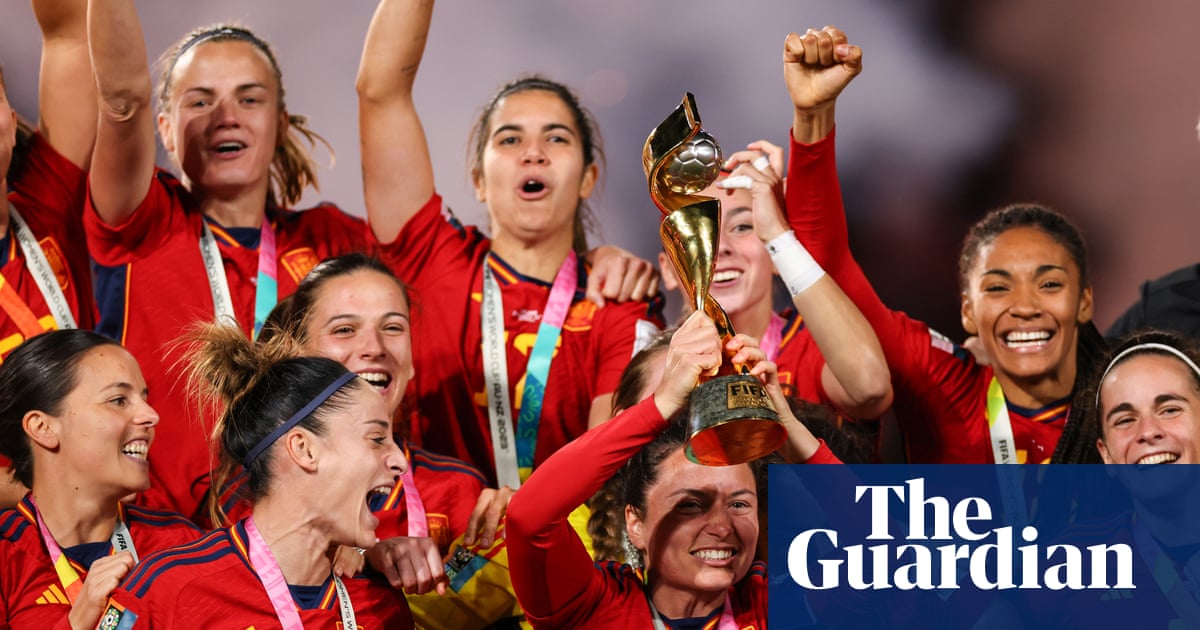
However, global glory remains the one missing piece on Sarina Wiegman's managerial resume. The Lionesses suffered heartbreak in Australia three years ago, falling 1-0 to Spain in a brutal 2023 final.
Next year takes the tournament to Brazil in 2027, followed by a four-nation staging in 2031 across the United States, Mexico, Costa Rica, and Jamaica. Those two tournaments give England golden chances to become world champions before 2035 even kicks off.
An Immediate Hurdle on the Pitch
Before anyone can dream about Brazilian beaches or a Wembley homecoming in 2035, England must take care of business right now. Qualification for the 2027 World Cup is not fully secured.
Wiegman's squad still faces a two-legged playoff against Ukraine to lock down their spot in Brazil. That match is a trap game England cannot overlook while the front office celebrates stadium logistics.
The UK will get its football festival in nine years. The stadiums will be packed, the TV numbers will shatter records, and 104 games will roll across four nations. But the real work starts on the training pitch, where the Lionesses must prove their world-conquering ambitions are ready for the present day.
Read Next
- The UK won the 2035 World Cup by default and the numbers are wild
- The UK landed the 2035 World Cup and FIFA already wants a tax holiday
- The UK won the 2035 World Cup bid, but the venue fight will be messy
- Britain landed the 2035 World Cup, but four co-hosts bring big dilemmas
- 🏆 World Cup 2026 — Full Coverage Hub