A locker room divided while a media war rages
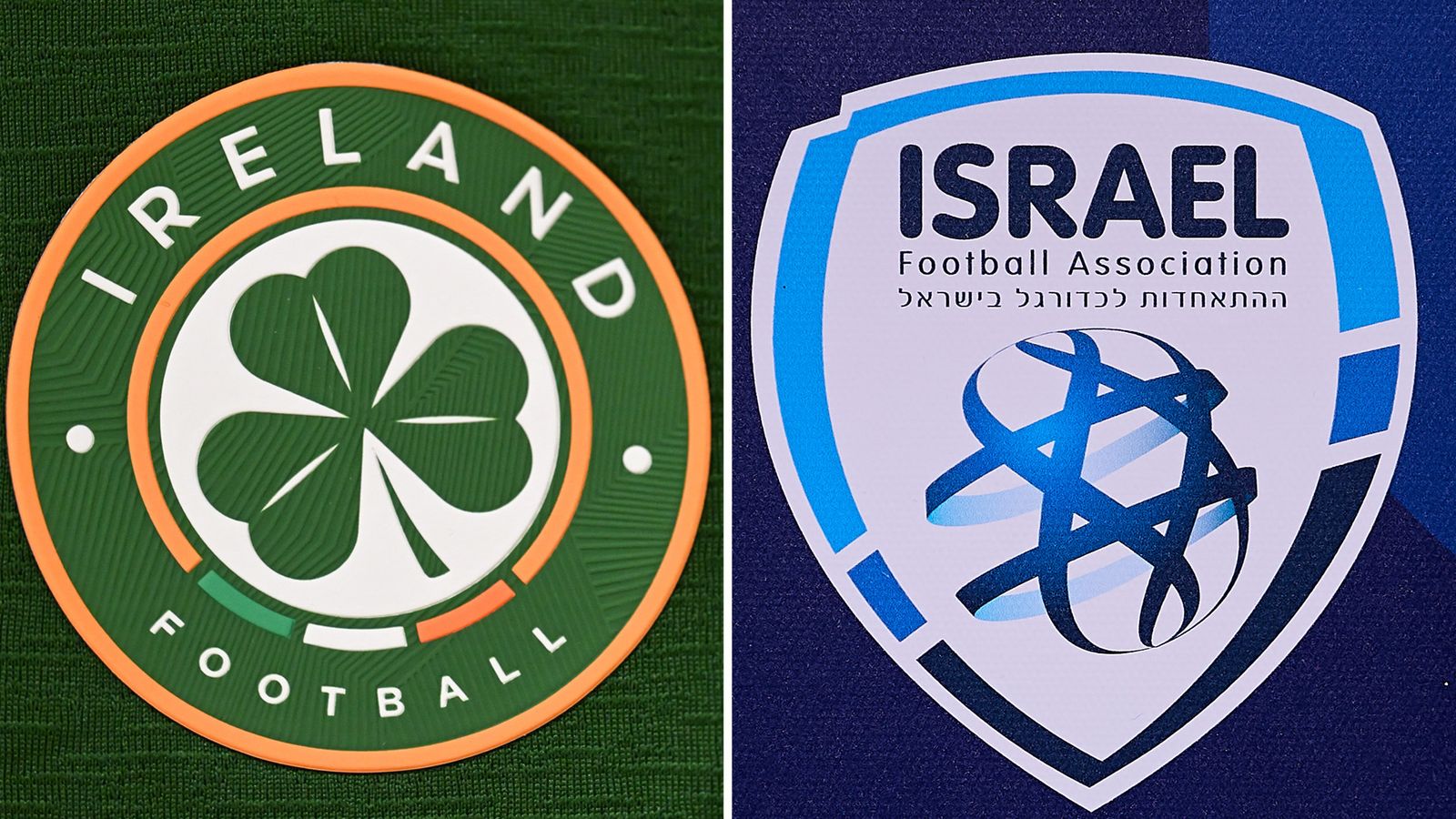
Heimir Hallgrimsson faces a tactical crisis wrapped in a political firestorm. On Thursday, September 24, 2026, the Republic of Ireland head coach leads his squad against Kosovo in their Nations League B3 opener before turning immediately to Sunday's fixture against Israel in Debrecen, Hungary. Drilling a compact defensive shape is difficult enough under ordinary international match conditions, but preparing a team while players schedule hotel meetings to discuss political protests is an operational mess.
Top-tier international football demands complete concentration on pressing triggers, defensive spacing, and set-piece assignments. Ireland enter this international window with their mental bandwidth consumed by off-field turmoil. You cannot build defensive cohesion when every press conference devolves into a debate over international diplomacy.
The media war erupted last week when Hallgrimsson attempted to address how his players would maintain their focus. The former Iceland head coach told reporters his squad was "playing against genocide," adding that Ireland were playing against Israel rather than with them. His comments ignited an immediate response on social media from the Israel Football Association.
The Israeli federation accused Hallgrimsson of embodying stupidity, ignorance, and hypocrisy. Their statement pointedly noted Israel's contributions to humanity and its collection of Nobel Prizes, while claiming no cure had been found for the Irish manager's ignorance. That bitter exchange instantly elevated the sporting fixture into an ugly public feud.
The political fallout escalated to the United Nations General Assembly in New York on Tuesday. Irish Taoiseach Micheal Martin publicly intervened, describing the Israeli FA's comments as unacceptable and demanding their immediate withdrawal. Martin added that Israel cannot keep denying what the world understands, forcing Hallgrimsson into damage control during Wednesday's pre-match media duties.
Hallgrimsson conceded that taking the spotlight away from football was not clever from a leadership perspective. However, that public admission came too late to shield his squad from the surrounding noise. The manager admitted it was a tricky time for the team, even as he expressed gratitude for the public support he received.
That administrative friction has left Ireland's dressing room carrying a heavy emotional burden. Ipswich Town defender Dara O'Shea confirmed that the playing staff will meet on Friday to openly discuss potential pre-match protests ahead of Sunday's game in Debrecen. When senior defenders are organizing protest discussions 48 hours before kickoff, tactical preparation takes a secondary role.
Political boycotts, UEFA rejections, and administrative retreat
The friction inside the Irish squad reflects months of intense campaign work across Irish athletics. Former Ireland international Kevin Kilbane, who earned 110 caps for his country, took a firm stand in his newspaper column. Writing in the Irish Times, Kilbane argued that Ireland should refuse to play Israel while military action in Gaza continues.
"The Republic of Ireland should not be playing Israel… not while Israeli forces are committing genocide."
Kilbane's column mirrors a broader boycott campaign gaining traction across Irish sport. Over 160 athletes signed an open letter organized by Irish Sport for Palestine, urging the national team to boycott both Nations League matches. Demonstrators from the campaign picketed outside the Irish team hotel in Dublin on Monday, keeping pressure directly on the players.
Fan protests had already spilled into stadium venues earlier this year. During a May friendly against Qatar at Dublin's Aviva Stadium, supporters threw tennis balls printed with the Palestinian flag onto the pitch, causing two separate match stoppages. That demonstration underscored deep public opposition to hosting Israel on Irish soil.
The administrative timeline behind these matches reveals months of internal tension within the Football Association of Ireland. In October 2025, four months before the Nations League draw, FAI members overwhelmingly approved a motion calling on UEFA to ban Israel. The motion cited violations of UEFA statutes regarding clubs operating in illegal settlements in the occupied West Bank without Palestinian Football Association consent.
When the February draw placed Ireland alongside Kosovo, Austria, and Israel in Group B3, Irish politicians like FAI member Joanna Byrne immediately demanded a boycott. However, the FAI executive board prioritized financial survival over political boycott. At a July Extraordinary General Meeting, FAI delegates voted 75 to 32 in favor of playing the matches.
The association argued that a boycott would bring catastrophic disciplinary sanctions from UEFA, damaging Irish football for years. Yet the FAI sought to minimize domestic fallout by surrendering home advantage for the return match. In late June, officials announced that Ireland's nominal home fixture on October 4 would be moved 1,500 miles away to Serbia due to security challenges in Dublin.
UEFA quickly slammed the door on any long-term diplomatic separation. FAI chief executive David Courell revealed on September 18 that UEFA rejected Ireland's formal request to be kept apart from Israel in future tournament draws. Courell stated that UEFA refused the request because Ireland and Israel have never been in direct military conflict.
Broadcasters are also distancing themselves from the coverage. Irish public broadcaster RTE, which boycotted the Eurovision Song Contest for two consecutive years over Israel's participation, announced a scaled-back broadcast strategy. RTE will fulfill minimum contract duties but will send no studio presenters or match commentators to Hungary or Serbia.
Hostile neutrality: Why Hungary and Serbia fit Israel's template
Playing on neutral ground removes the traditional home advantage that fuels Irish international performances. Sunday's fixture takes place behind closed doors at the Nagyerdei Stadion in Debrecen, stripping away matchday atmosphere. No tickets were made available to Ireland supporters, leaving the team in a quiet, sterile stadium environment.
For Israel, playing in Hungary is familiar territory. Israel have used Hungarian grounds as their adopted home since November 2023, when they resumed Euro 2024 qualifying against Switzerland at the Pancho Arena in Felcsut. Debrecen subsequently hosted their 2026 World Cup qualifiers against Estonia, Norway, and Italy, as well as European club matches for Maccabi Haifa and Maccabi Tel Aviv.
Former Hungarian Prime Minister Viktor Orban established close diplomatic ties with Israeli Prime Minister Benjamin Netanyahu, promoting Hungary as Europe's safest venue for Israeli teams. That institutional familiarity gives Israel a clear psychological edge. They excel in low-energy neutral environments where technical ball circulation dictates match tempo.
Relocating Ireland's nominal home match to Serbia on October 4 presents an equally complex geopolitical backdrop. Serbian President Aleksandar Vucic recently inaugurated an assembly plant for Israeli-manufactured drones, with plans for three additional production facilities. Moving the match to the TSC Arena in Backa Topola places Ireland in a venue hosted by an ally of their opponent.
Recent European fixtures illustrate how political tension impacts performance on the pitch:
- Norway hosted Israel in October 2025 following massive street protests outside the stadium in Oslo.
- The Norwegian Football Federation released statements highlighting Gaza's humanitarian suffering while fulfilling the fixture.
- Norway swept aside the off-field noise, dominating the match to secure a 5-0 victory in Oslo.
- Amnesty International warned on Tuesday that UEFA risks allowing football to rubber-stamp apartheid, drawing a sharp response from the Israeli FA.
Norway demonstrated that political controversy can be managed if a team possesses elite wide attackers to break open defensive lines. During that 5-0 loss in Oslo, Israel struggled to defend rapid lateral switches. Norway repeatedly pulled Israel's full-backs out of position, exposing wide channels between center-back and wing-back.
Tactical paralysis and a grim prediction for Debrecen
Ireland possess the structural tools to target those exact wide channels, but Hallgrimsson's tactical caution often restrains his wing-backs. Ireland's defensive system uses a compact mid-block designed to deny central space. However, when central midfielders fail to track second-ball runners, the defensive line drops too deep and isolates the full-backs.
Without a vocal crowd to drive aggressive pressing, Ireland's structure becomes passive. Hallgrimsson rarely permits both wing-backs to push high up the pitch together, fearing turnover counters through the center. That conservative setup forces Ireland into slow, predictable U-shaped passing along their own back line.
Ireland's goal-scoring production in competitive matches remains painfully low. The squad creates few quality scoring opportunities from open play, relying heavily on long throw-ins and recycled set pieces. Against an Israeli team disciplined at defending low-tempo possession, Ireland's lack of creative playmaking will prove fatal.
Israel are comfortable remaining in a patient mid-block, waiting for opposition errors. They manage quiet matches effectively, using short passing sequences to draw aggressive midfielders out of position. Once Ireland's central press breaks down, Israel's line-breaking passes will exploit the space behind Ireland's midfield pivot.
Ireland enter Sunday's contest emotionally drained before a ball is kicked. Hallgrimsson is managing public fallout from his managerial press conferences, while senior players coordinate protest logistics inside the team hotel. Elite international performance requires absolute mental focus, and Ireland simply do not have it.
Expect a slow, foul-heavy match dominated by midfield duels and low-risk passing. Ireland will struggle to generate high-turnover pressing opportunities in an empty Hungarian venue. Israel will absorb early pressure and wait for Ireland's structure to crack under fatigue, securing a 1-0 victory in Debrecen.
Read Next
- Ireland face Israel in Nations League as UEFA ignores growing fallout
- Ireland playing Israel in Hungary and Serbia is a complete circus
- Anthony Gordon is telling the truth about England's fatal flaw
- Thomas Tuchel is making excuses before Spain even arrive at Wembley
- 🏆 UEFA Nations League Final Four 2026 Hub — June 4-8, Lisbon