The Goal Fest Has Broken European Football In The Best Way Possible
Grab a drink, pull up a stool, and look at the scoreboard before your eyes play tricks on you. We are witnessing absolute, unadulterated madness across the continent right now.
Through the early weeks of this campaign, European football has completely abandoned any pretense of cautious mid-block defending. The numbers are frankly absurd: 187 goals scored so far, shaking out to an eye-watering average of 4.16 goals per game.
That is not a misprint. That is not a typo generated by a sleep-deprived statistician at midnight.
To put that astronomical figure into perspective, the Premier League is currently rolling along at 2.9 goals per fixture. La Liga sits at 3.03, while the famously wild Bundesliga clocks in at 3.69.
The Champions League is blowing them all out of the water. Even wilder is the fact that we have not seen a single goalless draw in the entire tournament.
As reported by BBC Sport, this run is the highest scoring mark in Champions League history. You actually have to flip the history books back to the black-and-white reels of 1959-60 and 1955-56 to find higher rates.
Back then, European Cup ties averaged 4.19 and 4.38 goals, respectively. Those were days when defenders smoked unfiltered cigarettes at the half and goalkeepers threw caps on mud heaps.
Just yesterday, Tuesday delivered 40 goals across nine games without breaking a sweat. It felt like playing FIFA on beginner mode with the shot error slider dialed down to zero.
Phil Foden took full advantage of the chaos, bagging a ruthless hat-trick in Manchester City's 5-1 demolition of AEK Athens. Erling Haaland was not even on the pitch, yet Pep Guardiola's squad still racked up five without shifting into top gear.
How The League Format Decapitated Defensive Caution
To understand why defenders are getting vaporized every Tuesday and Wednesday, you have to look at the structural wiring of this revised tournament. Football did not suddenly forget how to organize a back four overnight.
UEFA spent years tinkering with their flagship property before rolling out this 36-team single table for the 2024-25 season. The evolution has been long, stretching from the initial six-team invitational in 1955-56 through the 32-team straight knockout format introduced back in 1967.
The modern era arrived in 1992, stumbled through a clunky secondary group stage era, and finally settled into the beloved 32-team format in 2003. For two decades, four teams played six fixtures, and two advanced while the rest wept.
That traditional setup produced genuine panic. If you slipped on a cold night in November, your season went up in flames.
Now, each side plays eight one-off matches against eight different opponents in one massive, sprawling league table. The old round-robin familiarity has been completely tossed out the window.
Here is the critical catch that managers figured out immediately: 24 out of 36 clubs survive the initial phase. Two-thirds of the field stay alive to play knockout football in the spring.
The top eight punch their tickets straight into the round of 16, while the teams sitting ninth through 24th battle it out across a two-legged playoff. Only the bottom eight get booted out of Europe entirely.
Think about the psychology of an elite manager staring at that safety net. Why on earth would you travel to Paris or Madrid and park an eight-man defensive wall for ninety minutes?
A single draw does very little to improve your seeding, while a loss is essentially a harmless scratch. The system actively incentivizes coaches to throw bodies forward, take silly risks, and trade punches like a pair of heavyweight brawlers in the twelfth round.
Pure Entertainment Or Just Spectacularly Rotten Defending?
The pundits are already lining up on both sides of the bar counter to argue about what this actually represents. Former pros are caught between genuine awe and absolute disbelief.
"Look how many goals have been scored, it's phenomenal," former Manchester United winger Ashley Young noted during his appearance on BBC Radio 5 Live. "The attackers are being clinical."
Former Liverpool fullback Stephen Warnock was equally stunned, describing the sheer volume of goals as "incredible." Yet there is a legitimate counterargument that cannot be swept under the rug.
Are we celebrating magnificent attacking brilliance, or are we applauding horrific, disorganized defending? The answer is probably a messy mixture of both.
The Times football writer Tom Arnott hit the nail directly on the head while discussing the spectacle on BBC Radio 5 Live. He did not mince words about the trade-off.
"I think the entertainment has gone up, although I'm not sure the quality has gone up."
Arnott pointed out the obvious flaw in the theater: "The lack of jeopardy, why would PSG and Barcelona play for a draw, why not go for it? If you need five wins from the eight games you know you've got some margin there. If you lose it's OK."
That clash between Paris Saint-Germain and Barcelona was a breathtaking watch, especially with Desire Doue running wild and turning defenders into traffic cones. But from a purely tactical perspective, the match resembled a Sunday league shootout where both backlines called in sick.
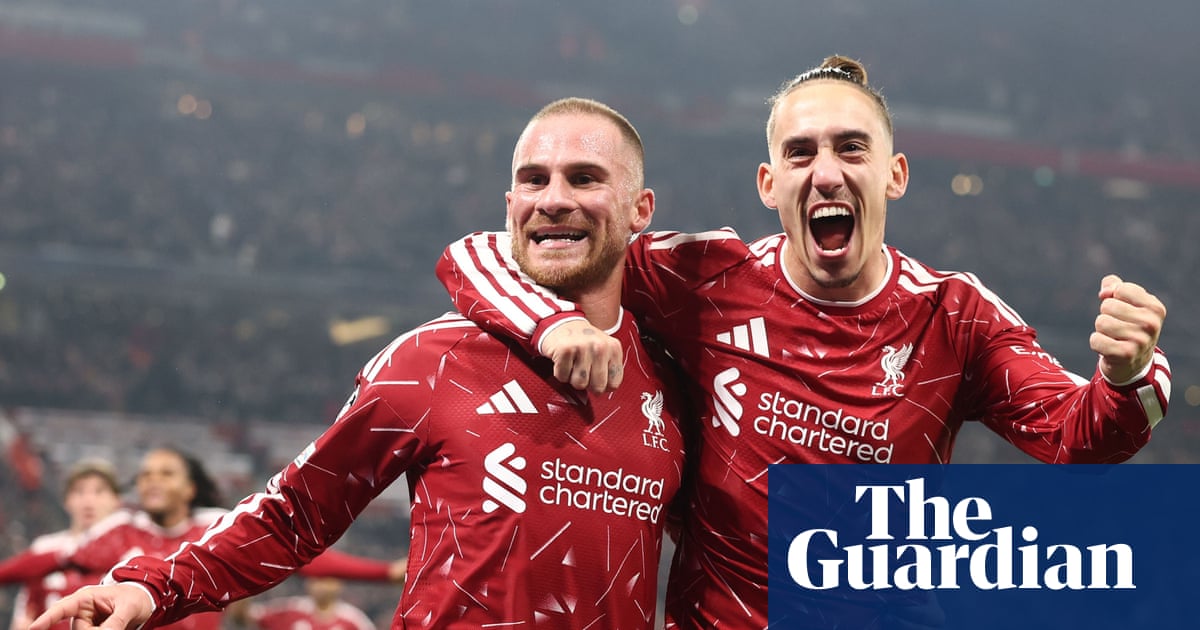
When young talents like Rio Ngumoha take the European stage and look fearless for Liverpool, the excitement is intoxicating. At the same time, top-flight European football should not feel like an exhibition match where defending is considered impolite.
The statistical ramp-up over the last fortnight proves this is not a one-off anomaly. In analysis from BBC Radio 5 Live, the sheer volume of scoring reveals how rapidly the dam has burst.
Matchday one set an outrageous benchmark with 69 goals across the continent. Matchday two walked in seven days later, grabbed the record book, and topped it by pouring in 78 goals across forty-eight frantic hours.
Last Wednesday alone delivered 46 goals. That mark sits as the third highest-scoring single day in European history, behind only the manic final matchdays of the 2024-25 and 2025-26 league phases where eighteen matches played simultaneously.
The Great Jeopardy Dilemma
Let us be brutally honest about what is happening here. UEFA stumbled into an action-movie blockbuster by accidentally neutering the stakes of autumn football.
Back in 2012, if a powerhouse fell two goals behind in an away fixture, the dugout smelled like pure terror. Managers chewed through fingernails because one bad bounce meant dropping into the secondary tournament.
Today, a tactical slip in late October barely causes a ripple in the coaching room. You can take an absolute hiding, regroup on the team flight home, and still qualify comfortably with three fixtures to spare.
As Arnott rightfully questioned: "If I'm looking at the games it's brilliant to watch and thrilling because the football itself is fantastic - but what do they mean?" That lingering doubt hangs over every eight-goal thriller.
He added that supporters walk away from these frantic contests wondering about the true weight of the outcome. "The entertainment value is there but I think you come away from these matches sometimes and still think 'what does it all mean?'. The lack of jeopardy early on does deliver entertainment."
That quote cuts right to the bone of the modern football paradox. We complain endlessly when managers choke the life out of matches with tactical pragmatism and sterile possession.
Now UEFA has engineered a setup where caution is mathematically pointless, and purists are suddenly complaining that the goals feel cheap. You simply cannot have it both ways.
The data does not lie even when your eyes struggle to believe it. Here is what the record-breaking numbers tell us about this competition right now:
- Scoring averages sit at historical highs of over four goals per contest.
- Twenty-four teams advancing out of thirty-six destroys any incentive to protect a low block.
- Managers are unleashing fearless young wingers instead of anchoring conservative double pivots.
Make no mistake: the defending across Europe right now is sloppy, undisciplined, and completely vulnerable to quick transition counters. Elite center-backs look isolated in wide channels, while holding midfielders are getting bypassed like turnstiles.
Yet for the casual fan tuning in on a midweek evening, this is absolute television gold. High-octane chaos beats a dour tactical stalemate nine times out of ten.
The purists can furrow their brows and mourn the death of defensive masterclasses all they want. As detailed in the ongoing coverage from the BBC, the goals will keep pouring in until someone figures out how to stop the bleeding.
Until the knockout rounds arrive to restore real fear, sit back and enjoy the fire drill. Football has traded its chess set for a rocket launcher, and the results are wildly entertaining.
Read Next
- Why Tottenham Are Screwed and Man City's Perfect Start Means Nothing
- Man United players eye millions in compensation after Man City guilty verdict
- Man United's defensive overhaul might already be falling apart
- Zlatko Tripic clears fitness tests as Viking roll into Villa Park
- ⭐ UCL 2026 — Champions League Quarter-Finals Hub