Blaming National DNA for Tactical Shortcomings
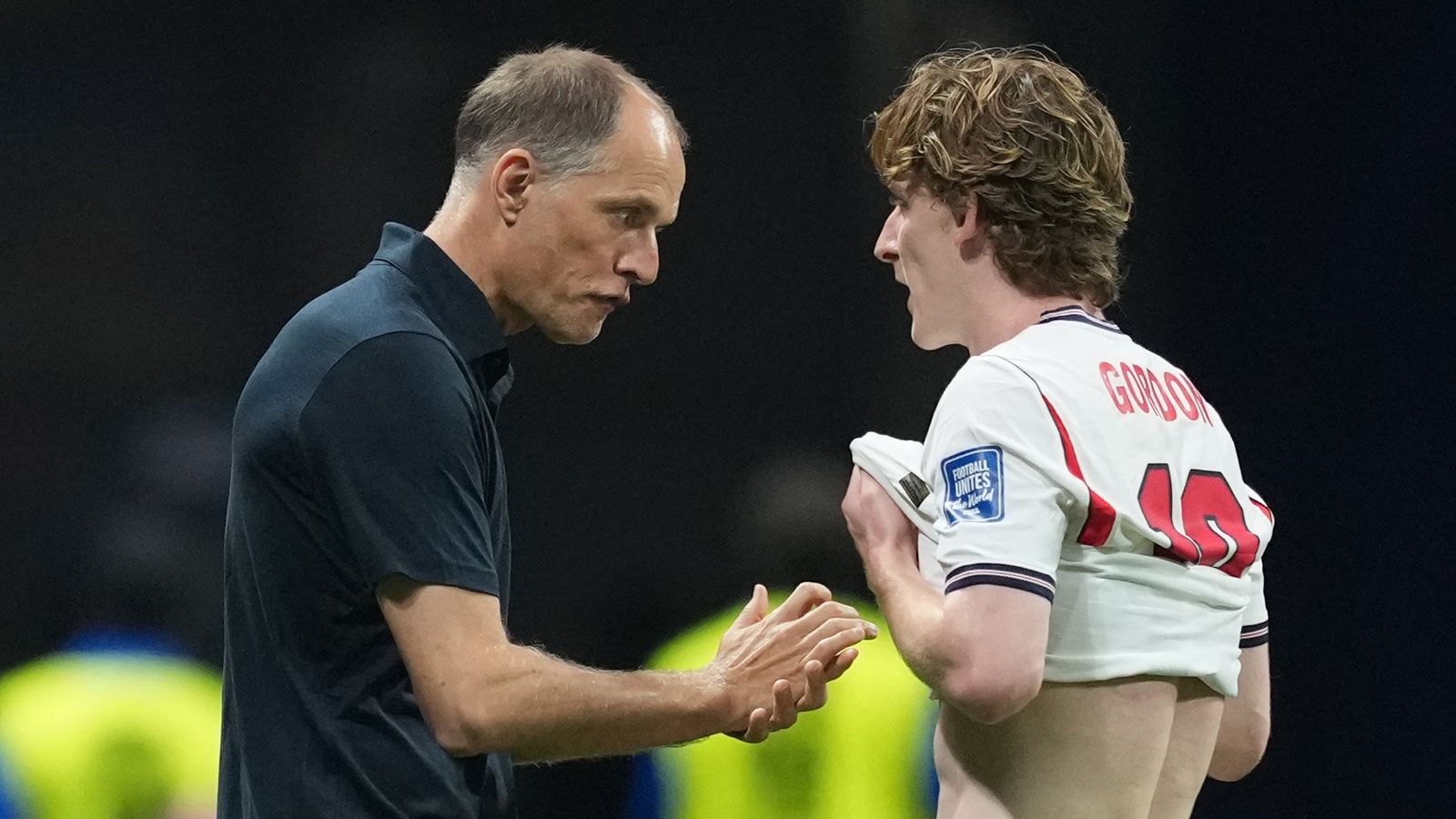
When Thomas Tuchel claimed that ball possession is simply missing from the DNA of English footballers, he was not delivering an objective technical diagnosis. He was laying the groundwork for an advance apology ahead of England's World Cup semi-final exit against Argentina.
Speaking on Wednesday at St George's Park ahead of Saturday's Nations League opener against world champions Spain, winger Anthony Gordon publicly backed his manager's assessment. As detailed in the Sky Sports report, Gordon argued that English players lack the natural decision-making required to control matches when opponent pressure intensifies.
That is a remarkably convenient argument for a head coach who made active selection decisions to leave technical controllers behind. Leaving Cole Palmer, Phil Foden, and Trent Alexander-Arnold out of the World Cup squad was not an accident of genetics. Giving midfielder Kobbie Mainoo exactly 0 minutes of tournament action was a tactical choice, not a biological constraint.
You cannot deliberately leave your most fluent passers at home and then point to national heritage when your midfield cannot retain the ball under pressure. Former England defender Gary Neville was entirely right to express a big problem with Tuchel's comments. Blaming genetic coding for a lack of composure under pressure is lazy management, plain and simple.
The tactical failure in that semi-final against Argentina was self-inflicted. Gordon scored to give England the lead, but instead of using the ball to manage the tempo, England retreated into a defensive shell. That choice handed complete territorial control to Argentina and invited wave after wave of pressure in the closing stages.
The Irony at St George's Park
There is a stark contradiction in where this message was delivered. Gordon stood inside St George's Park, a venue built specifically to develop technically gifted players in a style inspired by Spanish football. Former FA chief football officer Dan Ashworth designed that facility around what was dubbed the 'England DNA'—an ironic backdrop given the current narrative.
Now playing his club football in Spain for Barcelona, Gordon offers a firsthand perspective on the difference in technical culture. He admitted to watching Spanish teammates make decisions on the ball that feel entirely alien to players raised in the English system.
"Playing in Spain, I can speak with an educated view on the way they keep the ball is different. It's much different than I've ever experienced playing in this country. I'm not sure we can ever get that but we can definitely get better, or maybe go the other way and really play to our strengths, which is play physical, play direct football, and on the counter-attack."
After spending hundreds of millions of pounds attempting to replicate Spanish technical fluency, the national team leadership appears ready to throw in the towel. Rather than fixing build-up mechanics, the current plan is to embrace direct chaos and physical duels. It is an extraordinary admission of failure for a system designed to create elite controllers.
Gordon noted that Spanish players seem built differently when it comes to spatial awareness and tempo control. But accepting that gap as permanent ignores the progress young English players have made across European academies over the last decade.
The Azteca Hangover and the Semi-Final Meltdown
That defensive retreat against Argentina did not happen in isolation. It was the direct psychological byproduct of England's grueling victory over Mexico earlier in the tournament.
Gordon admitted during his media conference at St George's Park that grinding out a win with 10 men at the Azteca after a red card subconsciously altered the team's identity. Battling through adversity became a default tactical setting rather than an emergency response. That survival instinct carried over into matches against Norway and Argentina, turning a talented squad into a passive defensive unit.
Against Argentina, Gordon was subbed off shortly after scoring the opening goal. He admitted feeling untouchable with confidence on that stage, yet watched from the bench as England surrendered midfield control. While fans blamed Tuchel for defensive substitutions, Gordon insisted players must take responsibility for failing to take initiative on the pitch.
Yet Gordon's post-tournament optimism crosses into total delusion when discussing the world champions. He claimed he felt completely confident England would have defeated Spain in the final had they advanced past Argentina. That statement ignores how easily Spain dismantled Argentina in the World Cup final itself.
Spain controlled that final with ruthless positional authority. Had England reached the final with their passive defensive approach, Spain's midfielders would have systematically dissected them. Believing otherwise is revisionist fantasy designed to soften the blow of a wasted semi-final lead.
Direct Chaos Will Collapse Against Spanish Rest Defence
Rather than trying to match Spain's technical precision, Gordon is calling for England to double down on raw athletic strengths. He believes English players should stop trying to copy foreign models and focus on vertical speed and physical power.
"It's important for us that we can't keep looking at other countries and trying to be like them, because we're not them, we're English and we have our own strengths, which they don't have. So maybe we start playing to what we're good at."
That philosophy sounds enticing on a broadcast panel, but it collapses against elite international opposition. Spain do not leave huge gaps behind their midfield for direct runners to exploit during transition moments.
Luis de la Fuente's side employs a tight rest defence designed to smother counter-attacks before they start. When an opponent wins possession and immediately looks for a long vertical pass, Spanish midfielders trap the receiver within three seconds. Direct football requires clean vertical passing under pressure; without technical controllers, those passes end up as easy interceptions.
Furthermore, possession is Spain's primary defensive mechanism. By holding the ball for long sequences, Spain starve physical opponents of energy and force them into exhausting defensive shuffling across the pitch. Chasing shadows for seventy minutes drains the legs of direct runners long before the final whistle sounds.
If England abandon central midfield control on Saturday, they will surrender the match structurally before kick-off. Direct transitions only work when you can regain the ball in dangerous areas, not when you are pinned deep inside your own penalty box.
Wembley Prediction: A Tactical Reality Check
Saturday's Nations League clash at Wembley, scheduled for a 7.45pm kick-off, will serve as an immediate test of this direct philosophy. Playing against the reigning world champions in front of a home crowd provides an intense arena to evaluate Tuchel's tactical direction.
Expect England to open with aggression, relying on Gordon's direct surges down the left channel to generate early momentum. If Spain's fullbacks commit forward during build-up phases, England may create an early opportunity through raw vertical speed.
However, once Spain settle into their passing rhythm, the match will follow a predictable script. England's midfield will drop deeper to protect central zones, giving up territory and ball control. Without midfielders capable of cooling down the game, England will be forced into long stretches of desperate defending.
Spain will patiently move the ball from side to side, probing for spaces between England's midfield and defensive lines. The decisive breakthrough will arrive in the 84th minute, when Spanish pressure finally forces a defensive error for a deserved 2-1 victory for the world champions.
Surrendering technical control is not tactical pragmatism—it is an admission of failure disguised as national pride. Until England produce managers and players willing to demand the ball under pressure, matches against Spain will remain an exercise in passive endurance.
Read Next
- England keeps retreating when it matters most, and Harry Kane knows it
- Jordan James rejected the Premier League, but Portugal will test his resolve
- Jarrad Branthwaite's German brain rehab saved his England career
- Top 10: Top Moments in the England Squad Selection Saga
- 🇪🇸 Spain World Cup 2026 — La Roja Hub
- 🏆 FA Cup Final 2026 — May 16, Wembley