The Monsoon at the Colossus
Pull up a stool, grab a cold pint, and let's talk about the absolute circus that went down in Mexico City last night. The Estadio Azteca was supposed to host a blockbuster Round of 32 clash between Mexico and Ecuador. Instead, Mother Nature decided to open the heavens and drop a biblical flood right on the pitch, delaying kick-off and throwing FIFA's shiny new rulebook into the trash.
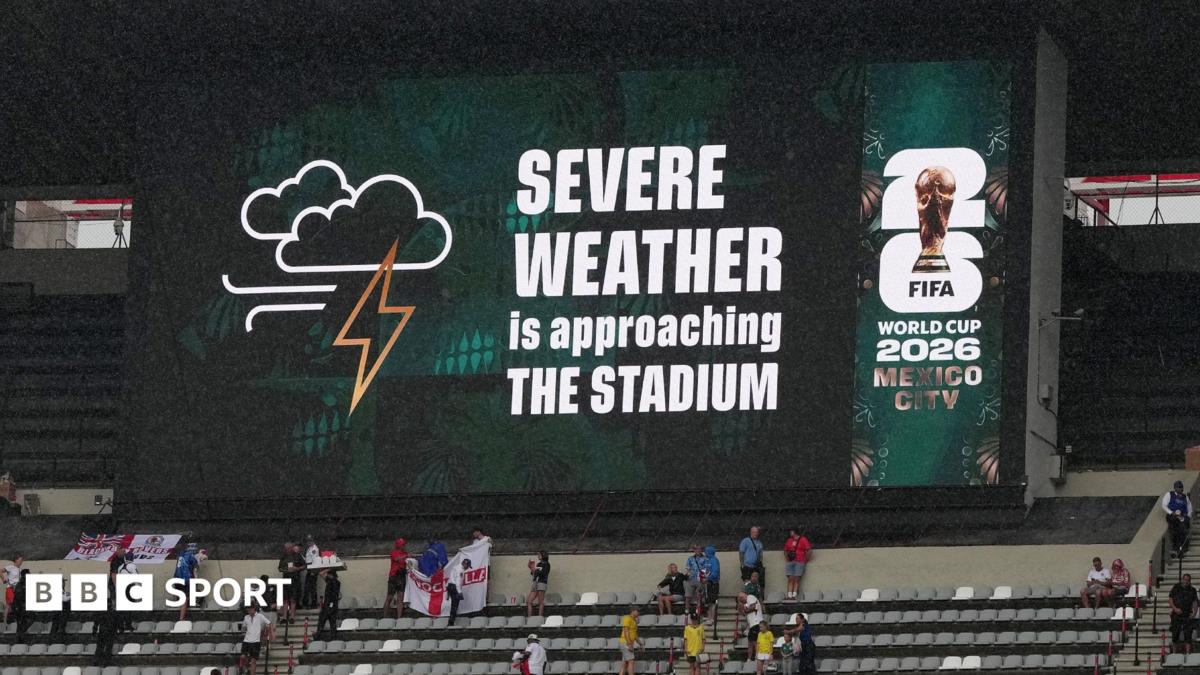
The match was scheduled for June 30, 2026, with a kick-off time of 9:00 p.m. ET. But by 8:30 p.m., the skies over Mexico City turned pitch black. Lightning started cracking near the stadium, triggering FIFA's emergency safety protocols.
Under these guidelines, any lightning strike within an eight-mile radius forces a mandatory suspension of play. The players were kept inside the dressing rooms. Thousands of fans in the open sections of the Colossus of Santa Ursula had to huddle under the concrete concourses.
As the Sky Sports live coverage detailed, the kickoff was pushed back to 10:00 p.m. ET, giving the storm just enough time to pass. But the real drama wasn't the rain. The real drama was happening behind the scenes in the TV broadcast booths and the FIFA committee rooms.
The Great Water Break Swindle
Before the tournament began, FIFA announced a new mandate. Every single match in this World Cup would feature a mandatory three-minute hydration break in each half. They claimed it was for player welfare.
We all knew it was actually a convenient way to squeeze in extra commercial slots for television sponsors. But when the Azteca match was pushed back, officials realized they were running out of time. They had to get the game finished before midnight local time to satisfy local curfew laws.
So, what did the suits do? They unilaterally decided to cancel the hydration breaks for the match. They argued that because it had just poured rain and the temperature had dropped, the players didn't need to drink water.
Think about that for a second. It is a standardized slot designed to protect players from heat stroke. Suddenly, because the clock was ticking, player safety was no longer a priority.
The irony here is delicious. Players were literally slipping and sliding on a soaked pitch, and FIFA decided they didn't need a break. But the television executives were absolutely furious.
They lost their scheduled advertising slots. This showed once and for all that these player safety rules are really just about cash. Broadcast networks had already sold those slots for millions of dollars to corporate giants.
Mexico's High-Stakes Pressure Cooker
Mexico entered this knockout round with the weight of an entire country on their shoulders. Javier Aguirre's side sailed through Group A with a perfect record. They played clean, efficient football, but their fans are notoriously demanding.
They started their campaign on June 11 with a comfortable win over South Africa. Then they ground out a victory against South Korea on June 18. Finally, they dismantled Czechia on June 24 to finish top of the group with 9 points.
They want style, they want goals, and they want them now. Playing at the Azteca is a massive advantage, but it also means the pressure is suffocating. If Mexico crashes out in the Round of 32, it will be a national tragedy.
There is no room for error in knockout football. One bad bounce on a wet pitch can ruin four years of preparation. Mexico's captain Edson Álvarez wanted a fast start to get the crowd involved early, but the weather delay ruined that plan.
Santiago Giménez and Raúl Jiménez had to warm up, cool down, and warm up again. That is a recipe for pulled hamstrings and mental fatigue. We will see if their physical preparation holds up under these ridiculous conditions.
Ecuador the Giant Killers
Ecuador is not here to play the role of the polite guest. They had a wild ride in Group E, playing alongside Germany, Ivory Coast, and Curaçao. Nobody expected much from them, especially after they struggled in their opening matches.
But they pulled off one of the biggest upsets of the tournament. Their victory over Germany by 2-1 allowed them to squeeze into the Round of 32. Meanwhile, Germany went on to lose to Paraguay on penalties, proving that Group E was a strange place to live.
Ecuador has a fast, physical squad that thrives on counter-attacks. They will happily sit back, let Mexico have the ball, and strike like a cobra when the hosts make a mistake. They have absolutely nothing to lose.
Nobody expects them to win against the host nation at the Azteca. That makes them extremely dangerous. If they can weather the early storm, both literally and figuratively, they can make the home crowd very nervous.
When the Azteca crowd turns on Mexico, the stadium becomes a very hostile place for the home team. The whistles start, the players panic, and the giant-killers pounce. Ecuador's coaching staff knows this and will try to exploit it.
Aguirre vs Beccacece: The Battle of the Benches
The tactical battle between the two managers is just as fascinating as the weather chaos. Javier Aguirre is a veteran of these high-pressure situations, leading Mexico in his third World Cup campaign. He knows how to calm his players down when the fans start getting restless.
On the other side, Sebastián Beccacece is a ball of pure energy on the touchline. The Argentine manager paces his technical area like a caged tiger, shouting instructions and waving his arms constantly. His high-energy approach is the complete opposite of Aguirre's calm, calculated demeanor.
Beccacece's defensive structure will be tested on this wet pitch. His back three of Willian Pacho, Piero Hincapié, and Pervis Estupiñán must remain compact to deny space to Giménez. Any slip or missed tackle on this slick surface will result in an immediate goalscoring opportunity.
Álvarez vs Caicedo: The Midfield War
The outcome of this match will likely be decided in the center of the park. Edson Álvarez is the anchor for Mexico, using his physicality to break up plays and protect the defense. He will go head-to-head with Moisés Caicedo, who drives Ecuador's transition from defense to attack.
Caicedo has the speed and work rate to cover every blade of grass, even in a downpour. Álvarez will need to be disciplined and avoid getting drawn out of position by Caicedo's late runs. This matchup is a heavyweight battle that will set the tone for the entire game.
Ecuador also boasts the young sensation Kendry Páez on the wing. The nineteen-year-old has the flair and creativity to unlock Mexico's defense, but playing in a storm might limit his effectiveness. Aguirre will likely instruct his defenders to double-team the teenager whenever he gets the ball.
In goal, Guillermo Ochoa provides a massive security blanket for Mexico. The veteran goalkeeper is playing in his sixth World Cup and has seen every weather condition imaginable. His experience in organizing the defense will be critical on a night when communication is difficult.
The Recurring Weather Nightmare
This is not the first time weather has disrupted this tournament. On June 22, 2026, a group stage match between France and Iraq in Philadelphia was suspended at halftime. That delay lasted for two hours and ten minutes due to a massive thunderstorm.
The players had to wait in their locker rooms while the fans sat in the concourses of Lincoln Financial Field. France eventually won that game 3-0, but it exposed how vulnerable this summer schedule is to extreme weather. Hosting a tournament across three massive North American countries in the middle of summer is always a gamble.
We have matches in high-altitude Mexico City, humid Philadelphia, and scorching Texas. FIFA wants to pretend everything is fine, but the weather is not cooperating. Scheduling these games in Mexico City during the rainy season was always a risky move.
Afternoon and evening storms are a daily occurrence in June and July. FIFA's logistics team should have anticipated this. Instead, they acted surprised when a massive thunderstorm rolled in right at kick-off.
The Ugly Business of Football
Let's talk about the television networks for a second. These companies paid billions of dollars for the rights to broadcast the 2026 World Cup. When FIFA promised them mandatory hydration breaks, they sold those windows to advertisers for premium rates.
Canceling those breaks because of a rain delay is a logistical nightmare for the networks. According to the Sky Sports live feed, broadcast executives were furious with the sudden schedule changes. They wanted the breaks kept in the game, regardless of the weather.
It was a beautiful look at the ugly business of modern football. Money always comes first, even when the pitch is practically a swimming pool. The players are just pawns in this game.
They are expected to perform at the highest level, regardless of the delays or the pitch conditions. A wet pitch also changes how the ball rolls. Quick, short passing becomes risky, and long direct balls become much more effective.
Ecuador's physical attackers will relish the physical battles in the mud. The winner of this chaotic fixture will advance to the Round of 16. The prize is a matchup against either England or the Democratic Republic of Congo.
Neither of those teams will be easy, but getting out of this match alive is the only thing that matters right now. Mexico has the squad depth, but Ecuador has the momentum of giant-killers.
We are in for a long night of football under the stormy skies of Mexico City. Grab another pint, because this is going to get messy.
Read Next
- Mexico and Ecuador set for a brutal physical battle in the Azteca
- Reece James and Jarell Quansah ruled out as England's right-back crisis peaks
- England fans are setting themselves up for a historic disaster against DR Congo
- Hien's hamstring surgery hits Atalanta as France monitor Thuram's calf
- 🏆 World Cup 2026 — Full Coverage Hub
- 🇲🇽 Mexico World Cup 2026 — El Tri Hub