The Storm Before the Storm
If you wanted to build a custom-made anxiety machine to break the fragile psyche of English football, you could not draw up a better blueprint than this. You take a World Cup knockout match, stick it in the Azteca—a stadium that feels less like a sporting venue and more like a concrete colosseum designed to swallow dreams—and then you let the weather gods drop a biblical lightning storm right on top of it. Oh, and then you issue a shelter-in-place order just to make sure everyone is properly trapped in the chaos.
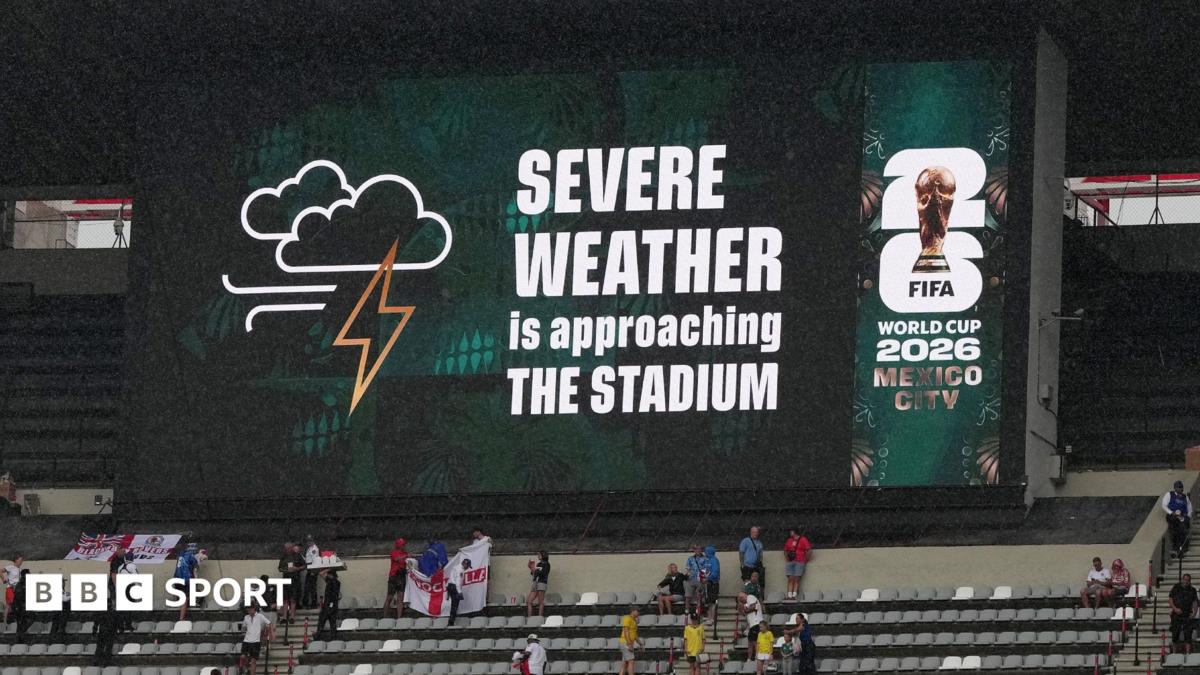
The Azteca Stadium is currently under lockdown. According to reports from the BBC, fans have been ordered to stay in their seats as a severe storm rolls over Mexico City. It is a bizarre, chaotic start to what was already going to be a complete madhouse of a football match.
Let's be honest about the logistics here. Telling a crowd of nearly 87,523 fans who have been drinking warm beer in the Mexican sun to shelter in place because of lightning is like telling a pack of wolves to respect a noise ordinance. The stadium is open, the concrete is shaking, and the skies are turning an angry shade of purple.
This is the round of 16. The stakes are massive, the pressure is sky-high, and now we have players stuck in the dressing rooms, staring at the walls, waiting for the green light. For Mexico, this is just another Tuesday in the capital. For England, this is a recipe for a classic mental collapse.
The Chaos Timeline
- 15:30 local time: Severe weather warnings are officially broadcast to fans arriving at the outer gates.
- 16:15 local time: Lightning strikes within a five-mile radius of the stadium, triggering the safety protocol.
- 16:30 local time: The official PA announcement orders the stadium to shelter in place, halting player warmups.
The timeline shows how quickly the situation deteriorated. The weather forecast had warned of potential rain, but nobody expected a full-scale tropical tempest to park itself directly over the Coloso de Santa Úrsula. Around two hours before the scheduled kickoff, the clouds started rolling in over the surrounding mountains, looking like a scene from an alien invasion movie.
By the time the players came out for their initial warmups, the wind was already whipping through the upper tiers. The referees took one look at the lightning flashes in the distance and sent everyone back inside. Then came the official announcement over the PA system, ordering supporters to remain seated and seek shelter where possible.
A Logistical Nightmare in the Coloso
As the BBC confirmed in their coverage, the sudden storm forced stadium officials to prioritize safety over schedule. But trying to enforce a shelter-in-place order in a stadium built in the 1960s is a hilarious challenge. There are no retractable roofs here, no climate-controlled concourses for the cheap seats, just raw concrete and passion.
England fans, who traveled thousands of miles for this game, are currently getting drenched. They are trying to shield their overpriced replica shirts with plastic bags while Mexican supporters lead chants that echo through the thunder. You can hear the drumming from the home section even as the rain beats down on the pitch.
This is where the negative observations come in. The FIFA organizers should have seen this coming. Summer in Mexico City is notoriously rainy, and holding a late-afternoon kickoff in an open-air stadium during the height of the wet season is asking for trouble. It is another example of scheduling decisions being made by executives in suits rather than people who actually understand local climates.
The fans are the ones paying the price for this incompetence. They are stuck in an open bowl during an electrical storm with very little guidance. While the media box is warm and dry, the average fan is facing lightning strikes with nothing but a wet poncho for protection.
Let's look at how the crowd is reacting. Instead of panicking, the Mexican fans are turning the stadium into a giant street party. The thunder claps are being answered by chants of "México, México" that are loud enough to shake the press box. It is a hostile environment that is only getting more intense as the delay drags on.
The English fans are trying to respond, but their voices are being drowned out by the elements. A wet England fan is a miserable sight. They are already complaining about the price of Mexican beer, and now they are getting a free shower to go with it.
If the match is delayed by more than two hours, FIFA rules state that a decision must be made regarding postponement. Nobody wants that. A postponement would mean playing the game tomorrow behind closed doors or with limited capacity, which would be an absolute tragedy for a fixture of this magnitude.
The Ghosts of the Azteca
This stadium does not do normal matches. The Azteca is built on volcanic rock, and it seems to attract volcanic levels of drama. From Maradona's Hand of God in 1986 to Pelé's masterclass in 1970, this pitch is haunted by the greatest moments in football history. Adding a tropical lightning storm to that history feels almost fitting.
But the real enemy here is the altitude. Playing at 7,200 feet above sea level is hard enough when you are fully prepared and the weather is perfect. The air is thin, the ball flies faster, and your lungs feel like they are filled with sand after a ten-yard sprint.
Now, add the humidity of a summer storm. The air becomes thick and heavy, making it even harder to breathe. For players who spend their winters playing in places like Manchester or London, this is a physical shock to the system. It is like trying to play football inside a giant steam room.
Mexican players are used to this. They train in these conditions and know how to pace themselves. They know when to sprint and when to conserve energy. The English players will have to learn that lesson very quickly, or they will be completely exhausted by the hour mark.
The Psychological War in the Dressing Rooms
Let's check the tactical side of this delay. A delayed kickoff ruins the pre-match routine that modern sports scientists spend months planning down to the second. The players have already eaten their carb-loaded meals, done their activation drills, and mentally peaked for the scheduled whistle. Now they are sitting on benches, cold-calling their agents or scrolling through social media.
For a team like England, this waiting game is dangerous. Historically, English footballers do not handle dead time well. Give them forty minutes to sit in a locker room and think about the weight of fifty-plus years of tournament disappointment, and their legs will turn to jelly before they even touch the grass.
Think about the contrast in preparation. The Mexican squad is led by veterans who know the Azteca like the back of their hands. They know the altitude, they know the humidity, and they certainly know how the local weather can change in a heartbeat. They will treat this delay as a minor inconvenience, a chance to have another cup of coffee.
Meanwhile, the English players are probably checking the weather apps on their phones, wondering if the match will be postponed to tomorrow. If that happens, the ticket logistics alone will cause a diplomatic incident. Thousands of fans are scheduled to fly out of Mexico City within the next forty-eight hours.
Let's think about the mental state of the English coaching staff. They will be trying to keep the players warm and focused. They will be playing music, doing light stretching in the dressing room hallways, and trying to ignore the constant rumble of thunder from outside.
But you can't ignore the atmosphere. The Azteca has a weight to it. It is a place where legends are born and where English dreams go to die.
If England can survive this delay, survive the storm, and survive the hostile crowd, it will be one of their greatest mental victories in modern history. But if they come out flat, give away an early goal on a waterlogged pitch, and crumble under the pressure, the post-match autopsy will be brutal.
The English media is already sharpening its knives. They are waiting to blame the manager, the altitude, the weather, and the FIFA scheduling. But at the end of the day, football is played on the pitch, even if that pitch is currently underwater.
The Tactical Mudfight Ahead
Let's look at the pitch itself. The Azteca turf is legendary, but no pitch can handle a tropical deluge without turning into a marsh. If the game does start tonight, we are not going to see beautiful, tiki-taka football. We are going to see a mud fight where long balls and physical strength dominate.
That plays directly into Mexico's hands. They have the physical presence of Raul Jimenez upfront, a striker who has built a career on winning ugly battles in the box. If the ball is sticking in the mud, Jimenez will be in his absolute element, throwing his weight around and making life miserable for the English center-backs.
England, on the other hand, relies on quick transitions and technical wingers. Players like Bukayo Saka and Jude Bellingham need a fast, dry surface to exploit their speed and dribbling ability. If they are forced to slog through standing water, their effectiveness will drop significantly.
Let's also look at the refereeing team. They are under massive pressure to get this game played. The World Cup schedule is tight, and there is very little room to push games back. Due to the severe weather highlighted by the BBC's live updates, the referees are constantly consulting with safety officials, but the pressure to avoid a postponement is immense.
We are hearing reports that the referees will inspect the pitch again in fifteen minutes. The rain has slowed down slightly, but the lightning is still a major concern. You can feel the tension in the stadium building with every passing minute.
The stadium security is struggling to keep fans in their designated areas. People are crowding under the overhangs to escape the downpour, creating massive bottlenecks in the concourses. It is a safety hazard that the organizers are desperately trying to manage.
This is the reality of a World Cup co-hosted across an entire continent. You get the glitz and glamour of modern stadiums in the US, and then you get the raw, unpredictable drama of the Azteca. Personally, I prefer the drama.
Let's hope we get some football tonight. The world is watching, the fans are wet, and the stage is set for a classic. Whether it is a classic match or a classic disaster is up to the weather gods.
Read Next
- Tuchel is walking England straight into an Azteca trap
- Tuchel is walking England straight into an Azteca trap
- The 2 AM kick-off is a war crime and England fans are losing it
- England are walking into a tactical trap at the Azteca
- 🏆 World Cup 2026 — Full Coverage Hub
- 🏴 England World Cup 2026 — Three Lions Hub
- 🇲🇽 Mexico World Cup 2026 — El Tri Hub