The Azteca Nostalgia Trap
Walk into any sports bar from Mexico City to East L.A. and somebody will try to sell you the same old fairy tale. They will point at a dusty poster on the wall and talk about the magic of home turf. They will bring up Pelé wearing a sombrero in 1970. They will rave about Diego Maradona slaloming through five English defenders in 1986.
It sounds romantic over a pitcher of draft beer. The problem is that historic grass does not score goals in modern international football. Nostalgia is a hell of a drug, and right now it is blinding the Mexican Football Federation to a terrifying reality.
Mexico is not building toward a triumphant homecoming in the 2026 World Cup. They are marching straight into a high-stakes ambush of their own making.
The suits running the FMF seem to genuinely believe that hosting matches at Estadio Azteca, Estadio Akron, and Estadio BBVA will magically fix a broken program. They think the altitude of Mexico City and 87,000 screaming fans will spook world-class European and South American opponents. That is not a tournament strategy. That is pure delusion.
Host nation advantage is real, but it requires a functional football team to capitalize on it. Ask South Africa in 2010 or Brazil in 2014 how much home turf helps when your tactical structure is built on quicksand. Right now, El Tri is closer to a chaotic daytime telenovela than a serious global contender.
From Qatar to Copa América: A Masterclass in Regression
Look at the actual track record over the last four years instead of relying on grainy YouTube highlights from the twentieth century. The warning lights have been flashing red so long the bulbs are about to explode.
In Qatar 2022, Gerardo "Tata" Martino oversaw the most dismal Mexican World Cup campaign in modern history. El Tri played with all the attacking spark of a stalled lawnmower. They failed to advance from the group stage for the first time since 1978, getting outmaneuvered by Poland and Argentina while needing a desperate late flurry against Saudi Arabia just to score a goal.
If Qatar was the wake-up call, the federation hit the snooze button and went back to sleep. Fast forward to the 2024 Copa América on North American soil. This was supposed to be the launchpad for the 2026 project under Jaime Lozano.
Instead of showing growth, Mexico produced an absolute disaster class. They managed a grand total of one single goal across three group matches. They lost 1-0 to Venezuela and got booted out of the tournament after a lifeless 0-0 draw against Ecuador.
That was not an unlucky weekend or bad officiating. That was a systemic indictment of a national team that has completely lost its identity.
Meanwhile, the regional balance of power in CONCACAF has flipped upside down. For decades, Mexico viewed the United States as an annoying little brother who occasionally got lucky. Today, the USMNT treats El Tri like a routine tune-up match.
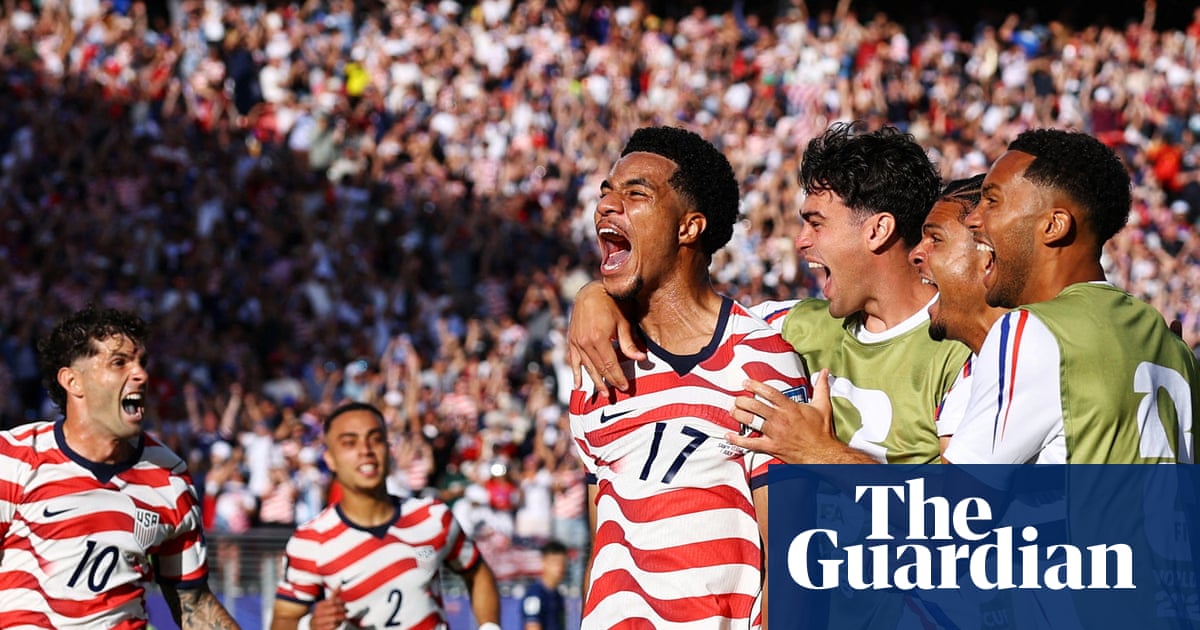
When Christian Pulisic and Gio Reyna dismantled Mexico in back-to-back CONCACAF Nations League finals, it was not a fluke. It was the predictable outcome of one country sending two dozen players to top European leagues while the other country prioritized stadium cash grabs in North Texas.
Javier Aguirre, Rafa Márquez, and Panic Booking
So how did the FMF executives respond after firing Jaime Lozano post-Copa América? They did what every panicked, out-of-touch front office does when the fans start revolting. They reached into the vault and hired Javier "El Vasco" Aguirre for his third separate stint as national team manager.
To sweeten the deal, they convinced Barcelona legend Rafa Márquez to leave his coaching post at Barca Atlètic to serve as Aguirre's assistant before taking over full-time for the 2030 cycle. It is the managerial equivalent of WWE bringing back Goldberg or The Undertaker for a Saudi Arabia pay-per-view.
When your current storylines are completely dead and the crowd is throwing trash into the ring, bring back the legends from 2002 to pop the arena. It creates headlines for forty-eight hours, but it does not fix the underlying booking failure.
Aguirre is a tough, pragmatic survivor who knows how to bark orders and instill discipline. But asking a 65-year-old manager to modernize a fundamentally flawed program in under two years is absurd. You cannot fix a jet engine with duct tape and nostalgia.
The core problem of Mexican football has never been just the poor guy standing in the technical area. The rot starts at the top with an executive structure that views the national team as a marketing instrument first and a sporting project second.
Consider the structural decisions made by Liga MX club owners over the past decade. They abolished promotion and relegation, taking away any real competitive stakes for bottom-half clubs. They capped the flow of young talent by placing ridiculous buyout tags on domestic players, pricing them out of transfers to Holland or Spain.
Why risk sending a 19-year-old prospect to Feyenoord for three million dollars when a domestic rival will pay eight million to keep him in Mexico? The short-term bank accounts look fantastic. The long-term product on the pitch pays the ultimate price.
Add in the lucrative SUM tour agreement, which forces Mexico to play endless friendly matches against mediocre opposition in front of 70,000 fans in Arlington, Houston, or Pasadena. El Tri spends international windows collecting multi-million dollar appearance checks instead of testing themselves against top European or South American sides in hostile environments.
Roster Realities and the Fifth Game Myth
Take a cold, hard look at the actual squad Aguirre has to work with heading into 2026. Where is the elite, world-class talent capable of carrying a host nation past the heavyweights?
Edson Álvarez is a warrior. His work rate and defensive awareness at West Ham make him the engine of this team. But Álvarez cannot tackle, sweep the backline, and dictate the tempo of the match all by himself. The moment he gets isolated or picks up a yellow card, the Mexican midfield turns into a highway with no speed bumps.
Up front, Santi Giménez has demonstrated genuine goal-scoring pedigree in the Eredivisie. Yet when he puts on the green shirt, he spends ninety minutes starving on an island. You cannot expect a striker to produce magic when the wingers are firing wild crosses into the third row and the midfield cannot break a high press.
Then there is the immortal goalkeeper situation. Guillermo Ochoa has delivered legendary World Cup moments across five separate tournaments. But if Mexico enters the 2026 World Cup relying on a 41-year-old goalkeeper because the federation failed to groom a successor over a ten-year span, that is organizational negligence.
For nearly thirty years, Mexican football was defined by the obsession with the quinto partido—the elusive fifth game or quarterfinal stage that El Tri reached in 1970 and 1986, but failed to hit in seven consecutive World Cups from 1994 to 2018.
That fifth game curse used to feel like a tragic hex. Today, after watching the group stage exit in Qatar and the Copa América disaster, reaching the round of 16 feels like climbing Mount Everest. Talking about a quarterfinal run in 2026 sounds like pure comedy.
In 1970 and 1986, Mexico had genuine domestic stars like Hugo Sánchez and Manuel Negrete, playing alongside battle-tested veterans who could hold their own against global powers. In 2026, Mexico risks being out-paced, out-muscled, and out-thought by teams with far superior European experience.
The Ultimate Home Field Backfire
Host nation status is a double-edged sword. When things are going well, the energy inside the stadium can carry a team past superior opposition. But when an unprepared host nation stumbles, the pressure becomes suffocating.
If Mexico drops points early in the group stage or struggles against an organized European opponent, the atmosphere inside Estadio Azteca will turn toxic in minutes. The famous chant, the endless booing, and the intense media scrutiny will crush a squad that lacks leadership.
Brazil thought five world titles and the historic noise of the Maracanã would protect them in 2014. Germany handed them a humiliating 7-1 beating on home soil because history does not defend back posts on corner kicks.
Unless Aguirre and Márquez execute a radical tactical shift and strip away the squad's entitlement, Mexico is staring at the most embarrassing World Cup campaign in host nation history. Canada possesses terrifying counter-attacking speed with Alphonso Davies. The United States boasts deep European starters across every line. Mexico has marketing deals and a historic stadium.
If the FMF does not stop treating El Tri like a travelling roadshow, the 2026 World Cup will not be the glory year Mexican supporters have dreamed about for forty years. It will be an unmitigated disaster broadcast live to the entire world.
Read Next
- CONCACAF Qualifiers Were Pure Chaos and Costa Rica Should Be Ashamed
- La Roja’s New Dynasty Isn't Tiki-Taka 2.0—It's Way More Dangerous
- FIFA's 48-Team World Cup Monster Was Pure Greed and Total Chaos
- Algorithms amplified World Cup abuse against England stars, report finds
- 🏆 World Cup 2026 — Full Coverage Hub
- 🇲🇽 Mexico World Cup 2026 — El Tri Hub


.jpg)