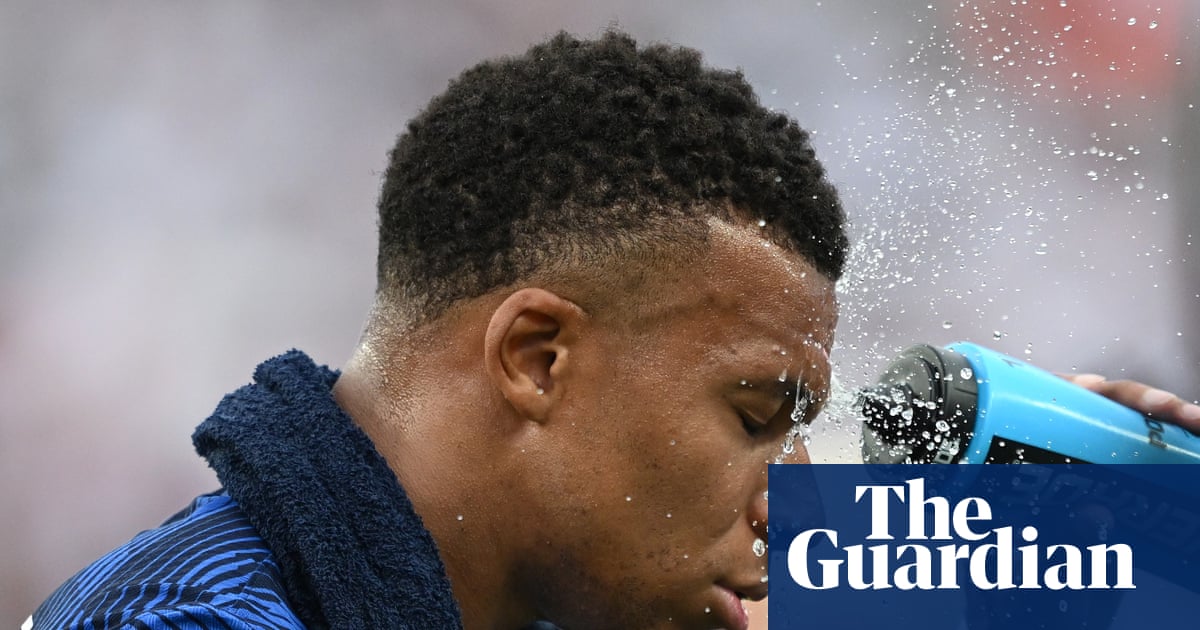
The thermometer is the real MVP of World Cup 2026
Look, I love the beautiful game as much as the next degenerate who spends their weekends nursing a pint in a dark bar. But this year’s tournament has become a literal slow-cooked roast, and not the kind you serve with gravy on a Sunday. According to an extensive investigation by The Guardian, nearly 19% of the matches in this year's expansive calendar hit weather conditions that make a standard training session look like a winter wonderland.
We are talking about heat and humidity levels that the players’ union specifically flagged as dangerous territory. It’s hard to play tiki-taka when your lungs feel like they are being scrubbed with steel wool. FIFA, in its infinite bureaucratic wisdom, insists that their safety measures are enough. They treat these heat protocols like an optional DLC for a video game that nobody actually bothered to download.
The subreddit is currently a war zone of cold takes
If you head over to the main football threads, the discourse is a beautiful, trashy wreck. You’ve got the old-school purists who think any complaint is weak sauce. One commenter noted that footballers in the 70s played in worse, ignoring the minor detail that those guys were often fueled by nothing but cigarettes and hope. They seem to think that if you aren't collapsing on the pitch, you aren't trying hard enough.
Then, you have the data nerds who are weaponizing the statistics to show just how far off the rails this has gone. They aren't just complaining; they are comparing wet-bulb globe temperatures across host cities like it’s a championship caliber sport of its own. It’s a stark contrast to the folks who just want to watch the highlights without hearing about atmospheric pressure.
Is FIFA actually protecting anybody here?
The skepticism towards the governing body is at an all-time high. A common refrain across forums is that this is simply the inevitable consequence of a tournament that has been bloated to over 100 matches. You can’t expand the product to the moon without expecting a few meteor crashes along the way. When organizers prioritize ticket revenue and global broadcast reach, the actual physical limit of the human body becomes a suggestion rather than a rule.
Some contrarians suggest that late-night kickoffs should be mandated, but the TV networks have already locked their windows. Trying to convince a major broadcaster to push a game to midnight for the sake of player hydration is like trying to win an argument with a bouncer after last call. It’s a losing battle. The frustration in the community isn't just about the temperature; it’s about the feeling that the people in the suits are staring at a spreadsheet while the guys on the pitch are suffering from heatstroke.
The reality check we didn't want
My take? The players are the ones bearing the cost of this corporate expansion. We saw some sluggish performances in the group stages, and it wasn't because of a lack of tactical preparation. It’s hard to execute a high-press system when your central midfielders are running on fumes by the 60th minute because the humidity percentage is higher than the crowd engagement at a neutral site game.
It’s a bad look for the sport when the most talked-about tactical variable isn't a formation shift or a clever substitution, but rather how much water someone can chug before passing out. If the governing body doesn't admit that 20% of their tournament was essentially a health hazard, the credibility gap is only going to widen. We’ve seen recent reports indicate that safeguarding protocols are largely performative. You can't just slap a cooling towel on a crisis and call it a day.
The enthusiasts want to tell you that these challenges show the mental fortitude of the modern professional. I see it differently. It shows that we are pushing these guys towards a breaking point where the quality of the product is being diluted by pure, unadulterated hubris. When the weather is the deciding factor in who reaches the knockout stages, we have a massive problem. We are heading toward a future where a stadium’s cooling capacity is a bigger transfer factor than a scout’s eye for talent, and that’s a tragedy for the game we all claim to love.
Read Next