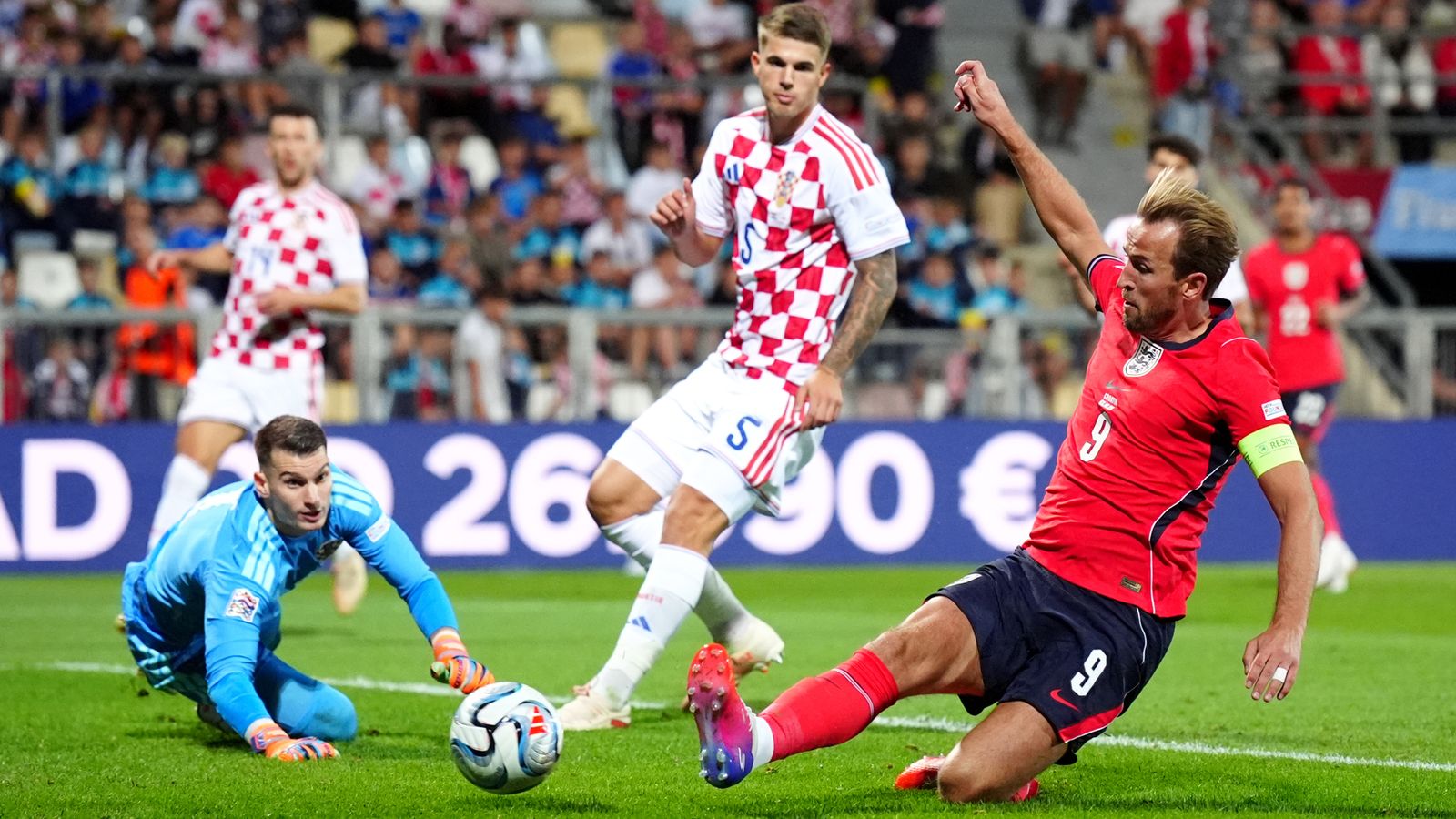
The Post-Kane Reality and England's Striker Vacuum
Fresh off another painful semi-final exit in North America, England's international blueprint is already undergoing a complete reset. The ink is barely dry on the 2026 tournament post-mortems, yet eyes have already shifted toward Spain, Portugal, and Morocco for World Cup 2030.
As Mirror Football reports, the prospective squad features a dramatic generational shift. The headline takeaway is straightforward: the era of relying on established 2018 and 2021 stalwarts is coming to a hard close.
Harry Kane will turn 36 by the summer of 2030. Expecting him to spearhead a grueling seven-game tournament run at that stage of his career is wishful thinking. Kane remains a world-class finisher in isolated moments, but international football moves too fast for static center-forwards past their physical peak.
England currently face a genuine central striker vacuum. The pipeline behind Kane lacks an obvious heir apparent capable of scoring five goals against top-tier opposition in a high-stakes knockout setting. That is a massive red flag for the FA coaching staff.
Converting wide forwards into makeshift strikers has failed England in past cycles. If a true central focal point does not emerge during Euro 2028 qualifying, the entire tactical structure collapses. Pitch control means nothing without a killer inside the eighteen-yard box.
The Engine Room and Defense: Trafford, Guéhi, and Bellingham
While the central striker role looks deeply uncertain, the defensive spine shows far more promise. James Trafford is slated to take over the starting goalkeeper shirt permanently, ending Jordan Pickford’s decade-long reign between the posts.
Trafford will be 27 in 2030, putting him right in the prime age window for elite goalkeepers. His modern distribution and aggressive sweeping ability give England a tactical dimension Pickford never quite mastered under pressure.
In front of Trafford, Marc Guéhi projects as the central defensive anchor at age 29. Guéhi proved his big-stage credentials during recent international campaigns. He brings positional composure and rare aerial dominance that modern backlines desperately require against top European opposition.
The fullback positions will demand a complete overhaul. While Trent Alexander-Arnold will be 31 and transitioning into a central midfield role, young fullbacks like Rico Lewis and Lewis Hall are positioned to take over the flanks. Their ability to invert into midfield will determine how dominant England can remain in possession.
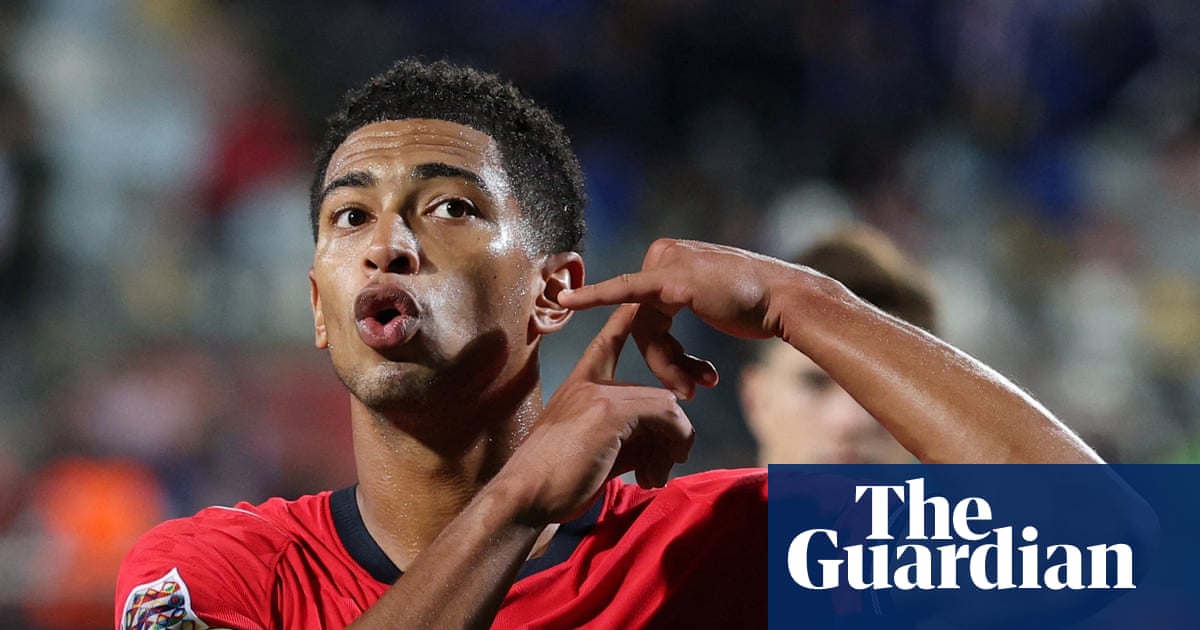
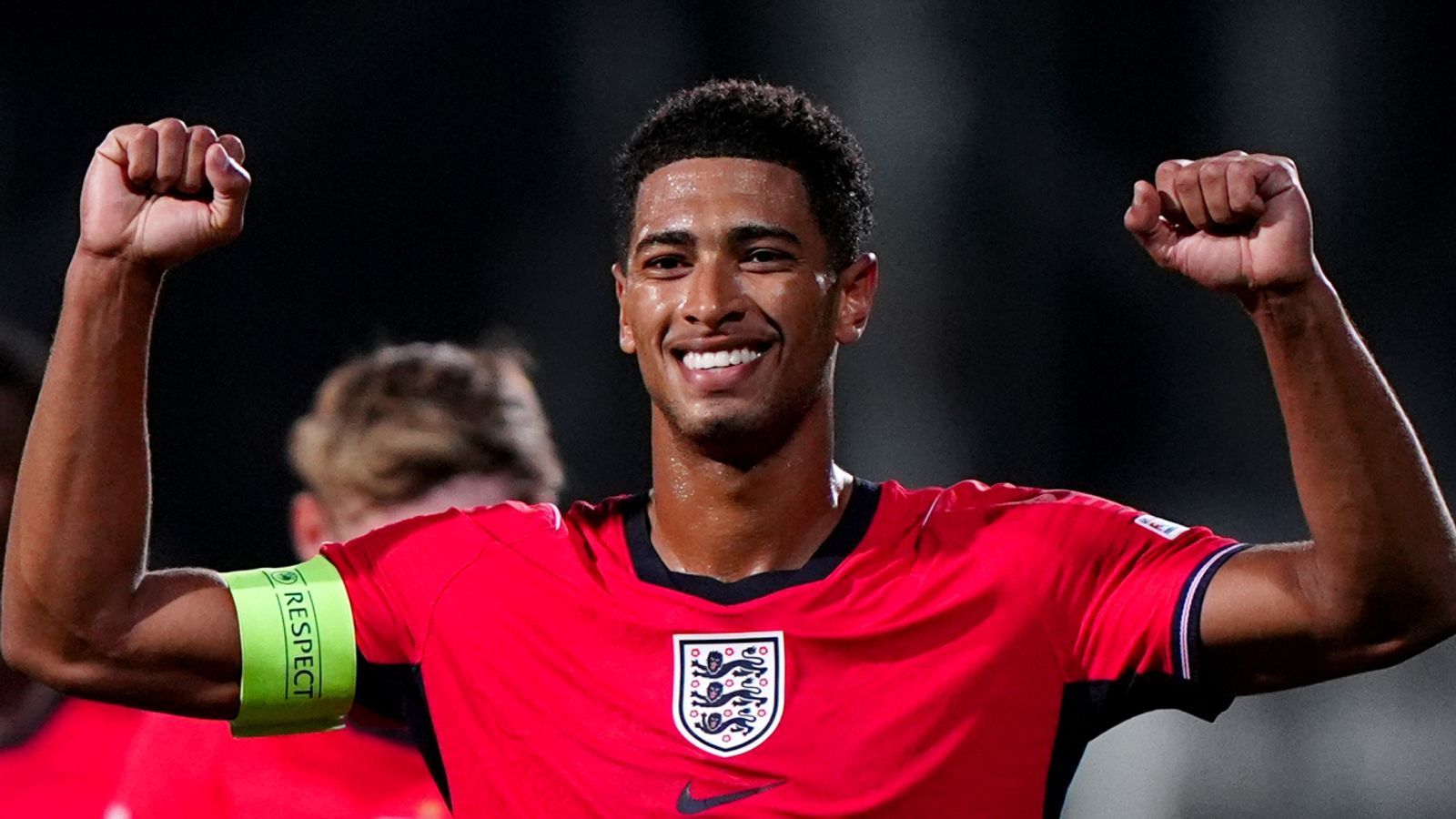
The entire operation hinges on Jude Bellingham. By 2030, Bellingham will be 26 and wearing the captain’s armband. He is no longer the rising phenom; he is the undisputed engine room leader responsible for driving the tempo.
Bellingham’s ability to crash the box while maintaining defensive discipline makes him irreplaceable. However, asking him to carry both the emotional weight and tactical workload of a national team for eight straight years carries real burnout risk. Staff must manage his minutes carefully.
The Midfield Engine: Mainoo, Wharton, and Nwaneri
To maximize Bellingham’s attacking instinct, the tactical setup demands a disciplined double-pivot behind him. Kobbie Mainoo and Adam Wharton represent the ideal pairing for that system. Both players will be entering their absolute physical prime at ages 25 and 26 respectively.
Mainoo’s press-resistance in tight central spaces gives England a way to play through aggressive opposition high-presses. He rarely panics under pressure, turning defensive transitions into immediate counter-attacking opportunities.
Wharton provides the surgical long-range passing that breaks low blocks. His ability to hit diagonal switches to wide forwards allows England to stretch compact defenses instantly. Together with Mainoo, they offer balance that previous national team managers only dreamed of having.
Arsenal’s Ethan Nwaneri also looms as a game-changing option in the attacking midfield rotation. If Nwaneri continues his rapid development, he gives England a left-footed creator capable of unlocking elite defenses late in matches. Having that depth is essential for tournament survival.
Wide Attack: Palmer, Saka, and Foden's Transition
England’s wide attacking options remain envy-inducing across global football. Bukayo Saka and Cole Palmer will both be 28 in 2030, right at the peak of their athletic and tactical capabilities. Their track record in major matches makes them automatic starters on either wing.
Palmer’s flair and unbothered mentality in high-pressure moments make him a nightmare for opposition left-backs. Saka offers relentless work rate, defensive tracking, and clinical final-third output that managers rely on when matches tighten up.
Phil Foden will be 30 during the 2030 tournament, likely shifting from an explosive winger into a controlling central playmaker. His technical quality ensures he remains a vital asset, even as his role evolves from direct runner to tempo controller.
Having Palmer, Saka, and Foden in the squad gives England incredible tactical versatility. However, the coaching staff must avoid shoehorning all three into the lineup simultaneously at the expense of defensive balance. Balance must take priority over individual star power.
The Teenage Gamble: Hype vs. Senior Reality
The most controversial element of the projected XI published this week involves shoehorning teenage prodigies into World Cup starters four years before the main event. Names like Arsenal’s Max Dowman and youth wing prodigy Rio Ngumoha dominate the speculative graphic.
This is where media projection strays into dangerous fantasy land. Dowman and Ngumoha possess undeniable technical brilliance in academy setups, but projecting 15-year-olds into senior international starters is historically a fool's errand.
Remember when pundits penciled Jack Wilshere and Ravel Morrison into locked-in national team starters for a decade? Premier League history is littered with academy phenoms who stalled the moment physical demands escalated at senior level.
Looking back at similar national team projections from 2014, media outlets listed players like Josh McEachran and Nathaniel Chalobah as guaranteed 2022 World Cup starters. Neither player ended up anywhere near the final squad. Media guesswork consistently underestimates how difficult the transition to senior football really is.
Ngumoha’s one-on-one dribbling is electric, yet international defenders eat predictable wingers alive. Without tactical maturity and elite decision-making, raw speed disappears against low-block defenses in hot weather climates.
Media outlets love building up teenage prodigies to generate clicks during quiet summer windows. The harsh truth is that fewer than twenty percent of academy projections ever play a minute of senior World Cup football. Expecting these kids to carry national expectations in 2030 is premature and deeply flawed.
Tactical Evolution: Preparing for Spain, Portugal, and Morocco
Tournament football in 2030 across three host nations presents unique physical challenges. Heavy travel schedules across Southern Europe and North Africa demand tactical flexibility rather than a fixed eleven-man squad.
England’s mid-block defense failed miserably against top South American opposition last month. Transitioning to a high-pressing 4-3-3 system requires midfielders who can cover ground continuously without fading in the final twenty minutes.
Depth will dictate success far more than a flashy graphic on paper. Developing a secondary unit capable of maintaining tempo during group matches is the only way to keep key starters fresh for the quarter-finals.
The FA needs a cohesive long-term plan rather than hopeful guesswork. Relying on talent alone has yielded decades of heartbreak. The 2030 cycle will prove whether England has finally built a modern football operation or just another overhyped roster.
Read Next
- Thomas Tuchel's England project is hitting a historical wall
- Jude Bellingham at false nine is Thomas Tuchel's only path to Euro 2028 glory
- Pep Guardiola is weighing up a move into the international game
- Pep Guardiola is weighing up his next move after English interest cools
- 🏆 World Cup 2026 — Full Coverage Hub
- 🏴 England World Cup 2026 — Three Lions Hub