Azteca's Metabolic Tax
Mexico City does not offer quiet preparation. England learned this when their coach pulled up to their hotel, only to find hundreds of local fans waiting with whistles, chants, and boos. The English staff had hoped to keep their location undisclosed, but local supporters tracked them down within hours of arrival.
After the Ecuador squad suffered sleep disruption from late-night firecrackers outside their lodging earlier in the week, security around the English camp has been doubled. You can read details of the hostile welcome on arrival to understand the pressure cooker England has entered.
This hostile greeting is merely a prelude to the physical test waiting at the Azteca. Playing at an elevation of 7,200 feet forces a metabolic tax that European-based squads rarely calculate correctly. The air thinness alters ball flight, speeds up passes, and drains muscle oxygen reserves by the hour mark.
Teams that attempt to sustain high-intensity pressing sequences in these conditions usually hit a wall after sixty minutes. Thomas Tuchel must navigate this environment while balancing a risky tactical setup. His decision to deploy Declan Rice as a lone defensive anchor in his preferred 4-1-4-1 system has raised eyebrows among tactical observers.
Rice is expected to cover horizontal space between the touchlines alone, a task that becomes physically punishing at high altitude. In the group stage, England operated with a double pivot of Rice and Kobbie Mainoo. This pairing stabilized the center but limited vertical progression, resulting in flat possession phases.
The Single-Pivot Gamble
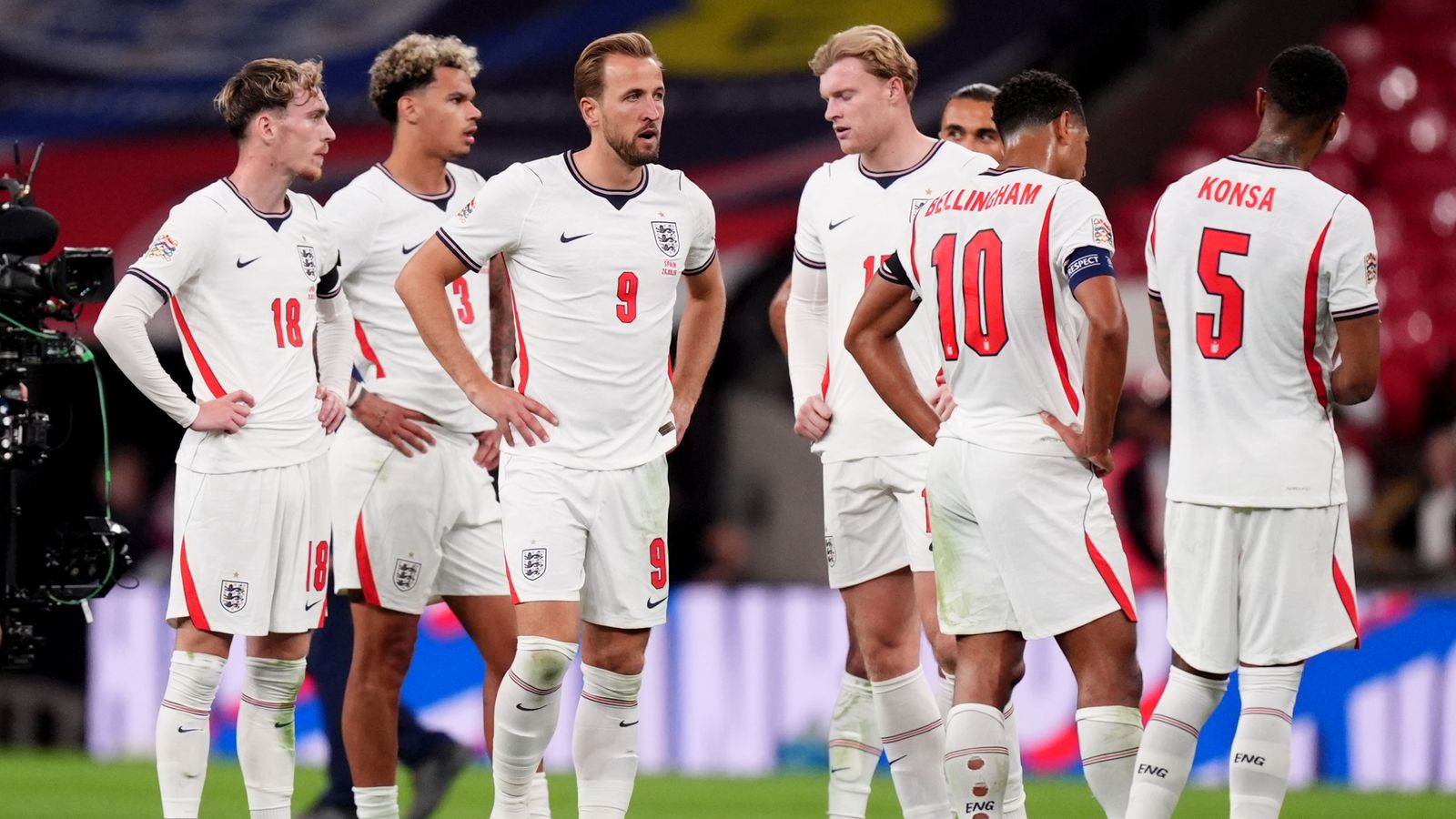
By removing Mainoo and pushing Jude Bellingham into a dual-eight role alongside Cole Palmer, Tuchel hopes to unlock central zones. This setup shifts the creative burden forward but places immense defensive responsibility on Rice. Against a Mexican side that transition through rapid, vertical combinations, a single pivot is highly vulnerable.
Mexico's central trio of Edson Álvarez, Luis Chávez, and Orbelín Pineda excel at drawing opponents forward before releasing quick wingers. They will look to isolate Rice in transition by overloading the half-spaces. During the group stage, Rice averaged 5.4 tackles and interceptions per 90 minutes.
However, his successful defensive action rate dropped by 18 percent when isolated in transition. If Mexico bypass England's first line of pressure, Rice will be left defending a 40-yard channel alone. Mexico's manager Javier Aguirre knows this weakness.
Aguirre has drilled his side to trigger high-intensity presses immediately when England's center-backs split. They want to force John Stones or Marc Guéhi into long, speculative passes that hang in the thin air. This tactic allows Mexico to win the second balls and mount immediate counter-attacks.
When England build from the back, Jordan Pickford must resist the urge to go long. The ball travels roughly 10 percent faster at this altitude, making deep aerial diagonals highly unpredictable. If Pickford launches long balls, César Montes and Johan Vásquez will dominate the aerial duels.
England must build through short, controlled exchanges to keep their defensive shape intact. Bukayo Saka and Anthony Gordon need to drop deep to draw Mexican full-backs out of position. This movement will open lateral passing lanes for Harry Kane, who must act as a wall passer to release running midfielders.
If Kane fails to hold up the ball, England's midfield will be caught in transition repeatedly. Mexico's defensive structure under Aguirre is narrow and aggressive. They play a hybrid 4-4-2 block that shifts into a 5-3-2 when defending deep.
Exploiting the Left-Sided Asymmetry
They rely on compact spacing to suffocate creative playmakers in the half-spaces. This structure forces opponents to play wide, where Mexico's full-backs use the touchline as an extra defender. This is where Cole Palmer's role becomes decisive.
Palmer must operate in the right half-space, occupying Luis Chávez and forcing him to choose between tracking the runner or blocking the pass to Saka. If Palmer plays too wide, he plays into Mexico's hands by crowding the touchline. The connection between Palmer and Saka will determine England's ability to break the low block.
On the opposite flank, England's left-back situation remains a concern. Kieran Trippier is likely to start on his weaker side again. Trippier lacks the natural overlapping instinct of a left-footer, which slows down England's rotations on that side.
This makes England's build-up predictable, allowing Mexico to shift their defensive block early. Mexico will target this asymmetry by keeping Uriel Antuna wide on the right, attempting to isolate Trippier in one-on-one situations. If Trippier is caught high up the pitch, Marc Guéhi must slide across to cover.
This leaves a gap in the box for Santiago Giménez to attack. Giménez is a clinical penalty-box predator who averages 3.8 shots per 90 minutes. Over seventy percent of those attempts come from single-touch finishes.
He does not need multiple touches to punish defensive lapses. Guéhi and Stones must remain touch-tight inside the penalty area. England's center-backs cannot afford to drop too deep to protect Trippier.
Doing so would create a massive gap between the defensive line and Declan Rice. That zone is exactly where Pineda likes to operate, picking up second balls and driving forward. England's defensive line must remain high, despite the risk of long balls over the top.
Conserving Oxygen and Energy
Tuchel's tactical risk is not just about defensive structure. It is also about physical conservation. Pressing high for ninety minutes at this altitude is a recipe for physical collapse in the final third of the match. England must select their pressing triggers with extreme discipline.
We saw this with Ecuador, who pressed aggressively in the first half but conceded twice after the 70th minute as fatigue set in. England must select their pressing triggers with extreme discipline. They cannot afford to chase lost causes or engage in wild recovery runs.
They must accept periods of passive defending to survive the full match. A mid-block posture would serve them better, conserving English energy for explosive counter-attacks. When recovery occurs, the transition must be immediate and vertical.
This strategy relies heavily on Bellingham's physical attributes. His ability to carry the ball under pressure relieves stress on the defense. If Bellingham can draw fouls in transition, he will buy England valuable seconds to catch their breath.
Palmer must also drop deep to offer a reliable escape route under pressure. Set pieces will play a disproportionate role in this match. With the ball moving faster and dipping less, direct free-kicks are harder for goalkeepers to judge.
Trippier and Palmer must exploit this by putting high-velocity deliveries into the corridor of uncertainty. England's height advantage must be utilized at every opportunity. Mexico's goalkeeper, Luis Malagón, has shown vulnerability on cross claims.
He ranks in the bottom thirty percent in Liga MX for successful aerial claims. England's physical presence at corners, led by Stones and Kane, must test this weakness early. Any loose ball in the six-yard box must be attacked with conviction.
However, Aguirre has surely anticipated this. Mexico will likely deploy a zonal marking system on corners, packing the six-yard box with physical bodies. This tactic aims to block runners and deny Pickford quick release options.
It will require clever blocking from England's secondary runners to free up Stones and Guéhi. The bench selection will decide the final thirty minutes. Tuchel has often been slow to make changes in knockout matches.
In high altitude, waiting until the 80th minute to refresh the midfield could prove fatal. The physical drop-off will happen suddenly and without warning. Conor Gallagher and Mainoo must be ready to enter by the hour mark.
Their fresh lungs will be needed to support Rice, who will likely be running on empty by then. If Tuchel hesitates, Mexico's substitutes will overrun the central zones. This is where the match could slide away from England.
Mexico's squad depth is impressive, particularly in wide areas. The introduction of César Huerta or Alexis Vega late in the game will test England's tired full-backs. These players excel at driving at defenders when fatigue has slowed reaction times.
Tuchel's substitutions must match Aguirre's moves chess-piece for chess-piece. England's path to the quarter-finals requires tactical patience, not raw aggression. If they try to match Mexico's early intensity, they will lose.
They must control the tempo, use the ball to rest, and exploit the spaces that open as Mexico chase the opening goal. It is a test of mental maturity as much as tactical shape. The hostile crowd at the Azteca will demand a fast start from the home team.
England must weather this initial storm. The first fifteen minutes will require disciplined shape, simple passes, and zero high-risk dribbles in the defensive third. Surviving the opening phase is the absolute priority.
If England can keep the score level at halftime, the pressure will begin to shift onto the hosts. The Mexican fans, while passionate, can turn quickly if they sense their team is failing to break down a stubborn defense. England must use this psychological edge to control the second half.
Tactically, this is Tuchel's biggest test since taking the England job. His reputation as a tournament specialist rests on his ability to solve specific defensive puzzles. This match requires a pragmatic masterclass rather than a fluid attacking show.
The Verdict
Any tactical arrogance will be punished swiftly. My prediction is a tight, bruising encounter. England will suffer, and Rice will be forced to play a highly disciplined, sacrificial role.
But England's individual quality in transition will ultimately make the difference. They have the superior talent, provided they have the energy to use it. Expect a late Bellingham surge to seal it.
England will edge out a 2-1 victory after extra time. They will survive the altitude and the hostile crowd to reach the quarter-finals.
Read Next
- Why England's 1am kick-off against Mexico is a tactical nightmare for Tuchel
- England's right-back crisis has turned Thomas Tuchel into a mad scientist
- Why Mexico's altitude and sudden kickoff change is Tuchel's nightmare
- Why the Azteca altitude will expose England's spacing crisis
- 🏴 England World Cup 2026 — Three Lions Hub