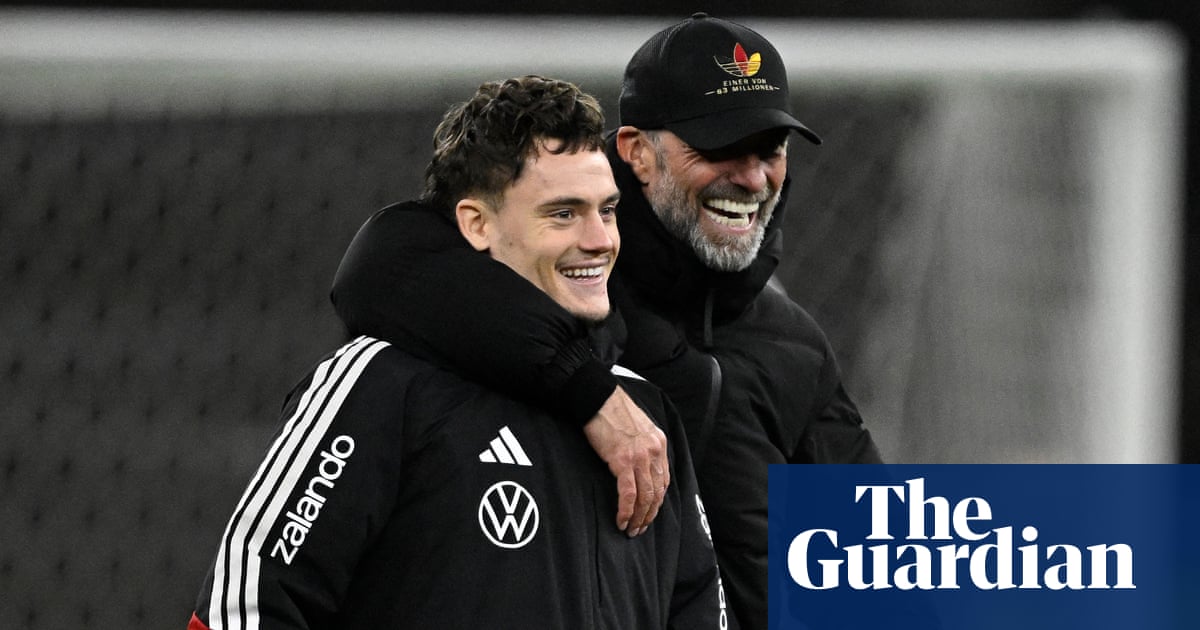
Seventeen minutes of relentless transition football completely flipped Germany's Nations League trajectory. Germany struck four goals in 17 second-half minutes in Berlin, turning a tense tactical arm-wrestle against the Netherlands into an emphatic 5-0 statement. It was the most devastating statistical spike seen across European football this window.
The sudden explosion inverted what had been a deeply unconvincing campaign. Barely six weeks ago, Jürgen Klopp’s home debut in the German dugout concluded in a grim 1-0 defeat to Greece. That evening in October revealed a stagnant attack that lacked vertical movement and surrendered cheap transitions.
Klopp remained publicly defiant after that opening setback. As noted by The Guardian's Football Daily, the German manager treated early adversity as purely analytical feedback rather than a sporting crisis.
“I’ve lost far more matches than I would have liked, but as long as you draw the right conclusions, a loss is ultimately a piece of information – no different from a win.”
Monday evening delivered that required information in devastating fashion. Germany spent forty-five minutes absorbing Dutch possession before releasing their counter-pressing traps with surgical violence. When the Dutch backline cracked, the floodgates opened entirely.
The seventeen-minute blitz in Berlin
Elite international fixtures almost never disintegrate so quickly between evenly matched rivals. For nearly an hour, Xavi Hernández's Netherlands looked comfortable manipulating the ball through their defensive third. That composure vanished the moment Germany shifted their defensive block ten yards higher up the pitch.
Bart Verbruggen endured a harrowing evening between the posts. The Dutch goalkeeper was repeatedly pressured into hurried clearances, eventually halting play to herd his defenders together like a shellshocked amateur squad. Germany targeted his passing angles relentlessly, cutting off inside exits and forcing errors into contested zones.
The turning point was tactical rather than emotional. Klopp instructed his forward line to abandon zonal waiting and hunt the ball at the exact moment the Dutch played into their midfield pivots. That change ignited a turnover sequence that produced four goals in rapid succession.
Exploiting Dutch structural flaws
The Dutch defensive setup carried fatal vulnerabilities that Klopp picked apart. Coming off a fixture where they scored seven past Greece, Xavi’s team committed excessive numbers ahead of the ball without adequate rest-defense. When possession broke down, enormous pockets of space opened behind their midfield.
Germany attacked those vacant channels with immediate vertical passes. Instead of recycling backwards to maintain sterile possession, German runners sprinted into the channels within two seconds of regaining the ball. That aggressive directness stretched the Dutch center-backs until their spacing collapsed.
Derry Scherhant typified that attacking urgency. The young forward attacked the blind side of the Dutch defense, finishing with composure to validate Klopp’s faith in fresh legs. His direct running offered a vertical threat that Germany sorely lacked during their toothless October outings.
Then Brajan Gruda delivered the final blow off the bench. Chasing down a loose back-pass, Gruda calmly converted to seal the five-goal margin in the dying moments. It capped an attacking display built entirely on structural discipline and opportunistic counter-pressing.
The tactical shift against low blocks
To understand the magnitude of this performance, one must examine the friction of Klopp's opening month. Germany entered this decisive clash carrying mixed form from their autumn schedule:
- A blunt 1-0 home defeat to Greece that raised sharp media criticism in October.
- Two gritty, narrow victories over Serbia built on defensive attrition rather than fluid attacking play.
- A frustrating 0-0 draw in Athens where Germany generated ninety minutes of sterile dominance without a breakthrough.
The contrast between facing Greece and facing the Netherlands explains the tactical paradox. Against deep low blocks in Athens, Germany struggled to manufacture overloads in the half-spaces and looked ponderous moving the ball laterally. Greece compressed thirty yards of pitch, refusing to bite on German pressing traps.
Xavi’s expansive tactical philosophy played directly into Klopp’s hands. By expanding the pitch and trying to build through central areas, the Dutch offered Germany the transition space they crave. Klopp’s teams do not want seventy percent possession against packed penalty boxes; they thrive in the chaotic moments between phases.
Wirtz and the youth revolution
Klopp’s selection policy represents a clean break from the past. When he took the job in July, the German manager famously dared the media to confront him directly if his methods faltered. Rather than recycling veteran names with declining physical outputs, he stacked his squad with energetic, unproven talent.
Both Gruda and Scherhant reward that philosophy with tireless running off the ball. They press aggressively on defensive transitions and sprint into channels without demanding that every phase flow through their boots. That work rate creates space for others to exploit.
Florian Wirtz operates as the primary beneficiary of that youthful movement. Handed total freedom in the central corridor, Wirtz pulled Dutch markers out of position all night before finding runners in stride. Klopp has unlocked Wirtz's creative vision by providing dynamic targets who constantly attack the penalty area.
Seeding margins and the road to 2028
The late surge carried immense mathematical consequences for the entire campaign. Gruda’s stoppage-time goal did not merely pad the scoreline; it propelled Germany above the Dutch on goal difference in the group standings. That tiny statistical margin completely alters their competitive path.
Securing the top seed grants Germany home advantage in the quarter-finals and avoids titanic clashes against France and England. Klopp understood the psychological value immediately during his post-match press conference.
“For at least the next three or four months, no one will be questioning the German national team.”
That breathing room is vital for a manager implementing complex pressing mechanisms. International managers rarely receive extended blocks of uninterrupted training time to fine-tune spacing and defensive distances. A three-month winter truce spares Klopp the corrosive scrutiny that derailed his predecessors.
The critical questions facing Klopp
Skeptics will rightly note that Germany's underlying defensive problems have not vanished overnight. During the opening twenty minutes in Berlin, the Dutch repeatedly bypassed Germany's initial press with long diagonal balls. A sharper attacking frontline would have punished the vast space behind Germany's high defensive line.
Furthermore, Germany still look vulnerable when opponents refuse to engage. While smashing an open Dutch side is thrilling, tournament football routinely forces teams into cagey battles against entrenched defenses. The scoreless draw in Greece showed that Klopp still lacks a reliable secondary mechanism when transition space is denied.
The benchmark across the continent remains Thomas Tuchel’s England. As highlighted in The Guardian's coverage, Tuchel’s squad looks significantly more advanced in their tactical evolution and tournament readiness. England control game states with pragmatic maturity, whereas Germany still rely on intense, high-variance emotional bursts.
Klopp has engineered an exhilarating hard-launch in Berlin, but the project is only beginning. Germany possess the firepower and pressing intensity to destroy elite opposition when the game opens up. The true test of Klopp’s rebuild will arrive when the game closes down and space disappears.
Read Next
- Wayne Rooney is about to win over every skeptic on reality TV
- Wayne Rooney will win the jungle because he finally stopped pretending
- Wayne Rooney's Manchester United peak was darker than anyone knew
- Piero Hincapie to Arsenal is peak Arteta madness and I love it
- 🇩🇪 Germany World Cup 2026 — Die Mannschaft Hub