The Cold Truth About 48 Teams and North American Heat
Every four years, FIFA tries to sell us a fairytale. For the 2026 tournament, with 48 teams sprawling across Canada, Mexico, and the United States, Gianni Infantino wants you to believe that any nation with a decent striker and a dream can pull off a miracle. He wants you to buy into the romantic illusion that expansion equals parity.
That is complete garbage. Expanding the tournament field simply means more group-stage roadkill for elite nations to pad their goal differentials. You are going to watch bloated, uninspired fixtures where powerhouse squads treat smaller countries like warm-up opponents before the real competition begins in the knockout rounds.
The harsh reality of a North American World Cup comes down to brutal geography and climate. Flying 2,000 miles between Vancouver humidity and Dallas heatwaves will decimate squads lacking deep, top-tier rotations by the time the Round of 16 rolls around. Turf conditions and jet lag will tear through soft rosters like a scythe.
Remember, lifting the trophy now requires surviving seven knockout matches instead of six. That extra 90 minutes of high-stakes football eliminates Cinderella stories before the quarter-finals even kick off. A plucky underdog might surprise someone in the group stage, but their legs will fall off by July.
Tournament football at this level rewards cold efficiency and ruthless tactical maturity. When you slice through the broadcast fluff and corporate noise, only a tiny elite actually has the structural horsepower to walk out of MetLife Stadium holding gold.

The Tier 1 Juggernauts: Spain and France Are Playing a Different Sport
Spain is the single most complete football team on planet Earth right now. Luis de la Fuente did something his predecessors refused to do: he stripped away the brain-numbing, 1,000-pass possession obsession that led to their embarrassing exit against Morocco in Qatar. He replaced tiki-taka dogma with raw, vertical violence.
Replacing endless sideways passing with dynamic wing play changed everything for La Roja. Lamine Yamal and Nico Williams slice through low blocks like warm butter, giving Spain an immediate, lethal counter-attacking edge they lacked for a full decade. Defenders cannot cheat toward the box without getting burned on the outside.
Look at how they tore through the draw at Euro 2024. They did not hide behind easy bracket math; they systematically dismantled Italy, Germany, and France before putting England in a body bag by a 2-1 scoreline in the final. That was not luck; it was tactical dominance from start to finish.
Mikel Merino and Dani Olmo come off the bench and instantly dictate match tempo without dropping the team's defensive intensity. Even as Rodri manages his minutes following major knee surgery, Spain’s central midfield remains press-resistant and suffocatingly organized. They control matches like an experienced chess grandmaster playing speed games.
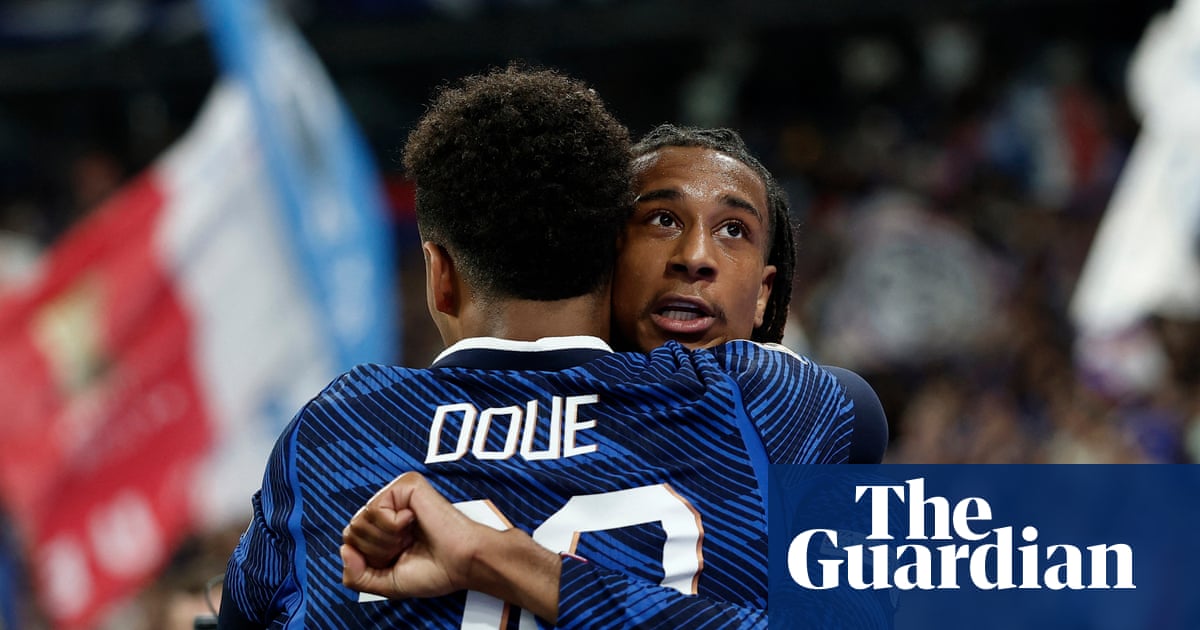
France sits right beside them at the absolute summit of international football. Didier Deschamps manages Les Bleus less like a traditional coach and more like a hedge-fund manager sitting on an endless supply of blue-chip assets. They do not always play pretty football, but their physical ceiling is terrifying.
Kylian Mbappé gives France a cheat code that forgives any tactical sloppiness in build-up play. One sloppy giveaway from an opponent turns into a 60-yard sprint and a goal before the opposition center-backs can even turn around. He remains the most destructive big-game performer of his generation.
Beyond Mbappé, France possesses a ridiculous surplus of defensive depth. William Saliba, Dayot Upamecano, and Jules Koundé form a defensive backline that surrenders virtually nothing in transition. You can press them for 80 minutes, but one long ball over the top destroys your entire afternoon.
When France needs to break a deadlock, they bring Eduardo Camavinga and Randal Kolo Muani off the bench to bully tired defenders. Their second-string lineup would comfortably win almost any group in the tournament without breaking a sweat. That kind of bench strength is completely unfair over a seven-week sprint.
The Royalty Trap: Why Argentina Won't Repeat and Brazil Is Broken
Defending a World Cup crown is the hardest task in global sports. Only two nations in history—Italy in 1938 and Brazil in 1962—have ever managed back-to-back titles. The physical toll, emotional hangover, and tactical film available to opponents make repeating almost statistically impossible in the modern era.
Argentina under Lionel Scaloni achieved eternal immortality in Qatar and validated their standard by claiming Copa América 2024. They possess world-class grit and an unmatched competitive soul. But Father Time remains undefeated, even when dealing with footballing gods.
Lionel Messi will turn 39 during the 2026 finals. While Julián Álvarez and Alexis Mac Allister provide relentless pressing and energy, relying on Messi to orchestrate seven grueling knockout matches in scorching July heat is pure fan fiction. He can still produce moments of magic, but he cannot cover ground like he did in 2022.
Without Messi operating at his physical peak, Argentina transitions from an unstoppable force into merely a very good football team. Opponents will no longer play with the psychological terror that haunted them during that magical run in Qatar. Once the fear factor fades, Argentina becomes vulnerable against athletic elite sides.
If Argentina faces a steep downhill slope, Brazil is currently tumbling headfirst off a cliff. Their recent CONMEBOL qualification performances exposed structural problems that flashy YouTube highlights can no longer cover up. They look like a mid-2000s Galácticos reboot that went straight to DVD.
Dorival Júnior inherits a squad devoid of a true, controlling central midfielder. Brazil’s midfield gets bypassed with two simple diagonal passes, leaving their fullbacks exposed against modern, pacey wingers. They play like eleven talented individuals sharing a pitch rather than a coherent unit.
Vinícius Júnior remains incredible for Real Madrid, but his international form frequently sputters when opposing national teams double-team him and cut off his inside lanes. Relying purely on individual brilliance while lacking structural balance cost Brazil in 2006, 2018, and 2022. They have learned nothing from those heartbreaks.
The Permanent Pretenders: England and the Illusion of Depth
England fans will spend the next two years blaring propaganda about how Thomas Tuchel holds the magic key. On paper, the roster looks stacked with Harry Kane, Jude Bellingham, and Bukayo Saka. The English media will hype them as joint-favorites until the moment reality strikes.
Yet England remains international football's ultimate paper tiger. They routinely feast on inferior opposition in qualifying groups before wilting the moment a legitimate elite power tests their spine. It is a recurring tragedy with a script everyone has memorized.
Cole Palmer and Phil Foden want to operate in the exact same central spaces, creating an awkward positional traffic jam. Forcing both into the starting lineup sounds great on fantasy football podcasts, but it leaves massive wide-open ocean in central midfield for elite teams to exploit on the counter.
Jordan Pickford can produce heroic reaction saves, but England’s center-back depth behind John Stones is frighteningly fragile. Against high-pressing teams like Spain or France, their build-up play from the back degenerates into panicked long balls that surrender possession immediately.
You cannot win a World Cup when your central defenders panic under aggressive pressure. Tuchel will certainly organize their defensive structure better than Gareth Southgate ever managed, but organizing a mid-block cannot magically invent world-class center-backs out of thin air.
Winning this tournament requires a cold-blooded killer instinct when trailing in the 85th minute of a semi-final. When the lights get blindingly bright in North America, Spain and France execute their gameplan with clinical precision, while England inevitably collapses and looks for someone to blame on social media.
Read Next
- Why Mbappe and Haaland Just Destroyed the 48-Team Golden Boot Myth
- Jesse Marsch turned Canada into North America's scariest football team
- Five World Cup 2026 dark horses ready to ruin your bracket
- Michael Olise salvaged Zinedine Zidane's wild gamble against Belgium
- 🏆 World Cup 2026 — Full Coverage Hub