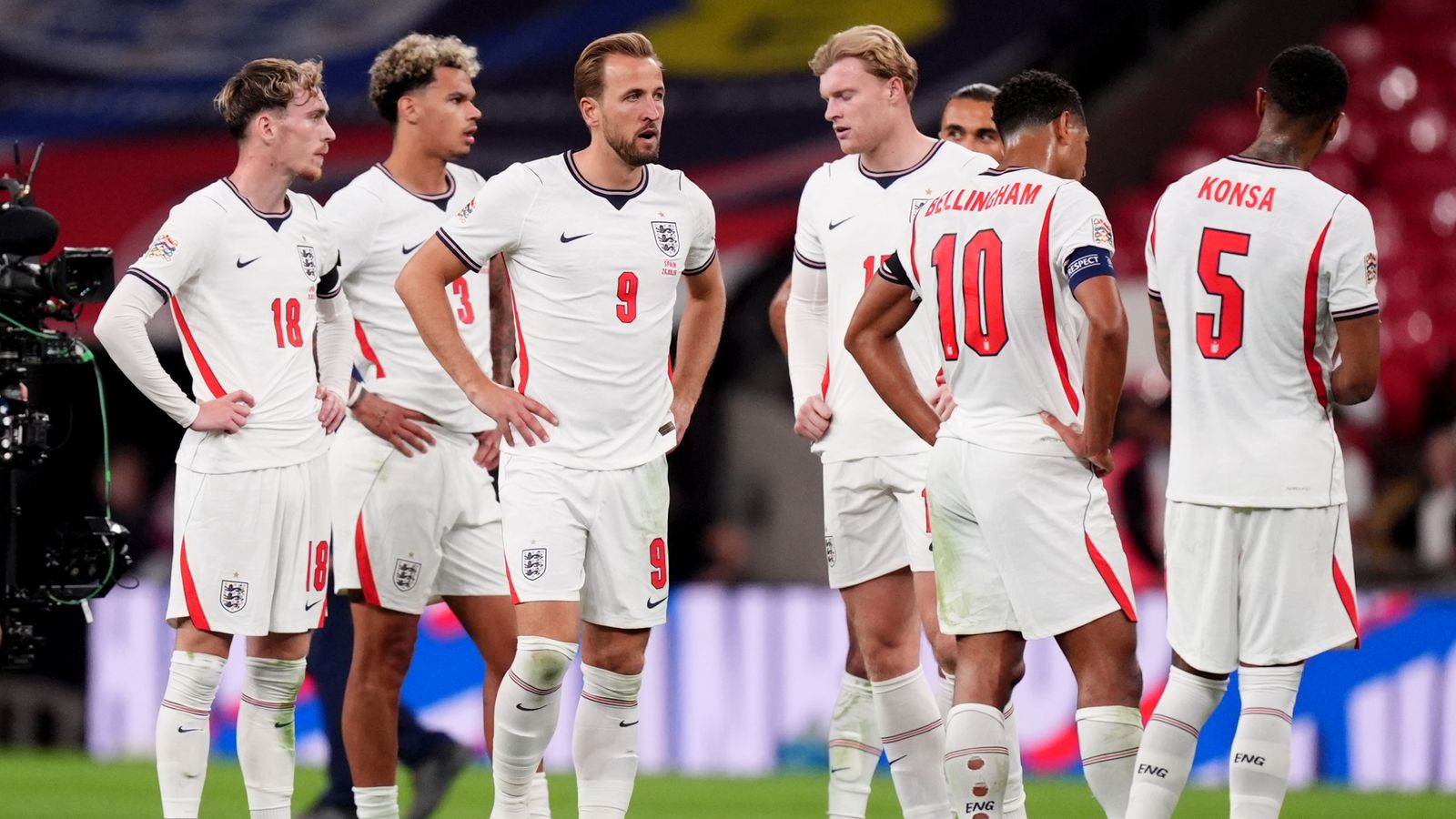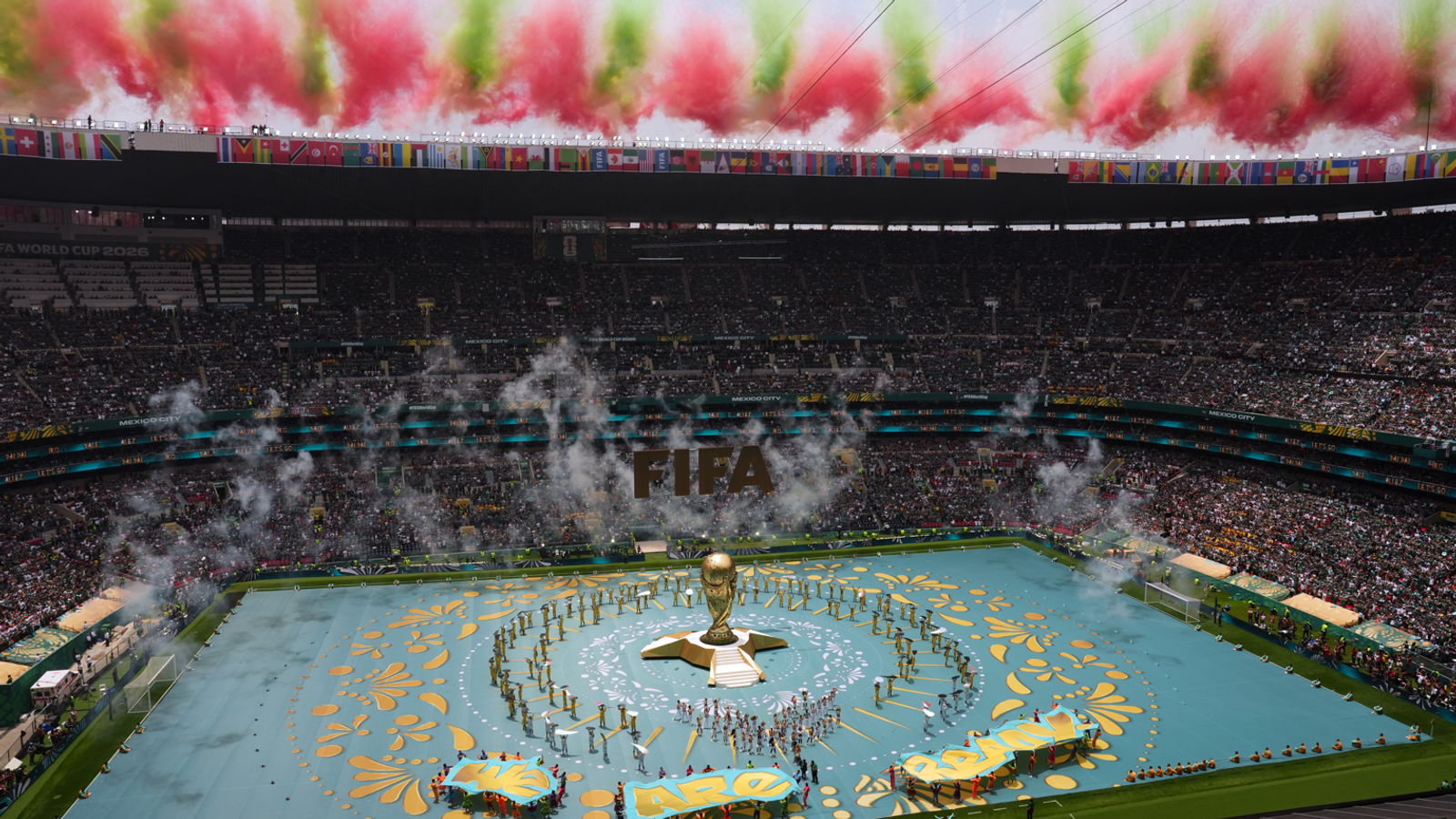
The corporate suits in Zurich finally made their decision. England’s World Cup last-16 tie against Mexico will kick off at 1am UK time on Monday morning as originally scheduled. It is a decision that has triggered a civil war between players, pundits, and tournament planners.
FIFA had spent days in backroom negotiations with the English and Mexican FAs about pulling the kick-off forward six hours to midday local time due to severe storms forecast for Mexico City. That shift would have given British television audiences a comfortable Sunday evening broadcast. Instead, the match remains a late-night test of physical endurance.
The refusal to reschedule has drawn fierce criticism from the broadcast studio, as Sky Sports live updates confirmed. Speaking on ITV, Gary Neville was vocal in his opposition to any potential last-minute changes. Neville warned that the alteration would damage the sporting integrity of the tournament.
“I would find it disruptive,” Neville said. “Conditions are huge for England in a tournament. Playing at 12pm versus 6pm is very different. For our players, it is worse.”
Neville’s frustration is rooted in his own tournament experience as an England player and coach. He highlighted that moving a match two days before kick-off is unprecedented at the elite level. He believes it is a direct disadvantage to England’s players and their preparation.
Within the England dressing room, the tone is predictably more diplomatic. Forward Marcus Rashford insisted that the team’s tactical focus will not waver. Rashford pointed to the squad’s resilience as their primary strength in high-pressure scenarios.
“I think for us it’s the same how we prepare for the game,” Rashford said. “We have to be focused. We have to be ready for anything.”
The forward added that while the scheduling chaos is not ideal, it ultimately does not matter to the players. That stoicism will be tested to its absolute limit at the Azteca. The local authorities in Mexico City had a major say in blockading the schedule change due to logistical challenges.
The Physical Tax of the Azteca Furnace
Rob Dorsett explained why a midday kick-off would have been physically ruinous for the Three Lions. At midday, the combination of high temperature, toxic smog, and altitude would have suffocated the English press. The relative humidity at that hour can reach a stifling 90%.
At 2,240 meters above sea level, the air is already thin enough to challenge elite cardiovascular systems. Smog and midday heat exacerbate this oxygen deficit, causing rapid muscle fatigue. The evening slot offers slightly cooler air, but the atmospheric pressure remains a major obstacle.
Tuchel’s altitude strategy relies on minimizing exposure to the environment. Experts advise that the debilitating effects of high altitude typically manifest between two and nine days after arrival. By keeping their stay brief, the staff hopes to bypass the worst physiological symptoms.
However, FIFA regulations mandate that teams must spend at least two nights in the host city prior to a knockout tie. England must also conduct a mandatory training session on the Azteca pitch. This rule has forced Tuchel’s hand, keeping the squad in the thin air longer than desired.
There is a historical precedent for FIFA rearranging high-profile World Cup schedules. Sixty years ago, during the 1966 tournament, England's semi-final against Portugal was moved from Goodison Park to Wembley. Goodison Park instead hosted the semi-final between West Germany and the Soviet Union.
Tactical Fragility and the Mexican Machine
The DR Congo Warning Signs
England only reached this stage by scraping a 2-1 victory over DR Congo on July 1 in Atlanta. As seen on BBC Sport's match coverage, the performance was a tactical mess that exposed severe structural faults in Tuchel’s system. John Stones committed a costly error in the 9th minute, allowing Brian Cipenga to score.
Stones was pressed aggressively by Yoane Wissa, causing his pass completion rate to plummet to 74% in the defensive third. His loose sideways pass was easily cut out by Cipenga, who finished past a stranded Jordan Pickford. This defensive breakdown highlighted England's sluggish transition from possession to progression.
Declan Rice returned to the lineup after recovering from a calf injury, but as The Guardian reported, he looked physically off the pace. Next to him, Elliot Anderson struggled to track runners in the half-spaces, leaving the center of the pitch completely exposed. Wayne Rooney has publicly urged Tuchel to drop Anderson in favor of Kobbie Mainoo.
Rooney argued that Mainoo’s press-resistance is vital for protecting the central space. England is also battling a severe crisis at fullback. Reece James was ruled out after injuring his hamstring against Ghana on June 23, while Tino Livramento withdrew earlier.
Tuchel must now deploy center-backs Ezri Konsa or Trevoh Chalobah out of position on the right. Djed Spence is available but is playing with a protective face mask after fracturing his jaw. This structural imbalance makes England's right flank highly vulnerable to targeted overloads.
England’s first-half attack was utterly toothless, generating a measly 0.23 xG across forty-five minutes. Their shot map showed all three attempts were desperate efforts from outside the penalty area. Against DR Congo, England were rescued by the individual quality of their substitutes.
Anthony Gordon replaced Marcus Rashford on the left wing and completely changed the tempo of the attack. In the 75th minute, Gordon’s overlapping run and cross allowed Harry Kane to equalize. This simple tactical adjustment bypassed DR Congo’s compact defensive block.
The turnaround was completed in the 86th minute when Gordon found Kane on the edge of the box for the winner. While the result saved England from humiliation, relying on late individual magic is not a viable tactical plan. Mexico’s structured defensive block will not be so easily broken.
The Mexican Machine Awaiting in the Smog
Javier Aguirre’s Mexico enter the round of 16 in flying form. El Tri broke their 40-year knockout curse with a clinical 2-0 victory over Ecuador on June 30. That match was delayed by a severe thunderstorm, but Mexico remained tactically disciplined throughout.
Julián Quiñones opened the scoring in the 22nd minute before Raúl Jiménez sealed the win. Mexico’s compact mid-block completely choked Ecuador’s central ball progression, holding them to a mere 0.45 xG. The frustration led to Piero Hincapié receiving a late red card, prompting Sebastián Beccacece to resign.
Mexico has their own injury issues, with starting goalkeeper Luis Ángel Malagón out with a ruptured Achilles tendon. However, Raúl Rangel has deputized securely behind a disciplined back line. Jorge Sánchez, César Montes, Johan Vásquez, and Jesús Gallardo form a robust defensive shield.
El Tri will look to exploit England’s slow lateral ball circulation. Aguirre’s tactical setup relies on aggressive pressing traps in the middle third. Quiñones and Jiménez are expert at turning defensive turnovers into rapid, vertical counter-attacks.
The Verdict: A High-Altitude Reality Check
Tuchel’s insistence on a rigid defensive shape will face its ultimate test in the altitude. With a compromised right-back and a rusty midfield double pivot, England cannot hope to control the tempo. Mexico will use the evening altitude and hostile crowd to suffocate Rice.
Our prediction is a tactical reality check for the Three Lions. Mexico will secure a 2-1 victory after extra time, exposing England’s lack of width and depth. Tuchel will be left to answer for his squad selection as England exit in the round of 16.
Read Next
- Why the Azteca altitude will expose England's spacing crisis
- Tuchel's rigid tactics will melt under the Estadio Azteca midday sun
- FIFA moving the England-Mexico kick-off is a tactical disaster
- England vs Mexico late kick-off triggers chaotic 5am pub opening battle
- 🏴 England World Cup 2026 — Three Lions Hub
- 🇲🇽 Mexico World Cup 2026 — El Tri Hub